The Universal Frankenstein Movies

THE UNIVERSAL FRANKENSTEIN MOVIES
Of all the horror movie series, there’s not one I like more than Universal Studios’ Frankenstein cycle which started with the immortal 1931 classic Frankenstein and continued through The Bride of Frankenstein, Son of Frankenstein, The Ghost of Frankenstein, Frankenstein Meets the Wolf Man, House of Frankenstein, House of Dracula, and finally concluded with Abbott and Costello Meet Frankenstein in 1948.

Seven of the eight films are stone cold classics and I rate Frankenstein, The Bride of Frankenstein, Son of Frankenstein, and Abbott and Costello Meet Frankenstein at four stars and The Ghost of Frankenstein, Frankenstein Meets the Wolf Man, and House of Frankenstein three-and-a-half, with House of Dracula ranked two-and-a-half and it’s the only one that I would even slightly hesitate to recommend to people.

I watched Frankenstein, The Bride of Frankenstein, and Abbott and Costello Meet Frankenstein around roughly the same time in the late ’90s and early ’00s. I caught up with the others much later on during a marathon of Universal horror films. I liked The Ghost of Frankenstein, Frankenstein Meets the Wolf Man, and House of Frankenstein upon first viewing, as well Abbott and Costello Meet Frankenstein a lot, but they’ve all grown on me to where I bumped up their rating one-half star.

I have a feeling that watching the eight films in close proximity to one another will become a tradition, like it has for who knows how many people over the last 90 years.

Here’s a look at the film series that seemingly started it all in the horror genre.

Frankenstein (1931; James Whale): The one that started it all, Edward Van Sloan, who plays Dr. Van Helsing in Dracula and Doctor Waldman in Frankenstein, begins the picture, How do you do? Mr. Carl Laemmle feels it would be a little unkind to present this picture without just a word of friendly warning. We’re about to unfold the story of Frankenstein, a man of science who sought to create a man after his own image without reckoning upon God. It is one of the strangest tales ever told. It deals with the two great mysteries of creation: life and death. I think it will thrill you. It may shock you. It might even horrify you. So if any of you feel that you do not care to subject your nerves to such a strain, now is your chance to, uh … well, we’ve warned you!

Colin Clive and Dwight Frye are great in their roles as mad scientist Henry Frankenstein and hunchbacked assistant Fritz, Van Sloan is much better in Frankenstein than in Dracula, and Boris Karloff is not even credited as Karloff yet for playing The Monster. The opening credits have it The Monster — ?

The work done by makeup artist Jack Pierce and set designer Herman Rosse is just as definitive and influential as the characters and performances by Clive, Frye, and Karloff.

We’ve all seen Frankenstein time and time again in the thousands if not hundreds of thousands of films that have been influenced by James Whale’s first horror masterpiece.

The Bride of Frankenstein (1935; James Whale): One of the greatest horror films and greatest sequels ever made, I rate The Bride of Frankenstein as the best Frankenstein and it’s not even all that close, despite the fact that it shares the same star rating as Frankenstein, Son of Frankenstein, and Abbott and Costello Meet Frankenstein.

The Bride of Frankenstein has a more wicked sense of humor than any of the other films in the series, and that’s including Abbott and Costello Meet Frankenstein, and it’s undeniably the most fun to watch. It’s just as iconic and influential as the original Frankenstein, from the more sympathetic, speaking Monster to the makeup and the sets.

Mad scientists do not come madder than Ernest Thesiger’s Doctor Pretorius, and he’s a devious hoot throughout The Bride of Frankenstein. He’s so mad that he makes Colin Clive’s Doctor Frankenstein seem almost sane. You think I’m mad. Perhaps I am. But listen, Henry Frankenstein. While you were digging in your graves, piecing together dead tissues, I, my dear pupil, went for my material to the source of life. I grew my creatures, like cultures, grew them as nature does, from seed.

I wish they would have done more with the title character, that’s just about my only gripe against The Bride of Frankenstein.

Son of Frankenstein (1939; Rowland V. Lee): Easily the longest of the series, the third Frankenstein entry benefits tremendously from the presence of four absolute legends of the genre in Lionel Atwill, Boris Karloff, Bela Lugosi, and Basil Rathbone. Atwill and Lugosi are especially fantastic.

I would make the argument that Lugosi never had a better role than Ygor and never gave better performances than he did in Son of Frankenstein and The Ghost of Frankenstein. He’s the driving engine in both films and helps make them so entertaining. They hanged me once Frankenstein. They broke my neck. They said I was dead. Then they cut me down. They threw me in here, long ago. They wouldn’t bury me in holy place like churchyard. Because I stole bodies, eh they said. So, Ygor is dead! So, Dr. Frankenstein. Nobody can mend Ygor’s neck. It’s alright.

Atwill became the most versatile and most important supporting player in the Frankenstein series, playing Inspector Krogh in Son of Frankenstein, Doctor Theodore Bohmer in The Ghost of Frankenstein, the Mayor in Frankenstein Meets the Wolf Man, Inspector Arnz in House of Frankenstein, and Police Inspector Holtz in House of Dracula.

He’s at his best as Inspector Krogh, and this character will ring a bell to Young Frankenstein fans, as will Ygor. Most vivid recollection of my life. I was but a child at the time, about the age of your own son Herr Baron. The Monster had escaped and was … ravaging the countryside, killing, maiming, terrorizing. One night he burst into our house. My father took a gun and fired at him but the savage brute sent him crashing to a corner. Then he grabbed me by the arm!

Karloff gives his final performance as Frankenstein’s Monster and he’s given less to do than Frankenstein and especially The Bride of Frankenstein. He returns to not speaking in Son of Frankenstein after the strides the Monster made in Bride, but Karloff had the innate ability to communicate much without dialogue.

The Ghost of Frankenstein (1942; Erle C. Kenton): This is the first downturn in quality in the series after the triple triumph of Frankenstein, The Bride of Frankenstein, and Son of Frankenstein, but The Ghost of Frankenstein still proves to be loads of fun with the return of Ygor, the brain transplant and mad scientist plot, and plenty of action during one of the shortest running times in the entire series.

Ygor could take a hanging before Son of Frankenstein and take a shooting in Son and keep on ticking in The Ghost of Frankenstein. He’s still got his one true friend in Ghost, Frankenstein’s Monster, though it’s no longer Boris Karloff but Lon Chaney Jr in his first and only appearance. Chaney became a big horror movie star after The Wolf Man and Universal cast him as Frankenstein’s Monster, Dracula, and Kharis. Not sure how they missed him for The Invisible Man and The Phantom of the Opera.

Anyway, Lugosi dominates The Ghost of Frankenstein, despite the fact that Ygor’s not as menacing as he was in Son of Frankenstein. You cannot take my friend away from me. He’s all that I have. Nothing else. You’re going to make him your friend and I’ll be alone. Ygor plots to have his brain transplanted inside Frankenstein’s Monster, so he can rule the world, and finds a willing conspirator in Atwill’s Doctor Theodore Bohmer. As Doctor Ludwig Frankenstein says, You’re a cunning fellow, Ygor. Do you think I would put your sly and sinister brain into the body of a giant? That would be a monster indeed. You will do as I tell you or I will not be responsible for the consequences.

The Ghost of Frankenstein has one of the better casts in the series with Cedric Hardwicke as Ludwig Frankenstein and The Wolf Man cast members Ralph Bellamy and Evelyn Ankers join Chaney and Lugosi. The original Frankenstein (Colin Clive) makes an archive footage cameo appearance; Clive passed away in 1937 at the age of 37.

Frankenstein Meets the Wolf Man (1943; Roy William Neill): The fifth installment of the series begins with arguably the best seven minutes of the entire franchise and the film takes a steady dip in quality for the next hour until we get to the last few minutes.

Lawrence Talbot and The Wolf Man make their first appearance in the series, and his tortured soul number makes sweet music especially as played by Chaney Jr. I only want to die. That’s why I’m here. If I ever find peace I’ll find it here. Lugosi plays Frankenstein’s Monster, but one might remember from the end of The Ghost of Frankenstein that our Monster speaks like Ygor because of the brain transplant operation late in the picture. He’s still blind, as well, respecting continuity for a change in any of these sequels, but it’s all rendered moot because Universal muted Lugosi’s speaking voice as the Monster. He’s not the worst Monster, and they all became interchangeable after Karloff left the role anyway.

Before King Kong vs. Godzilla and long before Freddy vs. Jason, there was Frankenstein Meets the Wolf Man.

Isn’t it an interesting coincidence that Frankenstein Meets the Wolf Man came out in 1943, the American version of King Kong vs. Godzilla in 1963, and Freddy vs. Jason in 2003?

House of Frankenstein (1944; Erle C. Kenton): The sixth installment piles on the monster characters and the acting talent.

Boris Karloff returns to the series for the final time as the mad doctor Gustav Niemann and not Frankenstein’s Monster, Chaney returns as Lawrence Talbot and The Wolf Man, John Carradine and Glenn Strange make their debuts as Dracula and Frankenstein’s Monster, and J. Carrol Naish almost steals the show as the hunchbacked henchman Daniel.

There’s also Lionel Atwill, George Zucco, and Sig Ruman, so there’s no shortage of talent in the cast even in the smallest roles.

Where’s Lugosi? No, seriously, where’s Lugosi?

Carradine and Strange are major downgrades as Dracula and Frankenstein’s Monster, it’s great to have Karloff back in a speaking and a mad doctor role though I’d still prefer him as Frankenstein’s Monster, Chaney plays his tortured soul number again, and Naish joins Dwight Frye and Lugosi in the lexicon of scene-stealing servant characters.

This is as good a place as any to mention Frye, who passed away in 1943 and who appeared in Frankenstein as Fritz, The Bride of Frankenstein as Karl, Son of Frankenstein as a villager, The Ghost of Frankenstein as a village, and Frankenstein Meets the Wolf Man as Rudi, a nice little supporting role for Frye.

House of Frankenstein is a step down from The Ghost of Frankenstein and Frankenstein Meets the Wolf Man and closer to a three-star rating.

House of Dracula (1945; Erle C. Kenton): This is the only film in the series that I’ve not been able to warm into a positive review after repeat viewings. Apparently, I’ve made three attempts over the last couple years.

Unfortunately, by this point in the series, House of Dracula feels like we’ve been here before … and in better films.

The title, the poster, and the cast of characters echo House of Frankenstein.

The Wolf Man, Dracula, and Frankenstein’s Monster all return and we have a new mad doctor and a new hunchback after Karloff and Naish in House of Frankenstein.

I must state again that I don’t particularly care for Carradine and Strange in the roles of Dracula and Frankenstein’s Monster. They are many grades below Lugosi and Karloff. Especially Carradine, who I unfortunately watched playing Dracula first in Billy the Kid vs. Dracula from 1966. I had no idea back then Carradine had played Dracula before he revisited the role for director William Beaudine in a toothless cross between a western and a horror film. Anyway, Carradine does this thing with his eyes that’s supposed to be hypnotic, but it always comes across like somebody’s just squirted him in the eyes. They wisely gave Strange absolutely little to do in House of Frankenstein, House of Dracula, and Abbott and Costello Meet Frankenstein.

Chaney is still pretty good in House of Dracula, and he’s the main positive reason for the film’s mixed review.

Abbott and Costello Meet Frankenstein (1948; Charles Barton): The comedic duo of Bud Abbott and Lou Costello and the monsters like Frankenstein’s Monster, Dracula, and The Wolf Man were the main cash cows for Universal throughout the 1940s.

Universal squeezed from the teets for a big hit in Abbott and Costello Meet Frankenstein — we have Bud and Lou as Chick and Wilbur, Lugosi for the second and final time as Dracula, Chaney once more as tortured soul Lawrence Talbot and The Wolf Man, and Strange as Frankenstein’s Monster. The monsters do make for great straight men and Costello’s fright never proved more convincing or delightful or funny than it is throughout Abbott and Costello Meet Frankenstein.

Lenore Aubert and Jane Randolph are both quite fetching as women with ulterior motives for their interest in Wilbur.

I reviewed Abbott and Costello Meet Frankenstein at length earlier in the month, and I stand 100 percent behind that four-star review.

The Universal Frankenstein Movies, Ranked
1. The Bride of Frankenstein (1935) ****
2. Frankenstein (1931) ****
3. Son of Frankenstein (1939) ****
4. Abbott and Costello Meet Frankenstein (1948) ****
5. Frankenstein Meets the Wolf Man (1943) ***1/2
6. The Ghost of Frankenstein (1942) ***1/2
7. House of Frankenstein (1944) ***1/2
8. House of Dracula (1945) **1/2
Karloff Meets Lugosi Meets Poe: The Black Cat, The Raven

KARLOFF MEETS LUGOSI MEETS POE: THE BLACK CAT, THE RAVEN
Boris Karloff (1887-1969) and Bela Lugosi (1882-1956) endure as two icons of horror and their best movies remain essential to a greater understanding of the horror genre long after their death.

Karloff and Lugosi starred in many classic films. Dracula. Frankenstein. Island of Lost Souls. The Mummy. White Zombie. Old Dark House. Murders in the Rue Morgue. The Mask of Fu Manchu. Chandu the Magician. The Bride of Frankenstein. Mark of the Vampire. The Black Room. The Man They Could Not Hang. The Wolf Man. Frankenstein Meets the Wolf Man. The Return of the Vampire. House of Frankenstein. Isle of the Dead. Bedlam. Abbott and Costello Meet Frankenstein. Targets.

That list grows once the several films they made together are considered: The Black Cat, The Raven, The Invisible Ray, Son of Frankenstein, Black Friday (not a classic), You’ll Find Out (not seen this one), and The Body Snatcher.

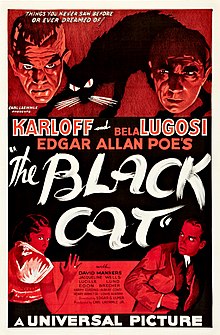
The Black Cat and The Raven, generally paired together in greatest hits packages, are the films where Karloff and Lugosi are most evenly matched on screen. They’re both immortal movie classics based on that mere fact alone; Lugosi nearly walks away with Son of Frankenstein as Ygor, while it’s sad to see how much of a nonentity part Lugosi received in The Body Snatcher, especially when compared against Karloff’s meaty role as John Gray and perhaps his best performance.

Young American lovers on their honeymoon in Hungary, a train ride beginning and ending the picture, a dark and rainy night, a road accident, an old dark house, an enigmatic doctor, a Satan worshipping priest, a story suggested by the work of Edgar Allan Poe with story and direction from Edgar G. Ulmer, and The Black Cat flies past in about 65 minutes, like a lot of the early horror classics.

Of course, there’s Karloff credited merely as Karloff, David Manners as one of the young American lovers, and Karloff and Lugosi find themselves at each other’s throat by the end of the picture.

Like the Frankenstein pictures and the Mary Shelley source material, The Black Cat departs almost entirely from Poe’s short story originally published in The Saturday Evening Post on August 19, 1843. I am okay with that, because Ulmer has a style all his own like James Whale in Frankenstein and The Bride of Frankenstein and The Black Cat pairs two movie legends for the first time.

The Raven gets done faster than even The Black Cat at 61 minutes, credits both Karloff and Lugosi with their surnames alone, and it has a lot of the same elements as The Black Cat.

Lugosi plays arguably his most diabolical and evil character in Dr. Richard Vollin, the archetype for the brilliant but troubled surgeon who has this, let’s say, morbid obsession with instruments of torture. He’s not your average doctor, obviously. Lugosi chews through the scenery, especially in the final reel, and relishes lines like Death is my talisman, I like torture, I tear torture out of myself by torturing you, and Poe, you are avenged!

Yes, he’s also obsessed with Edgar Allan Poe. The Pit and the Pendulum even makes a cameo appearance!

The Raven tilts more toward being Lugosi’s show because Karloff doesn’t even show up for his first scene until 17 minutes into the picture.

Karloff is great though, of course, and brings a certain poignancy to the tortured murderer on the run Edmond Bateman, who just wants the doctor to fix his ugly face.

EB: I’m saying, Doc, maybe because I look ugly … maybe if a man looks ugly, he does ugly things.

DRV: You are saying something profound.

Naturally, Vollin makes Bateman’s face even uglier and enlists him in a diabolical scheme.

The rest of the cast doesn’t measure up against Lugosi and Karloff, especially Irene Ware as the screaming socialite Jean Thatcher, but it doesn’t really matter because Lugosi and Karloff are so damn great.

I heartily recommend The Black Cat and The Raven, both Poe and Universal.

The Black Cat (1934) ****; The Raven (1935) ****


Abbott and Costello Meet Frankenstein (1948)

ABBOTT AND COSTELLO MEET FRANKENSTEIN (1948) ****
Over a period of a couple years, I watched all 36 Abbott and Costello feature-length comedies from their scene-stealing minor roles in One Night in the Tropics (1940) to their last disappointing picture in Dance with Me, Henry (1956).

Bud Abbott (1897-1974) and Lou Costello (1906-59) are not on the same elite level as Charlie Chaplin, Buster Keaton, Harold Lloyd, W.C. Fields, the Marx Brothers, and Laurel and Hardy, for starters, but they fit on a tier below neatly alongside the Three Stooges and Wheeler and Woolsey.

I recommend 28 out of their 36 films, and I do like the duo and their films a good bit. That said, I do not recommend binge-watching their films because they are often saddled with cornball musical numbers, cornball romantic subplots, and comedic routines that could quickly become very repetitive and tiresome after repeat exposure to their work. I spread their 36 films out very effectively, rarely ever watching any of them consecutively in a single sitting.

Until I recently watched Abbott and Costello Meet Frankenstein again, easily their most famous picture, I would have even argued they never made a truly great motion picture.

I’ve seen it several times over the years, and I’ve always liked it a lot ever since that first viewing many years ago on AMC. I always considered it nothing less than a very good film and the ultimate Abbott and Costello motion picture experience.

Anyway, this last time watching Abbott and Costello Meet Frankenstein, a meeting of Universal’s main staples, I thought Who the hell am I kidding, this is a great movie and I’m bumping it up to four stars exactly right where it belongs!

Of course, Abbott and Costello don’t actually meet Frankenstein, it’s Frankenstein’s Monster (Glenn Strange) and he plays a subservient role to Count Dracula (Bela Lugosi) and Larry Talbot / The Wolf Man (Lon Chaney Jr.), and it’s also not Abbott and Costello but Chick Young and Wilbur Gray who do the meeting within the movie. I guess Chick and Wilbur Meet Frankenstein’s Monster or Abbott and Costello Meet Glenn Strange or Abbott and Costello Meet Dracula, Frankenstein and the Wolf Man just wouldn’t have worked as titles.

If you stop and think too much about the inconsistencies and continuity gaps and logical flaws in any Universal horror movie, especially the ones made during the ’40s, you just might drive yourself stark raving mad and start foaming at the mouth.

I recommend just going with the flow. You’ll likely live a little if not a lot longer.

I’m not even going to regurgitate a plot synopsis for Abbott and Costello Meet Frankenstein because life is short, life is precious, and I honestly believe that one knows more or less what to expect from something titled Abbott and Costello Meet Frankenstein.

Abbott and Costello developed a routine in their horror comedies, as early as 1941’s Hold That Ghost and starting again with Abbott and Costello Meet Frankenstein and continuing through 1955’s Abbott and Costello Meet the Mummy, where something frightens Costello’s character and he will try (often in vain) to get Abbott’s character to believe him.

I am not exactly the biggest fan of this routine, I must admit, and it’s the first exhibit for what I wrote earlier about their comedic routines becoming repetitive and tiresome.

They never got that routine down any better than Abbott and Costello Meet Frankenstein, however, and it definitely has something to do with the presence of Lugosi (1882-1956), Chaney (1906-73), and, to a much lesser degree, Strange (1899-1973).

Lugosi, Chaney, and Strange play it straight and they help sell the laughs just by acting no differently than if they were in House of Frankenstein or House of Dracula.

Costello never played more convincingly frightened than he does throughout Abbott and Costello Meet Frankenstein.

Abbott and Costello were never more consistently funny than they are during Abbott and Costello Meet Frankenstein.

She-Wolf of London (1946)

SHE-WOLF OF LONDON (1946) *
I have an alternate title for the 1946 Universal Studios anti-horror classic She-Wolf of London: She-Wolf of Tedium.

Since there’s no actual she-wolf, our new alternate title downsizes to Tedium.

Over a 31-year period, Universal made 31 films that are grouped together as the Classic Monsters series, featuring Dracula, Frankenstein’s Monster, the Wolf Man, the Invisible Man, the Phantom, the Mummy, and/or the Werewolf of London, not to mention Abbott and Costello.

She-Wolf of London falls outside the Classic Monsters jurisdiction and it’s worse than any of them. Yes, it’s even worse than The Invisible Woman, the nadir of the Classic Monsters series.

Since I watched The Wolf Man and Werewolf of London, I expected a she-wolf in London, transformation scenes, and scenes of mayhem.

No, director Jean Yarbrough (The Devil Bat), screenwriter George Bricker, and producer Ben Pivar give us a standard issue murder mystery.

June Lockhart, then a 21-year-old ingenue years before her mother roles on Lassie and Lost in Space, stars as poor, poor Phyllis Allenby, whose deep, deep belief in the so-called ‘Curse of the Allenbys’ leads her to believe that she’s the werewolf responsible for all the deaths in the local park. Good old Aunt Martha (Sara Haden), that good old Aunt Martha, anyway, she owns dogs that bark all night and they take a real shining to poor, poor Phyllis. Between all the murders that point toward her and dogs barking and curse talk, Phyllis gets worse over the course of She-Wolf of London. That’s all part of Aunt Martha’s master plan, since she wants to drive Phyllis insane and inside an asylum so Aunt Martha and her daughter remain living inside the mansion rather than Phyllis and her doting barrister, boyfriend, and potential husband Barry Lanfield (Don Porter). Barry sees through it all, believes in Phyllis, and it’s all so touching when he proves her innocence. Instead, Aunt Martha becomes one of those less than convincing movie murderers, you know, in a revelation that renders the rest of the movie, what’s the word, ridiculous … and not the good ridiculous either.

Yeah, that’s a whole lot of plot synopsis and She-Wolf of London surrenders itself to many exposition scenes during a 61-minute motion picture spread. All that exposition becomes the source of all that pesky tedium, which is not exactly what I was expecting from a movie titled (incorrectly) She-Wolf of London. There I go again, my own worst enemy.

Werewolf of London (1935)

WEREWOLF OF LONDON (1935) ***
Werewolf of London — Hollywood’s first werewolf picture — must be one of the most overlooked horror films in the history of overlooked horror films, for obvious reasons.

During the 1930s, Universal Studios released Werewolf of London among the following group of horror films: Dracula, Dracula (Spanish version), Frankenstein, The Mummy, The Invisible Man, The Bride of Frankenstein, Dracula’s Daughter, and Son of Frankenstein, over half of them landmark productions that spawned multiple imitations and sequels. Werewolf of London came out nearly a month after The Bride of Frankenstein in the spring of 1935 and The Bride of Frankenstein became a big hit and developed a reputation for being a sequel that arguably betters the original.

Late in 1941, Universal’s second werewolf film appeared, The Wolf Man, and it quickly became the quintessential werewolf film, leaving Werewolf of London behind in the dustbins of cinematic history. Lon Chaney Jr. joined his late father Lon Chaney (Phantom of the Opera), Boris Karloff (Frankenstein), and Bela Lugosi (Dracula) in becoming a horror movie icon just from a single performance. Chaney Jr. revisited Larry Talbot / The Wolf Man in Frankenstein Meets the Wolf Man, The House of Frankenstein, House of Dracula, and Abbott and Costello Meets Frankenstein, and he displayed his versatility by portraying Dracula, Frankenstein’s Monster, and the Mummy.

In addition to Chaney Jr., The Wolf Man cast includes Claude Rains and Ralph Bellamy and many horror films love it for its mood and first-rate atmosphere.

By contrast, Werewolf of London stars veteran character actor Henry Hull and that’s unfortunately not a name that rolls off the tongue like, say, Lon Chaney Jr. Warren Zevon name checked both Chaneys in “Werewolves of London” — Well, I saw Lon Chaney walking with the Queen / Doing the Werewolves of London / I saw Lon Chaney Jr. walking with the Queen / Doing the Werewolves of London / I saw a werewolf drinking a piña colada at Trader Vic’s / And his hair was perfect — but, alas, no direct mention of Hull.

Werewolf of London definitely holds its most value as curiosity (and conversational) piece and not only for its place as the most overlooked film within the Universal canon and for its overall historical standing. After all, when’s the last time any protagonist in a film counted botany for their career or a horror film started with a prologue in Tibet. It also holds considerable fascination comparing and contrasting Jack Pierce’s makeup work between Werewolf of London and The Wolf Man, as well as how this earlier film handled the essential transformation scenes. The werewolf seems to have inspired Eddie Munster, so Werewolf of London does have that going for it.

Phantom of the Opera (1943)

PHANTOM OF THE OPERA (1943) **
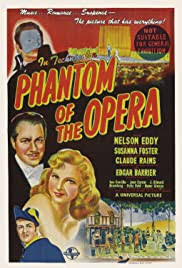
I put off watching a sound version of Phantom of the Opera for the longest time and the 1943 Phantom of the Opera only confirmed that suspicion and doubt.

Claude Rains did not even remotely approach what Lon Chaney accomplished in the 1925 silent version and I have to face the fact that I am definitely not the world’s biggest opera fan.

Yes, I do realize that I made it through A Night at the Opera and Opera with relative ease, but predominantly because I am big fans of both the Marx Brothers and Dario Argento, not opera.

Allan Jones’ production numbers in both A Night at the Opera and A Day at the Races, as well as James Whale’s Show Boat, are why they invented the fast-forward and skip buttons. The Marx Brothers’ numbers are infinitely better on the ears.

As for Argento, he goes so far over the top (especially in the murder sequences) that I find his operatic excess in Opera enjoyable.

Universal Studios invested $1.75 million on Phantom of the Opera (both Phantom and fellow 1943 release Frankenstein Meets the Wolf Man received much larger production budgets than previous Universal releases, like, for example, the $180,000 Wolf Man from 1941) and the film accomplished something unique for an Universal horror film — win an Academy Award, for Best Art Direction and Best Cinematography, and it was nominated in two more categories.

Phantom of the Opera, the first adaptation of the 1910 Gaston Leroux novel filmed in Technicolor, became a hit, especially in France.

Sorry to say, though, it’s not deserving of classic status.

Universal released 25 horror films from 1931’s Dracula through 1948’s Abbott and Costello Meet Frankenstein that are grouped together in the Classic Monsters series and I rank Phantom of the Opera only ahead of The Mummy’s Ghost, The Mummy’s Curse, and The Invisible Woman.

Lon Chaney Jr. (1906-73) felt slighted Universal did not consider him for his father’s most legendary role. Granted, he was an incredibly busy actor. Chaney Jr. had starring roles in the three films immediately surrounding Phantom of the Opera in 1942 and 1943 — his first time playing Kharis in The Mummy’s Hand, his second time as Larry Talbot / The Wolf Man in Frankenstein Meets the Wolf Man, and his first and only time as Dracula in Son of Dracula. Chaney Jr. previously took on Frankenstein’s Monster in The Ghost of Frankenstein (1942) and he proved himself Universal’s most versatile monster thespian, only missing the Invisible Man and the Phantom from his credits.

Chaney Jr. especially worked as Larry Talbot / The Wolf Man, and I am imagining what he could have done in Phantom of the Opera.

Rains killed it as Dr. Jack Griffin in the 1933 James Whale classic The Invisible Man. In Phantom of the Opera, not so much, because he’s just not scary, even without his ridiculous mask when his mutilated face is revealed in the laughable grand finale. He’s not the film’s main problem, though, believe it or not.

I mean, Rains plays the freaking title character in Phantom of the Opera and he’s third-billed, for crying out loud, behind our singing leads Nelson Eddy and Susanna Foster. This never happened to Lon Chaney, who’s billed above both Mary Philbin and Norman Kerry. Rains’ Phantom becomes less of a factor and that just about sums up the failure of this particular Phantom of the Opera — too heavy on the opera and too light on the phantom.

The Invisible Woman (1940)

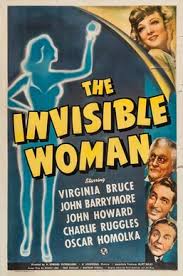
THE INVISIBLE WOMAN (1940) *1/2
Normally, it’s great for a movie to be considered 20 years ahead of its time.

Unfortunately for Universal Studios’ third entry in the Invisible Man series, The Invisible Woman, it’s not so great that it predated the Disney live-action comedies of the ’60s and ’70s, unless you’re into that kind of thing.

One always should account for personal taste in delicate matters like these, so I will note that I prefer both The Invisible Man and The Invisible Man Returns (released earlier in 1940) over The Invisible Woman because they have a darker sense of humor at play than a predominantly lighthearted comedy that revolves heavily around the good old slapstick.

Ah, yes, good old slapstick. That’s where The Invisible Woman paved the way for all them Disney Solid Gold hits of the ’60s and ’70s.

Slapstick, in this case, does not mean the virtuoso physical feats of silent greats Buster Keaton and Harold Lloyd or the brutality of the Three Stooges and Home Alone.

No, rather, it’s mostly supporting characters falling down and fainting and gasping, like, for example, man servant George (played by Charlie Ruggles). Take a drink for every time George falls down or faints or flusters and you’ll be feeling at least a buzz in no time. Depending on the drink, you might miss out on most of The Invisible Woman and I call that a happy ending.

The Invisible Woman throws in comic gangsters, characters that have very rarely worked throughout cinematic history, not then, not before then, not after then, not ever. Given the presence of Shemp Howard in a henchman role, one might be tempted to believe The Incredible Woman would give up on the genial slapstick and really go for the gusto like maybe a Three Stooges short. No, no, no.

I don’t really need to discuss the plot, because it’s one of them movies where the title says it all more or less and we can quickly move on to who plays who, like John Barrymore as nutty Professor Gibbs, Virginia Bruce the spunky title character and John Howard her eventual leading man, Margaret Hamilton and Ruggles the servants, and Oscar Homolka the main heavy. What a waste of a talented cast, though, and undoubtedly one of the worst films made during Universal’s run of horror films.

A New World Pictures Double Feature: Avalanche & Piranha (1978)

A NEW WORLD PICTURES DOUBLE FEATURE: AVALANCHE & PIRANHA (1978)

Two New World Pictures exploitation films entered the Great American box office sweepstakes in August 1978.

One became a surprise hit and the other dramatically flopped.

Roger Corman, a man of a million film productions, tossed his hat into the disaster movie ring with AVALANCHE, while PIRANHA riffed on the killer fish blockbuster JAWS.

PIRANHA, directed by Joe Dante and populated by experienced character actors like Bradford Dillman and Keenan Wynn and Dick Miller, recouped its budget and then some and spawned one sequel and at least two remakes.

Star actors Rock Hudson (1925-85) and Mia Farrow headline the human cast of AVALANCHE and New World invested a reported $6.5 million on the picture, a great deal more $ than PIRANHA. You know that it did not go very well for AVALANCHE when its greatest claim to fame is that it made “The Official Razzie Movie Guide” honoring the 100 most enjoyably bad movies ever made.

This bad movie enthusiast, however, did not enjoy AVALANCHE. I found it to be a long slog. I mean, I felt like the one climbing the mountain to get through its 90-odd minutes.

First and foremost, it’s a soap opera in the shape of a ski resort hosting a ski tournament and a figure skating competition. Egads! Magazine reporter Caroline (Farrow) divorced control freak and wealthy ski resort owner David (Hudson). You guessed it, David wants her back, wants her to use his last name rather than her maiden name, she keeps him at arm’s length, and she attaches herself to another man, which only infuriates Mr. Control Freak. Man oh man, that scene on the dance floor when David flips on Caroline, I wanted to bury my head in the snow.

That’s not all: We have David’s spirited mother, an elite skier who seems to be even better as lothario, competing figure skaters, competing lovers, a television reporter, and a nosy photographer. Remember, we need a body count.

That nosy photographer (Robert Forster) and David act out a scene near and dear to disaster movie connoisseurs everywhere. Nick Thorne, the nosy photographer’s name, warns David there’s an avalanche coming and that everybody’s in danger. Any of us could write the rest of the scene and, for that matter, the rest of the movie.

Disaster movies often create a dilemma in our hearts and minds: We desperately want the disaster to come and take us away from the phony baloney dialogue and situations. Yes, I’ll say it, the characters deserve to die a dramatic cinematic death sooner rather than later. … Then, when disaster strikes, disaster movies invariably give us scenes just as phony baloney as before. That’s what happens in AVALANCHE.

Director and screenwriter Corey Allen (1934-2010) blamed AVALANCHE’s disaster as a movie on budget cuts and a tight production schedule, whereas Corman said PIRANHA succeeded because it’s funny and very well directed.

I agree.

PIRANHA tips its humorous hand very early on when one of the main characters plays the classic Atari “Shark Jaws” arcade game. Then, we have classic lines like “They’re eating the guests, sir” and “People eat fish. Fish don’t eat people” and “Terror, horror, death. Film at eleven.” Those with a darker sense of humor may find a friend in PIRANHA. We can thank John Sayles for the script.

I’ve said it before and I’ll gladly say it again: Joe Dante is one of the best American directors. His credits include GREMLINS, GREMLINS 2: THE NEW BATCH, THE HOWLING, THE ‘BURBS, MATINEE, and SMALL SOLDIERS. I don’t think he’s ever let me down, and he does not let me down in PIRANHA.

PIRANHA goes cheerfully over-the-top.

For example, JAWS eliminates one kid. PIRANHA takes out virtually an entire summer camp in grisly detail. I’ve known people who hate PIRANHA because of this one sequence.

Roger Ebert began his one-star review, “I walked into PIRANHA wondering why the U.S. government would consider the piranha to be a potential secret weapon. After all, I reasoned, you can lead the enemy to water but you can’t make him wade. I was, it turns out, naive. PIRANHA is filled with people who suffer from the odd compulsion to jump into the water the very moment they discover it is infested by piranhas.”

Of course, the characters in PIRANHA have a compulsion to jump into piranha-infested waters. Honestly, that’s all part of the joke and part of the fun, especially when Kevin McCarthy works up a variant on his INVASION OF THE BODY SNATCHERS performance.

Just like it’s fun seeing Dick Miller doing his take on Murray Hamilton’s mayor in JAWS. Miller, of course, does not want to hear about top secret scientifically-engineered killer piranhas (created through Operation: Razorteeth) and he does not cancel his party for prospective home buyers. You can guess what happens to most of them home buyers. Yes, PIRANHA takes many of the elements from JAWS and pushes them to extremes.

I enjoyed PIRANHA quite a bit, for its tongue-in-cheek humor and film buff references. There’s brilliant little touches strewn throughout the film, like Phil Tippett’s stop-motion animation creation in McCarthy’s lab. He’s the scientific genius behind them super killer fish, who are released into the system by our heroes played by Dillman and Heather Menzies. Anyway, this stop-motion creation, part-fish and part-lizard, epitomizes the generosity of PIRANHA in general. The film gives us a lot to enjoy.

The credits for PIRANHA are first-rate: Dante, Sayles, Tippett, composer Pino Donaggio, editors Dante and Mark Goldblatt, and makeup effects creator Rob Bottin. They all have done some fine work during their careers, inc. PIRANHA.

Steven Spielberg, the director of JAWS, reportedly considered PIRANHA the best of the many JAWS rip-offs and his approval expressed to Universal stopped the studio from pursuing an injunction against New World for PIRANHA. Universal’s first JAWS sequel, JAWS 2, came out two months before PIRANHA.

AVALANCHE (1978) *; PIRANHA (1978) ***

The Car (1977)

THE CAR

THE CAR (1977) *

The Devil and cars were huge in the movies of the 1970s.

Building on the momentum of ROSEMARY’S BABY in 1968, we saw THE BROTHERHOOD OF SATAN, THE EXORCIST (the biggest hit of them all that spawned many imitators and successors), THE DEVIL’S RAIN, THE DEVIL WITHIN HER, BEYOND THE DOOR, BEYOND THE DOOR II, THE OMEN and DAMIEN: OMEN II, and THE AMITYVILLE HORROR.

As far as cars, we had TWO-LANE BLACKTOP, DUEL, THE SUGARLAND EXPRESS, GONE IN 60 SECONDS, DEATH RACE 2000, THE GUMBALL RALLY, EAT MY DUST, GRAND THEFT AUTO, and SMOKEY AND THE BANDIT.

THE CAR, directed by Elliot Silverstein and distributed by Universal, combines The Devil and cars to make one stupefying, awful, patently ridiculous horror movie.

Yes, that’s right, a homicidal maniac automobile seemingly possessed … or just having a really, really, really bad day. Maybe the latter was just me watching THE CAR.

This movie just doesn’t know when to quit and it starts early with the murders of two bicycling teenagers in the majestic desert of Utah. We’re talking first few minutes and the film wastes absolutely no time in establishing its basic pattern. Maybe I should have turned off the subtitles, because they provided the evocative forewarning “Ominous instrumental music.” I knew the bludgeoning music was coming, though, because I’ve seen a movie or two before, especially a horror movie. Ominous instrumental music indeed, especially when it sounds like 50 horror film musical scores piled up into one super bad score. Forget the killer car next time, I want the movie about the killer musical score. Tagline: “They could not believe their ears, until it was too late. … THE MUSICAL SCORE FROM HELL will make your eardrums bleed. Coming soon to a theater near you.”

Every 10-15 minutes, at least, we are beaten with a ridiculous death scene or, barring that, a scene of peril just for variety. That ominous instrumental music, all them close-ups of the customized 1971 Lincoln Continental Mark III (built by George Barris, who previously brought us the Batmobile for the 1966 BATMAN), and Silverstein’s overall poor handling of action. At times, the vehicles look like they’re being artificially sped up.

Unfortunately, in between those violent scenes, we are served a steady diet of banalities and unpleasantries, only adding insult to injury.

For example, just about every scene with veteran character actor R.G. Armstrong (1917-2012) applies the unpleasant extra thick. He beats on his wife and insults just about everybody in sight. Never mind his slurs against Native American character Chas (played by Henry O’Brien in his final feature film). He’s a nasty old man. Honestly, why is his character Amos not killed? You’re right, it must have something to do with the explosives needed for the grand finale … and, before that, Sheriff Everett (John Marley) needs to be killed rather than Amos so Wade (James Brolin, who seems to be hired when Sam Elliott is unavailable), our main human protagonist, can take charge. It all makes sense.

Our title character is maddening to the nth degree and we have already touched on why, but let’s pursue it more.

Sure, it can kill a main character by driving through her house in the ultimate display of supernatural power. This character, Lauren (Kathleen Lloyd), the lover of the protagonist, turns her back to the window as she speaks to Wade on the phone. This means, however, that we can see the car coming straight for her through her window. This scene is supposed to be a highlight, a real heart breaker or at least a real tense moment since we see the murderous car well before her, but, like virtually every other scene in THE CAR, it’s laughably bad in a bad way.

Just like the scene that establishes the car’s need for revenge against Lauren. Safe on the hollowed grounds of a cemetery, Lauren really lets our title character have it, resorting to chickenshit and a son of a bitch. That’s obviously going too far, even before she tosses a tree branch at it. She asked for her auto demise. I should mention that she’s a school teacher whose marching band students were chased into that cemetery by you know who. We have seen that scene archetype before, namely in Alfred Hitchcock’s 1963 classic THE BIRDS. THE CAR just drags this entire sequence out.

Then again, dragging it out describes the entire movie.

Our title character is especially maddening because it wastes two perfect opportunities to flatten Wade like a pancake. What’s that all about? We get the feeling that were it any other character and not the protagonist, it would be “Sayonara, sucker!” The first opportunity even gives us a cut from Wade in danger in the desert to being safe in a hospital bed. I hate cheap tricks like that.

Was there anything I liked about THE CAR? Fleeting moments, like glimpses of the Utah scenery as seen through filming locations St. George, Snow Canyon, Zion National Park, Glen Canyon, Hurricane, the Mount Carmel Tunnel, and Kanab. I would have preferred a 96-minute nature documentary on this area over THE CAR.

I knew I was in trouble when THE CAR starts out with a quote from Church of Satan leader Anton LaVey (1930-97) and The Satanic Bible.

LaVey also previously had a hand in the making of THE DEVIL’S RAIN, another godawful horror movie.

Sometimes, it seems like even the Devil just can’t buy a break.

Fright Night (1985)

FRIGHT NIGHT

FRIGHT NIGHT (1985) Three-and-a-half stars

In a not-at-all shocking revelation, Crispin Glover admitted that he did FRIDAY THE 13TH: THE FINAL CHAPTER (1984) because he needed the money and that he does not think much of the slasher film genre overall.

“I’ve only seen two of those films, I saw the original film [FRIDAY THE 13TH] and the one that I’m in,” Glover told Yahoo! Movies. “I remember when I saw the original one, not too long before it I’d seen the original TEXAS CHAINSAW MASSACRE, and when I saw the first FRIDAY THE 13TH, I thought, ‘Well, this is extremely derivative.'”

Not sure what Glover thinks of FRIGHT NIGHT, but surely he can relate to the dialogue from horror movie host Peter Vincent (Roddy McDowall) after he’s fired by that darn TV station wrapped up in demographics and ratings.

“I have just been fired because nobody wants to see vampire killers anymore, or vampires either. Apparently, all they want to see are demented madmen running around in ski-masks, hacking up young virgins.”

FRIGHT NIGHT gives us vampires and vampire killers, and it’s one of the best examples from a decade of horror movies that successfully mixed horror and comedy. That’s part of a grand tradition that started with all them Universal classics in the 1930s.

FRIGHT NIGHT both pays tribute to classic horror movies of the variety that we’d see on late night TV and updates them for contemporary audiences and mores, taking in the rising expectations for special effects and our increased demand for gore and nudity. Richard Edlund, whose previous credits include RAIDERS OF THE LOST ARK and GHOSTBUSTERS, delivers the gore effect goods late on in FRIGHT NIGHT and Chris Sarandon’s head vampire Jerry Dandridge is both a charming ladies killer and a nasty piece of work. He’s not one of them pretty boy puss vampires that we have seen in such bastardizations of the genre as TWILIGHT and DRACULA 2000.

The name Peter Vincent itself descends from actors Peter Cushing and Vincent Price, who are symbolic of the horror movies obviously loved by director and screenwriter Tom Holland. Cushing slayed Dracula several times in Hammer films, as he played Van Helsing in HORROR OF DRACULA, DRACULA A.D. 1972, THE SATANIC RITES OF DRACULA, THE BRIDES OF DRACULA, and THE LEGEND OF THE 7 GOLDEN VAMPIRES. He should not be mistaken for Christopher Lee, who played Dracula so many times that a Hollywood traffic cop once pulled over the actor and asked him if he should be out in the daylight.

I wonder if Cushing (1913-94) and Price (1911-93) saw FRIGHT NIGHT and what they made of both the film and the Peter Vincent character. (McDowall said that he used “The Cowardly Lion” from THE WIZARD OF OZ as his inspiration for Peter Vincent. As a guest at one of McDowall’s parties, Price said FRIGHT NIGHT was wonderful and McDowall gave a wonderful performance.)

McDowall’s Vincent is one of those characters that elevate a film. Fortunately, there’s a few more memorable characters in FRIGHT NIGHT.

William Ragsdale plays our bright-eyed high school protagonist Charley Brewster who just might be Peter Vincent’s biggest fan. He never misses a “Fright Night” episode. Mr. Brewster encounters great difficulty getting anybody to believe him that his next-door neighbor, the charming and good-looking Jerry, is a vampire. Everybody thinks it’s just a byproduct of Charley’s overactive imagination only made worse by horror movies.

Peter ultimately believes Charley and the old washed-up actor becomes a real-life vampire hunter, paired up with the horror movie fanatic. They believe in each other.

Amanda Bearse is Charley’s girlfriend and Jerry’s target for his vampire bride, since she resembles the lady in that painting on his wall or Bearse’s Amy is the reincarnation of Jerry’s long-lost love. Stephen Geoffreys, who looked like he was Jack Nicholson’s son, almost steals every scene that he’s in as Evil Ed, Charley’s friend.

FRIGHT NIGHT has made a lasting impression on me. I first watched it as part of a horror movie marathon during a friend’s slumber party. It was the film that I remembered most fondly and it stuck with me for several years before watching it again.