


KISS ME DEADLY (1955) ****
Sometimes, it seems that like no author ever liked any film adaptation of their work. It feels that way every time I read up on a film based on a novel.
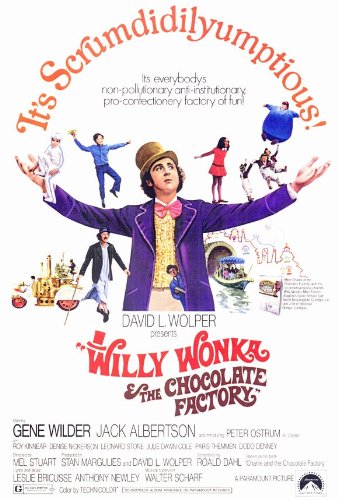
For example, British novelist Roald Dahl (1916-90) hated WILLY WONKA & THE CHOCOLATE FACTORY, though he’s credited for writing the screenplay. David Seltzer rewrote Dahl’s original script and the original author hated the changes like a different ending and the addition of musical numbers. The choice of Gene Wilder to play Willy Wonka also did not jibe with Dahl.
Stephen King famously hates Stanley Kubrick’s adaptation of THE SHINING. “I have a real problem with THE SHINING and Stanley Kubrick knew that I had a real problem with THE SHINING. I had a discussion with him beforehand. He said, ‘Stephen, Stanley Kubrick here, don’t you agree that all stories of ghosts are fundamentally optimistic?’ I said, ‘What do you mean?’ and he said ‘Well if there are ghosts it means we survive death and that’s fundamentally an optimistic view, isn’t it?’ I said, ‘Mr. Kubrick, what about Hell?’ and there’s a long pause on the telephone line and then he said in a very stiff and a very different voice, ‘I don’t believe in Hell.’ I said to myself, ‘Well, that’s fine, but some of us do and some of us believe that ghosts may survive and that may be Hell.’” King called THE SHINING “a cold film” with “striking images” and compared it to a “beautiful car that had no engine.”
Now, we get to the classic 1955 apocalyptic film noir KISS ME DEADLY directed by Robert Aldrich (1918-83) and written by screenwriter A.I. Bezzerides (1908-2007) and an uncredited Aldrich from Mickey Spillane’s 1952 novel.
Spillane (1918-2006), of course, did not find the film adaptation of his novel to be “classic.” Apparently, Bezzerides felt the same about the source material.
“I was given the Spillane book and I said, ‘This is lousy. Let me see what I can do.’ So I went to work on it. I wrote it fast because I had contempt for it. … I tell you Spillane didn’t like what I did with his book. I ran into him at a restaurant and, boy, he didn’t like me.”
Why not?
Bezzerides added espionage and the infamous nuclear suitcase (“The great whatsit”), plot details not in Spillane’s novel. On top of that, Bezzerides made detective protagonist Mike Hammer a narcissistic bully of a very high degree of creep. Hammer, played by Ralph Meeker, pushes anti-hero to its most extreme limits. For whatever reason, Nazareth’s “Hair of the Dog” comes to mind, mainly that “Now you’re messin’ with a son of a bitch” chorus.
The appropriately named Hammer makes his living (predominantly) by blackmailing adulterous husbands and wives and he’s appropriately named Hammer because he’s always dropping the hammer on somebody in his way. Assorted thugs and sordid contacts, of course, but also a coroner not wanting to part with a key and a clerk not wanting to cooperate because Hammer’s not a member. Hammer’s friends and associates also pay dearly for their association with the detective.
I love Bezzerides’ dialogue.
One thug waxes poetic, “Dames are worse than flies.”
That’s as great as “I don’t pray. Kneeling bags my nylons” from Billy Wilder’s ACE IN THE HOLE and Harry Lime’s “cuckoo clock” speech from Carol Reed’s THE THIRD MAN.
KISS ME DEADLY prepares us for what lies ahead from its very first scene and then its opening credits, both stating that it will be a film like none other. What’s that old Cole Porter song? Yes, “Anything Goes.”
First scene: A frightened young woman. Dressed only in a trench coat, and she’s also in her bare feet. She’s flagging a ride as the motor cars zip past on a highway. She’s desperate, so desperate that she finally places herself in front of the path of one of the zipping cars. That car just happens to be driven by none other than Hammer. His first line, “You almost wrecked my car! Well? Get in!”
Opening credits: They scroll backwards. All the while, we hear the cries of the frightened young woman (Cloris Leachman).
Christina Bailey, the frightened young woman, tells Hammer, “Get me to that bus stop and forget you ever saw me. If we don’t make it to the bus stop. … If we don’t, remember me.” Needless to say, Miss Bailey does not make it to the bus stop and Hammer (and by extension, we) go down the proverbial rabbit hole. All roads lead to the atomic suitcase and one helluva explosive finale.
Every film noir seems to have at least one femme fatale and KISS ME DEADLY gives us Lily Carver (Gaby Rodgers), who’s compared to Pandora and Lot by one character she guns down late in the picture. She then greets Hammer, “Kiss me, Mike. I want you to kiss me. Kiss me. The liar’s kiss that says I love you, and means something else.” She unloads on Hammer, too.
Yes, she’s arguably the most fatal of any femme.
From her profile on “The Female Villains Wiki,” “Lily often has the manner of a slightly flaky adolescent, which doesn’t seem to be all assumed for the deceptive role she’s playing in the early scenes. When her true identity and character are later revealed, it’s clear she’s one of the most black hearted, deadly female villains ever put on screen. … She kills people easily, with no ethical concerns whatever evident. She smirks after she’s done it. In the last scene in which she appears, we see she’s more than just a greedy, callous killer, very pleased with herself, she’s also a sadist.”
Lily meets her maker in one of the great cinematic deaths. There’s a shot during the apocalyptic ending in RAIDERS OF THE LOST ARK that’s a dead ringer for one in KISS ME DEADLY. Gotta love that Spielberg.
In the alternate ending, the one that was seen for many years, even Hammer goes down in flames. Nihilism and its variants have been used to describe KISS ME DEADLY many times, 639,000 in fact according to Google.
Aldrich later directed WHAT EVER HAPPENED TO BABY JANE?, THE DIRTY DOZEN, and THE LONGEST YARD, but he already outdid himself with KISS ME DEADLY.
All we need to know is that the Kefauver Commission named KISS ME DEADLY as 1955’s No. 1 menace to American youth. That would have included an 8-year-old Steven Spielberg and look how he turned out.
 Attack of the Killer Librarian