Halloween Ends? Surely, They Can’t Be Serious! They’re Not But Please Don’t Call Me Shirley!

HALLOWEEN ENDS? SURELY, THEY CAN’T BE SERIOUS! THEY’RE NOT BUT PLEASE DON’T CALL ME SHIRLEY!
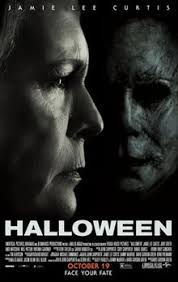
I have not yet seen Halloween Ends, the latest and 13th overall installment that has now passed Friday the 13th (12) and long passed A Nightmare on Elm Street (9), but I have watched and read a great many reviews of the film.

Based on the early returns, Halloween Ends just might go down in history as the most divisive Halloween film since 1982’s Halloween III: Season of the Witch, you know the one without Michael Myers absolutely hated for many years before it developed a cult following in recent years, like the 1985 tandem A Nightmare on Elm Street 2: Freddy’s Revenge and Friday the 13th: A New Beginning.

Currently, Halloween Ends has a 5 out of 10 score on IMDb, 39 percent on Rotten Tomatoes, and 47 percent on Metacritic.

General audiences seem to hate it even more than critics, interestingly enough for a horror film.

Google returns a 1.9 score for the film, based on 3,266 ratings with the vast majority giving it one.

Probably in the shape of an upraised middle finger.

By comparison, Season of the Witch returns a 3.3 audience rating and both Freddy’s Revenge and A New Beginning score 3.5.

They were hated back in the day, especially Season of the Witch and A New Beginning since they do not feature Michael Myers and Jason Voorhees.

You can bet the initial audience feedback on them would have read or sounded like the furor now over Halloween Ends.

The enraged are treating Halloween Ends like a betrayal of the faith and the spirit of Halloween and Michael Myers.

Seriously, could anything in Halloween Ends possibly be worse than EVIL DIES TONIGHT in Halloween Kills, the White Horse and Michael talking in Rob Zombie’s Halloween II, the white trash back story and mommy issues for Michael in Rob Zombie’s Halloween, Busta Rhymes kicking Michael’s ass in Resurrection, the Dawson’s Creek-meets-Scream flavor of H20, the Thorn cult in The Curse and The Revenge of Michael Myers, no Michael in Season of the Witch, and the revelation that Michael and Laurie are brother and sister in Halloween II?

I don’t like Season of the Witch very much at all, but it’s not because it doesn’t feature Michael Myers.

I like a lot of the ideas behind Season of the Witch, but I feel they are poorly executed.

The majority of Halloween fans seem to want just one more Halloween sequel with a Michael Myers silently stalking and slashing his way through a series of disposable teenagers and disposable adults or corpses-in-waiting for 90-95 minutes.

They could probably take or leave Laurie Strode, but it’s obvious they want more of the same and they don’t want something different when it comes to a Halloween movie.

On the other hand, I wish the Halloween series ended many, many, many years ago, but I don’t think anybody’s foolish enough at this point to believe that it’s the end for Michael Myers or Laurie Strode. The Halloween films have always seemed much smarter than Friday the 13th and even to a lesser degree A Nightmare on Elm Street, because they never featured ends or final or dead in any of their titles until Halloween Ends.

This franchise has returned more times from the dead than any other.

I didn’t want to watch Halloween Ends after Halloween 2018 and especially Halloween Kills where all the gruesome kills in the world cannot make up for some of the worst characters we’ve ever seen in a Halloween movie … even in this series. Evil might (or might not) have died tonight, it might not have since they made another movie, but my desire to watch another new Halloween film seemingly died with Halloween Kills.

I’m just so damn sick and tired of Laurie Strode and Michael Myers, whether or not they’re brother and sister or just two strangers passing in the night and no matter how many times they’ve been retconned, rebooted, and repackaged for maximum consumption.

I love the original from 1978 directed by John Carpenter and starring Donald Pleasence and Jamie Lee Curtis. It remains one of the all-time greats, absolutely essential viewing for the Halloween season.

I liked H20 when I first watched it on the big screen in 1998, but it has not aged well and it has fallen in my estimation, and Halloween II, Halloween 4: The Return of Michael Myers, Halloween 2007, and Halloween 2018 each have their moments, but the rest of the sequels that I have seen are bloody terrible.

I don’t see how Halloween Ends could possibly be any worse a movie than Season of the Witch or Halloween 5 or Halloween 6 or Resurrection.

Maybe one day soon I’ll give it a chance and find out for myself.

The Fog (1980)

THE FOG (1980) **1/2
Fog has been a critical element in many horror movies and the 1939 Hound of the Baskervilles, The Wolf Man, Frankenstein Meets the Wolf Man, and The Return of the Vampire immediately leap to mind as films made definitely better from their use of fog effects to create a foreboding atmosphere.

Edgar Allan Poe died at the age of 40 in 1849 but his writing and his influence live on forever. Is all that we see or seem / But a dream within a dream?

Ghost stories around the campfire have been around longer than The Legend of Sleepy Hollow, and I believe that’s how Washington Irving first heard about Ichabod Crane, Brom Bones, and the Headless Horseman.

John Carpenter directed, co-wrote, and scored the original Halloween in 1978, one of the great transcendent low-budget shockers with a boogeyman killer.

Carpenter’s The Fog, his first horror film after Halloween, combines the title character, a Poe quote before the opening credits, a ghost story around the campfire told by distinguished actor John Houseman, and some grisly murder set pieces that far surpass the relatively tame and nearly entirely bloodless Halloween, but I remain steadily down the middle of the road in my reaction to it.

I want to like it a lot more than I do, believe me, and maybe I will get there next time.

I liked it more during the most recent viewing of the film and I definitely understand why it’s developed a cult following and a much better reputation in recent years.

It does create quite the foreboding atmosphere at times, it bears all the trademarks of a Carpenter film with his penchant for great composition both in the sense of framing and the music present throughout, and I do like the story of this small California town celebrating their centenary with a dark secret about the founding discovered, discussed, and confronted during the film as the dead men return 100 years to the day for their revenge.

Still, all the same, it’s underwhelming.

I believe it’s mainly because I don’t particularly connect to any of the characters and thus, I don’t really care about their fates particularly all that much.

I come the closest to connecting with radio station owner and host Stevie (played by Carpenter’s former wife Adrienne Barbeau) and Father Patrick Malone (Hal Holbrook), but they’re not on the same level as Dr. Loomis and Laurie Strode in Halloween, Kurt Russell’s characters in Escape from New York and The Thing, Keith Gordon’s Arnie Cunningham in Christine, Karen Allen’s and Jeff Bridges’ characters in Starman, and Roddy Piper’s George Nada in They Live, some of Carpenter’s best characters and best films.

While it is comforting to see Carpenter regulars like Barbeau, Jamie Lee Curtis, Tom Atkins, Charles Cyphers, Nancy Kyes, and good old ‘Buck’ Flower, they’ll still all be remembered first for other characters in other Carpenter films.

We simply don’t get enough of any of the main characters.

The Fog lacks a certain something, energy perhaps first and foremost, to really take it over the top and into the stratosphere like Halloween.

All that said, The Fog still has some very good even almost great moments.

I especially like the scene when Father Malone reads four entries from his grandfather’s journal and then delivers the best line of the film, The celebration tonight is a travesty. We’re honoring murderers.

Speaking of a travesty, I watched the 2005 remake in a theater and I have to believe that it’s one of the 10 worst movies I’ve ever watched in a multiplex near you.

The Texas Chainsaw Massacre 2

THE TEXAS CHAINSAW MASSACRE 2 (1986) ***
I wanted to like The Texas Chainsaw Massacre 2 considerably more than I did, because of the way director Tobe Hooper (1943-2017) and screenwriter Kit Carson (1941-2014) mixed in satire and dark comedy with all the material that seems like a prerequisite for a sequel to only one of the most infamous movies ever made, 1974’s The Texas Chain Saw Massacre.

Unfortunately, though, leading lady Caroline Williams’ harried disc jockey Stretch — yes, even women from Texas have names that play right alongside Slim and Tex — spends a good 75 percent of her screen time screaming. Williams screams more than Fay Wray in The Most Dangerous Game and King Kong and Mystery of the Wax Museum combined, more than Jamie Lee Curtis in Halloween and The Fog and Prom Night and Terror Train and Halloween II combined, and more than all the heroines combined who have faced Jason and Freddy and Michael over the last couple decades. Williams probably wishes they paid her by the scream.

All that infernal screaming begins to bog Massacre 2 down in the middle stretches of a film that both starts and finishes rather strongly.

Massacre 2 also features a Dennis Hopper performance that rates a distant fourth behind River’s Edge, Blue Velvet, and Hoosiers in the unofficial Hopper-portrays-an-epic-burnout-not-totally-unlike-himself (though, to be fair to Hopper, his Blue Velvet character goes beyond, way beyond, the pale of the normal cinematic psychopath) in 1986 competition.

Since Hopper (1936-2010) portrays former Texas Ranger and Sally and Franklin Hardesty-Enright’s uncle Lt. Boude ‘Lefty’ Enright and Cannon Films released Massacre 2, wouldn’t it have been absolutely fantastic if Cannon action hero Chuck Norris played the ranger pursuing vigilante justice against the ripped, twisted, absolutely positively deranged (not to mention cannibalistic) Sawyer family.

Both Chainsaw movies start with narration and an opening crawl.

The original: The film which you are about to see is an account of the tragedy which befell a group of five youths, in particular Sally Hardesty and her invalid brother, Franklin. It is all the more tragic in that they were young. But, had they lived very, very long lives, they could not have expected nor would they have wished to see as much of the mad and macabre as they were to see that day. For them an idyllic summer afternoon drive became a nightmare. The events of that day were to lead to the discovery of one of the most bizarre crimes in the annals of American history, The Texas Chain Saw Massacre.

The sequel: On the afternoon of August 18, 1973, five young people in a Volkswagen van ran out of gas on a farm road in South Texas. Four of them were never seen again. The next morning the one survivor, Sally Hardesty-Enright, was picked up on a roadside, blood-caked and screaming murder. Sally said she had broken out of a window in Hell. The girl babbled a mad tale: a cannibal family in an isolated farmhouse … chainsawed fingers and bones … her brother, her friends hacked up for barbecue … chairs made of human skeletons … Then she sank into catatonia. Texas lawmen mounted a month-long manhunt, but could not locate the macabre farmhouse. They could find no killers and no victims. No facts; no crime. Officially, on the records, The Texas Chainsaw Massacre never happened. But during the last 13 years, over and over again reports of bizarre, grisly chainsaw mass-murders have persisted all across the state of Texas. The Texas Chainsaw Massacre has not stopped. It haunts Texas. It seems to have no end.

Made on an estimated $80-140,000 production budget, the original deserves such descriptive phrases as grainy and gritty. Gory, no. Disturbing, yes definitely, terrifying, for sure, with a more than macabre sense of humor, especially during the best dinner table scene this side of Tod Browning’s Freaks. I about lose it every time the family wants the 124-year-old Grandpa Sawyer to end Sally’s life with one crushing blow of a hammer and this cannibalistic codger just can’t find the strength to do it, ultimately giving Sally the opportunity for escape.

More than a decade later, Hooper wanted Massacre 2 to be a dark comedy, accentuating those elements from the original. Meanwhile, naturally, Cannon desired a finished product more along the lines of The Texas Chainsaw Massacre or at least its shocking reputation.

The finished product plays more like a compromise.

Both films are reflective of the times they were made. The original, released on the first day of October 1974, came out in the midst of Richard Nixon’s resignation speech, the Watergate scandal that brought Nixon down, the final year of the Vietnam War, the Oil Embargo 1973-74, and general discord in the land. The sequel, released on Aug. 22, 1986, gives us cannibals with ‘family values’ a few months before former Hollywood actor turned politician Ronald Reagan’s speech centered around the family unit and giddy excess in every single frame to produce a bigger but not better Texas Chainsaw Massacre.

The original has this insidious way of getting underneath our skin and dominating our thought patterns, and none of the slicker sequels, remakes or imitations even come remotely close to its power to provoke.

NOTE: The parody of The Breakfast Club earns the film’s poster four stars.

Terror Train (1980)

TERROR TRAIN.jpg

TERROR TRAIN (1980) Two stars
An above-average cast and cinematographer John Alcott’s work aboard a novel setting for a horror film distinguish TERROR TRAIN but otherwise, it’s a bumpy ride for 90-plus minutes.

TERROR TRAIN succeeds in making the sales pitch “HALLOWEEN on a train” come true.

Scream queen Jamie Lee Curtis headlined the cast and this was her fourth horror movie of a career that began with a big bang in HALLOWEEN. She appeared in three horror movies alone in the calendar year 1980: THE FOG in February followed by Canadian productions PROM NIGHT (July) and TERROR TRAIN (October). HALLOWEEN II rounded out the Curtis horror movie quintology in October 1981 and she had successfully become typecast. Curtis broke free by the end of the decade, proving herself especially adept at comedy.

HALLOWEEN was a great scary movie and Curtis’ next four ranged from the average (THE FOG, HALLOWEEN II, TERROR TRAIN) to the abysmal (PROM NIGHT). They made her Laurie Strode character in HALLOWEEN II a shell of herself from the first movie: Curtis never quite perfected her limp and it was depressing to see her in that hobbled state after being such a refreshing, resourceful character in the original. She never lost her scream, though.

Like seemingly every other slasher of the era, TERROR TRAIN starts in the past. In the original HALLOWEEN, 6-year-old Michael Myers murdered his teenage sister Judith. In FRIDAY THE 13TH, two camp counselors are murdered. In PROM NIGHT, there’s a prank gone horribly wrong. TERROR TRAIN belongs in the prank gone horribly wrong category.

Curtis plays Alana Maxwell, who reluctantly takes a central role in the sexual initiation prank against fraternity pledge Kenny (Derek MacKinnon). Kenny, of course, goes schizo almost immediately after this prank and he’s sent to a psychiatric hospital. Three years later, these same fraternity and sorority creeps host a New Year’s Eve costume party on a moving train … and they have an uninvited guest. This costume party angle affords the filmmakers another novelty: Kenny can assume the identity of every person he kills, so he can be the guy in the Groucho Marx mask or the great lizard costume and catch his next victim by complete surprise.

These fraternity and sorority characters are by and large noxious pieces of work, especially Doc (Hart Bochner) and Mo (Timothy Webber). Their inevitable deaths feel like they take forever, mainly because we have to endure more and more of their odious behavior. Then, when we get there, their deaths are letdowns compared to similar moments in other slasher films. I mean, for crying out loud, even PROM NIGHT, an otherwise awful movie, gives us a great decapitation replete with a head roll.

And now for something completely different: Slashers often found room for at least one veteran cast member. They picked Ben Johnson (1918-96) as the veteran cast member in TERROR TRAIN and he thankfully gets a more substantial role than, let’s say, Glenn Ford in HAPPY BIRTHDAY TO ME. As the conductor Carne, Johnson shows the cool of a world champion rodeo cowboy and Academy Award winning supporting actor (LAST PICTURE SHOW). In fact, he’s almost too cool in the midst of all the murder and mayhem. Overall, he’s a welcome presence.

David Copperfield (the magician, not the Charles Dickens character) makes his motion picture debut, apparently because producer Sandy Howard liked magicians. Copperfield stretches his chops by playing “The Magician,” does a routine that slows down the movie even more in the middle, and bows out none too gracefully after being an obligatory red herring.

Harry Houdini (1874-1926) made only silent movies: feature-length THE GRIM GAME, THE MAN FROM BEYOND, and HAIDANE OF THE SECRET SERVICE. Silence could have served TERROR TRAIN well.

John Alcott (1931-86) received a mention in the opening paragraph for his cinematography. His credits include the Stanley Kubrick films 2001, A CLOCKWORK ORANGE, BARRY LYNDON, and THE SHINING (released about five months before TERROR TRAIN), and I mentioned him in the review of the 1975 World War II film OVERLORD. OVERLORD seamlessly combined archival footage director Stuart Cooper found from the Imperial War Museum with contemporary footage shot by Alcott. Alcott’s challenge in TERROR TRAIN naturally centered on space and lighting, and he proved up to the challenge. You can file TERROR TRAIN in the great-looking slasher films after HALLOWEEN and MY BLOODY VALENTINE.

Ultimately, though, TERROR TRAIN succeeds at train and fails at terror.

Halloween (2018)

day1242challoween2018

HALLOWEEN (2018) Two stars
Our word for today is “retcon” or “retroactive continuity,” which means to “revise (an aspect of a fictional work) retrospectively, typically by introducing a piece of new information that imposes a different interpretation on previously described events.”

This word often gets filed alongside “Soap Opera Rapid Aging Syndrome.”

Anyway, retconning happens frequently not only in soap operas but also manga, serial dramas, movie sequels, cartoons, professional wrestling, video games, and radio series.

Retconning helps explain HALLOWEEN 2018 — the 11th HALLOWEEN movie, the 10th to feature serial slasher Michael Myers, and the third in the series to use that very same title.

HALLOWEEN 2018 pretends the eight other HALLOWEEN movies featuring Michael Myers before it never existed. As tempting as that might sound, though, especially given the appalling quality of several of those movies, HALLOWEEN 2018 complicates that by recycling plot elements from, let’s see here, HALLOWEEN II (1981) and HALLOWEEN 4, for example.

If you recall HALLOWEEN 4: THE RETURN OF MICHAEL MYERS, idiots make the mistake of transferring Michael Myers from one hospital to another. Convenient, yes. Stupid, yes. Guess it never happened, though, and so I guess we should not have recalled it.

At the end of HALLOWEEN II, Michael Myers burns up real good. For that matter, so does Dr. Loomis. Of course, they both return in HALLOWEEN 4, even if the title only made room for one. Yeah, I know, right, never happened, so let’s move past it. We shall overcome.

HALLOWEEN 2018, why it’s the third occasion for bringing back Michael Myers to multiplexes in a year that ends with ‘8,’ a magic number since John Carpenter’s classic original came out in 1978.

We had first HALLOWEEN 4 (1988) and then HALLOWEEN H20: 20 YEARS LATER, Jamie Lee Curtis’ big return highlighted by a final showdown between cinematic siblings. Well, you guessed it, in HALLOWEEN 2018, that never happened, Laurie Strode did not take on an assumed name or become the dean of a private school in Northern California or have a biological son played by Josh Hartnett. No, instead, HALLOWEEN 2018 Laurie’s a lot like what happened to Linda Hamilton’s Sarah Conner in TERMINATOR 2: JUDGMENT DAY.

I strangely remember seeing H20: 20 YEARS LATER in theaters when it came out. Apparently that never happened. That’s it, I want a refund, but wait, how can I get a refund for a movie I never saw? I feel like a relative of George Orwell should be writing this review.

And, yes, Michael’s not Laurie’s brother, since that plot twist and great big revelation late in a movie never happened in the brave new world created by HALLOWEEN 2018.

Of course, you might also remember or at least you think you remember that Michael killed Laurie early on during HALLOWEEN: RESURRECTION (2002). Well, you guessed it, that’s been retconned and never happened, even though investigators can find the infamous scene on YouTube. Might want to delete that evidence.

See, it’s real knee-slapping funny, Laurie (and we in the audience) thought she beheaded Michael in H20: 20 YEARS LATER, but we’re told in RESURRECTION that she killed a paramedic with whom her brother swapped out clothes. Oops, hate when that happens.

H20: 20 YEARS LATER, you see, it’s a retcon itself that pretended only the first two HALLOWEEN movies existed. Well, hell, guess you can just retcon a retcon if you so desire another sequel in a long assembly line of sequels.

Rob Zombie directed two HALLOWEEN movies, titled HALLOWEEN and HALLOWEEN II. Yes, all that never happened, so Zombie’s reboots are retconned.

Man, I am so confused.

In a 1984 interview, Carpenter touched on HALLOWEEN II and HALLOWEEN III. (Has this interview been retconned?)

“There are two sides to when you work in the movie business,” he said. “One is as an artist. You think of yourself as a creative person, and the other side is the business person. I let my producer’s side come out when they offered me the sequels to HALLOWEEN. They offered a nice sum of money. I also had a lot of hope for giving new directors a chance to make films as I had been given a chance with low-budget films. The directors who did 2 and 3 — Rick Rosenthal and Tommy Wallace — what they were given was a budget and in some cases a script. ‘OK, here are the rules of the game, make your movie, nobody’s going to bother you.’ It doesn’t always work.

“I thought HALLOWEEN III was excellent. I really like that film because it’s different. It has a real nice feel to it. I think he’s a talented director (Wallace). On the other hand, I think HALLOWEEN II is an abomination and a horrible movie. I was really disappointed in it. The director (Rosenthal) has gone on and done some other films and I think his career is launched now. But I don’t think he had a feel for the material. I think that’s the problem, he didn’t have a feeling for what was going on.”

Carpenter took on a role as composer, executive producer, and creative consultant for HALLOWEEN 2018.

HALLOWEEN 2018 director David Gordon Green’s career, especially his first two films, suggests that he would not exactly have a feeling for the material. It’s a long way in nearly two decades from a feature debut like GEORGE WASHINGTON to HALLOWEEN 2018, from an independent release made for $42,000 to a major release for $10-15 million.

HALLOWEEN 2018 became a huge hit, especially for a horror movie, so that must already mean a sequel’s in the works. Will they dare call it HALLOWEEN II?

That brings us kicking and screaming back to the HALLOWEEN muddle. Let’s see, HALLOWEEN 2018 pretends none of the other sequels ever happened and that would make it the second HALLOWEEN movie. Not so fast. Where oh where does HALLOWEEN III: SEASON OF THE WITCH fit in, since it ventured away from Michael, Laurie, and Loomis and exists separately other than using HALLOWEEN as part of its title? That would make HALLOWEEN III really HALLOWEEN II and HALLOWEEN 2018 really HALLOWEEN III. I’ve not been this confused since right before I threw away my Rubik’s Cube.

On a basic level, retconning means that one can just do whatever they want. It seems to reflect a fundamental contempt for the audience: We can get away with murder.

That’s basically what they do in HALLOWEEN 2018.

Just remember that you cannot spell retcon or confusion without “con.”

Halloween (1978)

day332challoween

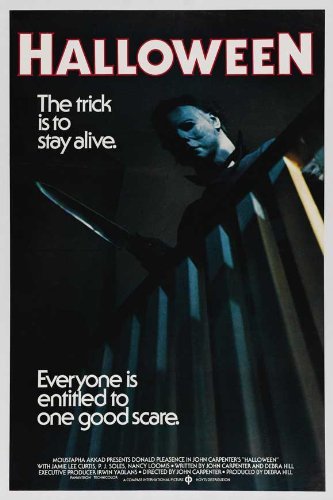
HALLOWEEN (1978) Four stars

There’s one particularly cherished moment from all the years watching HALLOWEEN.

Every time I have showed the film to friends and family, there’s one scene I patiently wait for with devilish anticipation.

I make internal bets with myself that it will work on everybody who’s seeing the movie for the first time, and it will even still work on those return viewers.

It’s a jump scare, one of the best ever filmed.

Every time, I would be taciturn leading up to this scene, not wanting to give a single thing away to my friends and family.

I wanted to see them jump, and I wanted to hear them scream.

It worked every single time.

It’s the scene where Dr. Loomis (Donald Pleasence) and Sheriff Brackett (Charles Cyphers) are discussing matters inside the old Myers house.

I won’t go any further than that.

Like the slasher films that followed, including its own many sequels, HALLOWEEN is a fun one to watch especially with several peers, but for slightly different reasons than the many, many, many followers and imitators.

First and foremost, director John Carpenter (in the words of Alfred Hitchcock) played the audience like a piano in HALLOWEEN. He’s the maestro and we love the music he’s playing, literally. The main theme in HALLOWEEN just stays with the viewer and in fact right now writing this review, I have that song playing over scenes from the first movie playing inside my head. Like other classics PSYCHO and JAWS, the music in HALLOWEEN added immeasurably to the film’s success.

Reportedly, Carpenter composed the theme in one hour, according to an interview he did for Consequence of Sound.

Carpenter discusses the movie and its music at some length on his official site: “HALLOWEEN was written in approximately 10 days by Debra Hill and myself. It was based on an idea by Irwin Yablans about a killer who stalks baby-sitters, tentatively titled ‘The Baby-sitter Murders’ until Yablans suggested that the story could take place on October 31st and HALLOWEEN might not be such a bad title for an exploitation-horror movie.

“I shot HALLOWEEN in the spring of 1978. It was my third feature and my first out-and-out horror film. I had three weeks of pre-production planning, twenty days of principle photography, and then Tommy Lee Wallace spent the rest of the spring and summer cutting the picture, assisted by Charles Bornstein and myself. I screened the final cut minus sound effects and music, for a young executive from 20th Century-Fox (I was interviewing for another possible directing job). She wasn’t scared at all. I then became determined to ‘save it with the music.’

“I had composed and performed the musical scores for my first two features, DARK STAR and ASSAULT ON PRECINCT 13, as well as many student films. I was the fastest and cheapest I could get. My major influences as a composer were Bernard Herrmann and Ennio Morricone (who I had the opportunity to work with on THE THING). Hermann’s ability to create an imposing, powerful score with limited orchestra means, using the basic sound of a particular instrument, high strings or low bass, was impressive. His score for PSYCHO, the film that inspired HALLOWEEN, was primarily all string instruments.

“With Herrmann and Morricone in mind, the scoring for HALLOWEEN began in late June at Sound Arts Studios, then a small brick building in an alley in central Los Angeles. Dan Wyman was my creative consultant. I had worked with him in 1976 on the music for ASSAULT. He programmed the synthesizers, oversaw the recording of my frequently imperfect performances, and often joined me to perform a difficult line or speed-up the seemingly never ending process of overdubbing one instrument at a time. I have to credit Dan as HALLOWEEN’s musical co-producer. His fine taste and musicianship polished up the edges of an already minimalistic, rhythm-inspired score.

“We were working in what I call the ‘double-blind’ mode in 1978, which simply means that the music was composed and performed in the studio, on the spot, without reference or synchronization to the actual picture. recently, my association with Alan Howarth has led me to a synchronized video-tape system, a sort of ‘play it to the TV’ approach. Halloween’s main title theme was the first to go down on tape. The rhythm was inspired by an exercise my father taught me on the bongos in 1961, the beating out of 5-4 time. The themes associated with Laurie (Jamie Lee Curtis) and Dr. Loomis (Donald Pleasence) now seem to be the most Herrmannesque. Finally came the stingers. Emphasizing the visual surprise, they are otherwise known as ‘the cattle prod’: short, percussive sounds placed at opportune moments to startle the audience. I’m now ashamed to admit that I recorded quite so many stingers for this one picture.

“The scoring sessions took two weeks because that’s all the budget would allow. HALLOWEEN was dubbed in late July and I finally saw the picture with an audience in the fall. My plan to ‘save it with the music’ seemed to work. About six months later I ran into the same young executive who had been with 20th Century-Fox (she was now with MGM). Now she too loved the movie and all I had done was add music. But she really was quite justified in her initial reaction.

“There is a point in making a movie when you experience the final result. For me, it’s always when I see an interlock screening of the picture with the music. All of a sudden a new voice is added to the raw, naked-without-effects-or-music footage. The movie takes on it’s final style, and it is on this that the emotional total should be judged. Someone once told me that music, or the lack of it, can make you see better. I believe it.”

HALLOWEEN, unlike its sequels and imitators, works from a minimalist base, with much fewer characters than the run-of-the-mill body count thriller for one prominent example of minimalism. HALLOWEEN gives us time with the characters, especially the three girls Laurie (Curtis), Annie (Nancy Loomis), and Lynda (P.J. Soles) and Dr. Loomis (Pleasence), and this is definitely to the film’s benefit. These characters take on a greater resonance than, for example, the gallery of grotesqueries in FRIDAY THE 13TH: A NEW BEGINNING, who only have a couple minutes of (largely) unpleasant behavior before their gruesome death scenes.

Carpenter and Hill found gold in Curtis: not only the daughter of Janet Leigh (PSYCHO) and Tony Curtis, but a great rooting interest who can be intelligent and resourceful and strong enough that we forgive her for the other moments that are standard in horror films, like (for just one example) her difficulty finding the keys with a madman bearing down on her. She’s pretty, as well, without it being overwhelming.

Annie and especially Lynda are pioneers of the Valley Girl speak, totally, and that might be one of the great sources of annoyance for anybody watching HALLOWEEN. Soles, though, is one of the more likable young actresses from that era, seen to even more effect in ROCK ‘N’ ROLL HIGH SCHOOL and STRIPES.

Likability is a key in the success of both HALLOWEEN and the first NIGHTMARE ON ELM STREET.

Dr. Loomis is the character lacking in any of the FRIDAY THE 13TH movies, for example. He’s just brilliant, brought to the life by the indelible screen presence of the late Pleasence (1919-95). His character commands our attention every time he steps onscreen and definitely every time he delivers that dialogue he keeps that attention, especially about Michael Myers and “pure evil.”

“I met him 15 years ago,” Dr. Loomis said. “I was told there was nothing left: no reason, no conscience, no understanding in even the most rudimentary sense of life or death, of good or evil, right or wrong. I met this … 6-year-old child with this blank, pale, emotionless face, and … the blackest eyes – the Devil’s eyes. I spent eight years trying to reach him, and then another seven trying to keep him locked up, because I realized that what was living behind that boy’s eyes was purely and simply … evil.”

` That’s one of the best monologues in any horror film (or any film period).

Monologues like that can sometimes bring the attached film to a halt, because we don’t want to hear this psychological jive talk recited by some hack actor at just that very moment. Please, shut the fuck up (Donnie).

For example, Simon Oakland’s jive talk late in PSYCHO drags us down a bit.

Honestly, though, I could have listened to Dr. Loomis talk all day.

Pleasence sells this dialogue with the conviction of his craft and I don’t know, I’ve always got the feeling that maybe Dr. Loomis is maybe just maybe a bit mad himself all these years working around Michael Myers.

You see this Dr. Loomis coming, and you just might head to the next city or county or perhaps country, because you know he’s trouble.

In horror films, often times authority figures do not believe the stories of teenage protagonists until it’s too late, but HALLOWEEN applies the slight twist to the formula by having authority figures question the story of another authority figure.

I love the way Carpenter and his team utilize Michael Myers in HALLOWEEN: he’s driving or standing around in the background of many early shots and combined with Dr. Loomis’ dramatic playing up of Myers in dialogue, he takes on mythic proportions. Paraphrasing from Dr. Loomis, this isn’t a man. He’s a shape, and a killing force. But we also get the sense that he’s childlike and in one of the great moments for any screen killer, Myers stands and admires his own craftmanship after one kill.

He’s far more interesting with far less back story, as the sequels beginning with HALLOWEEN II irrefutably proved.

Let’s see here, we have two great protagonists, one great killer (and one great weapon), and great music.

Seems like this is the beginning of a great horror movie.