Sequels Second to None: The Empire Strikes Back, Indiana Jones and the Temple of Doom

SEQUELS SECOND TO NONE: THE EMPIRE STRIKES BACK, INDIANA JONES AND THE TEMPLE OF DOOM

Having recently watched THE EMPIRE STRIKES BACK and INDIANA JONES AND THE TEMPLE OF DOOM for the first time in a movie theater, I have asked myself one tough question: Why are they my favorite Star Wars and Indiana Jones movies?

THE EMPIRE STRIKES BACK, the second installment in George Lucas’ space opera series eventually taken over by the fine folks at Disney, has the best direction (Irvin Kershner), best writing (courtesy Leigh Brackett and Lawrence Kasdan), best acting, best environs (the icy planet Hoth, the swampy Dagobah, and Cloud City), and the characters display their greatest emotional range and depth. Yoda, Boba Fett, and Lando are iconic additions, especially Yoda. Only the very first STAR WARS (A NEW HOPE) even approaches EMPIRE and please just forget about the prequels (REVENGE OF THE SITH by far the best of them) and the entries post-Disney takeover. It seems like the majority of STAR WARS fans agree.

Meanwhile, I seem to be in the minority who prefer TEMPLE OF DOOM over RAIDERS OF THE LOST ARK. I understand that it’s dark and disgusting, and that Kate Capshaw’s nightclub singer Willie Scott annoys the hell out of you with all that darn histrionic screaming that she does from the first reel to the very last. I grant all those points. Regardless, I prefer TEMPLE OF DOOM because it’s very dark and very disgusting, and yes, I do believe that it is one of the all-time best gross out movies. We’re talking such pleasantries as monkey brains, eels, snakes, bats, bugs, child slavery, heart removal, and bad, bad, bad men eaten by alligators. To be fair and honest, the Shanghai and Indian characters are grotesque caricatures even more disgusting than any of the creature and culinary discomforts, but then again so are the Nazis and Commies in the other Indiana Jones pictures. Understandably, though, India once banned TEMPLE OF DOOM.

TEMPLE OF DOOM does call to mind such classics as BLACK NARCISSUS, GUNGA DIN, THE STEEL HELMET (Short Round borrowed from Samuel Fuller’s 1951 Korean War picture), and THE GENERAL. Scott’s opening production number (Spielberg has long said that he’d love to do a musical and this scene and the jitterbug sequence in 1941 shows that he could make a very good even great one) clues us in on what’s exactly up the sleeves of director Steven Spielberg, screenwriters Willard Huyck and Gloria Katz, story writer Lucas, and gang. What’s that number called? “Anything Goes,” the Cole Porter standard. TEMPLE OF DOOM works because it is oversized and over-the-top like Spielberg’s earlier comedy 1941. Perhaps it is only fitting that Spielberg apparently likes 1941 and TEMPLE OF DOOM the least among his filmography. Does he recoil from their being so politically incorrect?

As far as Willie Scott goes, she epitomizes the sister or girlfriend or wife perpetually grossed out and disgusted by the shenanigans of all the boys surrounding her. I find that element fun. Yes, I do agree that Karen Allen’s Marion Ravenwood is a better match for Indiana Jones and it’s great they brought her character back for KINGDOM OF THE CRYSTAL SKULL. Scott remains more consistent throughout TEMPLE OF DOOM, though, whereas Marion switches between several modes and moods — just one of the boys, spitfire, damsel-in-distress, and wounded woman chief among them. I enjoy both characters, for different reasons. Capshaw’s performance and her character do not mar TEMPLE OF DOOM for me.

It’s been said numerous times before that Lucas endured a divorce around the time of the making of TEMPLE OF DOOM and that seeped into the movie — in the overall tone but specifically the Willie Scott character and the heart removal. Spielberg, two years after his divorce from actress Amy Irving, married Capshaw and they have been together nearly three decades.

It also must be said TEMPLE OF DOOM was my first Indiana Jones movie, because it was the only VHS tape she kept from a mid-1980s Christmas present from her children. Between that and her later acquisition, THE ADVENTURES OF ROBIN HOOD, I must have thrilled on them 100 times. Maybe nostalgia and sentimentality for old movies, even older movies, grand adventure, brassy dames from the Midwest, and politically incorrect characters and gross out gags animates my overall affection for TEMPLE OF DOOM. (I watched RAIDERS OF THE LOST ARK at the drive-in a couple weeks before TEMPLE OF DOOM. I passed on THE LAST CRUSADE for THE EMPIRE STRIKES BACK.)

As I watched THE EMPIRE STRIKES BACK in the Fort Cinema in the town where I attended high school and the first couple years of college, I periodically momentarily flashed back on how I must have first felt watching the movie some more than 35 years ago in the even smaller Southeast Kansas town Arcadia. I felt that way again, despite having seen EMPIRE 30-40-50 times.

Just one nagging thought occasionally spoiled the mood: We were not seeing the original theatrical version of EMPIRE, rather we had one of them dang blasted Special Editions that genius George Lucas masterminded in the mid-’90s for theatrical and home video release circa 1997 where he touched up some of the old school special effects and made some cringe-worthy insertions that will be mocked until the end of time. Lucas has sadly tinkered with A NEW HOPE, EMPIRE, and RETURN OF THE JEDI even more since then, until I think we fans have to ask him, “Why, George, why?” Some outraged STAR WARS fans have gone as far to proclaim “George Lucas Raped My Childhood.” (I do have both VHS and DVD copies of the original theatrical version of EMPIRE.)

Fortunately, I feel that Lucas has mangled EMPIRE considerably less than both A NEW HOPE and RETURN, which alone points to it being the best entry in the entire series. The uncanny valley effect: “An eerie feeling of unfamiliarity people get while observing or interacting with robots that resemble humans almost but not quite perfectly.” I believe we can add the “Star Wars Special Edition” corollary, as well as separate corollaries for both the prequels and the Disney Star Wars, to the uncanny valley effect. George, you should have just kept your ILM CGI magic in the prequels.

As EMPIRE played out more and more and we got deeper into the plot, though, any thoughts about Lucas, Special Edition, cringe-worthy insertions, etc., faded away and I became swept up in the spectacle more than ever before, because it was up there on the big screen for the first time. I felt wonderment and exhilaration, as well as the broader spectrum of emotions that other STAR WARS movies usually do not reach.

THE EMPIRE STRIKES BACK ****; INDIANA JONES AND THE TEMPLE OF DOOM ***1/2

Message from Space (1978)

MESSAGE FROM SPACE

MESSAGE FROM SPACE (1978) *

It took two tries to make it all the way through Kinji Fukasaku’s MESSAGE FROM SPACE, one of the first of many STAR WARS rip-offs that only make you appreciate more what George Lucas and gang did in their movies.

How does MESSAGE FROM SPACE rip off STAR WARS? Let us count the ways. A soap, er, space opera, characters named Meia and Hans, a robot, interplanetary strife and destruction, aerial dogfights in space, laser beams, and a musical score by Kenichiro Morioka that should have been enough for grounds for a lawsuit from 20th Century Fox, John Williams, and the London Symphony Orchestra.

I struggled through MESSAGE FROM SPACE and it was a real cinematic endurance contest to get through its 105 minutes. I only made it through about 30 minutes the first try.

At one point in time, I thought about cutting MESSAGE FROM SPACE a little slack for its often lousy special effects, until I read that MESSAGE FROM SPACE cost $5-6 million. Okay, that’s about half of what 20th Century Fox spent on STAR WARS the previous year, but the budget for MESSAGE FROM SPACE apparently established a record (long since broken, of course) for largest budget for a Japanese movie. There went the slack, she be gone.

Vic Morrow (1929-82) sadly found himself at that stage in his career when he appeared in awful movies like HUMANOIDS FROM THE DEEP, GREAT WHITE, and MESSAGE FROM SPACE. Work is work is work, right? In MESSAGE FROM SPACE, Morrow plays a character named General Garuda and receives top billing in the cast above Sonny Chiba. Garuda Indonesia is the airline of Indonesia. Morrow seems to be drinking in every scene and if you had to act with an imitation R2-D2 named Beba, you’d be a full-blown alcoholic too.

This is one of those films not exactly helped out by a bad dubbing job.

I am normally one equipped with more empathy and enthusiasm than the average cinematic pleasure seeker for movies like MESSAGE FROM SPACE. I mean, for crying out loud, I have given four stars to INFRA-MAN, DRUNKEN MASTER, and PLAN 9 FROM OUTER SPACE, three incredibly ridiculous movies that immediately came to mind.

I just found scant pleasure to be experienced from MESSAGE FROM SPACE.

Hard to believe, right, when MESSAGE FROM SPACE features eight Liabe seeds. They resemble walnuts, glowing, magical walnuts that are the unifying plot device; bet Nuts.com would do killer business with a MESSAGE FROM SPACE remake. Rather than The Force, MESSAGE FROM SPACE only manages doze nuts. Bad joke, I know right, but the bad movie made me do it. I promise, I promise, I would never write anything like that otherwise.

More American Graffiti (1979)

MORE AMERICAN GRAFFITI

MORE AMERICAN GRAFFITI (1979) *

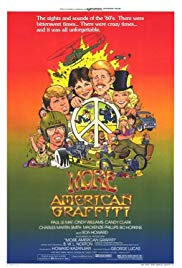
I missed the point of MORE AMERICAN GRAFFITI, the 1979 sequel to George Lucas’ highly influential smash hit from 1973, AMERICAN GRAFFITI.

Sure, I realize we are intended to catch up with John Milner (Paul LeMat), Steve and Laurie Bolander (Ron Howard and Cindy Williams), Debbie Dunham (Candy Clark), Carol “Rainbow” Morrison (Mackenzie Phillips), and Terry “The Toad” Fields (Charles Martin Smith) at different points in the 1960s, but I don’t know if the film had any other greater purpose than attempting to cash in on the AMERICAN GRAFFITI name for another box office bonanza.

You’re right: Richard Dreyfuss and Curt Henderson did not return for the sequel. He’s only the main character in AMERICAN GRAFFITI, for crying out loud. Just like there’s no Dreyfuss and Matt Hooper in JAWS 2. Like his friend Steven Spielberg did not direct JAWS 2, Lucas does not direct MORE AMERICAN GRAFFITI. Unlike Spielberg, though, Lucas had far more involvement with the AMERICAN GRAFFITI sequel, including editing duties.

We have Milner on New Year’s Eve 1964, The Toad in Vietnam on New Year’s Eve 1965, Debbie in San Francisco on New Year’s Eve 1966, and Steve and Laurie on New Year’s Eve 1967.

We shuffle between the four different New Year’s Eve days and director and screenwriter Bill L. Norton gussies up the 1965 and 1966 scenes with grainy newsreel style footage (1965) and split screen (1966). That helps us identify which year we’re seeing, for sure, but otherwise, both gimmicks do not work. Especially the split screen, a technique already overplayed after WOODSTOCK and Brian DePalma films like CARRIE. In MORE AMERICAN GRAFFITI, split screen takes away from every scene it’s used.

The original AMERICAN GRAFFITI focused on a single long day in 1962 and that made the parallel adventures of Curt, Milner, The Toad, and Steve much easier to follow and less distracting. Automobiles cruising the main drag and car radios playing Wolfman Jack’s radio show unified just about every scene.

AMERICAN GRAFFITI also proved to have a theme: It showed Curt, Milner, and The Toad all outside their comfort zones and getting to know somebody beyond their accustomed social circle: intellectual and future college boy Curt and the tough guy car club the Pharaohs, the James Dean “Rebel Without a Cause” Milner and a young teenage girl dumped off on him by her older sister and older friends, and the geeky and socially awkward Toad and the blonde bombshell Debbie. They all form a greater understanding of each other.

Lucas did not get across the theme in a pretentious, heavy-handed, preachy way. Just about every scene in AMERICAN GRAFFITI worked on some level, and it especially seemed incredibly accurate about what life was like in 1962.

Meanwhile, in MORE AMERICAN GRAFFITI, hardly any scenes work and the film never builds up any momentum. It seems to mark off the list of every cliche of the era and maybe it just feels that way even more after one million ‘60s nostalgia trips. MORE AMERICAN GRAFFITI plays like a Time Life movie.

MORE AMERICAN GRAFFITI loses steam early on when Debbie and her loser man friend Lance Harris (John Lansing) are pulled over and he’s busted for just a little joint by Officer Bob Falfa (gratuitous Harrison Ford cameo appearance) after a chase that feels like it takes forever … and that’s immediately followed by Steve and Laurie playing the Bickersons.

Considering how little works in MORE AMERICAN GRAFFITI, it’s even greater insult to injury when the final shot teases us with the death of a main character.

National Lampoon’s Animal House (1978)

NATIONAL LAMPOON’S ANIMAL HOUSE (1978) Four stars

There are few comedies I have enjoyed as much as NATIONAL LAMPOON’S ANIMAL HOUSE.

I have watched it many times over the years and that’s not even counting all those times on TBS, because, let’s face it, one misses so many “good parts” of a movie like ANIMAL HOUSE when it’s been edited for TV. It warped my fragile little mind seeing it on video the first time and I lost count of how many times I watched that VHS tape I bought circa 1997.

I loaned it to Brad Rich so he could watch Bluto’s infamous “Germans bombed Pearl Harbor” speech and remember it verbatim for his high school speech class. Mr. Rich earned an ‘A’ for his performance. Unfortunately, I did not have the opportunity to watch him act it out, though, fortunately, Mr. Rich returned the VHS tape. Bonus points for him.

College friend Don Stephens came over to my house about once a week to watch ANIMAL HOUSE it seemed like after Mr. Stephens joined a fraternity at Pittsburg State. Mr. Stephens and I started living ANIMAL HOUSE just a little bit so the viewings of the movie decreased significantly, especially after I continued my educational career in 2000 at Pitt State. Mr. Stephens eventually returned to the ranks of the independents and I remained one throughout both tours of college.

There was that one night when Mr. Stephens played Otter and I was Boon: “Hi, Don Stephens, damn glad to meet you,” then I hit ‘em with “Hi, that was Don Stephens, he was damn glad to meet you.” We only used it that one night, especially since it seemed like nobody got the reference. That’s when I started losing faith in the youth of America and have ever since.

Another time, Mr. Stephens and I went on a Thanksgiving break pilgrimage to Wichita to meet two young women (sisters) and, ahem, spend the night at their house. At some point, I believe it was early on at the bar, my date said that I was just like that Bluto guy from ANIMAL HOUSE, since I told her I’d been in college seven years. You win some, you lose some, and another time I’ll tell you about the six years off-and-on I knew my date from Wichita, although, to be honest, I really don’t want to do that.

Enough about that: ANIMAL HOUSE made a tremendous impact on the movie industry.

Every year, we get at least one raunchy, R-rated, gross out comedy.

ANIMAL HOUSE paved the parade route for PORKY’S, FAST TIMES AT RIDGEMONT HIGH, DAZED AND CONFUSED, AMERICAN PIE, OLD SCHOOL, WEDDING CRASHERS, and HANGOVER.

Every time I watch ANIMAL HOUSE, it holds up and it remains better than its followers.

First and foremost, it is superbly acted up and down the cast.

Tom Hulce and Stephen Furst (1954-2017) make a successful entry point into this world, as one snooty sorority sister calls them “the wimp and the blimp.” Tim Matheson and Peter Riegert play off each other so well as ladies man Otter and wing man Boon that we believe their characters have been friends for several years. James Daughton and Mark Metcalf, especially Metcalf as Niedermeyer, create thoroughly detestable characters that we love to hate.

Speaking of characters that we love to hate, Canadian actor John Vernon (1932-2005) had a knack for playing them better than just about anybody else. We enjoy every single appearance made by his Dean Wormer in ANIMAL HOUSE, every single time he gets his comeuppance, and especially every single time Vernon sinks his teeth into lines like “Fat, drunk, and stupid is no way to go through life, son” and “Put a sock in it, boy, or else you’ll be outta here like shit through a goose.” Vernon later played a similar character in KILLER KLOWNS FROM OUTER SPACE, retaining that bias against college kids.

John Belushi (1949-82) exploded into stardom with the success of ANIMAL HOUSE, one of the biggest hits of 1978. Outside action heroes Clint Eastwood, Charles Bronson, and Steve McQueen, we don’t find star-making performances built around fewer words. Belushi’s Bluto makes us laugh mostly through classic physical comedy and he irritates the comic villains every bit as effectively as the Marx Brothers and the Three Stooges did in their heyday.

Bluto definitely puts the animal in ANIMAL HOUSE, smashing acoustic guitars, downing full whiskey bottles in one fell swig (actually iced tea), pouring mustard on himself, starting food fights (by popping “zits”) and nationwide dance crazes, and peeping at cute coeds. Bluto’s predominantly silent act pays off with his big speech late in the pic for the Delta troops. It’s not quite George C. Scott as George S. Patton at the start of PATTON, but it’s close, real close in memorability.

Bluto has been described as a cross between Harpo Marx and the Cookie Monster.

Just about everybody has a memorable character in ANIMAL HOUSE, from Kevin Bacon in his motion picture debut (“Thank you sir, may I have another?”; how dare I forget a softball practice where I made every teammate who wanted another grounder hit their way ask that very question) to the lovely Karen Allen also in her debut, as well as Verna Bloom (1938-2019) as the ready and willing dean’s wife, Donald Sutherland as a hip professor, and DeWayne Jessie lip syncing his way through Otis Day on “Shout” and “Shama Lama Ding Dong.”

John Landis began a string of winners here, followed by THE BLUES BROTHERS, AN AMERICAN WEREWOLF IN LONDON, and TRADING PLACES over a few years. Universal wanted Chevy Chase to play the Otter role that went to Matheson, but Landis felt Chase was not right for the part and the director played a little Jedi mind trick by telling Chase that ANIMAL HOUSE would be an ensemble pic. That disinterested Chase, who instead made FOUL PLAY. Landis contributed to the anarchic atmosphere of ANIMAL HOUSE by throwing things at the actors, like an early scene when Bluto leads Flounder and Pinto into the Delta house and they’re greeted by a couple flying bottles.

Harold Ramis (1944-2014), Chris Miller, and Douglas Kenney (1946-80) combined on the screenplay and contributed their own collegiate and fraternal experiences.

George Lucas’ AMERICAN GRAFFITI famously asks “Where were you in ‘62?” ANIMAL HOUSE, released almost five years later to the day by the same studio, also takes place in ‘62 and Lucas, Ramis, Miller, and Kenney obviously had different answers to where they were in ‘62 and these different answers inform their respective movies and characters.

Both smash hit movies inform us what happened to their main characters. For example, in AMERICAN GRAFFITI, we’re told Terry the Toad is reported missing in action in Vietnam in December 1965. Meanwhile, in ANIMAL HOUSE, we read that Neidermeyer’s own troops kill him in Vietnam. Yes, indeed, they fragged Neidermeyer. Maybe even Terry the Toad took part in it.

The Wizard of Oz (1939)

THE WIZARD OF OZ

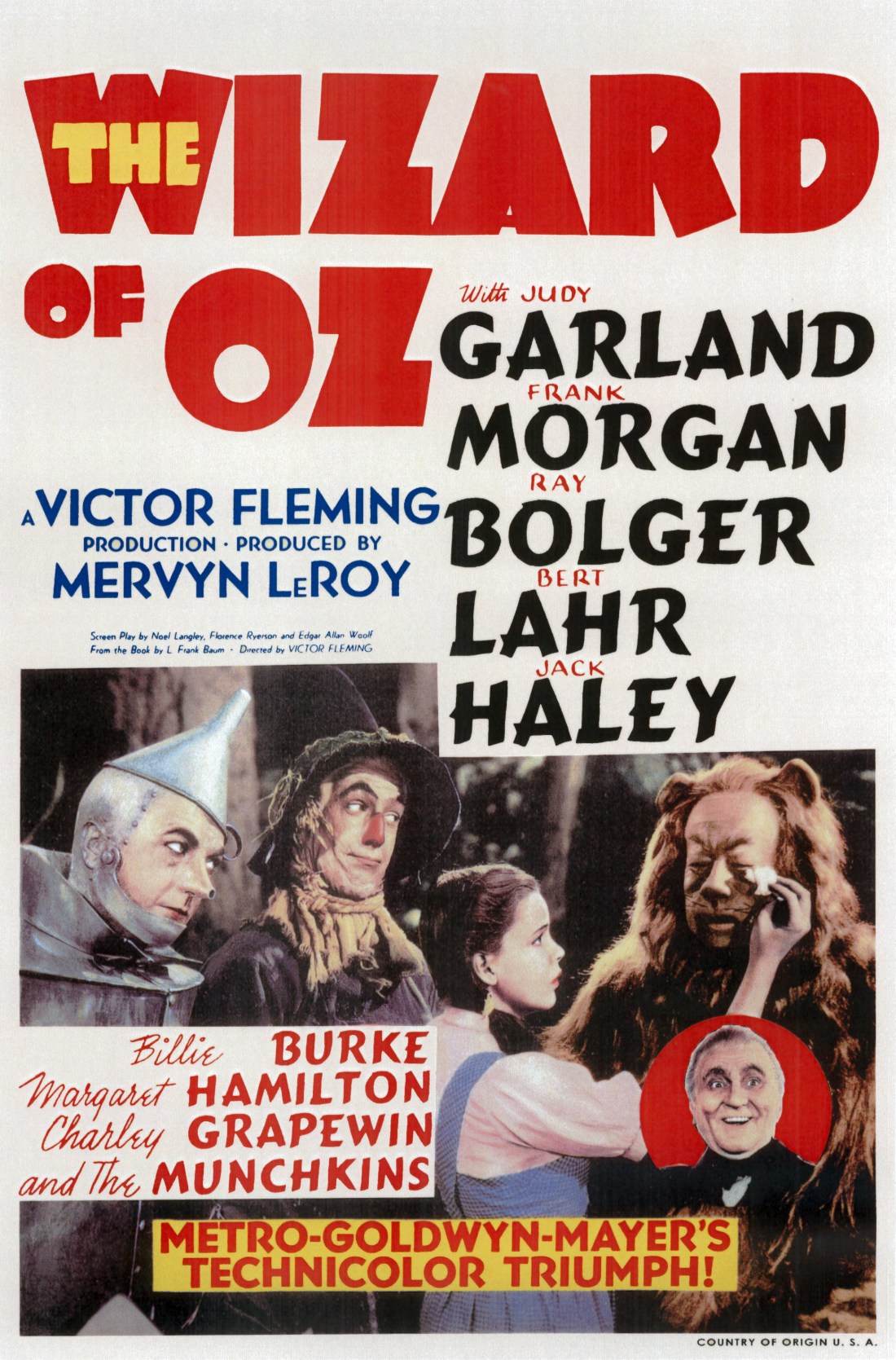
THE WIZARD OF OZ (1939) Four stars

I watched THE WIZARD OF OZ for the first time since my Grandma died and the experience naturally brought on a lot of precious memories.

After all, I watched THE WIZARD OF OZ for the first (and second and third …) time at my Grandma’s house. She loved the movie and every now and then, she also talked about how many times she went to the movies to watch GONE WITH THE WIND. It was several, and I can remember hearing the delight in her voice just talking about it. She turned 10 years old in 1939, one of Hollywood’s hallowed years with MGM productions THE WIZARD OF OZ and GONE WITH THE WIND headlining. GONE WITH THE WIND was the TITANIC of its day, but a 4-hour historical soap opera did not enter my priority list until college. I watched THE WIZARD OF OZ a good dozen times before I got through GONE WITH THE WIND even once.

It was the CBS broadcast of THE WIZARD OF OZ that we watched together and the first time I can remember it I must have been 8 years old. Like IT’S A WONDERFUL LIFE, THE WIZARD OF OZ became an annual TV event for generations of Americans. I first watched IT’S A WONDERFUL LIFE at my Grandma’s house and it assumed the position of a holiday tradition for many years. I want to say that IT’S A WONDERFUL LIFE played on the local NBC affiliate.

Seeing THE WIZARD OF OZ for the 20th or 30th or 40th or 50th time (I lost track) in my life before this review, I found myself singing the songs, yes, every single line of every single darn song, but the most pleasure I experienced came from imitating the Wicked Witch of the West (Margaret Hamilton). I mean, I doubt that anybody who’s ever watched THE WIZARD OF OZ can resist imitating her voice on the all-time classic line “I’ll get you, my little pretty, and your little dog, too.” Hamilton virtually steals the movie and she’s so much more fun than that darn Glinda the Good Witch (Billie Burke), whose goodness decreases over time.

The Wicked Witch finished in fourth place on the American Film Institute’s top 50 villains list (2003), behind Hannibal Lecter, Norman Bates, and Darth Vader and ahead of Nurse Ratched, Mr. Potter, Alex Forrest, Phyllis Dietrichson, Regan MacNeil (when possessed), and the Evil Queen in the top 10.

Ironically enough, Hamilton served as a school teacher before her acting career. She became known for terrifying children … but she retained a lifelong commitment to education.

I wish I could have met Hamilton (1902-85).

“Almost always they want me to laugh like the Witch,” she said. “And sometimes when I go to schools, if we’re in an auditorium, I’ll do it. And there’s always a funny reaction, like they wish they hadn’t asked. They’re scared. They’re really scared for a second. Even adolescents. I guess for a minute they get the feeling they got when they watched the picture. They like to hear it but they don’t like to hear it. And then they go, ‘Oh…’ The picture made a terrible impression of some kind on them, sometimes a ghastly impression, but most of them got over it, I guess. … Because when I talk like the Witch and when I laugh, there is a hesitation, and then they clap. They’re clapping at hearing the sound again.”

THE WIZARD OF OZ served as many people’s introduction to scary movies. (Throw in classic Disney films SNOW WHITE and PINOCCHIO, as well, both of which I remember first watching during roughly the same period as when I first watched THE WIZARD OF OZ.)

Not only the Wicked Witch, but also somebody wanting to take your pet away, running away from home, a tornado, them flying monkeys, et cetera, they’re all terrifying, especially to a small child watching it for the first time. (Please consider the film left out the most gruesome details from the L. Frank Baum source material.)

THE WIZARD OF OZ shows us how much fun it can be to be scared.

That’s just one way the film reaches us.

Hamilton herself talked about its seemingly everlasting appeal.

“THE WIZARD OF OZ keeps coming back every year,” she said, “because it’s such a beautiful film. I don’t think any of us knew how lovely it was at first. But, after a while, we all began to feel it coming together and knew we had something. I can watch it again and again and remember wonderful Judy, Bert, Ray, Jack, Billie, Frank and how wonderful they all were. The scene that always gets to me, though, and I think it’s one of the most appealing scenes I’ve ever seen, is the one where the Wizard gives the gifts to them at the end. Frank (Morgan) was just like that as a person. And every time I see him do it, the tears come to my eyes. I listen to the words. I think of Frank, and I know how much he meant what he said, and how much the words themselves mean.”

I devoted much space to Hamilton and the Wicked Witch, but there are at least six more beloved characters and performers: Dorothy Gale (Judy Garland, 1922-69), the Scarecrow (Ray Bolger, 1904-87), the Tin Man (Jack Haley, 1898-1979), the Cowardly Lion (Bert Lahr, 1895-1967), Toto (Terry, 1933-45), and the Wizard (Frank Morgan, 1890-1949). They go a long way toward making THE WIZARD OF OZ a classic that will persevere down the ages.

On this latest go-around, I again noticed how much of an influence WIZARD OF OZ had on George Lucas when he made STAR WARS.

THE WIZARD OF OZ grabs us early on, precisely at the moment when Garland begins singing “Over the Rainbow,” and it just builds and builds for the next 90-odd minutes.

Eighty years after it premiered (Aug. 25, 1939), I now have one more reason to watch it moving forward. Grandma, it felt like you were right there with me.

The Star Wars Holiday Special (1978)

day 71, star wars holiday special

THE STAR WARS HOLIDAY SPECIAL (1978) No stars
Movies, oops, TV specials based on movies, like “The Star Wars Holiday Special” are when yours truly wishes that he owned a stunt reviewer or had an evil twin movie reviewer, yes, an evil movie reviewer.

I first watched “The Star Wars Holiday Special” during the same week as LEONARD PART 6 and it’s amazing, it’s stupendous that anything competes with LEONARD PART 6 for sheer gut-wrenching awfulness. Sure enough, I saw two of the most awful pieces of celluloid within a short time of each other. I survived and now I am here to put together my story. Let me just say that you are not a true STAR WARS fan until you see “The Holiday Special,” which I rate at the bottom of the barrel. That’s an insult to the bottom and to the barrel.

Where does this review start? Where does it end? Why didn’t they dub in the laugh track?

First and foremost, please look at the cast for “The Star Wars Holiday Special.”

I seriously doubt kiddos in 1978 wanted codgers like Beatrice (her friends just called her “Bea”) Arthur and Art Carney anywhere near Han Solo, Luke Skywalker, Princess Leia, Chewbacca, and Darth Vader.

One bad idea right after the next flies right past our systems. No, wait, I am practicing the fine art of understatement when I say bad idea.

The first bad idea would be centering the action so to speak on Chewbacca’s family unit. Yeah, I know what you’re thinking. That’s absolutely unbelievable.

Granted, I am somebody who desired Chewbacca being a Hollywood leading man and paired with all them blazing beauty starlets like Kate Hudson, Katherine Heigl, and Jennifer Lopez in all them lovey dovey romances. Sorry, I am behind the times in romantic comedies and their beautiful people.

Anyway, we get Chewbacca’s wife Malla, his son Lumpy, and old man Itchy, who should have been named “Icky.”

Back to the bad ideas.

Malla watches an intergalactic cooking program with a cook based on Julia Child played by Harvey Korman, not Harvey Keitel, in drag.

Diahann Carroll shows up as an intergalactic and holographic sex fantasy of a dirty old wookie and sings a song for all our troubles. She doesn’t solve them, she makes them even worse.

Yes, Bea Arthur owned the intergalactic famous Cantina we saw in STAR WARS and of course, she sings a song.

Dagnammit, everybody, well, almost everybody gets a song.

We see intergalactic famous bounty hunter extraordinaire Boba Fett in cartoon form and we laugh every time he tells our protagonists that he’s a friend of Luke and Han and the droids. Boba Fett sounds like Mr. Rogers. Let’s see, Boba Fett died a crap death in RETURN OF THE JEDI and he made a crap entrance in “The Holiday Special,” but hey, at least, he made for a great action figure.

Jefferson Starship, a holographic facsimile of a rock band in the infant stages of dinosaurism, plays us an old-fashioned love song or perhaps not and they are not yet Starship, who knocked down a city with adult contemporary schlock rock and sang the love theme from MANNEQUIN that stopped Andrew McCarthy’s career.

“The Star Wars Holiday Special … brought to you by the Force or 20th Century Fox.” It premiered November 17, 1978 on CBS to much bewilderment.

George Lucas was not a big fan. Here’s Mr. Lucas from a 2005 interview:

“The special from 1978 really didn’t have much to do with us, you know. I can’t remember what network it was on, but it was a thing that they did. We kind of let them do it. It was done by … I can’t even remember who the group was, but they were variety TV guys. We let them use the characters and stuff and that probably wasn’t the smartest thing to do, but you learn from those experiences.”

If you’re seeking out “The Star Wars Holiday Special,” you will have to do it on YouTube. That’s how I came across my dubbed copy several years back. Folks, a.k.a. preservationists, found their original videotape recordings from November 17, 1978 and made copies, so what you see today started as second- to sixth-generation VHS dubs. Some copies have the original commercials and news breaks.

Apparently, at one point in time, Lucas said that he wished he could take a sledgehammer and smash every single copy of “The Holiday Special” in existence.

Out there in this cold, mean world, you will see “George Lucas Ruined My Childhood,” “Georce Lucas Wrecked My Childhood,” and even “George Lucas Raped My Childhood.”

Would those people look more favorably upon Lucas if he indeed smashed every copy of “The Holiday Special”?

Dammit, George, you’re not smashing mine, though.