B.I.G. (Bert I. Gordon) Double Feature: The Food of the Gods (1976) & Empire of the Ants (1977)


B.I.G. (BERT I. GORDON) DOUBLE FEATURE: THE FOOD OF THE GODS (1976) & EMPIRE OF THE ANTS (1977)

Killer giant rat films (giant killer rat films) do not populate the landscape as much as bad romantic comedies, bad teenage sex comedies, et cetera, do. They only come along every few years and it’s amazing we’ve not seen more in the aftermath of hipster environmentalism.

THE FOOD OF THE GODS is a bad film. A really, really, really bad film. Not a “so bad it’s good” film, just a plain bad film of epic proportions. There’s absolutely no suspense and there’s no entertainment from watching this incompetent film directed by one Bert I. Gordon, main creative force of the companion piece EMPIRE OF THE ANTS, yet another bio-kill film loosely based on a classic H.G. Wells novel. EMPIRE OF THE ANTS stars Joan Collins. Imagine the possibilities of a horror film where characters battle Joan Collins’ ego.

Bio-kill films came out seemingly by the hundreds after JAWS. We had mutant frogs, worms, ants, wasps, and killer bees. The animal kingdom — led by insects — will make us human scum pay for our transgressions against the ecosystem. See, we’ve screwed around with Mother Nature long enough and now Mother Nature will screw us.

Fond memories of THE KILLER SHREWS (1959) came back during THE FOOD OF THE GODS. Yes, the vicious killer rats in THE FOOD OF THE GODS look a whole helluva lot batter than whatever passed for imitation vicious killer rats in THE KILLER SHREWS (coon dogs, I do believe) yet that’s missing the point completely. THE KILLER SHREWS proves a campy good time and THE FOOD OF THE GODS feels more like a soulless mechanical assembly line production.

For example, there’s no mad scientist talk in THE FOOD OF THE GODS. Baruch Lumet and Gordon McClendon provided that during THE KILLER SHREWS and it reminded me of classic 1930s horror films like BRIDE OF FRANKENSTEIN and THE DEVIL-DOLL.

Ralph Meeker shows up in THE FOOD OF THE GODS as a mad capitalist named Bensington and mad capitalists are bad substitutes for mad scientists. There’s precious little energy and precious little joy in THE FOOD OF THE GODS. Had the Skinners’ animals been fed the script, we’d have never had THE FOOD OF THE GODS because a single morsel of the script would have poisoned every farm animal on the prerequisite remote island. They’d especially gag on the line Pamela Franklin throws Marjoe Gortner’s character about she’d like to make love to him, a crazy notion since they’re surrounded by giant killer rats. Coitus interruptus by rattus enormous!

Meeker and Ida Lupino are devoured by these giant killer rats. Not sure this is what they mean by paying one’s dues in the earlier stages of a career so one can later be devoured in a bad, bad, bad film.

Meeker (1920-88) had major roles in THE NAKED SPUR, KISS ME DEADLY, and PATHS OF GLORY, three brilliant films made in the 1950s.

Lupino, who appeared in the awful THE DEVIL’S RAIN just before THE FOOD OF THE GODS, directed eight films (including THE HITCH-HIKER) and seven of them from 1949 through 1953. She was ahead of her time.

Lupino and Meeker join icons like Ray Milland (killed in FROGS) and Kevin McCarthy and Keenan Wynn (killed in PIRANHA), for example.

Belinda Balaski survived THE FOOD OF THE GODS, but she did not PIRANHA and THE HOWLING, for those keeping score at home.

Notice how I did not yet mention the plot of THE FOOD OF THE GODS. That’s because the plot construction will immediately remind movie veterans of THE KILLER SHREWS, THE BIRDS, and NIGHT OF THE LIVING DEAD, all three better films with better plots.

The giant rats are not bad special effects, but they’re not the least bit scary. Winston Smith loved himself some rats in 1984 and we fill in the scenes with our imaginations rather than seeing Orwell’s illustrations of rats on the written page.

That said, there’s some really, really, really bad special effect sequences in THE FOOD OF THE GODS, as the gigantic killer wasps are every bit as scary as the killer bees in THE SWARM and the killer flies in AMITYVILLE 3-D. There’s some mutant chickens who provide us bad laughs.

Some day we’ll see a film with giant mutant killer film critics. We’ll be headed first after M. Night Shyamalan, as revenge for enduring his LADY IN THE WATER and his other bad, bad, bad movies.

The first sensible question posed by any reader might be, “Why do you review so many old movies?” A sensible question deserves a sensible answer.

Just because they are “old” plays, do we give up serious discussion of Shakespeare, for example? Do intellectuals give up on Marx and Socrates and Plato and the like just because they never had a Facebook account let alone have a place on the Hollywood Walk of Fame?

So “old” movies have a lot of catching up to do to other mediums.

Just a year after THE FOOD OF THE GODS, Mr. B.I.G. himself, Bert I. Gordon, came back with THE EMPIRE OF THE ANTS, another bio-kill movie loosely based on H.G. Wells.

EMPIRE OF THE ANTS opens with a ponderous voice-over narration that’s written like a combination of Rodney Dangerfield, Rickey Henderson, and Adolf Hitler. Our narration, obviously under ant control, lays it down that ants get no respect and it’s about time we stupid humans admit our genetic inferiority in the face of the superior ant race. It’s about time we stupid humans serve the superior ant race and we best “Treat it with respect” or there will be ecological hell to pay for us stupid, egotistical humans.

Once again, a post-JAWS horror film gives us an evil real estate developer. If there’s one horror film with an evil real estate developer, there are at least a hundred. However, evil real estate developers rarely take the shapely (and developed) form of Joan Collins. Of course, she’s a real mean bitch — potential audition tape for both THE BITCH and “Dynasty” — and she’s obsessed with the Bottom Line like all business people in bio-kill movies. Unfortunately, for us and coincidentally for her, the sight of her perfectly coiffed hair strikes more fear in the heart of the audience than the ants.

These are not the average garden variety ants. They are the brand of ant who had the great misfortune of being in a killer ant picture 23 years after the 1954 science fiction classic THEM! We do see a classic movie formula in action in EMPIRE OF THE ANTS: Barrels Labelled Danger: Radioactive Waste + Evil Real Estate Person = Giant Killer Ants. Extremely slow moving giant killer ants who laboriously pick off their victims as if the exposition scenes are not already bad enough.

Back to Joan Collins. Disaster movies of the era recruited fading stars for their casts. It must be some measure of the intrinsic artistic value of EMPIRE OF THE ANTS that it wound up with Joan Collins as its marquee attraction. For crying out loud, even FOOD OF THE GODS included Ralph Meeker and Ida Lupino.

A film like EMPIRE OF THE ANTS entertains idle thoughts. Lots and lots and lots of idle thoughts.

I started taking incriminating notes on the guilty parties of the opening credits and I came across this familiar name (and bod): Pamela Shoop. My internal movie database flashed back on a Pamela Susan Shoop from HALLOWEEN II (1981) and after some intense cross-referencing, it turned out this would be the same actress. She fared better as Pamela Shoop because the addition of Susan earned her a sweet nude scene before decapitation by Michael Myers. In EMPIRE OF THE ANTS, Shoop lives through a slime ball creep’s failed seduction and survives her attack by phony looking giant killer ants. Don’t forget radioactive.

After the basic expository set-up, the ants finally attack and establish a basic scene pattern, which I have reduced to (not in this exact order) BLOOD and SCREAMS and RUNNING and BLOOD and RUNNING and SCREAMS and PADDLING and SCREAMS and PADDLING and PADDLING and BLOOD and SCREAMS. I may have forgotten an extra RUNNING.

We get extra special treats like repeat ant’s eye view shots as they zero in on stock monster movie characters. Victims who just stand there and watch and scream. A victim who falls over what appears to be a single branch and just waits for her death. Of course, nobody brought any weapons to a picnic and outing sponsored by a friendly local evil real estate developer. There’s no guns, no knives, no machine guns, and, most importantly, no flamethrowers ‘cause, guess what, these ants hate fire. Of course.

Just imagine Devo in EMPIRE OF THE ANTS, in their radioactive suits and flower pot hats, killing ants by electric guitar and dangerous synthesizer grooves like the one that later powered “Whip It.” Devo could have even given us a classic theme song like the Five Blobs did for THE BLOB almost 20 years before.

Devo adapted their classic “Jocko Homo” and its “Are we not men? We are Devo” chant from a classic H.G. Wells novel. American International, producer Samuel Z. Arkoff, and Gordon also raided the Wells source material for two films. Wells may have predicted a time machine and cloning Marlon Brando in miniature form yet even his visionary mind never foreseen Joan Collins. Regardless, Wells should have written FOOD OF THE GODS and EMPIRE OF THE ANTS under another name.

THE FOOD OF THE GODS (1976) One star; EMPIRE OF THE ANTS (1977) One star

From Justin to Kelly (2003)

FROM JUSTIN TO KELLY (2003) No stars

Remember that scene in SCREAM 2 when horror movie geek Randy (Jamie Kennedy) blurts out SHOWGIRLS as his favorite scary movie?

In similar fashion, I blurt out FROM JUSTIN TO KELLY, one of the worst musicals and worst movies ever made. The thought of watching it again, now that’s scary, and so instead I will trust myself for a review I wrote of FROM JUSTIN TO KELLY many years ago. Here’s that review:

FROM JUSTIN TO KELLY set a lame musical number land speed record.

(approximate time)

Opening Number No. 1 — Kelly Clarkson sings “I Won’t Stand in Line.”

Opening Number No. 2 — Kelly sings the Go-Go’s “Vacation.”

6-7:00 — Stupid Beach Number.

10:00 — Lame White Guy Rap No. 1.

15:00 — Another Lame Group Number.

26:00 — Latino Flavored Number.

31:00 — Stabbed Myself in the Leg with an O’Reilly Auto Parts Blue Ink Pen.

34:00 — Stomach-curdling Love Ballad.

39:00 — Lame White Guy Rap No. 2.

43:00 — Charming, Oops, Harrowing Lame Pop Number.

51:00 — No Distinctive Lameness.

1:07:00 — Another Gut-Wrenching Ballad.

1:10:00 — Continuation of Previous Lame Ballad.

1:13.00 — Big Party Number (KC and the Sunshine Band cover).

1:16:00 — Lame White Guy Rap No. 3.

YOUR FEARFUL REPORTER SKIPPED THE END CREDITS.

Now it’s time for the multiple choice portion of this review.

Q: Justin Guarini’s hair most closely resembles this walking hair disaster:

A. Sideshow Bob, “The Simpsons”

B. Jack Nance, ERASERHEAD

C. “Kid” of Kid ’N’ Play

D. Carrot Top, Prop Comic Master

A: Ding! Ding! It is Sideshow Bob!

Q: The sexual activity of Justin and Kelly should be classified:

A. Coitus Interruptus

B. Coitus Postponus

C. Coitus or No Coitus Aggravate Us

A: Coitus or No Coitus Aggravate Us!

Some random declarations:

— FROM JUSTIN TO KELLY singlehandedly knocked Western Civilization back.

— Justin and Kelly have no chemistry.

— Travis Payne’s choreography made Busby Berkeley and Bob Fosse roll over in their graves.

— Justin leads three of the lamest guys in the history of the world. Actually the geeky guy in the glasses is the coolest and more closely resembles a real human being than his two male counterparts.

— Kelly’s entered into a Whipped Cream Bikini Contest. Remember this is a PG-rated spectacular. The MPAA citing: “For thematic elements, sensuality, and brief language.” Hell is said four or five times. Does this sound remotely like Spring Break?

— FROM JUSTIN TO KELLY made yours truly grateful he calls landlocked Kansas home.

— FROM JUSTIN TO KELLY also reminded me why I hate “American Idol” and have only watched two episodes over the years.

A scene missing from FROM JUSTIN TO KELLY: Remember that scene in ANIMAL HOUSE where the Delta House brothers throw their beer cans at the picture of pledge Flounder? Well, in FROM JUSTIN TO KELLY, Spring Break revelers throw their beer cans at a picture of Justin Guarini.

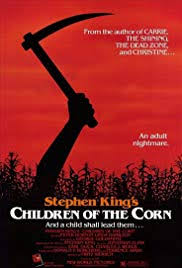
Children of the Corn (1984)

CHILDREN OF THE CORN

CHILDREN OF THE CORN (1984) One star

CHILDREN OF THE CORN is yet another textbook example of a film that cannot be taken seriously although it would love to be considered a serious film. We know that ‘cause we read an opening title like STEPHEN KING’S CHILDREN OF THE CORN, bashing us over the head this film wants to be a major event in our lives rather than a borderline incoherent, rambling supernatural thriller with pseudo-religious hogwash and brutal thriller machinations as its main selling points.

I will be the first to admit my ambivalence toward Stephen King, as well as Tom Clancy, John Grisham, Laurel Hamilton, Dean Koontz, and every other author who seems to have built-in access to a guaranteed mass audience every single time they publish even their napkins. Kmart, Walmart, and your friendly local supermarket determine the ultimate literary value of a select few writers and the rest of us hacks wallow in anonymity and simmering jealousy.

Fortunately, and unfortunately, I am well-versed in Stephen King film adaptations, probably just as much as you are at home. For every successful adaptation, like STAND BY ME and THE SHAWSHANK REDEMPTION, there’s absolute doggerel like CUJO, MAXIMUM OVERDRIVE, and DREAMCATCHER that rate among the most torturous movie experiences. In fact, I’d rate DREAMCATCHER high up among my top five worst movie theater experiences. One day, I’ll have to sit down and concentrate on that list.

CHILDREN OF THE CORN rates as bad King film adaptation. The rabid cult following may disagree but they’re not writing this review.

First and foremost, this is another King adaptation with religious poppycock galore. I traditionally despise religious fanaticism in the movies ‘cause it’s used by filmmakers as a cheap exploitation tactic. I hated, hated, hated this approach in films like AMITYVILLE II: THE POSSESSION, CARRIE, and THE OMEN. Are we supposed to cheaply laugh at somebody’s faith ‘cause they’re overzealous suckers and we’re in on the know and the joke they’re suckers?

How are we supposed to react to the evil corn, the pontification, and the music recycled from THE OMEN every time our filmmakers — led by director Fritz Kiersch — want us to pay attention. I have what’s called “bad laughs” and lots of them over the running time of CHILDREN OF THE CORN.

There’s a gruesome opening scene: The kids of Gatlin, Nebraska (introductory title: “GATLIN, NEBRASKA — THREE YEARS AGO”), kill their fathers and mothers and grandfathers and grandmothers and “The Blue Man.” See, a couple shady little individuals calling themselves Isaac and Malachi are instructed by “He Who Walks Behind the Rows.”

At this point, we should make a crucial distinction that just might save your life or at least guide you toward a better movie rental: In Nebraska, corn fields command kids to kill all the adults and make them sacrificial fodder. Meanwhile, in Iowa, corn fields instruct farmers to build a baseball diamond and they will come, well, except for Ty Cobb.

Anyhoo, Isaac (John Franklin) establishes a tyrannical regime of kids opposed to “sex, drugs, and rock ’n’ roll.” He’s a babbling pseudo-religious visionary with bad make-up. I laughed at Isaac’s pontification more than I have at some comedians over an entire career, because Isaac is a power-hungry miniature twit.

Malachi is the brute enforcer, a red-headed Jason Voorhees minus the hockey mask. He’s played by Courtney Gains, one of the best faces of 1980s movies. Sure we all remember Courtney Gains. George Constanza remembers him as the evil video store clerk in a “Seinfeld” episode. Gains appeared in BACK TO THE FUTURE, THE ‘BURBS, CAN’T BUY ME LOVE, and SECRET ADMIRER. For example, he tried cutting in on George McFly with Lorraine Baines at the Enchantment Under the Sea dance in good ole 1955. I’d rather talk more about Courtney Gains and his career than go back to reviewing CHILDREN OF THE CORN.

Where was I again? Who am I?

Anyway, Peter Horton and Linda Hamilton play our resident clean-cut wholesome All-American couple taking a trip inside a clean-cut wholesome All-American nightmare only found within a bad horror movie. These young lovers violate the Number One rule of interstate travel: ALWAYS STAY ON THE HIGHWAY. It’s almost like they never watched THE HILLS HAVE EYES.

This is yet another one of those “Of course” movies, because we say of course, they find a run down gas station with no telephone. Of course, the gas station owner’s a diabolical, shady old man in cahoots with the evil kiddos. Of course, the husband Burt (Horton) sees and hears something OVER THERE, always OVER THERE, and checks it out while the wife Vicky (Hamilton) wants to leave. Of course, they never do leave (until the end of the movie) and must fight through a living Hell to survive.

Next time, however, I suggest they drive through Iowa and find the Buddy Holly Crash Site near Clear Lake. It’s a long walk to the shrine of Holly, Ritchie Valens, and the Big Bopper, but a must if you love rock ‘n’ roll.

Back to the old man who’s the gas station attendant. He’s played by R.G. Armstrong in not one of his finest screen moments. Armstrong plays the role of a character whose function is that of the corpse in a self-contained murder sequence in a horror film, where it takes untold minutes to reach a destination we already predetermined in our heads after having watched countless self-contained murder sequences in horror films. Armstrong (1917-2012) must have rapidly slipped in his old age, considering that he survived THE BEAST WITHIN just a couple years before.

There’s also a little girl named Sarah, another pint-sized visionary. Her endearing and redeeming character trait is that she draws pictures of everything. Of course, Malachi wants to curb her artistic inclinations and of course, Isaac defends her visionary gifts, conflict among the ranks of the evil kiddos that only escalates during CHILDREN OF THE CORN.

I’d rather have looked at an exhibit of Sarah’s illustrations than watch CHILDREN OF THE CORN.

That’s because CHILDREN OF THE CORN bludgeons us with every cheap shock tactic of the bad horror movie.

There’s a lot of thunder and lightning, fire and brimstone, and loud music. And there are way too many scenes built on tight framing so we’re supposed to be scared on cue by an unexpected object jumping into the frame. The scariest accomplishment, however, of CHILDREN OF THE CORN is that it developed a cult following.

Howard the Duck (1986)

HOWARD THE DUCK

HOWARD THE DUCK (1986) One star

KODE-TV in Joplin once aired movies on Saturday nights and I recall watching THE ROCKY HORROR PICTURE SHOW, THE BREAKFAST CLUB, WOLFEN, and HOWARD THE DUCK in my impetuous youth.

Sometimes movies that we liked during our childhood and teenage years do not hold up during later viewings. Unfortunately, I do not remember how I reacted to HOWARD THE DUCK upon first viewing it some 30 years ago.

I do know that I caught up with HOWARD THE DUCK in 2009, though, wrote a negative review centered around the question “What were they thinking?” when Universal Pictures made HOWARD THE DUCK, and listed it as one of the worst movies of the 1980s, right down there with such “classics” as LEONARD PART 6 and THE GARBAGE PAIL KIDS.

That’s when I first encountered online defenders of bad movies. They’re vehement, and will leave you digital pleasantries like, for example, “Opinions are like assholes. …” Genius, pure genius, never heard that one before, Internet tough guy. I mean, how dare somebody think both HOWARD THE DUCK and LEONARD PART 6 stink it up. HOWARD THE DUCK and LEONARD PART 6 are both not so bad they’re good, they’re both so bad that they’re really really really bad. Every once in a great while, I dust them off just to remember what a bad movie plays like.

HOWARD THE DUCK is one of the great cinematic follies of all-time.

It wanted dearly to be like GHOSTBUSTERS, a combination of dazzling special effects and wisecracking comedy.

It fails in both departments and it starts with that live action duck, the biggest special effect mistake and comedic failure.

Howard’s a creepy little duck, a rather fowl protagonist despite the fact that director Willard Huyck (Huyck rhyme with duck?) and producer Gloria Katz toned him down and tried making him a nicer duck from his comic book origins.

It does not help the character that the film trots out every duck pun for 111 minutes, a running time a few minutes longer than GHOSTBUSTERS. Every single character must get at least one and I got tired of all the puns by the 5-minute mark.

Eight actors are credited as having some role in playing Howard the Duck: Ed Gale, Chip Zien, Tim Rose, Steve Sleap, Peter Baird, Mary Wells, Lisa Sturz, and Jordan Prentice. Six of the actors and actresses inside the duck suit (at different times) won the Razzie for Worst Performance in a Motion Picture. This is almost as impressive as the fact Harvey Stephens began his career as the Antichrist in THE OMEN. Where does one go from the Antichrist and where does one go from Howard the Duck? These are tough questions, and I have some more.

Do those actors and actresses put Howard the Duck on their resume? Or brag down at the pub “Oh yeah, man, you better not fuck with Howard the Duck” and “I played a talking duck from another planet in the movies. How about you, asshole, what the fuck have you done that’s so great?” Have any of these actors exploited their playing Howard the Duck to pick up women? Stranger lines have been spouted.

Howard’s not a funny duck and he must try a thousand jokes. He’s a lame duck, instead, that wishes he could have been the Groucho Marx or Bill Murray of ducks.

The last 40-45 minutes surrender to chase scenes and special effect showcases with lame duck pun interludes, then we’re treated to a thrilling grand finale of the “Howard the Duck” song, written by Thomas “She Blinded Me with Science” Dolby and George “Atomic Dog” Clinton.

The last 40-45 minutes feel like they run on as long as BEN-HUR and GONE WITH THE WIND combined.

Every time I see Lea Thompson, it brings me back to the strange trajectory of her early screen career: attacked by shark in JAWS 3-D, a creepy love affair with a married police officer who should have arrested himself for sex crimes in THE WILD LIFE, and unknowingly lusting after her own future son in BACK TO THE FUTURE. In HOWARD THE DUCK, the fetching Thompson smooches Howard all while she’s in her skimpies. It’s bad enough that her hairdo attacked the ozone layer, but she has to go the extra mile in HOWARD THE DUCK.

(We believe that Thompson’s hairdo in HOWARD THE DUCK contributed to the Montreal Protocol on Substances that Deplete the Ozone Layer that became effective in August 1989.)

Every time I watch HOWARD THE DUCK, I marvel at the fact that Tim Robbins somehow survived his performance and managed to sustain a career in such high-quality films as BULL DURHAM, JACOB’S LADDER, and THE SHAWSHANK REDEMPTION. His performance in HOWARD THE DUCK ranks among the most annoying supporting performances in history. Believe it or not, this was his fifth credited screen performance … and we have one more believe it or not.

HOWARD THE DUCK is the first feature-length Marvel Comics adaptation. When will Disney take a crack at remaking this remedial GHOSTBUSTERS?

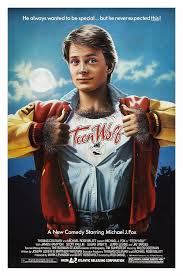
Teen Wolf (1985)

TEEN WOLF

TEEN WOLF (1985) Three stars

During the review of SILVER BULLET, TEEN WOLF came to mind and then I looked up a rather negative review I wrote 10 years ago.

A decade later, I recommend TEEN WOLF for the very things I once mocked. Here’s the original two-star review (with only small edits):

“TEEN WOLF almost succeeds in spite of itself and I do mean in spite of itself.

“The film stockpiles a nuclear arsenal of cliches. Next time I see Kim Jong-Il I will ask him what he thinks of the film, in between our usual rap session ‘bout FRIDAY THE 13TH films. Let’s see, I’ll have to make a list otherwise my brain will explode and that cannot happen before Finals Week, let alone Dead Week.

“I’ll briefly mention 1) the Nebraska small town setting; 2) the loving, single widower and his teenage son protagonist on their own; 3) the teenage son protagonist feels he’s doomed to an eternity of being “average” until he finds out that he can be a teenage werewolf just like Michael Landon and the Cramps song before him; 4) the protagonist’s hipster and profiteer best friend; 5) the “fat guy” fifth wheel nicknamed, oh you’ll love this one, “Chubby”; 6) The Blonde = Bad Girl and The Brunette = Good Girl formula; 7)the protagonist lusts after the Blonde, actually succeeds in sleeping with the Blonde as the Wolf, and ends up realizing his undying love for the Brunette in the final act though she prefers “average” Scott Howard over the Wolf; 8) the Blonde’s Evil Overlord of Brooding Hot Shot boyfriend and the protagonist’s eternal foil; 9) the Evil Principal; 10) the wise guy head basketball coach who spits out incantations of advice rejected by Fortune 500 fortune cookie companies; 11) the scene where the protagonist faces down a wily old liquor store veteran who’s heard every scam ever to purchase some alcoholic contraband for a monster party; 12) The Monster Party; 13) The Big High School Dance; and I believe I’m done after this one, 14) The Big Game. Sorry, I apologize in advance for missing a few there.

“Once we grant the film’s central premise, that werewolf genes run down a family’s genetic line, which sounds too much like TWILIGHT for its own good before Taylor Lautner was even born, what’s wrong with a few generic movie standards? Nothing, absolutely nothing, except for when taken in tandem our friendly standards make for a generic motion picture spread. TEEN WOLF almost set the cliche land speed record.

“Michael J. Fox makes for a likable, charismatic protagonist and his energetic movie star performance lets us live through standard, predictable material. He enlists us on his side, whether he’s average small town boy lined up to inherit his father’s small town hardware store, Scott Howard, or his alter ego, ultra-cool and ultra-hip and dazzling slam dunker “The Wolf.” Fox essentially plays the Lon Chaney existential dread film werewolf crossed with John Travolta in SATURDAY NIGHT FEVER (at least for the big dance sequence and the big preparation for the dance sequence) and Julius Erving, as well as having issues with anger management and teenage angst.

“Do teen wolves get pimples? TEEN WOLF fails to address several burning questions. Especially not a PG-rated TEEN WOLF. Fox plays these scenes ‘bout as good as any actor possibly can and we stomach him through every predictable change like, for example, how Scott Howard transforms himself into above average when he’s the Wolf: He can dance, he can act, he can surf on slow-moving customized Wolf vans, and he can play mean basketball. Scott Howard eventually turns his back on ‘Wolf Mania’ and decides to be himself for The Big Game.

“James Hampton must have enjoyed playing a humble, sagely teenage protagonist’s old man in TEEN WOLF, considering his past as evil public relations man in THE CHINA SYNDROME and his future as evil federal regulatory agency man in PUMP UP THE VOLUME. Susan Ursitti breathes some fire into her standard issue role as the Brunette / Good Girl and this is both good and bad, good because it makes our lives relatively less boring and bad ‘cause we get even more frustrated by the wait for the inevitable dramatic (overdue) realization made by the protagonist that she’s meant for him, forever. The Bad Girl and her maligned Evil Overlord of Brooding Hot Shit boyfriend are the only characters who fail to entertain us, interest us, et cetera. They’re not very good performers and it’s painful waiting for their inevitable downfalls.

“Surely Teen Wolf’s impressive slam dunk artistry did not inspire Spud Webb, the 5’7” Atlanta Hawks point guard who prevailed in the NBA Slam Dunk Contest at the 1986 NBA All-Star Weekend in Dallas, besting his own Atlanta Hawks teammate, Dominique Wilkins. Michael J. Fox, why he’s short and he’s Canadian, two proverbial strikes against him, so naturally it takes a stunt double werewolf for him to slam dunk. I would have thought a werewolf’s claws would have made playing basketball like a proverbial artiste virtually impossible. Anything goes, in the movies.

“Hey wait, lovely lads and lovely ladies, I recollect another standard trotted out by TEEN WOLF. The montage. The “Winning Streak” Montage. The Car Surfing Montage. The Big High School Dance Montage. The Big Game Montage. Hyperkinetic action scored by a hyperkinetic rock song. For the big dance montage, we get a bad theme song namedropping “The Big Bad Wolf.” It’s an unwritten rule that any 1980s movie referencing itself in song, like PROM NIGHT and BETTER OFF DEAD, will turn out crap. When in doubt, filmmakers, yes, bring on a montage of hyperkinetic action (basketball, dancing, violence) scored by hyperkinetic rock music. TEEN WOLF competes with THE HEAVENLY KID and OVER THE TOP for montage land speed record. I bet the composers do not put TEEN WOLF down on their permanent record.

“Oh, now I remember a couple more standard tricks exploited by TEEN WOLF. Slow motion. BONNIE AND CLYDE and THE WILD BUNCH used slow motion to brilliant effect, as did early Bruce Lee karate films, but lesser films like BLACK BELT JONES made slow motion passé, not to mention its overuse on sports television. Want to see Teen Wolf slam dunk for what feels like the hundredth billionth time? Watch TEEN WOLF! Want to see “average” Scott Howard’s lay-up that barely makes it around the cup and in? Watch TEEN WOLF!

“Now, here we have a standard within a standard: late in the game, Scott Howard gets clotheslined on a final shot layup attempt by his eternal foil (at least for 90 minutes eternity) and his team, the Beavers, are down by one point and two made free throws will naturally win The Big Game for the Beavers.

“Howard steps to the free throw line … his eternal foil stares him down … he makes the first one, smoothly … the second free throw … it’s released … it’s looking good … it’s SLOW MOTION … slower and slower … oh no! … it hits the back of the rim … slower and slower and even slower motion … it touches almost every corner of the rim … and it finally rolls in … reaction shots galore … NO MORE SLOW MOTION … and the crowd storms the court in celebration of either the end of the Big Game, the end of the movie, the end of shooting the movie, or all three simultaneously. I’ll bet on all three ‘cause I know they were solid pros.

“Rod Daniel, oh what a director, this here Rod Daniel. TEEN WOLF perhaps represents the peak of Rod Daniel’s cinematic directorial career, TEEN WOLF up against the Dudley Moore-Kirk Cameron body switch masterpiece of dreck cinema LIKE FATHER LIKE SON and the BEETHOVEN sequel. I favor a slam-dunking, breakdancing Teen Wolf over a born again Kirk Cameron (Jesus couldn’t save Kirk Cameron’s acting) and Charles Grodin overshadowed by a dog. At least, Daniel had the decency not to direct TEEN WOLF TOO. On this or any other job, you win some, you lose some.”

Not sure what came over me when I wrote that review 10 years ago, especially since I have enjoyed TEEN WOLF many times over the years. A lot of the success of TEEN WOLF has to do with Michael J. Fox at the center. After all, with Jason Bateman in the title role instead, TEEN WOLF TOO proved to be a disaster, although that’s partly because TEEN WOLF did not require a sequel.

Silver Bullet (1985)

SILVER BULLET

SILVER BULLET (1985) Two stars

“It’s such a fine line between stupid, and clever.”

— Spinal Tap lead singer David St. Hubbins

That’s one way to describe the Stephen King adaptation SILVER BULLET, which has left viewers from day one debating whether or not the film makers were intentionally parodying Stephen King and werewolf movies by making so many individual details ridiculous.

Many reviewers just considered SILVER BULLET to be laughably bad and not in the good way, hot on the entrails of previous laughably bad King adaptations CUJO and CHILDREN OF THE CORN.

Watching SILVER BULLET for the first time in many, many years, I must admit the internal split and acknowledge the fine line between stupid and clever.

Let us consider:

— We have a narrator (Broadway standout Tovah Feldshuh) who sounds like an old woman, although it’s only nine years after the main events depicted in the film when she was 15 years old. Feldshuh’s even listed as playing “Older Jane.”

— Gary Busey plays Uncle Red, a womanizing drunkard who dotes on paralyzed prepubescent protagonist Marty Coslaw (Corey Haim), Jane’s younger brother, and makes the boy customized wheelchairs called “The Silver Bullet.” I remembered the second wheelchair most from previous viewings of the film when I was roughly the same age as Marty.

— That second wheelchair, oh wow, just let me tell you that you’ve not enjoyed a complete moviegoing life until you’ve seen the scene where our priest / werewolf (Everett McGill) stalks Marty and his souped-up “Silver Bullet” in broad daylight. Marty’s second great escape is even greater than his first.

— Uncle Red should have pursued a career in wheelchair manufacturing.

— This review gives away the identity of the werewolf. Big deal. The movie tips off the identity almost immediately, but, of course, in a movie like SILVER BULLET, the townspeople are nincompoops and it takes young ones like Marty and Jane to figure out the truth. Those nincompoops are on an epic scale of nincompoop. I mean, it’s tipped off so obviously that “WEREWOLF” should have flashed on the screen below the character. They all should have died.

— The nincompoops form a “Citizens Action Brigade” in the first 30 minutes … after four killings. They load up on guns, load up into trucks, head out into the woods, step into traps, et cetera. Two nincompoops produce one of the great dialogue exchanges from the Planet X. …

Maggie Andrews: What’s the matter, Bobby? You gonna make lemonade in your pants?

Bobby Robertson: I ain’t scared!

— The werewolf resembles a black bear. After the technological advances made in the werewolf movie just four years earlier by THE HOWLING and AN AMERICAN WEREWOLF IN LONDON, SILVER BULLET set the species back years.

If they remade SILVER BULLET today, would the original be called a “classic”? Undoubtedly yes, of course, because every old movie remade automatically becomes “classic.” We’ve heard that incessantly about the 1989 PET SEMATARY, for example.

SILVER BULLET, like PET SEMATARY, is not a classic by any definition — “Judged over a period of time to be of the highest quality and outstanding of its kind” or “A work of art of recognized and established value.”

For crying out loud, TEEN WOLF — released a couple months before SILVER BULLET — stands up better.

An American Werewolf in London (1981)

AN AMERICAN WEREWOLF IN LONDON

AN AMERICAN WEREWOLF IN LONDON (1981) Three stars

The 1980s were a golden age for comedy horror: GREMLINS, GHOSTBUSTERS, RE-ANIMATOR, EVIL DEAD II, FRIGHT NIGHT, LITTLE SHOP OF HORRORS, and KILLER KLOWNS FROM OUTER SPACE.

I’d put AN AMERICAN WEREWOLF IN LONDON among the second tier of 1980s comedy horror films, below every film listed in the opening paragraph. Do not fear, though, because it’s still a good movie.

AMERICAN WEREWOLF specializes in dark comedy, very very very dark, even beyond morbid especially when a dead Jack Goodman (Griffin Dunne) haunts best friend David Kessler (David Naughton) as Mr. Kessler becomes the title character. Jack tells David that he must kill himself before he kills others and that he’s under the werewolf’s curse. Jack still has that same way with words he had when he was alive; that’s why David tells Jack, “I will not be threatened by a walking meatloaf.” Poor, poor Jack.

Of course, all this started when David and Jack, two American college students on a walking tour, stop at the Slaughtered Lamb. We’ve all heard of the Wrong Gas Station, a hallmark of many horror movies, but the Slaughtered Lamb represents the Wrong Drinking Establishment. You have to be real thirsty or hungry or both to stop at the Slaughtered Lamb. The regulars don’t exactly warm to no bratty Americans in the first place, but the irrepressible Jack sticks his foot in his mouth big time when he blurts out about a pentagram. The conspiratorial patrons give Jack and David the boot, although Jack and David are told very specifically to stay on the road and not to go into the moors. I believe that I last saw that setting in the 1939 Basil Rathbone Sherlock Holmes movie HOUND OF THE BASKERVILLES. I love the moors in the movies.

Of course, we all know that David and Jack don’t stick to the road and go exactly where they’re not supposed to go.

1981 featured three good wolf movies: THE HOWLING premiered March 13, WOLFEN July 24, and AMERICAN WEREWOLF August 21. For the record, I prefer both WOLFEN and THE HOWLING over AMERICAN WEREWOLF, and that’s an indication just how great of a year it was for movies about wolves. All three have their own distinct qualities, though both Joe Dante’s THE HOWLING and John Landis’ AMERICAN WEREWOLF pursue laughter far more than Michael Wadleigh’s WOLFEN.

All three stand out for their special effects: Rob Bottin and Rick Baker, who previously worked together on Dante’s PIRANHA, battled for werewolf transformation superiority and Baker’s makeup work on AMERICAN WEREWOLF earned him the first Academy Award for Best Makeup, as he beat out Stan Winston on the comedic craptacular HEARTBEEPS. The overshadowed WOLFEN did some innovative things with sound and image to depict the world of the wolf.

At this point in Landis’ career, the controversial director was on a major roll with a three-picture run of NATIONAL LAMPOON’S ANIMAL HOUSE, THE BLUES BROTHERS, and AMERICAN WEREWOLF. This was before TWILIGHT ZONE: THE MOVIE, when actor Vic Morrow and child actors Myca Dinh Le and Renee Shin-Yi Chen were killed in a helicopter accident during filming in July 1982.

The National Transportation Safety Board reported a couple years later: “The probable cause of the accident was the detonation of debris-laden high temperature special effects explosions too near a low-flying helicopter leading to foreign object damage to one rotor blade and delamination due to heat to the other rotor blade, the separation of the helicopter’s tail rotor assembly, and the uncontrolled descent of the helicopter. The proximity of the helicopter to the special effects explosions was due to the failure to establish direct communications and coordination between the pilot, who was in command of the helicopter operation, and the film director, who was in charge of the filming operation.”

(If you want to watch something fucked up, you can find “Vic Morrow’s Death Video” on YouTube. The rotor blades decapitated Morrow and Le and the right landing skid crushed Chen to death. All three died instantaneously. For this reason and the fact that it’s not very good, I cannot watch Landis’ installment in TWILIGHT ZONE: THE MOVIE and skip ahead on the DVD to the Joe Dante and George Miller portions of the program.)

Despite being acquitted of involuntary manslaughter after a nine-month jury trial over 1986 and 1987, Landis’ reputation rightfully took a major hit … and every single thing you can find about the incident makes Landis seem like the ultimate asshole director, worse than Hitchcock, worse than Kubrick, worse than Lang, worse than Preminger, worse than Woody Allen, worse than any other director in relentless pursuit of perfection. Landis broke California child labor laws by hiring both child actors without their required permits, in addition to his reckless behavior filming the nighttime helicopter sequence. None of this should have ever happened and Landis served not a single second of time for his crimes.

TRADING PLACES and COMING TO AMERICA both were hits directed by Landis. He also directed the nearly 14-minute music video for Michael Jackson’s “Thriller,” a job Landis earned after Jackson saw AMERICAN WEREWOLF. It is widely considered the greatest musical video of all-time.

Back to AMERICAN WEREWOLF.

AMERICAN WEREWOLF represents a throwback to the horror movies of the 1930s, especially the ones from Universal, updated with gore, nudity, and profanity of a modern era.

Like several other films from the 1980s, it deftly balances laughs and scares just right so often.

AMERICAN WEREWOLF, though, falls shy of greatness: There’s a lot to love, especially in the first 30 minutes, but I’ve never loved its ending (full half-point deduction alone for this deficiency) and I just cannot believe the savvy Landis did not choose Warren Zevon’s “Werewolves of London” — Lon Chaney Sr. and Jr. references on top lyrics “You hear him howling around your kitchen door / You better not let him in / Little old lady got mutilated late last night / Werewolves of London again” and “He’s the hairy-handed gent who ran amuck in Kent / Lately he’s been overheard in Mayfair / You better stay away from him / He’ll rip your lungs out, Jim / I’d like to meet his tailor.” In other words, Zevon’s dark sense of humor would have fit AMERICAN WEREWOLF, just like a wolf suit.

No matter how many times I’ve heard CCR’s “Bad Moon Rising” and Van Morrison’s “Moondance,” they still thrill and AMERICAN WEREWOLF uses them perfectly, especially pairing Morrison’s lyrics “Well, I want to make love to you tonight / I can’t wait ’til the morning has come / And I know now the time is just right / And straight into my arms you will run / And when you come my heart will be waiting / To make sure that you’re never alone / et cetera” with the escalation in David’s relationship with friendly nurse Alex (the alluring Jenny Agutter).

I’ll end this review with a warning to stick to the original and please do not watch AN AMERICAN WEREWOLF IN PARIS.

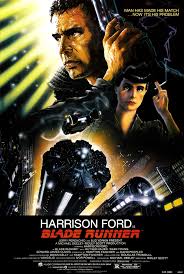
Blade Runner (1982)

BLADE RUNNER

BLADE RUNNER (1982) Four stars

Rutger Hauer’s death at the age of 75 brought me back a day later to BLADE RUNNER, one of the key movies in understanding the cinema of the last four decades.

It seems ironic that Hauer died in 2019, the same year as his character in BLADE RUNNER.

I can’t believe I’ve never written in detail about BLADE RUNNER, which has long been my No. 5 favorite movie of all-time behind CITY LIGHTS, DUCK SOUP, FREAKS, and TAXI DRIVER. Well, now is just as good a time as any to change that.

Watching the theatrical version from 1982, seeing BLADE RUNNER in any cut for what must have been the 100th time, faces especially stood out.

Title character Rick Deckard (Harrison Ford) as he takes in the death of main replicant Roy Batty (Hauer). We can read many different thoughts going through Deckard’s mind. The theatrical cut articulates it through Decker’s voice-over narration. I’ll get back to the narration later.

Batty throughout, from his entrance to his exit. Hauer’s so damn good that he almost steals the movie from both Ford and the incredible production design.

Batty’s punk pleasure model replicant lover Pris (Daryl Hannah) when she ambushes and assaults Deckard late in the picture.

J.F. Sebastian (William Sanderson) as he bears unfortunate witness to Batty settling his account with his creator Tyrell (Joe Turkel, best known as Lloyd from THE SHINING).

Leon Kowalski (Brion James) as he’s shot dead by replicant and Deckard romantic interest Rachel (Sean Young), just when it seemed Kowalski had Deckard near his demise.

Capt. Harry Bryant (M. Emmet Walsh) and his oily charm, and the enigma of Gaff (Edward James Olmos).

I’ve never exactly understood the criticism leveled at BLADE RUNNER that it’s great to look at but difficult to care about any of the characters.

I wonder if those critics saw the same movie.

I’ve always been moved by the plight of the replicants, the bio-engineered people who are “more human than human.”

The Nexus-6 model of replicants — represented by Batty, Pris, Leon, and Zhora (Joanna Cassidy) — look exactly like your average adult human being, but they have superior strength, speed, agility, resilience, and intelligence, especially combat model Batty. For the protection of the human race, replicants have a four-year life span and were given false memories.

Imagine finding out your childhood never happened.

The cold, hard facts of life.

Indeed.

The replicants bring a wide range of responses.

They’re slave labor off Earth … and illegal on Earth. “Quite an experience to live in fear, isn’t it? That’s what it is to be a slave.”

They’re at least complex villains, if they’re even the “bad guys.” We can make a strong case for Tyrell being more of a villain.

Then, we have the ambiguous title character who’ll probably always inspire debate: Is or isn’t Deckard a replicant? Ford argues human, director Ridley Scott replicant, but it’s been left for each viewer to determine.

Deckard plays like the detective hero lifted straight from THE BIG SLEEP or CHINATOWN and that comes across even more in the theatrical version with Ford’s gruff narration explicitly putting over Deckard’s world-weary cynicism.

Deckard gets no pleasure from his job “retiring” replicants. And the narration makes Deckard sound like he’s just woke up from a long hangover. (Ford’s hatred of the narration could not be more obvious.)

Later releases excised the voice-over narration, a device the executives wanted to make the film seem less confusing.

I watched the 1992 Director’s Cut first and so it took some adjustment to the narration. I find it works, except for one scene very late in the film where it’s sheer overkill. I mean, try it out:

“I don’t know why he saved my life. Maybe in those last moments he loved life more than he ever had before. Not just his life — anybody’s life; my life. All he’d wanted were the same answers the rest of us want. Where did I come from? Where am I going? How long have I got? All I could do was sit there and watch him die.” Do we need that? No.

That brings us to Batty’s final speech, “I’ve seen things you people wouldn’t believe. Attack ships on fire off the shoulder of Orion. I watched C-beams glitter in the dark near the Tannhauser gate. All those moments will be lost in time … like tears in rain … Time to die.”

In a sports column way back in 2012, I called Batty’s final speech my favorite movie dialogue.

In office conversation about this column, the late, great Morning Sun writer Nikki Patrick said that Hauer improvised Batty’s speech.

That made the speech even greater and Nikki even cooler.

The Marx Brothers & The Three Stooges

THE MARX BROTHERS & THE THREE STOOGES

Before Elvis and Chuck Berry, the Beatles and the Stones, Zeppelin and the Who, the Clash and the Sex Pistols, Nirvana and Pearl Jam, Woody Allen and Mel Brooks, Richard Pryor and George Carlin, Monty Python and Benny Hill, David Letterman and Jay Leno, and Jay and Conan, there was Buster Keaton and Charlie Chaplin, yes, but also the Marx Brothers and the Three Stooges.

There seems to be a notion that you can’t like both the Marx Brothers and the Three Stooges, and that you have to choose one over the other and the twain shall never meet.

I call bullshit on that notion.

There’s room for both in this mad, mad, mad, mad world.

However, I will admit upfront a preference for the Marx Brothers.

Granted, at the age of 8 through 10 or 11, I absolutely loved the Three Stooges and I learned only of the Marx Brothers from a scene in GOOD MORNING, VIETNAM. For a period of time on the school bus, my two cousins and I pretended that we were the Three Stooges and I played the Moe role. For many years after that obsessive period, though, I barely paid the Three Stooges a bit of attention. I don’t know, like fart jokes, they just seemed precisely like something that you instinctively move beyond as you get older and mature. I’ve revisited the Three Stooges’ work recently, though, and I’ve found enjoyment in them once again.

During college, I discovered the Marx Brothers and DUCK SOUP (1933) became one of my favorite all-time movies and Groucho Marx’s Rufus T. Firefly one of my favorite all-time characters. The Marx Brothers influenced my sense of humor tremendously, Groucho especially, and I don’t know how many co-workers or women I flirted with ever picked up any of the distinctive Marxist vibes.

I once argued with a college professor that DUCK SOUP retained value in the 21st Century because there’s still pompous jerks around who need to be deflated, not that I would have ever thought of naming that particular college professor as one.

In the end, I’ll choose Marxist anarchy over Stoogian anarchy because I prefer absurdist verbal wit over slapstick brutality.

The Marx Brothers paved the road for Mel Brooks, Woody Allen, Monty Python, Rodney Dangerfield, Bill Murray, Dan Aykroyd, Peter Sellers, Carl Reiner, Robin Williams, AIRPLANE!, Borat, Bugs Bunny, and “South Park.” Their influence extended to music — you cannot tell me their satirical and sartorial choices in military dress at the end of DUCK SOUP did not have an impact on the “Combat Rock” era Clash, Queen named two of their albums after Marx Brothers spectaculars (A NIGHT AT THE OPERA, A DAY AT THE RACES), and Alice Cooper and Groucho reportedly became good friends late in Groucho’s life. Groucho died in 1977, a year that also included the deaths of Elvis Presley and Charlie Chaplin (Elvis and Groucho separated by a mere three days in August 1977). The Ramones also had that great song “I’m Against It” on 1978’s ROAD TO RUIN, itself a reference to Hope and Crosby.

The Three Stooges influenced Sam Raimi, John Hughes, John Landis, John Belushi, John Candy, Chris Farley, the Farrelly Brothers, Mel Gibson, SMOKEY AND THE BANDIT, and wherever violent slapstick can be found in animation or live-action.

Now, I present 10 Marx Brothers and Three Stooges classics, five from each comedic team.

It should be duly noted the Marx Brothers starred in feature-length pictures (13 from 1929 to 1949) and the Three Stooges produced shorts (190 from 1934-1959).

HORSE FEATHERS (1932) — You don’t have to attend college for 10 years to appreciate HORSE FEATHERS. Oh, it definitely helps, don’t get me wrong. I must say I adopted Groucho’s opening song “I’m Against It” as my credo during college (I didn’t give a hoot that I had no son during the song adoption process): “I don’t know what they have to say / It makes no difference anyway / Whatever it is, I’m against it / No matter what it is or who commenced it / I’m against it / Your proposition may be good / But let’s have one thing understood: Whatever it is, I’m against it / And even when you’ve changed it or condensed it / I’m against it / I’m opposed to it / On general principles, I’m opposed to it … For months before my son was born / I used to yell from night till morn / ‘Whatever it is, I’m against it’ / And I’ve been yelling since I first commenced it / I’m against it.” I just now realized that “I’m Against It” as credo may have been responsible for 10 years of college. I met a lot of Connie Baileys during college, and they for sure were not “college widows,” but, yeah, everyone still says ‘I love you.’

DUCK SOUP (1933) — I don’t know how many damn times I’ve laughed myself silly at this damn movie. I just love how Groucho comes out firing innuendos and witticisms from the get-go and I’ve used several of them in real life like “I could dance with you till the cows come home. On second thought, I’d rather dance with the cows till you came home” and “[Fill in the blank] here may talk like an idiot and look like an idiot. But don’t let that fool you. He really is an idiot.” I must say that I always wanted to conduct official business at staff meetings just like Groucho’s Rufus T. Firefly does in the darkest chamber of Freedonia, especially the business about new and old business and the workers demanding shorter hours. DUCK SOUP upset Benito Mussolini and flopped at the box office, precipitating the brothers’ move from Paramount to MGM and the loss of one brother (Zeppo) from their movies. That’s what you get for truly being ahead of your time. DUCK SOUP is all killer, no filler Marx Brothers madness, and earns the highest (second highest) recommendation.

PUNCH DRUNKS (1934) — Moe Howard, Larry Fine, and Curly Howard starred together in 97 short films from 1934 to 1947, and there were many, many more featuring different Stooge permutations for Columbia Pictures. In their second production, Moe’s a struggling boxing manager, Curly’s a shy waiter, and Larry’s a fiddler. Curly turns into the world’s greatest heavyweight boxer, though, under the influence of the tune “Pop Goes the Weasel.” Rosin up that bow, Larry, and say ‘Bye, Curly, hello, K.O. Stradivarius.’ We can understand the effects of “Pop Goes the Weasel” in 1934 through later songs. In the late-1960s, for example, it’d have been the MC5’s “Kick Out the Jams.” In the early 1980s, Motorhead’s “Ace of Spades” or AC-DC’s “Hells Bells.” In the early 2000s, Drowning Pool’s “Bodies” would’ve perfectly suited a PUNCH DRUNKS remake. Personally, over the years, I’ve found much therapeutic value in such lovely, lilting songs as the Stooges’ “Search and Destroy,” the Clash’s “Cheat,” and the Misfits’ “Where Eagles Dare.”

MEN IN BLACK (1934) — Before Tommy Lee Jones and Will Smith, there was Doctor Howard, Doctor Fine, and Doctor Howard hot off the heels of PUNCH DRUNKS in this hospital spectacular that puts “Laughter is the Best Medicine” to the ultimate test. I know it was during the Great Depression, but one should consider how much dire straits a hospital must have been in to call on Doctor Howard, Doctor Fine, and Doctor Howard. MEN IN BLACK spoofs on the Clark Gable and Myrna Loy film MEN IN WHITE, which earned the distinction of being one of the first films condemned by the Legion of Decency. MEN IN BLACK competed against winner LA CUCARACHA and WHAT, NO MEN! for Best Short Subject – Comedy at the Academy Awards, the Three Stooges’ lone nomination in this category. The Three Stooges worked the broken glass running gag better than BETTER OFF DEAD (1985).

HOI POLLOI (1935) — Greek rooted phrase “Hoi polloi” means the masses or the common people, and elitist snobs use it derisively for people they believe are beneath them. Some pompous fools might even say the Three Stooges are “hoi polloi” or lowest common denominator entertainment. You might remember the good old “Nature vs. Nurture” discussion from school or at least TRADING PLACES when Ralph Bellamy and Don Ameche placed their bets on Dan Aykroyd and Eddie Murphy. Nature argues that genes and hereditary factors determine human behavior, whereas nurture centers around childhood experiences and how individuals are raised. Many great minds — from John Locke to Steven Pinker — have entered the dialectical fray in the last say 400 years, but the work of Doctor Howard, Doctor Fine, and Doctor Howard should not be neglected in the halls of history. HOI POLLOI is their 18-minute dissertation, replete with those patented Three Stooges slaps, eye pokes, head conks, and nose honks. Believe that’s even the name of a 1-minute, 42-second YouTube clip. There’s also some real good dancing in HOI POLLOI, and it left me with the urge to listen to Pulp’s or William Shatner’s “Common People.”

NIGHT AT THE OPERA, A (1935) — MGM producer Irving Thalberg (1899-1936) made sure the Marx Brothers were more “commercial” and “normal” after their five anarchic pictures at Paramount — especially DUCK SOUP — failed. A NIGHT AT THE OPERA, their MGM debut, gives us less Groucho, Chico, and Harpo and more standard romantic leads Allan Jones (not an improvement from Zeppo, who was a perfect parody of this kind of leading man) and Kitty Carlisle. We don’t want this romantic carp, er, crap, er, carp anywhere near our Marx Brothers madcap antics and wasn’t this a betrayal for our boys? For crying out loud, at the end of DUCK SOUP, all four Marx Brothers pelt Margaret Dumont with fruit when she begins singing a sweet victory song. One picture two years later, our boys embraced opera and let Jones and Carlisle sing their songs. What a letdown! Come on, man, I wish our heroes used fruit on Jones and Carlisle. I wish Zeppo stayed in their act. That said, Groucho, Chico, and Harpo still perform some of their best gags in A NIGHT AT THE OPERA and that’s a must to get somebody who hates opera through 96 minutes of a plot centered around opera.

DAY AT THE RACES, A (1937) — Despite not being the biggest fan of phones in real life, I’ve long been a fan of great telephone scenes in the movies, everything from Ray Milland’s final scene in FROGS (referencing DIAL M FOR MURDER, no doubt) and DR. STRANGELOVE to ONCE UPON A TIME IN AMERICA and IT’S A WONDERFUL LIFE. Groucho’s Dr. Hackenbush gives us a beautiful prank stall call scene and the boys get to ruffle the stuffed shirts of both Leonard Ceeley and Sig Ruman in A DAY AT THE RACES. I’ve always found it easier to get through A DAY AT THE RACES than A NIGHT AT THE OPERA, surely because it’s not opera. Yes, because it’s not opera and I’ll stop calling you Shirley. Allan Jones still needs a pie in the face whenever he opens that pretty boy mouth to sing, but Maureen O’Sullivan — TARZAN movies — proves to be a major upgrade from Kitty Carlisle and this is the MGM picture that most captures the spirit of the Marx Brothers at Paramount.

YOU NAZTY SPY! (1940) — A pioneer in mocking Hitler, well before THE DEVIL WITH HITLER and DER FUEHRER’S FACE and even before Charlie Chaplin’s THE GREAT DICTATOR. YOU NAZTY SPY premiered January 19, 1940, beating Chaplin’s first full-fledged talking picture by 286 days. Moe plays dictator Moe Heilstone, Larry’s propaganda minister Larry Pebble, and Curly’s field marshal Curly Gallstone. At least nobody’s “kidney stone.” After some evil shenanigans by evil cabinet ministers, Moe, Larry, and Curly take over Moronica and prove that old Rufus T. Firefly line true from the start of DUCK SOUP, “If you think this country’s bad off now / Just wait ‘till I get through with it.” The sung laws of Firefly’s administration included the line “Pop goes the weasel,” ironically the ditty featured in PUNCH DRUNKS. Yes, both YOU NAZTY SPY and its follow-up I’LL NEVER HEIL AGAIN could play right alongside DUCK SOUP … in fact, all three could join THE GREAT DICTATOR, TO BE OR NOT TO BE, THE DEVIL WITH HITLER, DER FUEHRER’S FACE, STALAG 17, and THE PRODUCERS in a marathon friendly to fascist dictators. Reportedly, YOU NAZTY SPY was both Moe’s and Larry’s favorite Three Stooges short.

I’LL NEVER HEIL AGAIN (1941) — Moe Heilstone (dictator), Larry Pebble (propaganda minister), and Curly Gallstone (field marshal) return again for this sequel released July 4, 1941, months before the United States’ official entry into World War II. The boys are paired again with director Jules White and screenwriters Clyde Bruckman and Felix Adler, despite the fact their characters were fed to the lions or something disturbing like that in YOU NAZTY SPY. One must wonder if Adolf Hitler and Joseph Goebbels ever came across YOU NAZTY SPY and I’LL NEVER HEIL AGAIN and how exactly they reacted. There’s much debate on whether or not Hitler saw THE GREAT DICTATOR. Chaplin himself wanted to know what Hitler thought of it. There were reports that Moe Howard rushed from the production to his daughter’s birthday party while still being dressed in full-on Hitler. Bet the switchboards in Hollywood went crazy on that one. It predated the mass hysteria in PLAN 9 FROM OUTER SPACE.

NIGHT IN CASABLANCA, A (1946) — German emigre Sig Ruman enjoyed a distinguished career in the films of the Marx Brothers, Ernst Lubitsch, and Billy Wilder and when you Google Sig Ruman you’ll encounter “Sig Ruman Marx Brothers” as keyword very quickly. He appeared in A NIGHT AT THE OPERA, A DAY AT THE RACES, and A NIGHT IN CASABLANCA, finding work in the most temporal Marx Brothers films. He’s like a windup machine that specializes in anger … and the Marx Brothers masterfully wind up that machine. Ruman’s incredible at both the double take and the overreaction. Watching A NIGHT IN CASABLANCA for the first time in several years, Ruman came to mind because he’s so great as the comic villain. Both the Marx Brothers and the Three Stooges needed comic villains, because sure they aggravate virtually everybody in their films but it’s more fun when it’s a comic villain who’s beyond exasperated.

The Marx Brothers: HORSE FEATHERS (1932) Four stars; DUCK SOUP (1933) Four stars; NIGHT AT THE OPERA, A (1935) Three-and-a-half stars; DAY AT THE RACES, A (1937) Four stars; NIGHT IN CASABLANCA, A (1946) Three-and-a-half stars

The Three Stooges: PUNCH DRUNKS (1934) Three-and-a-half stars; MEN IN BLACK (1934) Three-and-a-half stars; HOI POLLOI (1935) Three-and-a-half stars; YOU NAZTY SPY (1940) Four stars; I’LL NEVER HEIL AGAIN (1941) Four stars

The Rocky Horror Picture Show vs. Rock ‘N’ Roll High School

THE ROCKY HORROR PICTURE SHOW VS. ROCK ’N’ ROLL HIGH SCHOOL

I’ve never understood the appeal of THE ROCKY HORROR PICTURE SHOW and how it became the ultimate cult film.

Lord knows I’ve tried, but it’s still neither good nor bad enough to be any good for me.

First time I watched it was late-night TV during my early teenage years. This same late-night program later showed WOLFEN and those are the only two films I can remember watching from that program. (Upon further reflection, I also recall watching HOWARD THE DUCK and THE BREAKFAST CLUB under such circumstances.) Who would have ever guessed that I liked ROCKY HORROR most on this first viewing.

Second time I saw it was part of Starz’ “Midnight Movies” circa 2005. Starz presented a documentary called MIDNIGHT MOVIES based from the book written by film critics J. Hoberman and Jonathan Rosenbaum, then played the movies featured in the doc. I remember watching THE HARDER THEY COME and ROCKY HORROR.

Third time did not prove to be a charm. Two of my ex-girlfriend’s friends could not believe that she had never seen ROCKY HORROR, so they immediately rushed out to the nearest video store and snagged a copy. My ex-girlfriend and I sat there in stunned disbelief at ROCKY HORROR.

The second and third viewings of ROCKY HORROR turned out to be washes and I liked it less each viewing.

I don’t know, I’ve always expected something more outrageous, something more shocking than GREASE in drag.

In fact, I’ve long equated ROCKY HORROR with GREASE: They’re both downright positively absolutely wholesome in dealing with the source material of transgressive art.

Hip to be square, indeed.

Next to FREAKS, BEYOND THE VALLEY OF THE DOLLS, ERASERHEAD, and SHOWGIRLS, for example, ROCKY HORROR especially seems like a lame little song-and-dance picture.

As a social phenomenon, ROCKY HORROR is undeniable.

As a stand-alone film without the cult audience in the living room, it’s not so hot.

Feed me THE LITTLE SHOP OF HORRORS (1986) instead.

Hell, give me ROCK ’N’ ROLL HIGH SCHOOL, a 1979 production from the Roger Corman factory.

It’s a teenage rebellion picture and as the late, great Joey Ramone (1951-2001) once said, we haven’t had one of those since the Revolution. Think he meant the American Revolution, not the Industrial or the Television or the Rocky Horror.

ROCK ’N’ ROLL HIGH SCHOOL benefits greatly from a pair of fun fun fun performances at the heart of the picture: P.J. Soles as Ramones loving Riff Randell, who introduces herself as rock ’n’ roller, and Mary Woronov as the fascist Principal Togar, who’s the type to burn rock ’n’ roll albums and crush any individuality. She’s the Principal of Vince Lombardi High, and Riff Randell is her nemesis. Togar hates the Ramones, and I believe she point blank asks them, “Do your parents know you’re Ramones?”

In her quest to quash rock music, Togar introduces a nifty little device that I don’t remember seeing anywhere else: The Rock-O-Meter, which measures, I do believe, the comparative loudness of rock bands. The meter starts with Muzak at the bottom and proceeds through Pat Boone, Debbie Boone, Donny & Marie, Kansas, Peter Frampton, Foreigner, Jethro Tull, Led Zeppelin, Ted Nugent, the Rolling Stones, the Who, and, finally, the Ramones at the very top. Yeah, it’s a long way to the top, if you wanna rock ’n’ roll. When you reach that level, it’s not a good time to be a lab mouse (it’s just as bad as being a drummer in Spinal Tap).

Oh, it would have been a nifty little joke to have ROCKY HORROR between Donny & Marie and Kansas.

There’s also a role in ROCK ’N’ ROLL for cult film director Paul Bartel (1938-2000), who evolves from a rock ’n’ roll hater to a Ramones lover. It’s a great moment in dance and cinema when Bartel’s Mr. McGree shakes a tail feather to the Ramones’ cover of “Do You Wanna Dance?” after band and students have taken over the halls of Lombardi High.

That guy Dick Miller (1928-2019) shows up late, late in the pic as a scull-cracking would-be fascist police officer. Roger Corman once named Miller “the best actor in Hollywood” and he’s a favorite of fans of flicks like A BUCKET OF BLOOD, GREMLINS and GREMLINS 2, and PIRANHA. Arnold even blew him away in THE TERMINATOR.

Clint Howard plays Eaglebauer, a procurer at Vince Lombardi who sets up shop in a Brownsville Station dream.

Over the years, I began to notice the majority of my favorite movies are blessed with a multitude of great supporting characters and great character actors. BOOGIE NIGHTS and THE BIG LEBOWSKI, for example, leap quickly to mind.

Guess it goes to show the overall quality of ROCK ’N’ ROLL HIGH SCHOOL when I have mentioned five performers — Soles, Woronov, Bartel, Miller, and Howard — and not gone into detail about the Ramones.

Delving into the Ramones’ song catalog became one of the enduring pleasures of my life and their songs from “Beat on the Brat” and “Rockaway Beach” to “Rock ’N’ Roll High School” and “The KKK Took My Baby Away” have earned a place inside my punk rock heart alongside the Clash, the Sex Pistols, the Buzzcocks, et cetera.

It’s the punk rocker (and the antisocial free spirit) inside me that prefers ROCK ’N’ ROLL HIGH SCHOOL over THE ROCKY HORROR PICTURE SHOW.

THE ROCKY HORROR PICTURE SHOW (1975) One-and-a-half stars; ROCK ’N’ ROLL HIGH SCHOOL (1979) Three-and-a-half stars