The Stepfather (1987)

THE STEPFATHER (1987) ****

Every now and then, a horror film will feature a performance that earns widespread critical acclaim and official recognition typically not bestowed on actors or actresses within horror films.
For example, we’ve had Fredric March in Dr. Jekyll and Mr. Hyde, Anthony Perkins in Psycho, Sissy Spacek in Carrie, Anthony Hopkins in Magic, and Jeff Goldblum in The Fly. We should include The Stepfather star Terry O’Quinn with those distinguished performances. He’s so magnificently malevolent that he elevates The Stepfather a notch or two above the average horror thriller and makes it a transcendent exploitation film.

O’Quinn is one of those veteran character actor types who creates the stereotypical reaction, “Hey, I know that guy! He looks so familiar and he was in. …” But most people can’t quite name him! That joke told about John Malkovich in Being John Malkovich applies even more to O’Quinn. Let’s see, aside from a pair of Stepfather movies, O’Quinn appeared in Young Guns, The Rocketeer, and Tombstone, as well as numerous TV shows and movies.

O’Quinn plays a real piece of work in The Stepfather and the movie begins with him assuming his next guise Jerry Blake, after he murdered his family. We see the bloody aftermath, so there’s no doubt about the identity of the killer and we’re left waiting for the moment Blake again explodes into violence. We’re also waiting for when his new family discovers his old identity and his bloody murders, all roads leading to a final showdown that seems obligatory for any thriller since Halloween. That macabre interest level starts with the standard One Year Later title card.

O’Quinn effectively shows that he wants to be a straight, clean-cut, self-effacing man with the All-American nuclear family traditionally identified with Father Knows Best, Leave It to Beaver, and The Adventures of Ozzie and Harriet, also familiar through many, many other sitcoms. At the same time, we know that it’s 99.9 percent likely he’ll gradually snap, crack, and pop when familial disappointment hits dear old Dad again, so a lot of the fun involves Blake’s tension between establishing or slaughtering his new family.

Jill Schoelen’s spitfire teenage stepdaughter Stephanie naturally sees right through Jerry Blake and her character earns our sympathy and empathy almost immediately after we learn her biological father died only a year before this Blake fellow entered the picture and romanced her mother. Of course, nobody quite believes Stephanie, who gets expelled from school for her latest punch out, when she expresses that something’s not quite right about her stepfather. Schoelen plays a 16-year-old girl, so it’s a little creepy when director Joseph Ruben and screenwriter Donald E. Westlake give her a nude scene late in the picture; granted, Schoelen carried on the grand old movie tradition of a teenager portrayed by somebody at least several years older.

Shelley Hack complements O’Quinn and Schoelen and completes the trio of solid performances, in the role of the new Mrs. Blake. She plays a tricky role, perhaps just as tricky as the title role, because her discovery of the truth must be timed absolutely perfect. Otherwise, we see that she’s a dolt and feel she deserves her fate. The Stepfather times it just perfect, and it gets so many things right that we bask in the presence of a superior horror film.

Orgy of the Dead (1965)

ORGY OF THE DEAD (1965) ****
Officially, Stephen C. Apostolof (1928-2005) is the director of Orgy of the Dead, but it bears so many of the trademarks of its screenwriter, Edward D. Wood Jr., that it could play as the back end of a doubleheader with the immortal Plan 9 from Outer Space directed by Wood.

Loopy dialogue? Check. How about “Torture, torture! It pleasures me!” “A pussycat is born to be whipped.” “If I am not pleased with tonight’s entertainment, I shall banish their souls to everlasting damnation!” “Q: Is it some kind of college initiation? A: It’s an initiation alright, but not to any college as you or I know it!”

Criswell as narrator? Check. On top of being the narrator, Criswell stars as The Emperor, giving him more screen time than Plan 9 and he’s the source of most of the quotes in the above paragraph. Yeah, anyway, here’s the epic narration to open the film in true Wood (and Criswell) style, “I am Criswell. For years, I have told the almost unbelievable, related the unreal, and showed it to be more than a fact. Now I tell a tale of the threshold people, so astounding that some of you may faint. This is a story of those in the twilight time. Once human, now monsters, in a void between the living and the dead. Monsters to be pitied, monsters to be despised. A night with the ghouls, the ghouls reborn from the innermost depths of the world.”

Questionable acting? Check. Continuity errors galore? Check. Shoddy visual effects stemming from a micro budget? Check.

Unlike Plan 9 though, Orgy of the Dead features about one dozen bizarre topless dance sequences and that ultimately gives it the edge over Plan 9.

I love a film where the nominal protagonists have the only proper names. Of course, one of them answers to Bob and he’s a writer looking for inspiration. Boy, does he ever find it. Otherwise, in addition to The Emperor, we have The Black Ghoul and the bevy of dancers, Hawaiian Dance, Skeleton Dance, Indian Dance, Slave Dance, Street Walker Dance, Cat Dance, Fluff Dance, Mexican Dance, and Zombie Dance (great Cramps song). That’s all the plot synopsis necessary.

Orgy of the Dead, though, also leaves plenty enough room for poorly costumed Mummy and Wolfman as imperial henchmen. Pat Barrington essays a double role as Bob’s lady friend Shirley and the Gold Girl. The Gold Girl calls to mind Shirley Eaton’s infamous golden paint demise in the 1964 Bond film Goldfinger. At first, I thought they were saving the good girl’s nudity for last, like the bodaciously buxom good girl Debra Blee in the 1982 sex comedy The Beach Girls, but that’s not true in Orgy of the Dead since Barrington also played the Gold Girl.

Even the taglines for Orgy of the Dead (Titty Dance of the Dead describes the film more accurately) are incredible, especially “Are you heterosexual?” and “In Gorgeous ASTRAVISION and Shocking SEXICOLOR!” Shocking sexy color, indeed.

The Vampire Bat (1933)

THE VAMPIRE BAT (1933) ***
The Vampire Bat would otherwise be a forgotten horror entry were it not for the presence of four members of the Horror Movie Hall of Fame, three of them surefire first ballot inductees.

Fay Wray (1907-2004) earned her claim to be the First Lady of Horror and the first scream queen through her work alone in the 1933 classic King Kong. Ann Darrow gave Wray instantaneous immortality, but she also starred in Doctor X, The Most Dangerous Game, The Vampire Bat, and Mystery of the Wax Museum in a year period leading up to King Kong. She was no one-hit wonder.

Lionel Atwill (1885-1946) appeared in a variety of horror movie roles over a 15-year period, in such entries as Doctor X, The Vampire Bat, Mystery of the Wax Museum, Mark of the Vampire, Son of Frankenstein, The Ghost of Frankenstein, Frankenstein Meets the Wolf Man, House of Frankenstein, and House of Dracula. He generally played a mad doctor or an authority figure, be it Inspector Krogh (Son of Frankenstein) or the Mayor (Frankenstein Meets the Wolf Man). Atwill essayed an inspector in several Universal horror flicks.

Salina, Kansas born Dwight Frye (1899-1943) received a tribute nearly 30 years after his death when Alice Cooper released “Ballad of Dwight Fry” on the 1971 album Love It to Death, one of those classic Cooper morbid ballads / epics. Babe Ruth once said that he was paid more than Herbert Hoover because he had a better year than the President and Frye should have been able to say the same in 1931, between his roles in Dracula and Frankenstein, but it’s doubtful Universal paid a supporting actor in any movie more than the greatest home run hitter. Renfield’s presence certainly would have made the Kamala Harris-Mike Pence vice-presidential debate more interesting.

Melvyn Douglas (1901-81) enjoyed a 50-year acting career and he won Academy Awards for his supporting performances in Hud and Being There, but he earned his spot in the hallowed halls of horror history by appearing in the 1932 classic The Old Dark House.

In other words, Wray, Atwill, Frye, and Douglas elevate The Vampire Bat.

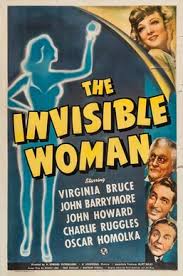
The Invisible Woman (1940)

THE INVISIBLE WOMAN (1940) *1/2
Normally, it’s great for a movie to be considered 20 years ahead of its time.

Unfortunately for Universal Studios’ third entry in the Invisible Man series, The Invisible Woman, it’s not so great that it predated the Disney live-action comedies of the ’60s and ’70s, unless you’re into that kind of thing.

One always should account for personal taste in delicate matters like these, so I will note that I prefer both The Invisible Man and The Invisible Man Returns (released earlier in 1940) over The Invisible Woman because they have a darker sense of humor at play than a predominantly lighthearted comedy that revolves heavily around the good old slapstick.

Ah, yes, good old slapstick. That’s where The Invisible Woman paved the way for all them Disney Solid Gold hits of the ’60s and ’70s.

Slapstick, in this case, does not mean the virtuoso physical feats of silent greats Buster Keaton and Harold Lloyd or the brutality of the Three Stooges and Home Alone.

No, rather, it’s mostly supporting characters falling down and fainting and gasping, like, for example, man servant George (played by Charlie Ruggles). Take a drink for every time George falls down or faints or flusters and you’ll be feeling at least a buzz in no time. Depending on the drink, you might miss out on most of The Invisible Woman and I call that a happy ending.

The Invisible Woman throws in comic gangsters, characters that have very rarely worked throughout cinematic history, not then, not before then, not after then, not ever. Given the presence of Shemp Howard in a henchman role, one might be tempted to believe The Incredible Woman would give up on the genial slapstick and really go for the gusto like maybe a Three Stooges short. No, no, no.

I don’t really need to discuss the plot, because it’s one of them movies where the title says it all more or less and we can quickly move on to who plays who, like John Barrymore as nutty Professor Gibbs, Virginia Bruce the spunky title character and John Howard her eventual leading man, Margaret Hamilton and Ruggles the servants, and Oscar Homolka the main heavy. What a waste of a talented cast, though, and undoubtedly one of the worst films made during Universal’s run of horror films.

Blackenstein (1973)

BLACKENSTEIN (1973) No stars
Blackenstein just might possibly be the worst horror movie I have ever seen and off the top of my head, that means it competes alongside such turkey bombs as Jaws: The Revenge, Monster a Go-Go, and Robot Monster. Now, that would be one way to do a horror movie marathon.

Poor Eddie. Dude lost both arms and both legs in Vietnam and he’s bullied in a Veterans Hospital near the beginning of Blackenstein over ice cream. He does have the love of the lovely Dr. Winifred Walker, who hooks Eddie up with the brilliant surgeon and DNA researcher Dr. Stein. Dr. Stein can attach new limbs to Eddie and he’ll be walking just like you and I in no time says this preeminent doctor. Not so fast, my fiend, not with Dr. Stein’s dastardly assistant Malcomb around.

This super creep Malcomb falls instantly in love, well he calls it love anyway, with Dr. Winifred, and by the way, the actor who plays Malcomb (Roosevelt Jackson) gives one of the most subtle performances ever. He does not foreshadow any upcoming plot developments by staring a hole right through Dr. Winifred the first half-dozen scenes they share. That’s why I called him super creep just a couple moments ago, because he’s super creepy.

Malcomb declares his lust, er, love for Dr. Winifred, Dr. Winifred tells Malcomb no because she loves Eddie, Malcomb becomes all spurned and switches Eddie’s DNA with that of a caveman, and Eddie becomes, you guessed it, the title character. That’s when Blackenstein really takes a dive for the dumpster, as it departs from soap opera to horrible horror with soul music interludes that quite frankly belong in another movie.

Blackenstein first wanted to cash in on the coattails of the 1972 hit Blacula and I have read that American International, one of the best exploitation film outlets, chose Scream Blacula Scream over Blackenstein. Gene Siskel reviewed Blackenstein in 1975, when distributors tried passing it off as Black Frankenstein with their fervent Malcomb-like desire to siphon off the success of the Mel Brooks satire / affectionate tribute Young Frankenstein. Siskel managed to be extremely generous when he rated Blackenstein one-half star.

Blackenstein, in short, has got no soul and that’s why it failed then and fails now or any moment in time. Not only does it have no soul, which is certainly bad enough, it’s got no joy of filmmaking like Edward R. Wood’s Plan 9 from Outer Space and Ray Dennis Steckler’s The Incredibly Strange Creatures Who Stopped Living and Became Mixed-Up Zombies, both of which are somehow considered worse than Blackenstein. The director of Blackenstein should be glad we cannot remember his name without an Internet search party.

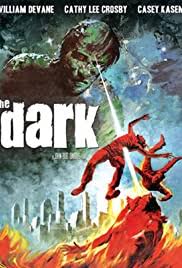
The Dark (1979)

THE DARK (1979) *

Be afraid, very afraid, not of the dark but of The Dark, a laughable thriller that only increases in being laughable until one of the most ridiculous conclusions in cinematic history.

See, I’m not afraid of sleeping in the dark, not afraid of being in a cemetery late at night, not afraid of being home alone in an old house, not afraid of admitting or being wrong, et cetera. In all honesty, though, I hated working alone late nights at the Neosho Daily News office and avoided it as much as possible, except Friday nights during football season. Once corporate killed the Sunday edition and made Tuesday our next paper, though, I started going home after the game, uploaded photos online, and wrote the gamer the next day.

Anyway, The Dark tells the story of a killer who strikes every night in the Los Angeles area and earns the cheap nickname ‘The Mangler.’ What’s a killer without a cheap nickname? This one is a nightmare for the police, because of his unusual strength, his seeming lack of any discernible pattern in his killing, his ability to leave no forensic evidence behind, and, predating Austin Powers, he shoots frickin’ laser beams from his frickin’ eyes. We eventually find out that he even grows stronger with every killing.

The killer and his laser beams look awesome on the poster for The Dark and I grade that promo artwork three-and-a-half stars. In the actual movie, though, the killer and his laser beams absolutely positively suck. These special effects alone impeded the advancement of all technology. When our killer unleashes his laser beams on several anonymous policemen in the grand finale, he clearly misses the mark but the policemen nonetheless take a mighty fall. In all seriousness, just thinking about these scenes now, I haven’t laughed this loudly since Richard Burton’s telekinesis in The Medusa Touch.

Just think all one had to do was light the killer on fire and BOOM! KABOOM! KABLOOEY! Just thinking about the killer’s demise now, I haven’t laughed so heavily since the paragraph before.

The Dark wastes a relatively distinguished cast — William Devane, Cathy Lee Crosby, Richard Jaeckel, and Keenan Wynn — and I find it ironic that fired director Tobe Hooper (replaced by John Cardos) later directed a flop horror film titled The Mangler.

Please remember, though, to be afraid, very afraid, of The Dark, especially since it’s possible that one’s head may explode from convulsive laughter.

The Prowler (1981)

THE PROWLER (1981) *
Describe The Prowler in one word.

Excess.

Yes, indeed, director Joseph Zito goes for an excess of false alarms and jump scares. It seems like there’s a scene like that every couple minutes. I mean, for crying out loud, somebody (usually her policeman significant other) sneaks up on our main female protagonist alone at least five times. Keep in mind The Prowler (hopefully not confused with the 1951 Joseph Losey thriller) earned Zito the opportunity to direct Friday the 13th: The Final Chapter.

Tom Savini’s gore effects ran into considerably less interference than earlier 1981 slasher films My Bloody Valentine and Friday the 13th Part 2, both released in the immediate aftermath of John Lennon’s murder and the subsequent MPAA tougher stance against graphic violence. Savini’s effects are quite frankly almost too good for their own good, as the blood gushes like a geyser at regular intervals. I found them a little much, just as I did in Maniac, and I usually love Savini’s work, especially Dawn of the Dead and Day of the Dead.

In addition to all the false alarms and jump scares, The Prowler relies too much on cat-and-mouse or a ‘contrived action involving constant pursuit, near captures, and repeated escapes.’ The main female protagonist and her dashing cop significant other recall Nancy Drew and one of the Hardy Boys. At one point late in the picture, she even attempts the old hiding underneath the bed with a deranged, psychopathic killer nearby trick.

The Prowler begins with a 1945 newsreel and a ‘Dear John’ letter, before getting down to brass tacks with a double homicide in the distant past that will trigger a present-day murder spree. After the success of Halloween, this flashback style of storytelling to start the whole shebang in style became the vogue for slasher films. Let’s see, Friday the 13th, Prom Night, Terror Train, and The Burning all started up this way and Happy Birthday to Me and My Bloody Valentine were both not too far behind with tours of the past. The plots of The Prowler and My Bloody Valentine have striking parallels, especially the overall look of the killer.

The Prowler conceals the identity of the killer until nearly the end of the movie and that’s probably best … but, who are we kidding, since I found some or even most of the Prowler’s behavior laughable even before the unveiling that calls into question every murder in the past hour. Fortunately, though, we have only a brief unmasking and then our heroine unceremoniously shotgun blasts the Prowler’s head to smithereens. We are spared any big speech or further character motivation and the frenzied scenery chewing of, let’s say, Betsy Palmer late in Friday the 13th. Unfortunately, we are not spared yet another jump scare in the film’s last scene, as if Zito received a bonus for overloading the picture with jump scares. Jump scares are cheap, though, and eventually some audience members turn against any picture that abuses jump scares, false alarms, cat-and-mouse, flashbacks, and dream sequences or whatever combination of them.

Casting Farley Granger as Sheriff George Fraser proved to be a strike against The Prowler, because I flashed back on two of the greatest thrillers ever made, Rope and Strangers on a Train, directed by none other than the Master of Suspense, Alfred Hitchcock. All the marvels of modern cinematic technology like nudity, gore, and profanity galore cannot make up for the difference between Zito and Hitchcock or the difference between a hack and a master.

Boris, Boris, Boris: The Man They Could Not Hang, The Man with Nine Lives, The Boogie Man Will Get You

BORIS, BORIS, BORIS: THE MAN THEY COULD NOT HANG, THE MAN WITH NINE LIVES, THE BOOGIE MAN WILL GET YOU

I am a big fan of the horror movies of the 1930s and 1940s and I am a big Boris Karloff (1887-1969) fan.

Older horror movies often stand out for two main reasons: atmosphere and wit. Just think DR. JEKYLL AND MR. HYDE and THE BRIDE OF FRANKENSTEIN.

Karloff’s film career began in the silent era and he was already 80 movies deep into his career when he portrayed Frankenstein’s Monster in James Whale’s 1931 FRANKENSTEIN. Karloff’s career exploded and he (along with such figures as Bela Lugosi, Peter Lorre, Basil Rathbone, Lionel Atwill, and Lon Chaney Jr.) became synonymous with a certain vintage of horror thrillers.

Watching his early Universal films like FRANKENSTEIN and THE OLD DARK HOUSE and then his work for Columbia like THE MAN THEY COULD NOT HANG, THE MAN WITH NINE LIVES, and THE BOOGIE MAN WILL GET YOU, it is fascinating to observe Karloff’s evolution from menacing mutes to mad scientists with mad elocution. In fact, during THE BOOGIE MAN WILL GET YOU, I wanted Karloff’s Professor Nathaniel Billings to just the heck shut up for a darn minute. He’s a blabbermouth, and it’s amazing to even think of Karloff playing that way after FRANKENSTEIN and THE OLD DARK HOUSE made the actor famous for playing silent but deadly.

THE MAN THEY COULD NOT HANG contains one of Karloff’s best performances. He plays Dr. Henryk Savaard, a genius who can bring the dead back to life, a feat that might come in handy for a film titled THE MAN THEY COULD NOT HANG. You guessed it, that man would be Dr. Savaard. Anyway, a medical student volunteers for Dr. Savaard and before he can be returned to life, them darn proper authorities interrupt Dr. Savaard. Call it “cadaver reanimatus interruptus.” They bring Dr. Savaard up for murder, convict him, and sentence him to death by hanging. They do in fact hang the good doctor, but his incredibly trustworthy assistant claims the body and brings the doctor back to life to enact his revenge against the judge and the jury responsible for convicting him and sentencing him to his death.

THE MAN THEY COULD NOT HANG basically splits into three movies: mad scientist, courtroom drama, and revenge thriller. It all works extremely well predominantly because of Karloff, whose performance dominates the movie. His courtroom defense scene is a thing of absolute beauty and it just might be his best single scene.

By the way, I absolutely love it when horror movies are not afraid to venture into other genres and become more than a horror movie while simultaneously maintaining the bulk of their body within the genre.

THE MAN WITH NINE LIVES tells a similar tale and Karloff plays a similar character to his role in THE MAN THEY COULD NOT HANG. Both pictures also have the same director (Nick Grinde) and the same writer (Karl Brown), as well as the same cinematographer (Benjamin Kline).

NINE LIVES picks up once we find Karloff’s Dr. Leon Kravaal frozen in an ice chamber deep in a secret passage within his home. Also found are Dr. Kravaal’s accusers … and might I add the plot of THE MAN WITH NINE LIVES gets very loopy even for its genre, despite its ties to real life.

Both THE MAN THEY COULD NOT HANG and THE MAN WITH NINE LIVES are rooted in Dr. Robert E. Cornish and his famous resuscitation experiments. Cornish successfully revived two dogs (Lazarus IV and V) and he wanted to expand his testing on humans. San Quentin inmate Thomas McMonigle, on Death Row, contacted Cornish and offered his body for experimentation, but California denied Cornish and McMonigle their petition because law enforcement officials feared a reanimated McMonigle would have to be freed due to “double jeopardy.” McMonigle was executed in early 1948. Cornish (1903-63) himself appeared in the 1935 film LIFE RETURNS, playing himself.

THE BOOGIE MAN WILL GET YOU plays around with similar material as the other Karloff films he made for Columbia, only more for laughs this fifth time. Yes, Karloff plays yet another mad scientist.

The presence of Karloff and Peter Lorre (1904-64) guarantees at minimum a certain quality and THE BOOGIE MAN WILL GET YOU definitely finds that minimum and nothing less or nothing more. The less said about it the better, and I wish the movie would have followed that policy.


THE MAN THEY COULD NOT HANG ***1/2; THE MAN WITH NINE LIVES ***; THE BOOGIE MAN WILL GET YOU **

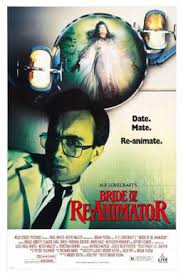
Bride of Re-Animator (1990)

BRIDE OF RE-ANIMATOR

BRIDE OF RE-ANIMATOR (1990) ***

Jeffrey Combs’ Herbert West is one of the all-time great movie characters and his presence alone makes BRIDE OF RE-ANIMATOR, a sequel to the 1985 cult favorite RE-ANIMATOR, worth a recommendation.

H.P. Lovecraft first created Herbert West for the 1922 short story “Herbert West-Reanimator.” RE-ANIMATOR took inspiration from “From the Dark” and “The Plague-Demon” (the first two sections), while BRIDE OF RE-ANIMATOR turned to “The Horror from the Shadows” and “The Tomb Legions” (the final two). West is the central human character in both films.

How to describe West for the uninitiated, that’s a challenge I face during this review. I first think of comparing West to a horror movie character archetype like Colin Clive’s Victor Frankenstein or, to be more precise, Peter Cushing’s Victor Frankenstein from the Hammer FRANKENSTEIN series. He’s brilliant, narcissistic, intense, intensely driven, and essentially amoral. He’s even far less interested in the ladies than Cushing’s Frankenstein. He’s only focused on his work.

West is one of those characters that we love to hate, like Cushing’s Victor Frankenstein and Michael Moriarty’s Jimmy Quinn in Q: THE WINGED SERPENT. There’s that great pencil breaking scene in RE-ANIMATOR, for example, that epitomizes West. He’s one of the great movie assholes.

Alas, most of the rest of BRIDE OF RE-ANIMATOR does not measure up against both West and the first picture. First and foremost, RE-ANIMATOR director and co-writer Stuart Gordon did not return for the sequel and instead Brian Yuzna directed from his own script. Yuzna earned production credits on his friend Gordon’s films RE-ANIMATOR, FROM BEYOND, and DOLLS.

Basically, I find that BRIDE OF RE-ANIMATOR drags more than RE-ANIMATOR or it’s a bit of a slog to get to the sequel’s rather nifty grand finale. I was really struggling around the hour mark and I even contemplated exiting BRIDE OF RE-ANIMATOR.

West’s arch nemesis from the first movie, Dr. Carl Hill (David Gale), returns for the sequel or at least his infamous disembodied head shows up for work. We do not get enough scenes with Hill in the sequel and that helps explain why BRIDE OF RE-ANIMATOR sputters a bit during its middle portion.

The incredible tension between West and Hill contributed a great deal to the success of RE-ANIMATOR. That’s predominantly missing from BRIDE OF RE-ANIMATOR and West battling a persistent burly policeman simply does not possess the same magic. However, we do ultimately have a great payoff when Hill and West are finally reunited.

Bruce Abbott’s Dan Cain returns for the sequel in his role of the straight man and main audience identification figure. He’s not as effective as he was in the first movie.

Kathleen Kinmont and Fabiana Udenio do not make up for the first movie’s Barbara Crampton.

The one area where the sequel trumps the original is special effects, especially during the final 20 minutes. Credited artists include John Carl Buechler, Screaming Mad George, Greg Nicotero, and David Allen, who rank among the best in their field.

Combs’ West and the special effects make BRIDE OF RE-ANIMATOR one of those relatively difficult to come-by sequels that works.

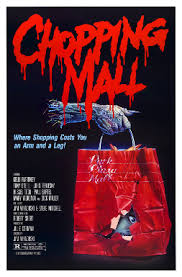
Chopping Mall (1986)

CHOPPING MALL (1986) ***1/2

Jim Wynorski’s CHOPPING MALL has just about everything anybody would ever want from a mid-80s horror film.

— An iconic shopping mall shooting location.

— Three killer robots who shoot real frickin’ laser beams. By the way, these kill-bots could eat Paul Blart for breakfast, lunch, dinner, and three desserts, plus in-between snacks.

— Big hair and big boobs.

— A Barbara Crampton topless scene that rates below RE-ANIMATOR and FROM BEYOND. Still, though, it’s topless Barbara Crampton.

— Other familiar teeny bopper horror movie bods and faces.

— The great character actor Dick Miller playing a character named Walter Paisley (his character’s name from BUCKET OF BLOOD).

— A Corman Factory production with posters from previous cult classics (including one directed by Wynorski, his debut film LOST EMPIRE) and clips from Roger Corman’s 1957 epic ATTACK OF THE CRAB MONSTERS.

— Cameos from Corman favorites Paul Bartel and Mary Woronov playing their characters from EATING RAOUL.

— Outdated special effects that were outdated even before the movie’s release. However, that’s all part of their charm.

— Gore galore highlighted by a gnarly head explosion.

— A plot that plays like a fast and loose combination of FAST TIMES AT RIDGEMONT HIGH, FRIDAY THE 13TH, and THE TERMINATOR.

CHOPPING MALL does not muck around, giving us our first killer robot scene right from the start and hey, let’s face it, it breezes past in 76 minutes. For crying out loud, that’s a running time straight from an earlier time in cinematic history. That not mucking around quality is one of the most admirable traits of CHOPPING MALL, that and its desire to give the people what they want in terms of meeting and exceeding the demands of an exploitation film.

It has a basic plot: Three security robots go haywire after a lightning storm, turn rogue and run amok in Park Plaza Mall, actually the Sherman Oaks Galleria in the Sherman Oaks neighborhood in Los Angeles. The galleria, on the corner of Ventura and Sepulveda Boulevards, has been given credit for inspiring the Frank and Moon Unit Zappa satirical hit single “Valley Girl” and FAST TIMES and COMMANDO famously utilized the location.

Of course, with this genre and location, we have four teenage couples who stay after hours to frolic and fool around inside a furniture store, naturally and predominantly hot and horny couples who make up the majority of our body count. That contributes the FRIDAY THE 13TH element, and the presence of Russell Todd aids and abets that mental connection. Todd played Scott in FRIDAY THE 13TH PART 2, a real smug horny bastard adept with a slingshot. Not that did him any bit of damn good against burlap sack Jason Voorhees.

CHOPPING MALL has a good cast and Kelli Maroney and Alan O’Dell make for appealing, likeable female and male leads, especially Maroney. With her big hair, her struggles working in a restaurant, her spunky attitude, and her way around weaponry, Maroney’s Alison Parks feels very reminiscent of Sarah Conner (Linda Hamilton) from the first TERMINATOR.

What I especially like about the teenagers in CHOPPING MALL is that they load up on guns (echoes of DAWN OF THE DEAD) almost immediately after discovering the killer robots. They are far more proactive than the average horror movie teenager, and that helps separate CHOPPING MALL from the pack of run-of-the-mill exploitation films.

File CHOPPING MALL right alongside cult classics from that moment in time like RE-ANIMATOR, FROM BEYOND, and NIGHT OF THE CREEPS.