The Lonely Lady

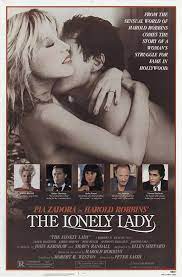
THE LONELY LADY (1983) 1/2*
The Lonely Lady is one of the all-time great stinker movies, 91 minutes of unpleasant characters in unsavory relationships with unbelievably bad actors speaking dialogue that should have never been uttered or ever written in the first place.

Like the (believe it or not) even more awful, killer Santa picture Silent Night, Deadly Night, The Lonely Lady potentially takes the heat off viewers by undercutting a procession of controversial scenes with unintentional humor. I could see hooting and howling in derisive laughter at the performances and the dialogue throughout Silent Night, Deadly Night and The Lonely Lady.

I found myself appalled more than anything else throughout The Lonely Lady, so I was basically too appalled to laugh.

The Lonely Lady especially lays it on thick whenever the title character — aspiring young screenwriter Jerilee Randall, played by the immortal Pia Zadora, though she’s never lonely — expresses her outrage at her perpetual exploitation by Hollywood writers, directors, actors, and producers, every one of them sexist pigs who just nonstop use and abuse her.

At the same time, however, the camera lingers on this exploitation from the rape by garden hose early on in the picture to some of the least sexy movie sex ever captured on celluloid.

On top of all that, Zadora’s real-life husband, Israeli multimillionaire industrialist Meshulam Riklis, funded Butterfly and The Lonely Lady with both pictures starring none other than Zadora. Legend has it that Riklis bought a Golden Globe award for his wife and her performance in Butterfly.

Zadora beat out Elizabeth McGovern and Howard E. Rollins Jr. in Ragtime, Kathleen Turner in Body Heat, Rachel Ward in Sharky’s Machine, and Craig Wasson in Four Friends, all five better-received performances in better-received films.

It remains inconceivable that Zadora — who made her motion picture debut in the 1964 cult film Santa Claus Conquers the Martians — won that award on her own merits.

Riklis was more than 30 years older than Zadora, and that’s not any different than the age gap between Jerilee and her much older husband, veteran Hollywood hack screenwriter Walter Thornton (Lloyd Bochner), in The Lonely Lady.

All those factors combine to make Jerilee’s speech at the Academy Awards — highlighted by that risible line I don’t suppose I’m the only one who’s had to fuck her way to the top! — the absolute worst scene in a movie populated by predominantly bad scenes.

Most of them involve Jerilee sleeping her way through some of the ugliest men imaginable.

Let’s take a look at one more scene that epitomizes The Lonely Lady.

Jerilee and Walter argue outside their Beverly Hills home, near the swimming pool seen first in one of the film’s most appalling scenes.

Jerilee: Walter? Walter, come to bed.
Walter: Haven’t you had enough wine? Go sleep it off.
J: If you’ll come with me.
[W turns away.]
J: I’m trying to say sorry.
W: With a head full of drink!
J: We don’t have to make love.
W: Thank you.
J: We could talk. We need to talk.
W: Why didn’t you go off with Dacosta? He would’ve enjoyed it.
[W picks up the garden hose that raped J earlier in the film.]
W: Or is this more your kick?

That’s even worse than the argument between Kathryn Harrold and Luciano Pavarotti in Yes, Giorgio that culminated in the infamous line I don’t want to be watered on by Fini.

That garden hose, in fact, might have once belonged to Fini.

The Lonely Lady flopped so badly that, thankfully, Hollywood never adapted one of Harold Robbins’ trashy novels again.

Now, I call that a happy ending.
Mac and Me (1988)

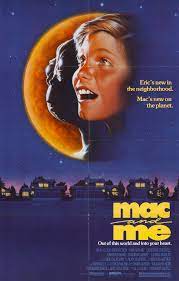
MAC AND ME (1988) *
Cable TV came to the little hamlet of Arcadia, Kansas, circa 1988 or 1989 and I watched a whole lot of movies time and time again.

That includes not only blockbusters like Back to the Future Part II and III, Beetlejuice, Big, Die Hard, Total Recall, and Terminator 2, but Arachnophobia, the first two Bill & Ted movies, The Blob remake, Tremors, Red Heat, Cocktail, The ‘Burbs, Bloodsport, Johnny Be Good, Appointment with Death, and even that disaster starring Tony Danza, She’s Out of Control. That last one begs the question WHY? Because it was on, naturally.

I only watched Mac and Me once back then, however, and that’s because even then with less discriminating taste I knew it sucked.

I revisited it all these decades later and it still righteously sucks. Just imagine a stupid E.T the Extra-Terrestrial where none of the cast members have the slightest bit charm or ability to keep our interest and to earn our emotional investment. It’s also incredibly weird and off-putting, especially considering that it’s designed to be family entertainment like E.T and The Wizard of Oz (1939), still the ultimate standard bearer for this kind of movie.

One of the main sources of weirdness: Mac and Me plugs more products than any movie this side of Leonard Part 6 or Happy Gilmore. Don’t you just hate it when a movie does that?

I mean, though, now that I think about it some more, it’s truly a missed opportunity for the ages that Dorothy didn’t drink Coke or the Tin Man didn’t use WD-40 or the Scarecrow didn’t wear designer hay or the Cowardly Lion didn’t have the courage to make a commercial plug right smack dab in the middle of his big melodramatic scene. MGM could have done so much more with their Yellow Brick Road (a sponsor on each and every brick) and the Wicked Witch of the West should have been melted by a brand name water, for crying out loud. We need a remake immediately just so the ruby slippers can be Nike.

Mac and Me could switch people over forever to Pepsi, Burger King, the St. Louis Cardinals, and Sweet Tarts.

Spielberg also missed an opportunity by not having a dance contest in a chain restaurant in E.T.

I was really bummed when I couldn’t find Paul Rudd in the cast and instead endured these apparently neophyte actors like Jonathan Ward, Tina Caspary, Lauren Stanley, and Jade Calegory. Ward and Caspary have considerably more acting experience than Stanley and Calegory, but they’re just as stilted or melodramatic in every scene.

The adult performers and their characters suck, as well, but they are blessed with fewer scenes to suck than the younger actors. By all rights, I should have rooted for the government agents, but, no, I cheered when the end credits rolled on this jive turkey. This is a movie that viewers should put they survived it on their resume.

Oh, in all this hubbub over a crap movie, I almost forgot MAC stands for ‘Mysterious Alien Creature’ and not that one restaurant with the impromptu dance scene interrupted by evil government agents. We have the main one, then his family, and I am guessing they’re distant, no good cousins of E.T. I mean, I doubt they would ever sit together for one of them big family pictures that brings in all the brothers and sisters and cousins and parents and grandparents and grandchildren. E.T. is simply too good for Mac.

Weird children, weird adults, weird aliens, product placement out the wazoo, and Squire Fridell add up to one weird (and awful) movie.

Mac and Me is so awful that Harry and the Hendersons seems like Citizen Kane instead.

Auto Pilot Cinema: The Airport Movies

AUTO PILOT CINEMA: THE AIRPORT MOVIES
When thinking of the worst series in movie history, I am tempted to start with Saw and Fast and the Furious then move back through time with The Omen and Amityville Horror and finally go way way way back to the Dead End Kids, er, Bowery Boys.

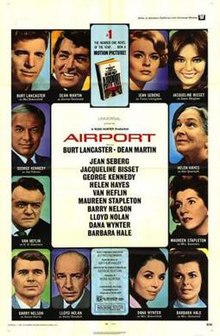
In piecing through all this cinematic carnage, I should not leave behind the four Airport movies that were churned out by Universal Pictures from 1970 to 1979. Maybe I should leave them behind.

Airport, based on Arthur Hailey’s 1968 novel of the same name, made a killing at the box office upon its late May release in 1970 and it even received 10, yes, believe it or not, 10 Academy Award nominations, including Best Picture, and 70-year-old Helen Hayes won Best Supporting Actress.

The three subsequent films — helpfully labeled 1975, ’77, and ’79 — got worse and worse, naturally, and the last film in the series, The Concorde … Airport ’79, is so bad (and so aggressively stupid) in fact that it could kill off any series. That’s despite the fact that it reportedly made $65 million, a much better take than, for example, Irwin Allen productions The Swarm ($7.7 million), Beyond the Poseidon Adventure ($2.1 million), and When Time Ran Out ($3.8 million). Regardless, Universal stopped making Airport movies after The Concorde and I’m almost dumbfounded why there’s not been a remake or a reboot loaded with today’s stars.

Hey, wait, did somebody mention stars? Yes, stars, that’s what these Airport movies were about — speculating which ones would emerge at the end of the picture relatively intact and which ones would die spectacularly. Grand Hotel in the sky, not exactly, since none of the careers in the Airport movies were at their peak like the ones in Grand Hotel, but the idea of stuffing the screen with stars in every scene applies just the same.

Airport: Burt Lancaster, Dean Martin, Jean Seberg, Jacqueline Bisset, George Kennedy, Hayes, Van Heflin, Maureen Stapleton, Barry Nelson, Dana Wynter, Lloyd Nolan.

Airport 1975: Charlton Heston, Karen Black, Kennedy, Efrem Zimbalist Jr., Susan Clark, Helen Reddy, Linda Blair, Dana Andrews, Roy Thinnes, Sid Caesar, Myrna Loy, Gloria Swanson.

Airport ’77: Jack Lemmon, Lee Grant, Branda Vaccaro, Joseph Cotten, Olivia de Havilland, Darren McGavin, Christopher Lee, Robert Foxworth, Kathleen Quinlan, James Stewart.

Airport ’79: Alain Delon, Susan Blakely, Robert Wagner, Sylvia Kristel, Kennedy, Eddie Albert, Bibi Andersson, Charo, John Davidson, Andrea Marcovicci, Martha Raye, Cicely Tyson, Jimmie Walker, David Warner, Mercedes McCambridge.

More like Hollywood Squares in the Sky? Yeah, believe so, especially since Davidson hosted a Hollywood Squares revival in the late ’80s.

Beside Airport in the titles, Kennedy (1925-2016) proved to be the connective tissue between all four pictures, meaning he’s the inverse of the Brody boys (Jaws) and the Griswold children (Vacation). Kennedy played Joe Patroni — first as mechanic, then as vice president of operations (1975), a consultant (’77), and finally an experienced pilot (’79). Regardless of position or rank, the character got worse and worse over the course of the films, not that he or the films started out all that hot. I found even his cigar was guilty of overacting in the original film and Patroni was so odiously obnoxious in the fourth film, especially after he utters the line that articulates the sexism of the entire series, They don’t call it the cockpit for nothing, honey. George Kennedy as sex symbol? Sure, I’ll believe anything, nearly anything except for, oh, the entire plot of The Concorde.

I’ll talk more about The Concorde and the original because they’re fresher in my memory. To be honest, though, I probably won’t even feel like discussing the original because …

Movies rarely come any dumber than The Concorde: Let’s see, this is going to be fun, not really, anyway TV reporter Susan Blakely comes across some highly incriminating evidence against defense contractor (and covert arms dealer) Robert Wagner. Wagner decides that he’s going to attempt to blow up real good the plane she’s on en route from Washington to Paris. Okay, okay, his plot to blow up the Concorde real good fails and they have dinner together in Paris during the middle section of the movie, because, you know, they have a history together and they still love each other. She still has this incriminating evidence, naturally, she’s going to eventually go public with it, of course, and what does he do? Kill her? He lets her walk away safe and unharmed, so he’ll have to go after the plane again. That’s right, she gets back on the Concorde for the final leg of the flight from Paris to Moscow. Guilt stricken, Wagner commits suicide very late in the picture and I believe it’s not because his secret’s been discovered and will be exposed regardless of whether he’s alive or not, but more that he’s one of the worst villains in cinematic history.

The Concorde is so laughable in so many ways, as if that whole plot discussed in the last paragraph wasn’t enough. The Concorde stops over in Paris for a night, and every single passenger gets back on the plane the next morning. They all seem way too calm and collected after the events of the first half of the movie. I would love to have just heard one character say ‘Hell no, I’m not getting back on that damn plane!’ They all deserved to die, but we know that’s not happening.

At one critical point during the first attack on the Concorde, the Übermensch George Kennedy proves that he’s truly The Übermensch by sticking his hand out the window of the Concorde and throwing a flare. Unbelievable, utterly unbelievable even in this preposterous movie. If only the first Airport had been the in-flight movie on The Concorde, especially that scene where Patroni discusses the effects of a bomb on a 707 and concludes, When I was a mechanic in the Air Force, I was being transferred on a MATS plane. At 20,000 feet, one of the windows shattered. The guy sitting next to it was about 170 pounds. He went through that little space like a hunk of hamburger going down a disposal, and right after him coats, pillows, blankets, cups, saucers. That was just a MATS plane, not the fastest plane in the universe.

I’m done, I can’t take it anymore, and I’m bailing out on the Airport movies.

Airport (1970) **; Airport 1975 (1974) **1/2; Airport ’77 (1977) *; The Concorde: Airport ’79 (1979) 1/2*

Bomb, Bomb, Bomb: Partners, Charlie Chan and the Curse of the Dragon Queen, When Time Ran Out

BOMB, BOMB, BOMB: PARTNERS, CHARLIE CHAN AND THE CURSE OF THE DRAGON QUEEN, WHEN TIME RAN OUT

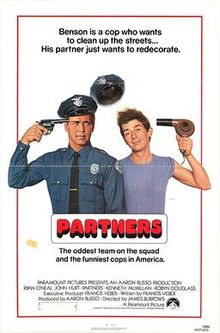
I could only make it through about 30 minutes of Partners and that’s more than enough for at least about 10 lifetimes, I’d say. I gave up on the picture for good around the fourth time star Ryan O’Neal uttered the epithet faggot. Yeah, Partners basically plays Cruising for laughs. Ha-ha, funny … about as funny as punching somebody’s mother in the face.

I consider Partners the absolute worst film from 1982, at least among the 70 or so films that I have seen thus far in my 42 years on this planet. It supplanted Amityville II: The Possession, a lovely little number incorporating blood, vomit, incest, matricide and patricide, fratricide and sororicide, and demonic possession. Never mind Inchon, a $46 million Korean War epic that bombed mightily at the box office with only a $5.2 million return. Never mind Halloween III: Season of the Witch, which features one of the least likable lead characters (Dr. Dan Challis) and lead performances (Tom Atkins) in recent memory. Believe it or not, Partners beats those other films in sheer unpleasantness.

Did longtime TV director James Burrows use Partners for his audition for Will and Grace? I seriously doubt it, because Partners is one of the nastiest pieces of work I have ever seen. Burrows has directed more than 1,000 TV episodes, including 237 Cheers and 75 Taxi and 32 Frasier. Thankfully, Burrows stuck with television after Partners.

Early in the picture, O’Neal asks his boss how he got stuck partnering up (literally) with gay records clerk Kerwin (John Hurt) to infiltrate and investigate a series of murders in the Los Angeles gay community. Anyway, Chief Wilkins (Kenneth McMillan) tells our matinee idol, “Because you’re a good cop, a real good cop. And because of your cute ass.” Maybe that’s how O’Neal himself got the gig. O’Neal certainly dressed up for the part, wearing a ridiculous tank top and then a leather garb in just the portion I watched before saying Roberto Duran on Partners.

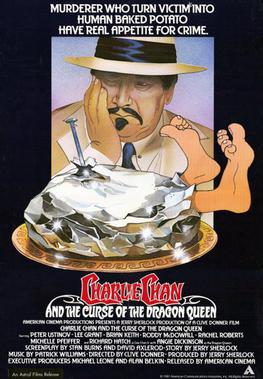
— As I sit here before this keyboard and ponder my next direction, I consider how I endured all 95 minutes or so of Charlie Chan and the Curse of the Dragon Queen, another great big smelly turd from the early ’80s like the ones mentioned about three paragraphs up.

When folks express this incredible nostalgia for the ’80s, undoubtedly it’s not Charlie Chan or Partners or Inchon, for that matter, they’re nostalgic about, because they SUCK in the immortal words of Al from Caddyshack. Then again, if I have learned anything over the years writing about movies or music online, it’s that somewhere in this great big world there’s a cult following Howard the Duck or Halloween III, for example, and they just might flame you for not cherishing their cult object in the same way they do.

Charlie Chan asks us to believe Peter Ustinov (1921-2004), Richard Hatch (1945-2017), and Angie Dickerson as characters of Asian descent. Sure, I believe the Englishman Ustinov as fictional Belgian detective Hercule Poirot (a character he played six times, including features Death on the Nile, Evil Under the Sun, and Appointment with Death) and Roman emperor Nero in Quo Vadis, but I call it more of a stretch to consider him as Chan in 2020, nearly 40 years after the film was made. It’s even worse for both Hatch and Dickerson.

Charlie Chan features plenty of the broadest comedy and frenzied overacting by a rather distinguished cast that also includes Lee Grant, Brian Keith, Roddy McDowall, Rachel Roberts, and Michelle Pfeiffer early in her career. Hatch plays Chan’s fumbling bumbling stumbling grandson Lee Chan Jr. and I’ve watched so many films lately with fumbling stumbling bumbling would-be detectives that I now grumble and rumble when I see them on the screen. I’m thankful my Grandma never behaved like the one played by Grant in Charlie Chan. Keith’s police chief says ‘Goddamn’ about 50 times. McDowall and Roberts play Grant’s domestic helpers, Gillespie and Mrs. Dangers respectively, but they both provide little help to Charlie Chan since they are both in the grand tradition of melodramatic domestic help in the movies; Mrs. Dangers calls to mind Patsy Kelly’s frantic maid in The Gorilla. Pfeiffer could have dialed the perkiness down a notch or few and still have saved enough for the rest of her career. Nearly all of these characters are cringeworthy.

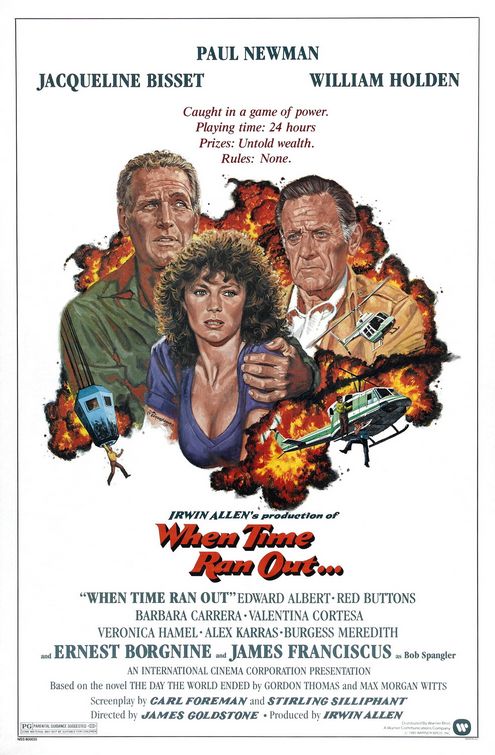
When Time Ran Out came out Mar. 28, 1980 and it eventually fell about $16 million short of making its $20 million production budget back at the American box office.

Later that year, on July 2, Airplane parodied Airport specifically and disaster movies in general, and became one of the biggest hits of the summer and the entire calendar year.

The failure of When Time Ran Out and the success of Airplane signaled the end of the disaster movie, at least in the form that dominated the first half of the seventies with The Poseidon Adventure, Earthquake, and Towering Inferno and then dribbled out pure unadulterated dreck the final half of that decade like The Swarm, Beyond the Poseidon Adventure, and Meteor. Since I mentioned Meteor, I also have to mention Avalanche, which provided disaster footage recycled in Meteor as if being in one disaster of a disaster movie just simply was not enough.

Master of disaster Irwin Allen (1916-91) produced at least half the films mentioned in the paragraph right above this one and he even stepped in the director’s chair for the turkey bombs The Swarm and Beyond the Poseidon Adventure. Allen called on Rollercoaster director James Goldstone for When Time Ran Out, which features the required number of old time movie stars, hot commodities, and fledgling character actors. When Time Ran Out should have been called Take the Money and Run, though Woody Allen and Steve Miller already used it for a comedy (1969) and a hit song (1976).

We have William Holden (1918-81), Paul Newman (1925-2008), Jacqueline Bisset, Ernest Borgnine (1917-2012), James Franciscus (1934-91), Burgess Meredith (1907-97), Red Buttons (1919-2006), Barbara Carrera, Pat Morita (1932-2005), Veronica Hamel, Edward Albert (1951-2006), and Alex Karras (1935-2012), as well as a volcano, a tidal wave, etc.

Seemingly half of the cast takes part in a glorified soap opera before the molten lava really begins to flow and they have to repeat business from Beyond the Poseidon and seemingly every other disaster movie of the era. Here’s that glorified soap opera: Holden proposes to Bisset very early in the movie and she turns him down because she’s in love with Newman, who’s not the marrying kind and anyway he does not seem to much care for Bisset but maybe he’s just masking his true feelings toward her with standard male bluster. Franciscus is married to Hamel but he’s fooling around with half-brother Albert’s significant other Carrera. Just wait, it gets better, Albert does not know that he’s Franciscus’ half-brother … and Holden and Hamel are sleeping together. I think I just about nailed it down and you’re right if you’re thinking all that seems like too much plot for such a dimwitted movie.

You’re also right that I hated these characters and their miserable lives, and rooted for the volcano to wipe them all out.

Especially Franciscus, who takes chronic disbelief in the face of impending disaster to new lows in When Time Ran Out. Unfortunately, an incredibly shoddy special effect leads to an incredibly unsatisfying death for Franciscus’ character. We crave to see him bite the dust or eat molten lava in spectacular fashion, and what we get is just plain laughable.

Of course, just plain laughable describes about 99 percent of When Time Ran Out.

Believe it or not, costume designer Paul Zastupnevich earned an Academy Award nomination for Best Costume Design and went against winner Tess, The Elephant Man, My Brilliant Career, and Somewhere in Time, all of them period films where the look of the film itself becomes another important character.

Yeah, I hope the 1981 Oscar broadcast used a shot of Newman in his utterly ridiculous Urban Cowboy garb.

Zastupnevich received a nomination for the same award two years before for his edgy, state-of-the-art costume work on The Swarm, beekeeper outfits. The Agatha Christie Hercule Poirot period murder mystery Death on the Nile won the prize.

I hate to say it, but time ran out on this review because I don’t want to consider When Time Ran Out any longer than I already have.

Partners No stars; Charlie Chan and the Curse of the Dragon Queen 1/2*; When Time Ran Out *

Rollercoaster (1977)

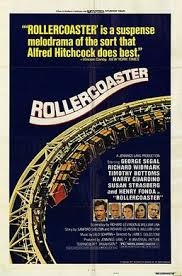
ROLLERCOASTER (1977) *
Rollercoaster, a thriller that combines Peter Bogdanovich’s vastly superior Targets, a disaster movie, and a mad bomber movie, marked the first time I returned to an amusement park since that fateful day on family vacation this past summer at Holiday World in Santa Claus, Indiana.

Everything was fine and dandy, we even maintained social distance and wore our masks as often as possible, until 16-year-old Emily wanted 12-year-old Isaac to ride on a roller coaster. She said he promised that he would try at least one roller coaster with her, he said that he made no such promise, she won’t ride on a roller coaster by her lonesome, he did not budge and refused to ride, and they eventually broke into hysterics and went their separate ways. Emily followed my wife Lynn and I back into the main body of the park and she frequently groused about her younger brother, while Isaac stayed behind and wept for the state of the world or something on a bench.

Two hours later, Emily decided to go to the car and she found Isaac sleeping on a bench just outside the park en route to the parking lot. No big deal, he said, he was tired, so he walked off, walked out, and took a nap. He did look a little refreshed.

I virtually walked the entire length of Holiday World twice over looking for Isaac to no avail and I lost count of every Beatles, every Beach Boys song the park blasted that day over the loud speakers. I had precise numbers, and they were gone. Lynn and I were obviously not pleased with either Emily or Isaac, and this is the first time I have spoken publicly about that Sunday afternoon in a place seven hours away from home.

The best thing about Rollercoaster, aside from the fact that it finally ended, is that it put that day in Santa Claus in perspective. I mean, yeah, at least we didn’t have happen to us what happened to the characters in Rollercoaster, especially at the 10-minute mark in the movie when our resident mad bomber (just call him The Mad Bomber with No Name who apparently represents something about our fears) played by Timothy Bottoms blows up a section of track and spectacularly derails a roller coaster. Needless to say, Universal Studios released Rollercoaster — in Sensurround, which Universal head Sidney Sheinberg called as big as any star in the movies — in June ’77 and a little release named Star Wars blew it away. Universal made just one more film in Sensurround. Big star?

Bottoms’ bomber presents one fundamental problem, because we never learn even his name or his motivation or much of anything ’bout him or even see that he enjoys being a mad bomber. He’s a cipher who’s not even mad enough in either way to justify being called a mad bomber. So when he meets his inevitable demise in the film’s grand finale, I felt no joy and only relief because it finally put this two-hour movie to pasture where it can rest in manure for eternity.

Here’s that perspective: Rollercoaster and that ordeal in Holiday World both lasted about two hours in real time, and both felt much longer. Yeah, I don’t much care for roller coasters in real life or captured on celluloid.

In closing, I should mention that Helen Hunt and Steve Guttenberg make their feature film debuts, iconic actors Henry Fonda and Richard Widmark appear here strictly for the money, and the eccentric rock band Sparks reportedly calls their cameo appearance in Rollercoaster — where they perform two songs from their 1976 LP Big Beat — the biggest regret of their career.

What’s Good for the Goose May Not Be Good for the Gander

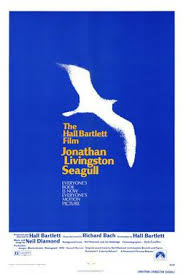
WHAT’S GOOD FOR THE GOOSE MAY NOT BE GOOD FOR THE GANDER: JONATHAN LIVINGSTON SEAGULL & MILLION DOLLAR DUCK

Jonathan Livingston Seagull felt like the cinematic equivalent of a bird pooping on you for 99 long, long, long minutes. How long? It felt twice as long as watching Shoah.

By the way, what did that bird spray on its way? A whole load of New Age gobbledygook that gobsmacked me right in the kisser. I’ll stand with the flock of seagulls in this case, thank you very much, and put Jonathan Livingston Seagull on blast for being one festering piece of poo.

The nature photography and some level of admiration for exactly how they filmed it earn Jonathan Livingston Seagull one star, and that’s definitely more than our next specimen. However, I hate Neil Diamond’s songs and the birds’ outer-inner monologues, and I desperately wish Jonathan Livingston Seagull was a silent movie. Maybe I should have watched it muted. My bad.

For example, there’s six-and-a-half minutes of a Diamond concoction named “Be.” Maybe just maybe it will replace “Sweet Caroline” as the Great American Sing-a-Long. This sports writer can only hope after 10 years of hearing “Sweet Caroline” at every single baseball game. I’ll have endless admiration for a crowd that could make something timeless from lyrics the likes of “Be / As a page that aches for words / Which speaks on a theme that’s timeless / While the Sun God will make for your day / Sing / As a song in search of a voice that is silent / And the one God will make for your way.”

Early on in Jonathan Livingston Seagull, it tricked me into thinking I might be stumbling into a remake of the Alfred Hitchcock classic The Birds. Oh, how I wish it were true. Guess I can wish in one hand and have bird shit in the other.

Now, we come to Million Dollar Duck, a Walt Disney Studios production from 1971 that must have created a commotion back then, namely the sound of Uncle Walt rolling over in his grave at the abysmal quality of what might quite possibly be “one of the most profoundly stupid movies I’ve ever seen.” Roger Ebert and Gene Siskel agreed, because I quoted Ebert and now I will mention that Siskel walked out on Million Dollar Duck.

For the record, I endured about one hour and I stopped watching Million Dollar Duck right around the point when they brought out a photo of Richard Nixon and the stereotype of a Japanese diplomat carried over from World War II propaganda. At that point, I told Million Dollar Duck to go straight to The Devil and Max Devlin.

Sandy Duncan’s Katie Dooley has a beat on being the single dumbest character in cinematic history, and yes, that’s including any dumb character played by Pauly Shore or Adam Sandler and Lloyd and Harry from Dumb and Dumber, for crying out loud. You wonder how Katie Dooley and her brilliant husband Professor Albert Dooley (Dean Jones) ever created a child, let alone one of those precious, er, precocious Disney brood, er, children that could kill Damien with kindness.

The other dumb characters are not far behind, who are all dumber than the title character who earns the title, you guessed it, by laying golden eggs. Million Dollar Duck certainly laid an egg, all right, definitely not golden.

Once upon a time, my Grandma told me the story of how a bird found my Grandpa’s bald head in their back yard one day and how the bird started pecking away on that bald head. Actually, she told me that story a few times over the years and I must admit that I thought about it and pictured my poor Grandpa being pecked by that bird during both Jonathan Livingston Seagull and Million Dollar Duck. Finally, though, I cannot hate Jonathan Livingston Seagull and Million Dollar Baby too much because they helped me think about my grandparents and I have settled on the thought that one day I will tell my grandchildren about that one fateful night I watched Jonathan Livingston Seagull and Million Dollar Duck back-to-back and how I lived to tell the tale.

The Magic of Lassie (1978)

THE MAGIC OF LASSIE

THE MAGIC OF LASSIE (1978) *

Nostalgia became a dominant cultural force in the 1970s, between AMERICAN GRAFFITI, “Happy Days,” ANIMAL HOUSE, ROCKY, STAR WARS, SUPERMAN, and THAT’S ENTERTAINMENT I and II.

Nostalgia also explains THE MAGIC OF LASSIE, in everything from everybody’s favorite cinematic collie to genial old timers James Stewart and Mickey Rooney to the songs by Richard M. and Robert B. Sherman and especially the values implied and directly stated by Lassie, Stewart, Rooney, and their songs.

The picture opens, for crying out loud, with All-American cinematic icon Jimmy Stewart singing “That Hometown Feeling.” I came up with a couple quick reactions: Thankfully, Stewart rarely ever sang during his long entertainment career; They are laying it on awful darn thick real quick in this pic. Of course, paraphrasing Bachman-Turner Overdrive, I hadn’t seen nothin’ yet. Is BTO on the soundtrack? No, but Stewart, Mickey Rooney, Debby Boone, and the Mike Curb Congregation are instead … hot diggity dog!

I just moaned and groaned about the Sherman Bros. songs in the 1972 animated SNOOPY, COME HOME, a picture about 10 or 50 or 100 times better than THE MAGIC OF LASSIE even with them darn songs.

In addition to songs that might cause somebody to wish for temporary hearing loss, THE MAGIC OF LASSIE relies heavily on a couple of my least favorite plot devices: A shady businessman leans on a property owner to sell his property (in this case a vineyard) and (mostly) comic villains ineptly chase our heroes.

In some real cutthroat business practices, Jamison takes Lassie away from kind old Grandpa Clovis Mitchell (Stewart) and his feisty grandchildren Kelly (Stephanie Zimbalist) and Chris (Michael Sharrett) and that horrible man makes it all the way to Colorado Springs with the prized bitch. Lassie runs away, headed for California. Chris runs away, headed for Colorado. Clovis takes off to look for Chris and Lassie. Clovis and Chris should be thankful, eternally grateful that Lassie’s the absolute smartest character in the entire movie, although maybe she wished she wasn’t so smart because her name would not have been in the title. Then again, wasn’t Lassie’s name always in the title of her entertainment packages?

It would take approximately 20 hours by automobile to get from Colorado Springs back to Sonoma (filming location of THE MAGIC OF LASSIE) and walking amounts to a trip lasting 414 hours. There are moments when THE MAGIC OF LASSIE feels like it lasts that long.

They really burden Lassie with some indignities during THE MAGIC OF LASSIE, all within that glorious ‘G’ rating. At least three name changes. A nasty addiction to banjo. Lassie rescues a cat from a burning building. That last one, why that’s just going way, way, way too far. I hope they paid her owners very handsomely.

Believe it or not, centerpiece song “When You’re Loved” (seen and heard in by my count two would-be feel good montages during the 100-minute cinematic endurance contest) received a nomination for Best Original Song at the 51st Academy Awards. I really can believe it, though, that “When You’re Loved” lost to Donna Summer’s “Last Dance” from THANK GOD IT’S FRIDAY.

By the end of THE MAGIC OF LASSIE (or TGIF, for that matter), though, all I was saying was “Thank God It’s Over.”

The In-Flight Double Feature: Airplane!, Airplane II: The Sequel

AIRPLANE!, AIRPLANE II: THE SEQUEL

AIRPLANE! contributed to the demise of the dominance of the disaster film just as much as beyond lackluster disaster films AVALANCHE, THE SWARM, WHEN TIME RAN OUT, BEYOND THE POSEIDON ADVENTURE, and AIRPORT ‘77 and THE CONCORDE … AIRPORT ‘79. It was like the decisive blow and disaster movies disappeared for many years.

AIRPLANE satirized disaster films in general and the AIRPORT series in particular. The team of Jim Abrahams, David Zucker, and Jerry Zucker ripped their ridiculous plot straight from the 1957 Paramount Pictures film ZERO HOUR starring an exclamatory title and Dana Andrews, Linda Darnell, Sterling Hayden, and Elroy “Crazy Legs” Hirsch. I watched ZERO HOUR (sans exclamation) after learning of the fact that it directly inspired AIRPLANE, and it’s scary how much AIRPLANE lifted from the earlier film. It is also fitting, because Arthur Hailey co-wrote the screenplay for ZERO HOUR and wrote the 1968 novel AIRPORT that became the beginning of the disaster film craze when AIRPORT hit box office gold upon its March 1970 release.

A decade later, millions were obviously clamoring for a sledgehammer attack on disaster films, because AIRPLANE finished behind only THE EMPIRE STRIKES BACK, 9 TO 5, and STIR CRAZY at the American box office in 1980.

Abrahams, Zucker, and Zucker not only had their way with disaster films, but they ripped to shreds both famous individual scenes (SATURDAY NIGHT FEVER, FROM HERE TO ETERNITY, KNUTE ROCKNE ALL-AMERICAN) and standard narrative devices. They especially had some devious fun with flashbacks and voice-over narration courtesy our rather square, good-looking protagonist with a troubled past (Robert Hays’ Ted Striker a perfect match for Dana Andrews’ Ted Stryker in ZERO HOUR. Andrews’ Stryker also brings to mind his troubled character 11 years earlier in THE BEST YEARS OF OUR LIVES).

In the process of satirizing movie genres, AIRPLANE created its own genre that has endured far longer than disaster films and gave birth to new old movie stars like Leslie Nielsen, Lloyd Bridges, Robert Stack, and Peter Graves, whose ability to play it straight at every moment made at least half the joke work.

(Disaster films have periodically made huge comebacks like when INDEPENDENCE DAY, TWISTER, and ARMAGEDDON became super blockbusters late in the apocalypse-minded 20th Century. Definitely not my favorite trend. For the record, I hate both TWISTER and ARMAGEDDON, and I have never managed to make it through INDEPENDENCE DAY in spite or more precisely because of all the hype and euphoric glee that came with it and still comes with it years later.)

Yes, we have seen virtually every movie genre under the sun parodied, quoted, and (less frequently) satirized. We have lived through all the immediate AIRPLANE imitations, the Z-A-Z Boys’ own movies, and everything from the works of the Wayans Brothers to Jason Friedberg and Aaron Seltzer. At some point, let’s say early in the 21st Century, I dreaded the parody movie even more than its various targets.

Most of these later parodies miss the satirical bent that gave AIRPLANE, TOP SECRET, and THE NAKED GUN, as well as Mel Brooks’ YOUNG FRANKENSTEIN, BLAZING SADDLES, HISTORY OF THE WORLD PART 1, and SPACEBALLS, their special verve. The later parodies seem far more willing to merely quote from a blockbuster movie and to just leave it at that. “You’ve seen it before and now, let’s see it again, only done less effectively.” Honestly, what’s the point and more precisely, what’s so funny about that?

For many years, I passed on AIRPLANE II: THE SEQUEL, especially after learning that Zucker, Abrahams, and Zucker were not involved. The boys apparently sent out a press release before the release of the sequel that stated just that.

The crack research team just unearthed this David Zucker gem from 2015: “Jim just said, ‘If your daughter became a prostitute, would you go and watch her work?’” That’s one way to look at THE SEQUEL, one of the cheaper, less essential AIRPLANE imitations out there. The addition of more stars (Raymond Burr, Chuck Connors, William Shatner) makes it even cheaper.

I laughed a couple and smiled a few times during THE SEQUEL, but mostly I watched this comedy that attempts maybe 500 jokes in an indifferent state. The laughs were front-loaded and I found it challenging to even remember them at the back end of the picture. Have you ever had that feeling, where you’re stuck in the middle of a movie thinking about how much you were enjoying it earlier and now you’re dreading it and the remaining seconds and minutes?

There’s almost nothing worse in the movie world than a comedy that fails, since most human life forms love to laugh, even or especially at the dumbest and corniest jokes. We are prepared to laugh during a comedy. We want to laugh. So, when you find very little or absolutely nothing to laugh at over 84 minutes, all this hostility builds up inside you and you get very upset about how you have wasted 84 minutes of precious time which you could have wasted on something else.

Never mind, I should have passed on THE SEQUEL and just watched AIRPLANE one more time.


AIRPLANE! ***1/2; AIRPLANE II: THE SEQUEL **

Goin’ Coconuts (1978)

GOIN’ COCONUTS (1978) 1/2*

In the distant future, one of the great mysteries of human behavior will be why there were so many teen idols after, oh, let’s say, 1955. Imagine trying to explain Tiger Beat, Joey Lawrence, Jonathan Taylor Thomas, NSYNC and the Backstreet Boys, and Justin Bieber to future generations.

I can only hope that future rational beings will reach the conclusion that many people (mostly girls, but also boys with such beacons of humanity as Britney Spears, Paris Hilton, Kim Kardashian, et cetera ) in the late 20th and early 21st centuries obsessed about the shallow and the superficial and the stupid and such attributes as perfect hair, perfect teeth, and dimples. “He / She has got such a perfect body. He’s so cute. She’s so hot.” All that jive can just go fuck off.

I thought about this “teen idol” angle during and after GOIN’ COCONUTS, the motion picture debut and finale of former teen idols Donny and Marie Osmond. Since I watched it after SLITHIS, I just might have survived the worst two movies I have ever seen back-to-back; I am blanking on whether or not I ever watched BATTLEFIELD EARTH after LEONARD PART 6 or vice versa.

Anyway, I hated just about every second of GOIN’ COCONUTS. Hated every musical number. Hated every bit of perfunctory dialogue. Hated every single attempt at humor. Hated the jewelry caper story and every single plot development that we have seen before from a million different movies and TV shows. Hated seeing legendary movie villains being reduced to buffoons for comedic purposes that miserably failed. Hated it the longer it went on. I rejoiced at the first sight of the end credits and turned off the movie. I didn’t even care all that much about the Hawaiian scenery, just because we had to watch this stupid movie take place within it.

I felt especially bad for actors like Kenneth Mars, Ted Cassidy, Khigh Dhiegh, and Harold Sakata. But, hey, not that bad, since they got paid and had the opportunity to make a movie in Hawaii. That sounds great right about now. I could go for that, even a movie as shitty as GOIN’ COCONUTS.

The reason I felt bad for them was they had to play cosmically inept. Like, for example, Sakata’s Ito could not take out Donny Osmond, for crying out loud. The filmmakers made the dread mistake of costuming Sakata (1920-82) in the same hat that he wore in GOLDFINGER as super henchman Oddjob. Sure we all remember what Oddjob did with his hat in GOLDFINGER; let’s just say that he wears the hat throughout GOIN’ COCONUTS and that’s that. It’s so insulting to see a World War II veteran and an Olympic silver medalist in weightlifting (Sakata represented the United States in the 1948 Summer Olympics in London) reduced to playing the fool, thwarted at every churn of the plot by a couple teen idols and their perfect teeth.

Dhiegh (1910-91) played a key role in THE MANCHURIAN CANDIDATE as brainwashing expert Dr. Yen. Yes, THE MANCHURIAN CANDIDATE, one of the most intelligent movies ever made. Then, 16 years later, Dhiegh appeared in GOIN’ COCONUTS, which should have borrowed from THE WIZARD OF OZ its musical theme … “If I Only Had a Brain.” Again, it simply defies all credibility that Dhiegh’s character would be outsmarted by a pair of coconuts.

In GOIN’ COCONUTS, Mars (1935-2011) more or less gives us a variation on his characters from the Mel Brooks comedies THE PRODUCERS and YOUNG FRANKENSTEIN, only without the laughs.

Cassidy (1932-79) played Lurch on “The Addams Family” and would it have been too much to ask director Howard Morris (who played Ernest T. Bass on “The Andy Griffith Show”) and screenwriters William Marc Daniels and Raymond Harvey to include a gag where Cassidy’s Mickey answers the phone with “You rang.” Yes, of course, it would have been too much to ask. That’s silly to ask if you’ve survived GOIN’ COCONUTS.

It was a pathetic sight every time watching these villains shoot their guns at Donny and Marie. They should have been sent back to marksmanship class or had their diabolical henchmen licenses revoked.

Aside from the end credits, there was something else great about GOIN’ COCONUTS. Since it failed at the box office, Donny and Marie made only this one movie rather than a series of Donny and Marie spectaculars. They returned to their variety show where they belonged with their aw shucks gee whiz nature and perfect teeth intact.

A New World Pictures Double Feature: Avalanche & Piranha (1978)

A NEW WORLD PICTURES DOUBLE FEATURE: AVALANCHE & PIRANHA (1978)

Two New World Pictures exploitation films entered the Great American box office sweepstakes in August 1978.

One became a surprise hit and the other dramatically flopped.

Roger Corman, a man of a million film productions, tossed his hat into the disaster movie ring with AVALANCHE, while PIRANHA riffed on the killer fish blockbuster JAWS.

PIRANHA, directed by Joe Dante and populated by experienced character actors like Bradford Dillman and Keenan Wynn and Dick Miller, recouped its budget and then some and spawned one sequel and at least two remakes.

Star actors Rock Hudson (1925-85) and Mia Farrow headline the human cast of AVALANCHE and New World invested a reported $6.5 million on the picture, a great deal more $ than PIRANHA. You know that it did not go very well for AVALANCHE when its greatest claim to fame is that it made “The Official Razzie Movie Guide” honoring the 100 most enjoyably bad movies ever made.

This bad movie enthusiast, however, did not enjoy AVALANCHE. I found it to be a long slog. I mean, I felt like the one climbing the mountain to get through its 90-odd minutes.

First and foremost, it’s a soap opera in the shape of a ski resort hosting a ski tournament and a figure skating competition. Egads! Magazine reporter Caroline (Farrow) divorced control freak and wealthy ski resort owner David (Hudson). You guessed it, David wants her back, wants her to use his last name rather than her maiden name, she keeps him at arm’s length, and she attaches herself to another man, which only infuriates Mr. Control Freak. Man oh man, that scene on the dance floor when David flips on Caroline, I wanted to bury my head in the snow.

That’s not all: We have David’s spirited mother, an elite skier who seems to be even better as lothario, competing figure skaters, competing lovers, a television reporter, and a nosy photographer. Remember, we need a body count.

That nosy photographer (Robert Forster) and David act out a scene near and dear to disaster movie connoisseurs everywhere. Nick Thorne, the nosy photographer’s name, warns David there’s an avalanche coming and that everybody’s in danger. Any of us could write the rest of the scene and, for that matter, the rest of the movie.

Disaster movies often create a dilemma in our hearts and minds: We desperately want the disaster to come and take us away from the phony baloney dialogue and situations. Yes, I’ll say it, the characters deserve to die a dramatic cinematic death sooner rather than later. … Then, when disaster strikes, disaster movies invariably give us scenes just as phony baloney as before. That’s what happens in AVALANCHE.

Director and screenwriter Corey Allen (1934-2010) blamed AVALANCHE’s disaster as a movie on budget cuts and a tight production schedule, whereas Corman said PIRANHA succeeded because it’s funny and very well directed.

I agree.

PIRANHA tips its humorous hand very early on when one of the main characters plays the classic Atari “Shark Jaws” arcade game. Then, we have classic lines like “They’re eating the guests, sir” and “People eat fish. Fish don’t eat people” and “Terror, horror, death. Film at eleven.” Those with a darker sense of humor may find a friend in PIRANHA. We can thank John Sayles for the script.

I’ve said it before and I’ll gladly say it again: Joe Dante is one of the best American directors. His credits include GREMLINS, GREMLINS 2: THE NEW BATCH, THE HOWLING, THE ‘BURBS, MATINEE, and SMALL SOLDIERS. I don’t think he’s ever let me down, and he does not let me down in PIRANHA.

PIRANHA goes cheerfully over-the-top.

For example, JAWS eliminates one kid. PIRANHA takes out virtually an entire summer camp in grisly detail. I’ve known people who hate PIRANHA because of this one sequence.

Roger Ebert began his one-star review, “I walked into PIRANHA wondering why the U.S. government would consider the piranha to be a potential secret weapon. After all, I reasoned, you can lead the enemy to water but you can’t make him wade. I was, it turns out, naive. PIRANHA is filled with people who suffer from the odd compulsion to jump into the water the very moment they discover it is infested by piranhas.”

Of course, the characters in PIRANHA have a compulsion to jump into piranha-infested waters. Honestly, that’s all part of the joke and part of the fun, especially when Kevin McCarthy works up a variant on his INVASION OF THE BODY SNATCHERS performance.

Just like it’s fun seeing Dick Miller doing his take on Murray Hamilton’s mayor in JAWS. Miller, of course, does not want to hear about top secret scientifically-engineered killer piranhas (created through Operation: Razorteeth) and he does not cancel his party for prospective home buyers. You can guess what happens to most of them home buyers. Yes, PIRANHA takes many of the elements from JAWS and pushes them to extremes.

I enjoyed PIRANHA quite a bit, for its tongue-in-cheek humor and film buff references. There’s brilliant little touches strewn throughout the film, like Phil Tippett’s stop-motion animation creation in McCarthy’s lab. He’s the scientific genius behind them super killer fish, who are released into the system by our heroes played by Dillman and Heather Menzies. Anyway, this stop-motion creation, part-fish and part-lizard, epitomizes the generosity of PIRANHA in general. The film gives us a lot to enjoy.

The credits for PIRANHA are first-rate: Dante, Sayles, Tippett, composer Pino Donaggio, editors Dante and Mark Goldblatt, and makeup effects creator Rob Bottin. They all have done some fine work during their careers, inc. PIRANHA.

Steven Spielberg, the director of JAWS, reportedly considered PIRANHA the best of the many JAWS rip-offs and his approval expressed to Universal stopped the studio from pursuing an injunction against New World for PIRANHA. Universal’s first JAWS sequel, JAWS 2, came out two months before PIRANHA.

AVALANCHE (1978) *; PIRANHA (1978) ***