Foul Play (1978)

FOUL PLAY

FOUL PLAY (1978) Three stars

Universal Studios demanded that Chevy Chase, the first breakout star from “Saturday Night Live,” be cast in NATIONAL LAMPOON’S ANIMAL HOUSE. However, in a lunch between ANIMAL HOUSE director John Landis, producers Matty Simmons and Ivan Reitman, and Chase, Landis played a Jedi mind trick on Chase, telling him that ANIMAL HOUSE would be an ensemble piece whereas FOUL PLAY would let Chase be a star. Chase stayed with FOUL PLAY and ANIMAL HOUSE cast Tim Matheson in the Otter role.

FOUL PLAY debuted July 14, 1978, and ANIMAL HOUSE came out two weeks later.

ANIMAL HOUSE made $141.6 million on a $3 million budget and changed the face of comedy forever. Yes, every year we get at least one comedy that would not have been possible without the example set by ANIMAL HOUSE. Meanwhile, FOUL PLAY generated $45 million and has been consigned to the margins of history.

It’s certainly not a bad movie by any stretch of the imagination, but it does pale in comparison when stacked up against ANIMAL HOUSE. Granted, FOUL PLAY chased different goals than the undeniably anarchic, anti-establishment ANIMAL HOUSE.

FOUL PLAY is the byproduct of writer and director Colin Higgins (1941-88). He’s one of those cases where you just might not know the name but you definitely know his movies. He made his name in Hollywood by penning the screenplay for the legendary cult favorite HAROLD AND MAUDE (1971). Five years later, he wrote the screenplay to SILVER STREAK, a comedic thriller hit pairing Gene Wilder and Richard Pryor. Higgins made his directorial debut with FOUL PLAY and would end with three directorial credits, 9 TO 5 and THE BEST LITTLE WHOREHOUSE IN TEXAS his second and third efforts. Additionally, Higgins wrote the screenplay for all three comedies he directed. All five comedies enjoyed some level of success.

Nominally Chase and Goldie Hawn are the stars of FOUL PLAY, but the writing and directing style of Higgins should not go unappreciated.

Both SILVER STREAK and FOUL PLAY stand out from HAROLD AND MAUDE, 9 TO 5, and THE BEST LITTLE WHOREHOUSE, in the fact they are heavily influenced by Alfred Hitchcock. SILVER STREAK screams Hitchcock’s 1938 thriller THE LADY VANISHES and FOUL PLAY references THE 39 STEPS, SABOTEUR, NORTH BY NORTHWEST, THE MAN WHO KNEW TOO MUCH, NOTORIOUS, VERTIGO, and PSYCHO. Fans of the Master of Suspense will also be delighted by Higgins’ inclusion of what the maestro called “The MacGuffin,” which is a roll of film hidden in a pack of cigarettes in FOUL PLAY.

I know that Hitchcock himself loved Mel Brooks’ HIGH ANXIETY, a 1977 affectionate spoof of suspense films mostly focused on Hitchcock’s SPELLBOUND, VERTIGO, PSYCHO, and THE BIRDS, so it is quite possible that he enjoyed FOUL PLAY.

In FOUL PLAY, librarian Gloria Mundy (Hawn) finds herself in the midst of a bizarre plot that ultimately involves an assassination attempt on the pope. We have a dwarf, an albino, a wild and crazy guy who attempts to seduce Miss Mundy, a karate fight between two highly unlikely combatants, an endless chase scene, and a pair of Japanese tourists who are big fans of Kojak and bang, bang! This is a pleasantly silly concoction and Hawn takes us through what turns out to be an overlong motion picture at 115 minutes. Or maybe it just felt that way every single damn time I heard the song “Ready to Take a Chance Again,” which predated the similar use of the song “That’s What Friends Are For” a few years later in NIGHT SHIFT. In both cases, I was ready to hear another song again instantly.

What about Chase? He’s part of an ensemble and he almost gets lost in the shuffle at times in his first movie leading role, but this is one of his better performances and his best films. Chase plays a capable leading man paired with Hawn.

Dudley Moore (1935-2002) basically steals every scene that he’s in and his work here led to his being cast in Blake Edwards’ 10, Burgess Meredith (1907-97) made four movies in 1978 and this is the one where his character knows martial arts, and Rachel Roberts’ last screen credit before FOUL PLAY was the eccentric Australian thriller PICNIC AT HANGING ROCK. Moore and Brian Dennehy, Chase’s partner, appeared together in 10.

FOUL PLAY is a minor film with minor charms, but sometimes that’s more than enough or just enough to hit the spot.

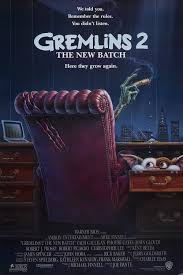
Gremlins 2: The New Batch (1990)

GREMLINS 2

GREMLINS 2: THE NEW BATCH (1990) Four stars

I watched GREMLINS 2: THE NEW BATCH for the first time sometime that summer after it first attacked multiplexes on June 15, 1990.

I wanted to see it badly, since I absolutely loved the original GREMLINS and felt hyped up additionally by the TV ads. I saw it at the Pittsburg 8 during a calendar year (1989-90) that brought multiplex trips to BATMAN, BACK TO THE FUTURE PART II, PARENTHOOD, and TEENAGE MUTANT NINJA TURTLES.

GREMLINS 2 did not let me down, I loved it then and I love it now after having seen it several times, and it has remained one of the most pleasurable multiplex experiences of my life. It’s lingered in my head all these years.

For example, every time since watching GREMLINS 2, when I hear Frank Sinatra’s “New York, New York,” I cannot help but replace it with the Gremlins’ grand production number inside my head. Watching the horribly overrated SHAME (2011) quite a few years back, I wished that GREMLINS 2 and SHAME were spliced together and the little beasties would ruin Carey Mulligan’s showcase rendition.

I’ve heard that GREMLINS 2 is an acquired taste and that you have to be in a certain mood to watch it. Well, I can say that I have acquired that taste and I don’t know, I’m always in the mood to watch a good movie.

“Silly rather than scary like the first GREMLINS” is the verdict on GREMLINS 2 and what people really mean when they spew the party line about being in that certain mood.

— GREMLINS 2 is a running commentary on sequels — everything from merchandising to an endless supply of new characters to sharp but affectionate jabs at the rules of the GREMLINS world and movie sequels in general.

It attempts to be an anti-sequel.

“When I was asked to do the sequel, which I originally turned down because it was so hard to make the first one,” director Joe Dante said in a 2015 interview. “The only reason I decided to make the sequel was because years later they had tried to make a sequel and couldn’t figure out how to do it, and they really wanted another one. So they said to me, ‘If you give us a couple of cans of film with gremlins in them next summer, you can do whatever you want.’ And they gave me three times the money we had to make the first one. So I made GREMLINS 2, which was essentially about how there didn’t need to be a sequel to GREMLINS.”

— We all know the three rules from GREMLINS: Don’t get them wet; Don’t expose them to bright light (especially sunlight, it will kill them); Don’t feed them after midnight.

Naturally, in GREMLINS 2, supporting characters in a control room challenge the hero Billy after he shares the rules.

“What if one of them eats something at 11:00, but then he gets something stuck in his teeth?”

“Like a caraway seed or a sesame seed?”

“And after 12:00, it comes out. Now, he didn’t eat that after midnight.”

It goes on.

“Wait, what if they’re eating in an airplane and they cross a time zone? I mean, it’s always midnight somewhere.”

I am sure many of us asked the burning question, “Isn’t it always after midnight?”

— Mr. and Mrs. Murray Futterman, whom we all thought met their demise in GREMLINS, return for the sequel. That guy Dick Miller (1928-2019) and Jackie Joseph (born 1933) reprise their roles, partly because it’s a Joe Dante movie and what’s a Joe Dante movie without Dick Miller.

— GREMLINS sparked much controversy over its ‘PG’ rating and parents complained about the film, a fact incorporated into GREMLINS 2.

From a 1984 article in The Christian Science Monitor, “Recent releases such as INDIANA JONES AND THE TEMPLE OF DOOM and GREMLINS have spurred controversy about their PG ratings. Many parents felt the violent content and some of the special effects warranted a stiffer rating. A significant number of directors, producers, and theater owners agreed and pushed for a change.”

Hence, the PG-13 rating was born and it debuted with the release of RED DAWN on Aug. 10, 1984.

— Film critic Leonard Maltin, a fan of Dante and his work, gave a negative review to GREMLINS.

“A teenager’s unusual new pet spawns a legion of vicious, violent monsters who turn picture-postcard town into living hell. Comic nightmare is a cross between Capra’s IT’S A WONDERFUL LIFE and THE BLOB; full of film-buff in-jokes but negated by too-vivid violence and mayhem.”

Maltin then makes a gratuitous cameo appearance in GREMLINS 2, where he’s mauled by the new batch for his negative review of the original film. Maltin’s famous last words, “Ow. I was just kidding. Ah. It’s a 10. It’s a 10.”

— At one point in GREMLINS 2, the title monsters disrupt their own film and it takes a threat from Hulk Hogan to get the picture back on track. …

“Okay you guys, listen up! People pay good money to see this movie! When they go out to a theater they want cold sodas, hot popcorn, and no monsters in the projection booth! Do I have to come up there myself? Do you think the Gremsters can stand up to the Hulkster? Well, if I were you, I’d run the rest of GREMLINS 2! Right now! Sorry folks, it won’t happen again.”

— Phoebe Cates became famous predominantly for two scenes: doffing her bikini top to the tune of the Cars’ “Moving in Stereo” in FAST TIMES AT RIDGEMONT HIGH and her ‘Why I hate Christmas’ speech in GREMLINS. In GREMLINS 2, Cates’ Kate starts on a speech why she also hates Lincoln’s birthday.

— GREMLINS and GREMLINS 2 main protagonist Billy Peltzer’s inept inventor father Rand (Hoyt Axton) played a pivotal role in the first movie. Rand Peltzer gets an upgrade in GREMLINS 2. We get eccentric billionaire Daniel Clamp (John Glover), a combination of Donald Trump and Ted Turner, whose technological innovations inside his wonderful Clamp Tower never seem to work properly. I get a kick from the building announcements, for example “Tonight, on the Clamp Cable Classic Movie Channel, don’t miss CASABLANCA, now in full color with a happier ending.”

The title characters take over Clamp Tower, creating all sorts of memorable scenes.

— I should perhaps mention the diabolical Dr. Catheter (Christopher Lee), identical twins Martin and Lewis played by identical twin actors Don and Dan Stanton, Grandpa Fred (Robert Prosky) clearly inspired by Grandpa (Al Lewis) from “The Munsters,” the appearance of the Batman logo, and a talking Gremlin named Brain (voiced by Tony Randall) who gets an opportunity to sum up the ethos of the beasts.

“The fine points: diplomacy, compassion, standards, manners, tradition … that’s what we’re reaching toward. Oh, we may stumble along the way, but civilization, yes. The Geneva Convention, chamber music, Susan Sontag. Everything your society has worked so hard to accomplish over the centuries, that’s what we aspire to; we want to be civilized.”

Of course, in the very next moment, Brain takes out his gun and shoots dead a goofy acting Gremlin.

Civilization is very hard to come by.

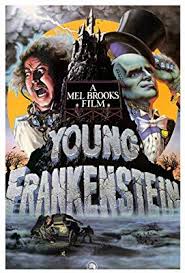
Young Frankenstein (1974)

YOUNG FRANKENSTEIN

YOUNG FRANKENSTEIN (1974) Four stars

Over a 20-year period from the late ‘60s to the late ’80s, Mel Brooks directed a series of inspired comedies: THE PRODUCERS, THE TWELVE CHAIRS, BLAZING SADDLES, YOUNG FRANKENSTEIN, SILENT MOVIE, HIGH ANXIETY, HISTORY OF THE WORLD PART I, and SPACEBALLS.

I’ll choose YOUNG FRANKENSTEIN as his best (i.e. my favorite) work.

It’s not his funniest work, per se, but you could put it on a DVD following FRANKENSTEIN, BRIDE OF FRANKENSTEIN, SON OF FRANKENSTEIN, and THE GHOST OF FRANKENSTEIN and it would be perfect. In fact, YOUNG FRANKENSTEIN nearly gives you the feeling that it’s a lost classic from Universal Studios during their reign of terror.

Brooks and co-writer and star Gene Wilder obviously loved Universal classics like FRANKENSTEIN. Brooks’ last feature film, DRACULA: DEAD AND LOVING IT, came in 1995, so Brooks took on Universal’s two most legendary monsters.

We can be sure the big boys at 20th Century Fox did not want YOUNG FRANKENSTEIN made in black & white. Some folks are guaranteed to say, “Black & white will never work again,” but what about every time it has worked over the years.

Wilder and Brooks based their characters on Mary Wollstonecraft Shelley’s original classic novel. They might as well have credited the screenwriters for the old Universal FRANKENSTEIN pictures.

All the technical people deserve their fair share of the credit for YOUNG FRANKENSTEIN: John Morris’ musical score, Gerald Hirschfeld’s cinematography, John C. Howard’s editing, Dale Hennesy’s production design, Robert De Vestel’s set decoration, Dorothy Jeakins’ costume design, and Edwin Butterworth’s, Mary Keats’, and William Tuttle’s work in the makeup department.

YOUNG FRANKENSTEIN benefits from using some of the same sets the original FRANKENSTEIN used.

Beyond the overall look and style of the picture, though, both the performances and the jokes are their usual grab bag that’s found in a Mel Brooks film.

Wilder’s obits called him “A Master of Hysteria” and he gave some of his defining performances in Mel Brooks comedies, namely THE PRODUCERS, BLAZING SADDLES, and YOUNG FRANKENSTEIN. There’s even the legendary “I’m hysterical and I’m wet” scene in THE PRODUCERS. Honestly, though, I prefer Wilder when he’s more calmer, more restrained and that patented hysteria did not work as well in his later pictures.

Wilder’s hysteria fits Dr. Frederick Frankenstein, the grandson of Victor Frankenstein, because British actor Colin Clive (1900-37) specialized in a bit of hysteria in FRANKENSTEIN and BRIDE OF FRANKENSTEIN.

Brooks himself does not appear as a main character in YOUNG FRANKENSTEIN, which differentiates it from later Brooks productions like SILENT MOVIE, HIGH ANXIETY, and HISTORY OF THE WORLD PART I.

Marty Feldman (1934-82) was perfect for the role of Igor (pronounced “EYE-gore”), Frankenstein’s hunchback compadre. Madeline Kahn (1942-99), Cloris Leachman, and Teri Garr insure that it’s not all about the boys — Kahn eventually makes a perfect bride for The Monster after being engaged to Frankenstein, Leachman plays a character and a name (Frau Blucher) loved by horses, and Garr’s cleavage deserves its own screen credit. Kenneth Mars’ police inspector Hans Wilhelm Friedrich Kemp calls to mind Dr. Strangelove in addition to his FRANKENSTEIN precursors. Gene Hackman makes a cameo as the blind hermit who befriends The Monster.

That brings us to The Monster, played by the great character actor Peter Boyle (1935-2006). I’ll make a case for Boyle being the second best actor to play The Monster, behind only the immortal Boris Karloff (1887-1969) who initiated the role. Boyle definitely gives a better performance than his TAXI DRIVER co-star Robert DeNiro did as “The Creation” in Kenneth Branagh’s MARY SHELLEY’S FRANKENSTEIN (1994). Of course, Boyle is the only Monster required to perform a soft-shoe number and he enjoys a domestic life.

Brooks practiced “saturation comedy,” a style where the jokes fly past fast and furious. It’s been said to not worry if you missed one joke because another one will be coming any moment. Brooks’ comedies are not quite as saturated as the works of the Zucker Brothers and Jim Abrahams during AIRPLANE!, TOP SECRET!, and THE NAKED GUN, which have jokes in virtually every inch of the frame. Saturation comedies are special because they believe in the intelligence of the audience, that we’re smart enough to get the jokes.

I’ll say that my favorite moment in YOUNG FRANKENSTEIN involves a revolving bookcase.

The Bad News Bears (1976)

THE BAD NEWS BEARS

THE BAD NEWS BEARS (1976) Four stars

I can hear somebody out there shout that THE BAD NEWS BEARS is not an underrated movie.

Sure, it’s not an underrated comedy or an underrated baseball movie, but I believe THE BAD NEWS BEARS is underrated as a serious consideration of competition and the effects of winning both individually and collectively on a team. Perhaps it’s because of director Michael Ritchie (1938-2001), whose other credits include THE CANDIDATE, SMILE, DOWNHILL RACER, and both FLETCH movies, that we get a sports comedy that goes a little deeper.

It’s that additional level that makes THE BAD NEWS BEARS my favorite baseball movie.

The Bears are, of course, the worst team in a prestigious California Little League. They’re a motley crew of misfits or as their firebrand shortstop Tanner Boyle (Chris Barnes) puts it in his inimitable way, “All we got on this team are a buncha Jews, spics, niggers, pansies, and a booger-eatin’ moron.”

Of course, they’re not wanted in this elite league — in fact, city councilman and attorney Bob Whitewood (Ben Piazza) sued and won a lawsuit against that prestigious Little League to allow the least skilled athletes (including his son Toby) to play in the first place. The Bears are made up of those bottom-of-the-barrel players.

Whitewood hires Morris Buttermaker (Walter Matthau), a former Minor League pitcher who turned to a life of beer and cleaning swimming pools … but mostly beer. Whitewood pays Buttermaker under the table to coach the Bears.

Buttermaker and the Bears are opposed by Coach Roy Turner (Vic Morrow) and the Yankees, namely Coach Turner’s son and star pitcher Joey Turner (Brandon Cruz, later a punk rock singer), at every turn. The Yankees are a juggernaut, of course, and the assholes and the bullies.

Along the way the Bears pick up two critical acquisitions: 11-year-old tomboy pitcher Amanda Whurlizer (Tatum O’Neal) and local hoodlum Kelly Leak (Jackie Earle Haley), who joins the Bears to get back at Coach Turner and to pursue his crush on Amanda.

The Bears start winning and they make it to the championship game against the hated Yankees.

Please keep in mind THE BAD NEWS BEARS does not end like so many sports movies with the underdog winning the Big Game. It’s funny that both THE BAD NEWS BEARS and ROCKY end differently than all the movies they influenced.

It’s more important that Buttermaker and the Bears finally see the effects winning had on them and how they started becoming more and more like them damn Yankees.

By the final scene, when the Yankees sing an obligatory and condescending cheer for the Bears, they’ve already had it and Tanner speaks for the entire Bears team when he tells the Yankees, “You can take your apology and your trophy and shove ‘em straight up your ass!”

Honestly, that’s a more satisfying finish than a win in the big game.

THE BAD NEWS BEARS IN BREAKING TRAINING and THE BAD NEWS BEARS GO TO JAPAN followed in successive years for three movies in three years and both sequels are lesser movies, especially the latter as the Bears resembled a high school baseball team. Kelly Leak, in fact, looks ready to join the cast of BREAKING AWAY. Yeah, GO TO JAPAN should be titled LONG IN THE TOOTH.

Matthau is perfect for the role of Buttermaker and the sequels miss him dearly, as William Devane (BREAKING TRAINING) and Tony Curtis (GO TO JAPAN) lack both the comedic and dramatic touches of Matthau. They’re just not as good as Matthau, who takes on a wide range in THE BAD NEWS BEARS. Matthau (1920-2000) handles the scenes where Buttermaker’s drunk, the quiet moments with Amanda, the screaming matches against Turner, and the shift in his personality after the Bears start winning. Matthau gives a great performance. He’s one of those actors that we’ll follow all the way through a turn toward asshole. Buttermaker takes a major asshole turn.

For example, Buttermaker pitches Amanda into early retirement, instructs Kelly Leak to go chase down and catch every fly ball even the ones hit to the other fielders, and commands godawful hitter Rudi Stein (David Pollock) to purposely get hit by pitches to give the Bears a runner on base.

The younger actors do not wear out their welcome and they’re not too damn cute for their (and our) own good. Yes, thankfully, it’s not one of those movies where the younger actors mug so heavily that I have to check my back pocket for my wallet.

There are many big laughs and moments of truth in THE BAD NEWS BEARS and the film deftly maneuvers between farce and slapstick, satire, sentiment, and drama.

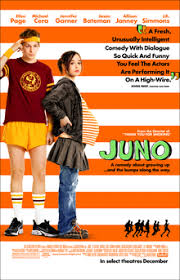
Juno (2007)

JUNO

JUNO (2007) One-and-a-half stars

The second episode of the 10th season of “South Park” gave us a great concept that applies to the 2007 comedy JUNO: “Smug Alert.”

That internal smug alert went off throughout Jason Reitman’s film, especially regarding Diablo Cody’s screenplay and Ellen Page’s precious little title character.

Two quotes from “Smug Alert” pinpoint what’s not right with JUNO.

“Being smug is a good thing,” Gerald Broflovski said.

“You mean — we should drive in hybrids but not act like we’re better than everyone else because of it?” Randy Marsh said.

JUNO (both the movie and the character) acts like being smug is a good thing and that it’s better than everybody else because of it, well, yeah, because that’s what it means to be smug.

Believe it or not, Cody’s original screenplay won for “Best Original Screenplay” in both the American and British editions of the Academy Awards. Yeah, I don’t believe it.

The dialogue scene between Juno and a clerk named Rollo proved enough to set off the “Smug Alert.” I’ll quote it all because I’ll let it form my case against JUNO and Juno.

Rollo: Well, well … if it isn’t MacGuff the crime dog? Back for another test?

Juno: I think the last one was defective. The plus sign looked more like a division sign so I remain unconvinced.

Rollo: Third test today, Mama Bear. Your eggo is preggo, no doubt about it.

Tough Girl: It’s really easy to tell. Is your nipples real brown?

Rollo: Yeah. Maybe your little boyfriend’s got mutant sperms. Knocked ya up twice.

Juno: Silencio old man! Look, I just drank my weight in Sunny-D and I gotta go pronto!

Rollo: Well, you know where the lavatory is.

Rollo [yells]: You pay for that pee stick when you’re done! Don’t think it’s yours just cuz ya marked it with your urine!

[later]

Rollo: Well, what’s the prognosis, fertile Myrtle? Minus or plus?

Juno: [taking a pregnancy test] I don’t know. It’s not seasoned yet. [grabs some candy] I’ll take some of these. Nope … There it is. The little pink plus sign is so unholy.

Rollo: That ain’t no Etch-a-Sketch. This is one doodle that can’t be un-did, homeskillet.

Yeah, exactly, that early dialogue indicts itself and the entire film. Did the voters for “Best Original Screenplay” have that scene erased from their collective memories? Never mind all the critics who listed JUNO as one of 2007’s best films — Roger Ebert named it his No. 1 film.

There are some good things in JUNO but they are ultimately overshadowed by that darn you-know-what that starts with ’s’ and ends with ’ss’ (it’s not success or sadness).

I also dislike the cinematic trend where seemingly every single damn character in a comedy talks like a stand-up comedian with crack timing and perfectly-timed cheap shots, even the characters that are not being played by stand-up comedians.

You had to have been living under a rock to not hear about JUNO in late 2007 and throughout 2008.

JUNO received Academy Award nominations for Best Picture, Best Director, and Best Actress (Page), in addition to its one victory.

Other screenplays nominated against JUNO were LARS AND THE REAL GIRL (Nancy Oliver), MICHAEL CLAYTON (Tony Gilroy), RATATOUILLE (Brad Bird, Jan Pinkava, and Jim Capobianco), and THE SAVAGES (Tamara Jenkins).

I don’t know about you at home, but I’d favor the rat over the brat ‘cause Ratatouille and RATATOUILLE are not smug in the slightest and that makes a huge difference.

Cody (born June 1978) made a name for herself writing an “adult” blog named “The Pussy Ranch” (honest to blog!) and her memoir “Candy Girl: A Year in the Life of an Unlikely Stripper” before she hit the jackpot with her debut screenplay for JUNO. Her life sounds perfectly equipped for becoming an Academy Award winning bio pic. Would her character be played by Miss Sassy Pants Page?

Cody’s other screenplay credits: JENNIFER’S BODY, YOUNG ADULT, PARADISE, RICKI AND THE FLASH, and TULLY. I also regret watching JENNIFER’S BODY, a horror comedy starring Megan Fox and Amanda Seyfried that again set off the “Smug Alert.”

Cody said of JUNO, “You can look at it as a film that celebrates life and celebrates childbirth, or you can look at it as a film about a liberated young girl who makes a choice to continue being liberated. Or you can look at it as some kind of twisted love story, you know, a meditation on maturity.”

I’d rewrite Cody’s quote, “You can look at it as a film that celebrates superficiality and celebrates hipster, or you can look at it as a film about a glib young girl who makes a choice to continue being glib. Or you can look at it as some kind of situation comedy, you know, a meditation on monotony.”

JUNO also frequently misses the mark with the soundtrack, apparently picked by Page herself.

JUNO makes overtures to punk, glam, alternative, et cetera, but picks songs like the Velvet Underground’s “I’m Sticking with You” and Sonic Youth’s “Superstar,” for example, atypical numbers for those bands. Where’s Nirvana and the many bands name-dropped by Kurt Cobain? Like the Vaselines, just one example. Nirvana covered “Here She Comes Now,” the most accessible song from the Velvets’ second LP WHITE LIGHT/WHITE HEAT, 40 minutes and 13 seconds of sound renowned for clearing rooms and making ear drums bleed. What would Juno have made of “Sister Ray”?

Sonic Youth’s Thurston Moore on JUNO in Magnet Magazine, “Every once in a while, you’ll be asked whether your music can be used in a movie. Invariably, we always ask, ‘What’s the movie about?’ Because you don’t want it to be some kind of grotesque film. I didn’t even remember that they’d used the song until I was watching it with my daughter, then I was like, ‘Oh my God!’ [Laughs} When Mark (Jason Bateman) tells Juno, ‘Here’s a Sonic Youth song, I think you’ll really like this,’ and then he plays the song that’s the least indicative of our music — us covering a Carpenters tune — it’s such an odd choice. It’s also funny that she would be into totally hardcore punk — Iggy, Patti Smith, the Runaways — and then quantify Sonic Youth as ‘just a bunch of noise.’ But I think she was just angry at the guy and trying to get back at him.”

Michael Cera plays Paulie Bleeker in what amounted to his second movie featuring “The Michael Cera Role,” following SUPERBAD, and I was already tired of it. No, that’s not Jesse Eisenberg, who you might remember from THE SQUID AND THE WHALE and ZOMBIELAND. Yeah, it’s confusing.

Guess this confusion happened to the guys all the time.

“I bumped into Jesse on the street once and he told me he gets it once a day,” Cera said in the New York Post. “This guy asked me today if I was Napoleon Dynamite [Jon Heder].”

You know you’re in trouble when the best performance in the movie belongs to Jennifer Garner.

Howard the Duck (1986)

HOWARD THE DUCK

HOWARD THE DUCK (1986) One star

KODE-TV in Joplin once aired movies on Saturday nights and I recall watching THE ROCKY HORROR PICTURE SHOW, THE BREAKFAST CLUB, WOLFEN, and HOWARD THE DUCK in my impetuous youth.

Sometimes movies that we liked during our childhood and teenage years do not hold up during later viewings. Unfortunately, I do not remember how I reacted to HOWARD THE DUCK upon first viewing it some 30 years ago.

I do know that I caught up with HOWARD THE DUCK in 2009, though, wrote a negative review centered around the question “What were they thinking?” when Universal Pictures made HOWARD THE DUCK, and listed it as one of the worst movies of the 1980s, right down there with such “classics” as LEONARD PART 6 and THE GARBAGE PAIL KIDS.

That’s when I first encountered online defenders of bad movies. They’re vehement, and will leave you digital pleasantries like, for example, “Opinions are like assholes. …” Genius, pure genius, never heard that one before, Internet tough guy. I mean, how dare somebody think both HOWARD THE DUCK and LEONARD PART 6 stink it up. HOWARD THE DUCK and LEONARD PART 6 are both not so bad they’re good, they’re both so bad that they’re really really really bad. Every once in a great while, I dust them off just to remember what a bad movie plays like.

HOWARD THE DUCK is one of the great cinematic follies of all-time.

It wanted dearly to be like GHOSTBUSTERS, a combination of dazzling special effects and wisecracking comedy.

It fails in both departments and it starts with that live action duck, the biggest special effect mistake and comedic failure.

Howard’s a creepy little duck, a rather fowl protagonist despite the fact that director Willard Huyck (Huyck rhyme with duck?) and producer Gloria Katz toned him down and tried making him a nicer duck from his comic book origins.

It does not help the character that the film trots out every duck pun for 111 minutes, a running time a few minutes longer than GHOSTBUSTERS. Every single character must get at least one and I got tired of all the puns by the 5-minute mark.

Eight actors are credited as having some role in playing Howard the Duck: Ed Gale, Chip Zien, Tim Rose, Steve Sleap, Peter Baird, Mary Wells, Lisa Sturz, and Jordan Prentice. Six of the actors and actresses inside the duck suit (at different times) won the Razzie for Worst Performance in a Motion Picture. This is almost as impressive as the fact Harvey Stephens began his career as the Antichrist in THE OMEN. Where does one go from the Antichrist and where does one go from Howard the Duck? These are tough questions, and I have some more.

Do those actors and actresses put Howard the Duck on their resume? Or brag down at the pub “Oh yeah, man, you better not fuck with Howard the Duck” and “I played a talking duck from another planet in the movies. How about you, asshole, what the fuck have you done that’s so great?” Have any of these actors exploited their playing Howard the Duck to pick up women? Stranger lines have been spouted.

Howard’s not a funny duck and he must try a thousand jokes. He’s a lame duck, instead, that wishes he could have been the Groucho Marx or Bill Murray of ducks.

The last 40-45 minutes surrender to chase scenes and special effect showcases with lame duck pun interludes, then we’re treated to a thrilling grand finale of the “Howard the Duck” song, written by Thomas “She Blinded Me with Science” Dolby and George “Atomic Dog” Clinton.

The last 40-45 minutes feel like they run on as long as BEN-HUR and GONE WITH THE WIND combined.

Every time I see Lea Thompson, it brings me back to the strange trajectory of her early screen career: attacked by shark in JAWS 3-D, a creepy love affair with a married police officer who should have arrested himself for sex crimes in THE WILD LIFE, and unknowingly lusting after her own future son in BACK TO THE FUTURE. In HOWARD THE DUCK, the fetching Thompson smooches Howard all while she’s in her skimpies. It’s bad enough that her hairdo attacked the ozone layer, but she has to go the extra mile in HOWARD THE DUCK.

(We believe that Thompson’s hairdo in HOWARD THE DUCK contributed to the Montreal Protocol on Substances that Deplete the Ozone Layer that became effective in August 1989.)

Every time I watch HOWARD THE DUCK, I marvel at the fact that Tim Robbins somehow survived his performance and managed to sustain a career in such high-quality films as BULL DURHAM, JACOB’S LADDER, and THE SHAWSHANK REDEMPTION. His performance in HOWARD THE DUCK ranks among the most annoying supporting performances in history. Believe it or not, this was his fifth credited screen performance … and we have one more believe it or not.

HOWARD THE DUCK is the first feature-length Marvel Comics adaptation. When will Disney take a crack at remaking this remedial GHOSTBUSTERS?

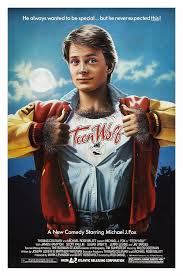
Teen Wolf (1985)

TEEN WOLF

TEEN WOLF (1985) Three stars

During the review of SILVER BULLET, TEEN WOLF came to mind and then I looked up a rather negative review I wrote 10 years ago.

A decade later, I recommend TEEN WOLF for the very things I once mocked. Here’s the original two-star review (with only small edits):

“TEEN WOLF almost succeeds in spite of itself and I do mean in spite of itself.

“The film stockpiles a nuclear arsenal of cliches. Next time I see Kim Jong-Il I will ask him what he thinks of the film, in between our usual rap session ‘bout FRIDAY THE 13TH films. Let’s see, I’ll have to make a list otherwise my brain will explode and that cannot happen before Finals Week, let alone Dead Week.

“I’ll briefly mention 1) the Nebraska small town setting; 2) the loving, single widower and his teenage son protagonist on their own; 3) the teenage son protagonist feels he’s doomed to an eternity of being “average” until he finds out that he can be a teenage werewolf just like Michael Landon and the Cramps song before him; 4) the protagonist’s hipster and profiteer best friend; 5) the “fat guy” fifth wheel nicknamed, oh you’ll love this one, “Chubby”; 6) The Blonde = Bad Girl and The Brunette = Good Girl formula; 7)the protagonist lusts after the Blonde, actually succeeds in sleeping with the Blonde as the Wolf, and ends up realizing his undying love for the Brunette in the final act though she prefers “average” Scott Howard over the Wolf; 8) the Blonde’s Evil Overlord of Brooding Hot Shot boyfriend and the protagonist’s eternal foil; 9) the Evil Principal; 10) the wise guy head basketball coach who spits out incantations of advice rejected by Fortune 500 fortune cookie companies; 11) the scene where the protagonist faces down a wily old liquor store veteran who’s heard every scam ever to purchase some alcoholic contraband for a monster party; 12) The Monster Party; 13) The Big High School Dance; and I believe I’m done after this one, 14) The Big Game. Sorry, I apologize in advance for missing a few there.

“Once we grant the film’s central premise, that werewolf genes run down a family’s genetic line, which sounds too much like TWILIGHT for its own good before Taylor Lautner was even born, what’s wrong with a few generic movie standards? Nothing, absolutely nothing, except for when taken in tandem our friendly standards make for a generic motion picture spread. TEEN WOLF almost set the cliche land speed record.

“Michael J. Fox makes for a likable, charismatic protagonist and his energetic movie star performance lets us live through standard, predictable material. He enlists us on his side, whether he’s average small town boy lined up to inherit his father’s small town hardware store, Scott Howard, or his alter ego, ultra-cool and ultra-hip and dazzling slam dunker “The Wolf.” Fox essentially plays the Lon Chaney existential dread film werewolf crossed with John Travolta in SATURDAY NIGHT FEVER (at least for the big dance sequence and the big preparation for the dance sequence) and Julius Erving, as well as having issues with anger management and teenage angst.

“Do teen wolves get pimples? TEEN WOLF fails to address several burning questions. Especially not a PG-rated TEEN WOLF. Fox plays these scenes ‘bout as good as any actor possibly can and we stomach him through every predictable change like, for example, how Scott Howard transforms himself into above average when he’s the Wolf: He can dance, he can act, he can surf on slow-moving customized Wolf vans, and he can play mean basketball. Scott Howard eventually turns his back on ‘Wolf Mania’ and decides to be himself for The Big Game.

“James Hampton must have enjoyed playing a humble, sagely teenage protagonist’s old man in TEEN WOLF, considering his past as evil public relations man in THE CHINA SYNDROME and his future as evil federal regulatory agency man in PUMP UP THE VOLUME. Susan Ursitti breathes some fire into her standard issue role as the Brunette / Good Girl and this is both good and bad, good because it makes our lives relatively less boring and bad ‘cause we get even more frustrated by the wait for the inevitable dramatic (overdue) realization made by the protagonist that she’s meant for him, forever. The Bad Girl and her maligned Evil Overlord of Brooding Hot Shit boyfriend are the only characters who fail to entertain us, interest us, et cetera. They’re not very good performers and it’s painful waiting for their inevitable downfalls.

“Surely Teen Wolf’s impressive slam dunk artistry did not inspire Spud Webb, the 5’7” Atlanta Hawks point guard who prevailed in the NBA Slam Dunk Contest at the 1986 NBA All-Star Weekend in Dallas, besting his own Atlanta Hawks teammate, Dominique Wilkins. Michael J. Fox, why he’s short and he’s Canadian, two proverbial strikes against him, so naturally it takes a stunt double werewolf for him to slam dunk. I would have thought a werewolf’s claws would have made playing basketball like a proverbial artiste virtually impossible. Anything goes, in the movies.

“Hey wait, lovely lads and lovely ladies, I recollect another standard trotted out by TEEN WOLF. The montage. The “Winning Streak” Montage. The Car Surfing Montage. The Big High School Dance Montage. The Big Game Montage. Hyperkinetic action scored by a hyperkinetic rock song. For the big dance montage, we get a bad theme song namedropping “The Big Bad Wolf.” It’s an unwritten rule that any 1980s movie referencing itself in song, like PROM NIGHT and BETTER OFF DEAD, will turn out crap. When in doubt, filmmakers, yes, bring on a montage of hyperkinetic action (basketball, dancing, violence) scored by hyperkinetic rock music. TEEN WOLF competes with THE HEAVENLY KID and OVER THE TOP for montage land speed record. I bet the composers do not put TEEN WOLF down on their permanent record.

“Oh, now I remember a couple more standard tricks exploited by TEEN WOLF. Slow motion. BONNIE AND CLYDE and THE WILD BUNCH used slow motion to brilliant effect, as did early Bruce Lee karate films, but lesser films like BLACK BELT JONES made slow motion passé, not to mention its overuse on sports television. Want to see Teen Wolf slam dunk for what feels like the hundredth billionth time? Watch TEEN WOLF! Want to see “average” Scott Howard’s lay-up that barely makes it around the cup and in? Watch TEEN WOLF!

“Now, here we have a standard within a standard: late in the game, Scott Howard gets clotheslined on a final shot layup attempt by his eternal foil (at least for 90 minutes eternity) and his team, the Beavers, are down by one point and two made free throws will naturally win The Big Game for the Beavers.

“Howard steps to the free throw line … his eternal foil stares him down … he makes the first one, smoothly … the second free throw … it’s released … it’s looking good … it’s SLOW MOTION … slower and slower … oh no! … it hits the back of the rim … slower and slower and even slower motion … it touches almost every corner of the rim … and it finally rolls in … reaction shots galore … NO MORE SLOW MOTION … and the crowd storms the court in celebration of either the end of the Big Game, the end of the movie, the end of shooting the movie, or all three simultaneously. I’ll bet on all three ‘cause I know they were solid pros.

“Rod Daniel, oh what a director, this here Rod Daniel. TEEN WOLF perhaps represents the peak of Rod Daniel’s cinematic directorial career, TEEN WOLF up against the Dudley Moore-Kirk Cameron body switch masterpiece of dreck cinema LIKE FATHER LIKE SON and the BEETHOVEN sequel. I favor a slam-dunking, breakdancing Teen Wolf over a born again Kirk Cameron (Jesus couldn’t save Kirk Cameron’s acting) and Charles Grodin overshadowed by a dog. At least, Daniel had the decency not to direct TEEN WOLF TOO. On this or any other job, you win some, you lose some.”

Not sure what came over me when I wrote that review 10 years ago, especially since I have enjoyed TEEN WOLF many times over the years. A lot of the success of TEEN WOLF has to do with Michael J. Fox at the center. After all, with Jason Bateman in the title role instead, TEEN WOLF TOO proved to be a disaster, although that’s partly because TEEN WOLF did not require a sequel.

An American Werewolf in London (1981)

AN AMERICAN WEREWOLF IN LONDON

AN AMERICAN WEREWOLF IN LONDON (1981) Three stars

The 1980s were a golden age for comedy horror: GREMLINS, GHOSTBUSTERS, RE-ANIMATOR, EVIL DEAD II, FRIGHT NIGHT, LITTLE SHOP OF HORRORS, and KILLER KLOWNS FROM OUTER SPACE.

I’d put AN AMERICAN WEREWOLF IN LONDON among the second tier of 1980s comedy horror films, below every film listed in the opening paragraph. Do not fear, though, because it’s still a good movie.

AMERICAN WEREWOLF specializes in dark comedy, very very very dark, even beyond morbid especially when a dead Jack Goodman (Griffin Dunne) haunts best friend David Kessler (David Naughton) as Mr. Kessler becomes the title character. Jack tells David that he must kill himself before he kills others and that he’s under the werewolf’s curse. Jack still has that same way with words he had when he was alive; that’s why David tells Jack, “I will not be threatened by a walking meatloaf.” Poor, poor Jack.

Of course, all this started when David and Jack, two American college students on a walking tour, stop at the Slaughtered Lamb. We’ve all heard of the Wrong Gas Station, a hallmark of many horror movies, but the Slaughtered Lamb represents the Wrong Drinking Establishment. You have to be real thirsty or hungry or both to stop at the Slaughtered Lamb. The regulars don’t exactly warm to no bratty Americans in the first place, but the irrepressible Jack sticks his foot in his mouth big time when he blurts out about a pentagram. The conspiratorial patrons give Jack and David the boot, although Jack and David are told very specifically to stay on the road and not to go into the moors. I believe that I last saw that setting in the 1939 Basil Rathbone Sherlock Holmes movie HOUND OF THE BASKERVILLES. I love the moors in the movies.

Of course, we all know that David and Jack don’t stick to the road and go exactly where they’re not supposed to go.

1981 featured three good wolf movies: THE HOWLING premiered March 13, WOLFEN July 24, and AMERICAN WEREWOLF August 21. For the record, I prefer both WOLFEN and THE HOWLING over AMERICAN WEREWOLF, and that’s an indication just how great of a year it was for movies about wolves. All three have their own distinct qualities, though both Joe Dante’s THE HOWLING and John Landis’ AMERICAN WEREWOLF pursue laughter far more than Michael Wadleigh’s WOLFEN.

All three stand out for their special effects: Rob Bottin and Rick Baker, who previously worked together on Dante’s PIRANHA, battled for werewolf transformation superiority and Baker’s makeup work on AMERICAN WEREWOLF earned him the first Academy Award for Best Makeup, as he beat out Stan Winston on the comedic craptacular HEARTBEEPS. The overshadowed WOLFEN did some innovative things with sound and image to depict the world of the wolf.

At this point in Landis’ career, the controversial director was on a major roll with a three-picture run of NATIONAL LAMPOON’S ANIMAL HOUSE, THE BLUES BROTHERS, and AMERICAN WEREWOLF. This was before TWILIGHT ZONE: THE MOVIE, when actor Vic Morrow and child actors Myca Dinh Le and Renee Shin-Yi Chen were killed in a helicopter accident during filming in July 1982.

The National Transportation Safety Board reported a couple years later: “The probable cause of the accident was the detonation of debris-laden high temperature special effects explosions too near a low-flying helicopter leading to foreign object damage to one rotor blade and delamination due to heat to the other rotor blade, the separation of the helicopter’s tail rotor assembly, and the uncontrolled descent of the helicopter. The proximity of the helicopter to the special effects explosions was due to the failure to establish direct communications and coordination between the pilot, who was in command of the helicopter operation, and the film director, who was in charge of the filming operation.”

(If you want to watch something fucked up, you can find “Vic Morrow’s Death Video” on YouTube. The rotor blades decapitated Morrow and Le and the right landing skid crushed Chen to death. All three died instantaneously. For this reason and the fact that it’s not very good, I cannot watch Landis’ installment in TWILIGHT ZONE: THE MOVIE and skip ahead on the DVD to the Joe Dante and George Miller portions of the program.)

Despite being acquitted of involuntary manslaughter after a nine-month jury trial over 1986 and 1987, Landis’ reputation rightfully took a major hit … and every single thing you can find about the incident makes Landis seem like the ultimate asshole director, worse than Hitchcock, worse than Kubrick, worse than Lang, worse than Preminger, worse than Woody Allen, worse than any other director in relentless pursuit of perfection. Landis broke California child labor laws by hiring both child actors without their required permits, in addition to his reckless behavior filming the nighttime helicopter sequence. None of this should have ever happened and Landis served not a single second of time for his crimes.

TRADING PLACES and COMING TO AMERICA both were hits directed by Landis. He also directed the nearly 14-minute music video for Michael Jackson’s “Thriller,” a job Landis earned after Jackson saw AMERICAN WEREWOLF. It is widely considered the greatest musical video of all-time.

Back to AMERICAN WEREWOLF.

AMERICAN WEREWOLF represents a throwback to the horror movies of the 1930s, especially the ones from Universal, updated with gore, nudity, and profanity of a modern era.

Like several other films from the 1980s, it deftly balances laughs and scares just right so often.

AMERICAN WEREWOLF, though, falls shy of greatness: There’s a lot to love, especially in the first 30 minutes, but I’ve never loved its ending (full half-point deduction alone for this deficiency) and I just cannot believe the savvy Landis did not choose Warren Zevon’s “Werewolves of London” — Lon Chaney Sr. and Jr. references on top lyrics “You hear him howling around your kitchen door / You better not let him in / Little old lady got mutilated late last night / Werewolves of London again” and “He’s the hairy-handed gent who ran amuck in Kent / Lately he’s been overheard in Mayfair / You better stay away from him / He’ll rip your lungs out, Jim / I’d like to meet his tailor.” In other words, Zevon’s dark sense of humor would have fit AMERICAN WEREWOLF, just like a wolf suit.

No matter how many times I’ve heard CCR’s “Bad Moon Rising” and Van Morrison’s “Moondance,” they still thrill and AMERICAN WEREWOLF uses them perfectly, especially pairing Morrison’s lyrics “Well, I want to make love to you tonight / I can’t wait ’til the morning has come / And I know now the time is just right / And straight into my arms you will run / And when you come my heart will be waiting / To make sure that you’re never alone / et cetera” with the escalation in David’s relationship with friendly nurse Alex (the alluring Jenny Agutter).

I’ll end this review with a warning to stick to the original and please do not watch AN AMERICAN WEREWOLF IN PARIS.

The Marx Brothers & The Three Stooges

THE MARX BROTHERS & THE THREE STOOGES

Before Elvis and Chuck Berry, the Beatles and the Stones, Zeppelin and the Who, the Clash and the Sex Pistols, Nirvana and Pearl Jam, Woody Allen and Mel Brooks, Richard Pryor and George Carlin, Monty Python and Benny Hill, David Letterman and Jay Leno, and Jay and Conan, there was Buster Keaton and Charlie Chaplin, yes, but also the Marx Brothers and the Three Stooges.

There seems to be a notion that you can’t like both the Marx Brothers and the Three Stooges, and that you have to choose one over the other and the twain shall never meet.

I call bullshit on that notion.

There’s room for both in this mad, mad, mad, mad world.

However, I will admit upfront a preference for the Marx Brothers.

Granted, at the age of 8 through 10 or 11, I absolutely loved the Three Stooges and I learned only of the Marx Brothers from a scene in GOOD MORNING, VIETNAM. For a period of time on the school bus, my two cousins and I pretended that we were the Three Stooges and I played the Moe role. For many years after that obsessive period, though, I barely paid the Three Stooges a bit of attention. I don’t know, like fart jokes, they just seemed precisely like something that you instinctively move beyond as you get older and mature. I’ve revisited the Three Stooges’ work recently, though, and I’ve found enjoyment in them once again.

During college, I discovered the Marx Brothers and DUCK SOUP (1933) became one of my favorite all-time movies and Groucho Marx’s Rufus T. Firefly one of my favorite all-time characters. The Marx Brothers influenced my sense of humor tremendously, Groucho especially, and I don’t know how many co-workers or women I flirted with ever picked up any of the distinctive Marxist vibes.

I once argued with a college professor that DUCK SOUP retained value in the 21st Century because there’s still pompous jerks around who need to be deflated, not that I would have ever thought of naming that particular college professor as one.

In the end, I’ll choose Marxist anarchy over Stoogian anarchy because I prefer absurdist verbal wit over slapstick brutality.

The Marx Brothers paved the road for Mel Brooks, Woody Allen, Monty Python, Rodney Dangerfield, Bill Murray, Dan Aykroyd, Peter Sellers, Carl Reiner, Robin Williams, AIRPLANE!, Borat, Bugs Bunny, and “South Park.” Their influence extended to music — you cannot tell me their satirical and sartorial choices in military dress at the end of DUCK SOUP did not have an impact on the “Combat Rock” era Clash, Queen named two of their albums after Marx Brothers spectaculars (A NIGHT AT THE OPERA, A DAY AT THE RACES), and Alice Cooper and Groucho reportedly became good friends late in Groucho’s life. Groucho died in 1977, a year that also included the deaths of Elvis Presley and Charlie Chaplin (Elvis and Groucho separated by a mere three days in August 1977). The Ramones also had that great song “I’m Against It” on 1978’s ROAD TO RUIN, itself a reference to Hope and Crosby.

The Three Stooges influenced Sam Raimi, John Hughes, John Landis, John Belushi, John Candy, Chris Farley, the Farrelly Brothers, Mel Gibson, SMOKEY AND THE BANDIT, and wherever violent slapstick can be found in animation or live-action.

Now, I present 10 Marx Brothers and Three Stooges classics, five from each comedic team.

It should be duly noted the Marx Brothers starred in feature-length pictures (13 from 1929 to 1949) and the Three Stooges produced shorts (190 from 1934-1959).

HORSE FEATHERS (1932) — You don’t have to attend college for 10 years to appreciate HORSE FEATHERS. Oh, it definitely helps, don’t get me wrong. I must say I adopted Groucho’s opening song “I’m Against It” as my credo during college (I didn’t give a hoot that I had no son during the song adoption process): “I don’t know what they have to say / It makes no difference anyway / Whatever it is, I’m against it / No matter what it is or who commenced it / I’m against it / Your proposition may be good / But let’s have one thing understood: Whatever it is, I’m against it / And even when you’ve changed it or condensed it / I’m against it / I’m opposed to it / On general principles, I’m opposed to it … For months before my son was born / I used to yell from night till morn / ‘Whatever it is, I’m against it’ / And I’ve been yelling since I first commenced it / I’m against it.” I just now realized that “I’m Against It” as credo may have been responsible for 10 years of college. I met a lot of Connie Baileys during college, and they for sure were not “college widows,” but, yeah, everyone still says ‘I love you.’

DUCK SOUP (1933) — I don’t know how many damn times I’ve laughed myself silly at this damn movie. I just love how Groucho comes out firing innuendos and witticisms from the get-go and I’ve used several of them in real life like “I could dance with you till the cows come home. On second thought, I’d rather dance with the cows till you came home” and “[Fill in the blank] here may talk like an idiot and look like an idiot. But don’t let that fool you. He really is an idiot.” I must say that I always wanted to conduct official business at staff meetings just like Groucho’s Rufus T. Firefly does in the darkest chamber of Freedonia, especially the business about new and old business and the workers demanding shorter hours. DUCK SOUP upset Benito Mussolini and flopped at the box office, precipitating the brothers’ move from Paramount to MGM and the loss of one brother (Zeppo) from their movies. That’s what you get for truly being ahead of your time. DUCK SOUP is all killer, no filler Marx Brothers madness, and earns the highest (second highest) recommendation.

PUNCH DRUNKS (1934) — Moe Howard, Larry Fine, and Curly Howard starred together in 97 short films from 1934 to 1947, and there were many, many more featuring different Stooge permutations for Columbia Pictures. In their second production, Moe’s a struggling boxing manager, Curly’s a shy waiter, and Larry’s a fiddler. Curly turns into the world’s greatest heavyweight boxer, though, under the influence of the tune “Pop Goes the Weasel.” Rosin up that bow, Larry, and say ‘Bye, Curly, hello, K.O. Stradivarius.’ We can understand the effects of “Pop Goes the Weasel” in 1934 through later songs. In the late-1960s, for example, it’d have been the MC5’s “Kick Out the Jams.” In the early 1980s, Motorhead’s “Ace of Spades” or AC-DC’s “Hells Bells.” In the early 2000s, Drowning Pool’s “Bodies” would’ve perfectly suited a PUNCH DRUNKS remake. Personally, over the years, I’ve found much therapeutic value in such lovely, lilting songs as the Stooges’ “Search and Destroy,” the Clash’s “Cheat,” and the Misfits’ “Where Eagles Dare.”

MEN IN BLACK (1934) — Before Tommy Lee Jones and Will Smith, there was Doctor Howard, Doctor Fine, and Doctor Howard hot off the heels of PUNCH DRUNKS in this hospital spectacular that puts “Laughter is the Best Medicine” to the ultimate test. I know it was during the Great Depression, but one should consider how much dire straits a hospital must have been in to call on Doctor Howard, Doctor Fine, and Doctor Howard. MEN IN BLACK spoofs on the Clark Gable and Myrna Loy film MEN IN WHITE, which earned the distinction of being one of the first films condemned by the Legion of Decency. MEN IN BLACK competed against winner LA CUCARACHA and WHAT, NO MEN! for Best Short Subject – Comedy at the Academy Awards, the Three Stooges’ lone nomination in this category. The Three Stooges worked the broken glass running gag better than BETTER OFF DEAD (1985).

HOI POLLOI (1935) — Greek rooted phrase “Hoi polloi” means the masses or the common people, and elitist snobs use it derisively for people they believe are beneath them. Some pompous fools might even say the Three Stooges are “hoi polloi” or lowest common denominator entertainment. You might remember the good old “Nature vs. Nurture” discussion from school or at least TRADING PLACES when Ralph Bellamy and Don Ameche placed their bets on Dan Aykroyd and Eddie Murphy. Nature argues that genes and hereditary factors determine human behavior, whereas nurture centers around childhood experiences and how individuals are raised. Many great minds — from John Locke to Steven Pinker — have entered the dialectical fray in the last say 400 years, but the work of Doctor Howard, Doctor Fine, and Doctor Howard should not be neglected in the halls of history. HOI POLLOI is their 18-minute dissertation, replete with those patented Three Stooges slaps, eye pokes, head conks, and nose honks. Believe that’s even the name of a 1-minute, 42-second YouTube clip. There’s also some real good dancing in HOI POLLOI, and it left me with the urge to listen to Pulp’s or William Shatner’s “Common People.”

NIGHT AT THE OPERA, A (1935) — MGM producer Irving Thalberg (1899-1936) made sure the Marx Brothers were more “commercial” and “normal” after their five anarchic pictures at Paramount — especially DUCK SOUP — failed. A NIGHT AT THE OPERA, their MGM debut, gives us less Groucho, Chico, and Harpo and more standard romantic leads Allan Jones (not an improvement from Zeppo, who was a perfect parody of this kind of leading man) and Kitty Carlisle. We don’t want this romantic carp, er, crap, er, carp anywhere near our Marx Brothers madcap antics and wasn’t this a betrayal for our boys? For crying out loud, at the end of DUCK SOUP, all four Marx Brothers pelt Margaret Dumont with fruit when she begins singing a sweet victory song. One picture two years later, our boys embraced opera and let Jones and Carlisle sing their songs. What a letdown! Come on, man, I wish our heroes used fruit on Jones and Carlisle. I wish Zeppo stayed in their act. That said, Groucho, Chico, and Harpo still perform some of their best gags in A NIGHT AT THE OPERA and that’s a must to get somebody who hates opera through 96 minutes of a plot centered around opera.

DAY AT THE RACES, A (1937) — Despite not being the biggest fan of phones in real life, I’ve long been a fan of great telephone scenes in the movies, everything from Ray Milland’s final scene in FROGS (referencing DIAL M FOR MURDER, no doubt) and DR. STRANGELOVE to ONCE UPON A TIME IN AMERICA and IT’S A WONDERFUL LIFE. Groucho’s Dr. Hackenbush gives us a beautiful prank stall call scene and the boys get to ruffle the stuffed shirts of both Leonard Ceeley and Sig Ruman in A DAY AT THE RACES. I’ve always found it easier to get through A DAY AT THE RACES than A NIGHT AT THE OPERA, surely because it’s not opera. Yes, because it’s not opera and I’ll stop calling you Shirley. Allan Jones still needs a pie in the face whenever he opens that pretty boy mouth to sing, but Maureen O’Sullivan — TARZAN movies — proves to be a major upgrade from Kitty Carlisle and this is the MGM picture that most captures the spirit of the Marx Brothers at Paramount.

YOU NAZTY SPY! (1940) — A pioneer in mocking Hitler, well before THE DEVIL WITH HITLER and DER FUEHRER’S FACE and even before Charlie Chaplin’s THE GREAT DICTATOR. YOU NAZTY SPY premiered January 19, 1940, beating Chaplin’s first full-fledged talking picture by 286 days. Moe plays dictator Moe Heilstone, Larry’s propaganda minister Larry Pebble, and Curly’s field marshal Curly Gallstone. At least nobody’s “kidney stone.” After some evil shenanigans by evil cabinet ministers, Moe, Larry, and Curly take over Moronica and prove that old Rufus T. Firefly line true from the start of DUCK SOUP, “If you think this country’s bad off now / Just wait ‘till I get through with it.” The sung laws of Firefly’s administration included the line “Pop goes the weasel,” ironically the ditty featured in PUNCH DRUNKS. Yes, both YOU NAZTY SPY and its follow-up I’LL NEVER HEIL AGAIN could play right alongside DUCK SOUP … in fact, all three could join THE GREAT DICTATOR, TO BE OR NOT TO BE, THE DEVIL WITH HITLER, DER FUEHRER’S FACE, STALAG 17, and THE PRODUCERS in a marathon friendly to fascist dictators. Reportedly, YOU NAZTY SPY was both Moe’s and Larry’s favorite Three Stooges short.

I’LL NEVER HEIL AGAIN (1941) — Moe Heilstone (dictator), Larry Pebble (propaganda minister), and Curly Gallstone (field marshal) return again for this sequel released July 4, 1941, months before the United States’ official entry into World War II. The boys are paired again with director Jules White and screenwriters Clyde Bruckman and Felix Adler, despite the fact their characters were fed to the lions or something disturbing like that in YOU NAZTY SPY. One must wonder if Adolf Hitler and Joseph Goebbels ever came across YOU NAZTY SPY and I’LL NEVER HEIL AGAIN and how exactly they reacted. There’s much debate on whether or not Hitler saw THE GREAT DICTATOR. Chaplin himself wanted to know what Hitler thought of it. There were reports that Moe Howard rushed from the production to his daughter’s birthday party while still being dressed in full-on Hitler. Bet the switchboards in Hollywood went crazy on that one. It predated the mass hysteria in PLAN 9 FROM OUTER SPACE.

NIGHT IN CASABLANCA, A (1946) — German emigre Sig Ruman enjoyed a distinguished career in the films of the Marx Brothers, Ernst Lubitsch, and Billy Wilder and when you Google Sig Ruman you’ll encounter “Sig Ruman Marx Brothers” as keyword very quickly. He appeared in A NIGHT AT THE OPERA, A DAY AT THE RACES, and A NIGHT IN CASABLANCA, finding work in the most temporal Marx Brothers films. He’s like a windup machine that specializes in anger … and the Marx Brothers masterfully wind up that machine. Ruman’s incredible at both the double take and the overreaction. Watching A NIGHT IN CASABLANCA for the first time in several years, Ruman came to mind because he’s so great as the comic villain. Both the Marx Brothers and the Three Stooges needed comic villains, because sure they aggravate virtually everybody in their films but it’s more fun when it’s a comic villain who’s beyond exasperated.

The Marx Brothers: HORSE FEATHERS (1932) Four stars; DUCK SOUP (1933) Four stars; NIGHT AT THE OPERA, A (1935) Three-and-a-half stars; DAY AT THE RACES, A (1937) Four stars; NIGHT IN CASABLANCA, A (1946) Three-and-a-half stars

The Three Stooges: PUNCH DRUNKS (1934) Three-and-a-half stars; MEN IN BLACK (1934) Three-and-a-half stars; HOI POLLOI (1935) Three-and-a-half stars; YOU NAZTY SPY (1940) Four stars; I’LL NEVER HEIL AGAIN (1941) Four stars

The Rocky Horror Picture Show vs. Rock ‘N’ Roll High School

THE ROCKY HORROR PICTURE SHOW VS. ROCK ’N’ ROLL HIGH SCHOOL

I’ve never understood the appeal of THE ROCKY HORROR PICTURE SHOW and how it became the ultimate cult film.

Lord knows I’ve tried, but it’s still neither good nor bad enough to be any good for me.

First time I watched it was late-night TV during my early teenage years. This same late-night program later showed WOLFEN and those are the only two films I can remember watching from that program. (Upon further reflection, I also recall watching HOWARD THE DUCK and THE BREAKFAST CLUB under such circumstances.) Who would have ever guessed that I liked ROCKY HORROR most on this first viewing.

Second time I saw it was part of Starz’ “Midnight Movies” circa 2005. Starz presented a documentary called MIDNIGHT MOVIES based from the book written by film critics J. Hoberman and Jonathan Rosenbaum, then played the movies featured in the doc. I remember watching THE HARDER THEY COME and ROCKY HORROR.

Third time did not prove to be a charm. Two of my ex-girlfriend’s friends could not believe that she had never seen ROCKY HORROR, so they immediately rushed out to the nearest video store and snagged a copy. My ex-girlfriend and I sat there in stunned disbelief at ROCKY HORROR.

The second and third viewings of ROCKY HORROR turned out to be washes and I liked it less each viewing.

I don’t know, I’ve always expected something more outrageous, something more shocking than GREASE in drag.

In fact, I’ve long equated ROCKY HORROR with GREASE: They’re both downright positively absolutely wholesome in dealing with the source material of transgressive art.

Hip to be square, indeed.

Next to FREAKS, BEYOND THE VALLEY OF THE DOLLS, ERASERHEAD, and SHOWGIRLS, for example, ROCKY HORROR especially seems like a lame little song-and-dance picture.

As a social phenomenon, ROCKY HORROR is undeniable.

As a stand-alone film without the cult audience in the living room, it’s not so hot.

Feed me THE LITTLE SHOP OF HORRORS (1986) instead.

Hell, give me ROCK ’N’ ROLL HIGH SCHOOL, a 1979 production from the Roger Corman factory.

It’s a teenage rebellion picture and as the late, great Joey Ramone (1951-2001) once said, we haven’t had one of those since the Revolution. Think he meant the American Revolution, not the Industrial or the Television or the Rocky Horror.

ROCK ’N’ ROLL HIGH SCHOOL benefits greatly from a pair of fun fun fun performances at the heart of the picture: P.J. Soles as Ramones loving Riff Randell, who introduces herself as rock ’n’ roller, and Mary Woronov as the fascist Principal Togar, who’s the type to burn rock ’n’ roll albums and crush any individuality. She’s the Principal of Vince Lombardi High, and Riff Randell is her nemesis. Togar hates the Ramones, and I believe she point blank asks them, “Do your parents know you’re Ramones?”

In her quest to quash rock music, Togar introduces a nifty little device that I don’t remember seeing anywhere else: The Rock-O-Meter, which measures, I do believe, the comparative loudness of rock bands. The meter starts with Muzak at the bottom and proceeds through Pat Boone, Debbie Boone, Donny & Marie, Kansas, Peter Frampton, Foreigner, Jethro Tull, Led Zeppelin, Ted Nugent, the Rolling Stones, the Who, and, finally, the Ramones at the very top. Yeah, it’s a long way to the top, if you wanna rock ’n’ roll. When you reach that level, it’s not a good time to be a lab mouse (it’s just as bad as being a drummer in Spinal Tap).

Oh, it would have been a nifty little joke to have ROCKY HORROR between Donny & Marie and Kansas.

There’s also a role in ROCK ’N’ ROLL for cult film director Paul Bartel (1938-2000), who evolves from a rock ’n’ roll hater to a Ramones lover. It’s a great moment in dance and cinema when Bartel’s Mr. McGree shakes a tail feather to the Ramones’ cover of “Do You Wanna Dance?” after band and students have taken over the halls of Lombardi High.

That guy Dick Miller (1928-2019) shows up late, late in the pic as a scull-cracking would-be fascist police officer. Roger Corman once named Miller “the best actor in Hollywood” and he’s a favorite of fans of flicks like A BUCKET OF BLOOD, GREMLINS and GREMLINS 2, and PIRANHA. Arnold even blew him away in THE TERMINATOR.

Clint Howard plays Eaglebauer, a procurer at Vince Lombardi who sets up shop in a Brownsville Station dream.

Over the years, I began to notice the majority of my favorite movies are blessed with a multitude of great supporting characters and great character actors. BOOGIE NIGHTS and THE BIG LEBOWSKI, for example, leap quickly to mind.

Guess it goes to show the overall quality of ROCK ’N’ ROLL HIGH SCHOOL when I have mentioned five performers — Soles, Woronov, Bartel, Miller, and Howard — and not gone into detail about the Ramones.

Delving into the Ramones’ song catalog became one of the enduring pleasures of my life and their songs from “Beat on the Brat” and “Rockaway Beach” to “Rock ’N’ Roll High School” and “The KKK Took My Baby Away” have earned a place inside my punk rock heart alongside the Clash, the Sex Pistols, the Buzzcocks, et cetera.

It’s the punk rocker (and the antisocial free spirit) inside me that prefers ROCK ’N’ ROLL HIGH SCHOOL over THE ROCKY HORROR PICTURE SHOW.

THE ROCKY HORROR PICTURE SHOW (1975) One-and-a-half stars; ROCK ’N’ ROLL HIGH SCHOOL (1979) Three-and-a-half stars