Conan the Barbarian (1982)

CONAN THE BARBARIAN

CONAN THE BARBARIAN (1982) Three stars

For the longest time, at least since Al Gore invented the Internets, I have thought the ultimate version of CONAN THE BARBARIAN is the 3-minute, 52-second version on YouTube that scores select scenes from the movie with Iron Maiden’s “Run to the Hills.”

As I watched CONAN THE BARBARIAN again, I kept hoping that Basil Poledouris’ score would be replaced by Bruce Dickinson’s wail and the soaring guitars of Dave Murray and Adrian Smith. Alas, it was not to be.

Lyrically, though, it’s not a perfect fit, since Conan seeks revenge against Thulsa Doom, who’s played by none other than James Earl Jones.

Iron Maiden released “Run to the Hills” on February 12, 1982 and THE NUMBER OF THE BEAST album on March 22.

CONAN THE BARBARIAN came out on May 14, 1982.

Both works proved to be controversial.

Critics thought CONAN THE BARBARIAN was either too violent or that it fell too short of the violence in the source material. That was the biggest controversy for John Milius’ film.

Of course, with an album title like THE NUMBER OF THE BEAST, Iron Maiden were called Satanists and boycotts, record burning, and demonstrations were organized by religious groups in the United States. Just picture old women smashing hundreds of copies of THE NUMBER OF THE BEAST to bits with their hammers.

“The Number of the Beast,” though, is not 867-5309.

Sword and sorcery films were big in the 1980s, a fantasy sub-genre defined as “sword-wielding heroes engaged in exciting and violent adventures. An element of romance is often present, as is an element of magic and the supernatural.”

CONAN THE BARBARIAN inspired a steady stream of imitations and knockoffs, like the DEATHSTALKER series: A big man with a big sword, busty women, and plenty of sex, violence, and head-splitting gore. Not that there’s anything wrong with that.

I had forgotten (shame on me) the amount of nudity during the first hour of CONAN and here I thought that I never forget a nude scene. (For what it’s worth, I remembered Sandahl Bergman’s shining moments in CONAN.)

Then, down the home stretch, CONAN turns up the violence to an operatic level. There’s also an orgy late in the picture.

Arnold Schwarzenegger was born to play Conan and he played him twice, less effectively though a second time. Arnold also played supporting role Lord Kalidor in RED SONJA, so three of his four films made for sultan of schlock producer Dino DeLaurentiis were sword and sorcery. Ed Pressman and fellow producer Edward Summer had considered Charles Bronson, Sylvester Stallone, and William Smith for the Conan role, but they found Arnold to be the embodiment of Conan the Barbarian after they watched a rough cut of PUMPING IRON. The success of both CONAN and THE TERMINATOR made Arnold a star.

Before CONAN, Arnold found mixed success in the motion picture business. In his 1969 debut HERCULES IN NEW YORK, Arnold’s thick Austrian accent required a dub job and the film credits him as “Arnold Strong ‘Mr. Universe’” partly to play against the name of co-star Arnold Stang. If you watch HERCULES IN NEW YORK, you will be amazed that Arnold ever had a motion picture career. I’ve seen it several times and it gets me every single time.

Other than PUMPING IRON, Arnold’s best early career role is Joe Santo in STAY HUNGRY, where he played alongside Jeff Bridges and Sally Field in a supporting role. This is a role that stands alone in a Schwarzenegger filmography populated with action and comedy.

CONAN started Arnold’s decade long run of solid action movies. Why did this seemingly muscle-bound guy with a ridiculous accent become at one point the biggest movie star in the world? Siskel & Ebert pondered that very question in an entire show dedicated to Arnold called “Arnold Schwarzenegger: The Unlikeliest Star.”

A joy of performance is the one element that Arnold exudes in all his best films and it’s what separates him from his competition.

Arnold meets his match in Broadway dancer Sandahl Bergman and when she and Arnold pair up, CONAN truly kicks into gear. The 6-foot tall Bergman (this Shawnee Mission East High graduate liked to say that she’s 5-12 rather than 6-0 because no girl should have to be 6-0) possesses an impressive physicality that’s not dwarfed by Arnold or any of her male co-stars and she exudes the same joy of performance as Arnold.

There’s certainly not been another woman, not Grace Jones in CONAN THE DESTROYER or Brigitte Nielsen in RED SONJA, paired more effectively on screen with Arnold than Bergman.

James Earl Jones became a popular villain after STAR WARS came out in 1977; Jones lent his voice to Darth Vader because director George Lucas did not want David Prowse’s English accent for Vader. Never mind Jones’ role as the older Kokumo in EXORCIST II: THE HERETIC, which was released not long after STAR WARS during the summer of ‘77. Just imagine the collection Jones possibly built from his villainous roles in the STAR WARS films, THE HERETIC, and CONAN. Not only Darth Vader’s helmet, but also his locust costume from THE HERETIC and possibly the snake from CONAN after his transformation. Later in the 1980s, Jones began playing kindly older men and that’s where he’s been ever since.

In addition to Jones, Max von Sydow (most famous for his work with Ingmar Bergman and THE EXORCIST) and Mako (Academy Award nomination for Best Supporting Actor for THE SAND PEBBLES) also lend their gravitas to the proceedings.

When he was the Governor of California, did Arnold read the following dialogue, “To crush your enemies, to see them driven before you, and to hear the lamentations of their women,” or say the following prayer, “Crom, I have never prayed to you before. I have no tongue for it. No one, not even you, will remember if we were good men or bad. Why we fought, or why we died. All that matters is that two stood against many. That’s what’s important! Valor pleases you, Crom … so grant me one request. Grant me revenge! And if you do not listen, then to HELL with you!”

Let’s hope there’s a soundboard with Arnold’s CONAN dialogue out there somewhere. This would restore a smidgen of my faith in humanity.

Breaking Away (1979)

BREAKING AWAY

BREAKING AWAY (1979) Four stars

BREAKING AWAY is one of those films that makes me feel incredibly good inside and it belongs on a list with such films as ONE FLEW OVER THE CUCKOO’S NEST, ROCKY, THE BLACK STALLION, CHARIOTS OF FIRE, HOOSIERS, and THE SHAWSHANK REDEMPTION for being uplifting cinematic experiences of the highest order.

It would be enough that BREAKING AWAY ends on a high emotional note, but the film, written by Steve Tesich and directed by Peter Yates, gives us a half-dozen great characters who have left an indelible mark on so many viewers. I’ll discuss these characters far more than I will THE BIG RACE, because they are far more unique and special than a feel good finish that has unfortunately become an industry standard over the decades.

We shall begin with our four main protagonists, Dave (Dennis Christopher), Mike (Dennis Quaid), Cyril (Daniel Stern), and Moocher (Jackie Earle Haley). They are 19 years old and going nowhere fast. They have decided to waste away their lives together and not work or go to college. They are derogatorily known as “cutters” to Indiana University students in Bloomington, since they are the sons of the stone cutters that built the campus. BREAKING AWAY provides us a rare opportunity to hear working class sentiments expressed onscreen. This is also undoubtedly the best movie ever made in Bloomington, Indiana.

All four protagonists, as well as both of Dave’s parents, are developed and sharply delineated. They are as real as the people in our lives.

Dave becomes obsessed with all things Italian, especially cycling and Team Cinzano. Dave takes his obsession so far that the family cat Jake has been renamed Fellini, Dave speaks Italian and plays opera records, he shaves his legs, he wants his parents to have another child because Italians have big families, and he pretends to be an Italian exchange student named Enrico Gimondi to impress a cute coed because he feels that just regular old Dave Stoller won’t cut it with this beauty. Dave drives his parents up a wall, especially his former stone cutter and current used car salesman father; “I want some American food, dammit! I want French fries!” We’ll return to the father soon.

Mike and Cyril both discuss their former athletic careers, Mike football and Cyril basketball.

“You know, I used to think I was a really great quarterback in high school,” Mike said as the contemporary Hoosiers practiced in front of our protagonists at Memorial Stadium. “I still think so too. Can’t even bring myself to light a cigarette, cause I keep thinkin’ I gotta stay in shape. You know what really gets me though? I mean, here I am, I gotta live in this stinkin’ town and I gotta read in the newspapers about some hot shot kid, new star of the college team. Every year it’s gonna be a new one. And every year it’s never gonna be me. I’m just gonna be Mike. Twenty-year-old Mike. Thirty-year-old Mike. Old mean old man Mike.”

Cyril bemoans the fact that his athlete’s foot and jock itch have gone away. “I was sure I was going to get that scholarship. My dad, of course, was sure I wasn’t. When I didn’t, he was real understanding, you know. He loves to do that. He loves to be understanding when I fail.”

Moocher predates Marty McFly, only Moocher hates being called “shorty.” He gives a sound explanation for being short in stature, “It’s my metabolism. I eat three times a day and my metabolism eats five times a day.”

We mentioned Dave’s father earlier and he’s the best character in BREAKING AWAY. Paul Dooley should have won the Academy Award for Best Supporting Actor in 1980, but he was not even nominated for his performance as Dad. Barbara Barrie, who played Mom, did get nominated for Best Supporting Actress.

Please just take an opportunity and think in this moment about how often we see a positive father on film. We’ve seen so many deadbeat dads, absentee fathers, child abusers, goofballs from another planet, etc., that it almost seems like a miracle when we see a more positive portrayal of a movie father. It should not be that way.

Dave exasperates his father in ways that older teenagers and young adults have so often throughout history and then in a way unique to Dave with his Italian obsession. In the long run, though, father loves son and vice versa, most evident in a great scene when father and son take a walk and talk about how they really feel.

“I was proud of my work,” Father tells Son. “And the buildings went up. When they were finished, the damnedest thing happened. It was like the buildings were too good for us. Nobody told us that. It just felt uncomfortable, that’s all.”

After conflict between cutters and campus kids escalates and spills over into a fight in the student union, IU officials determine the cutters are allowed to enter a team in the Little 500 bicycle race. They become “The Cutters.”

IU graduate Tesich based his Academy Award winning screenplay on real people and real events: Dave Stoller takes root from Dave Blase, Tesich’s fraternity brother and Little 500 teammate who put together 139 of the 200 laps (a record) for the winning Phi Kappa Psi team in 1962. Blase also inspired Stoller’s love of everything Italian.

British director Yates (1929-2011) made a large claim of his fame on directing BULLITT, that 1968 Steve McQueen vehicle with the legendary car chase in San Francisco. The bicycle race that ends BREAKING AWAY, it’s every bit as thrilling as the chase in BULLITT. BREAKING AWAY is the better movie.

In closing, I leave BREAKING AWAY a little note.

Adoro BREAKING AWAY ed è una mossa speciale perché solleva gli spiriti e mi fa venire voglia di parlare una lingua straniera con il mio gatto.

Predator and The Most Dangerous Game


PREDATOR (1987) & THE MOST DANGEROUS GAME (1932)

It’s been duly noted over the years that PREDATOR combines elements from ALIENS and RAMBO into one blockbuster.

Until only recently, I did not realize PREDATOR also updated a 1932 horror movie named THE MOST DANGEROUS GAME for modern times and weaponry. That relatively unknown classic centers around the concept of a big game hunter (Leslie Banks) who moved on from animals to humans on his own island reserve. The big game hunter finally meets his match in another legendary hunter (Joel McCrea) shipwrecked on the island, due to the big game hunter’s dastardly design of sabotaging ships and hosting then hunting the shipwrecked survivors. The two great hunters contest their most dangerous game on the same jungle sets as KING KONG. Ernest B. Schoedsack co-directed both MOST DANGEROUS GAME and KING KONG, films released several months apart. Fay Wray and Robert Armstrong appeared in both. I say go check out THE MOST DANGEROUS GAME.

In a two-star review for THE PREDATOR, I summed up the difference between the 1987 original and the 2018 retread.

“PREDATOR ‘87 does not have perfunctory dialogue and dead weight, and it does not drag. It plays like ‘a lean, mean fighting machine’ (in the great words from STRIPES) and it’s a streamlined entertainment that moves faster than this, er, last year’s model (an Elvis Costello reference following STRIPES).

“The cast of the original PREDATOR amounted to 16 actors.

“By comparison, THE PREDATOR features approximately 50 credited and 20 uncredited cast members.

“Favorite character: ‘Sobbing veterinarian.’ Second favorite: ‘Cantina bartender.’ Show: ‘Halloween mom.’”

Let’s face it: PREDATOR star Arnold Schwarzenegger could do very little wrong at this stage in his career and he’s a presence missing from the PREDATOR movies that have followed. This is a different Schwarzenegger film in one key aspect: When his Dutch faces off against the title character in the final act, it’s an incredibly tense final showdown because, for a change, we are not sure Schwarzenegger’s character will make it out alive. Kevin Peter Hall’s Predator knocks Schwarzenegger around real good, something that we just don’t see every day. Hall stood at 7-foot-2 and he towers over everybody, including Schwarzenegger.

The film’s marketing campaign proved to be misleading, since Schwarzenegger is not the predator, he’s the prey.

The supporting cast around Schwarzenegger forms one of the most macho in history, with such luminaries as Carl Weathers, Jesse Ventura, and Bill Duke around to chew the scenery. Their machismo ultimately descends into terror as the title character begins systematically eliminating them. They sure do make great trophies for the intergalactic hunter. They’re the best of the best, at least on this planet.

PREDATOR director John McTiernan (DIE HARD) and crew made the film in the real jungles of Mexico rather than some back lot. Like PLATOON, PREDATOR turns the jungle into another character and it exerts a force seemingly every bit as potent as the title character. If that intergalactic hunter don’t kill you, then the damn jungle will for sure.

Like JAWS, behind-the-scenes difficulties benefited the finished product. Originally, Jean-Claude Van Damme signed on to play the Predator, but was fired during production for reasons that nobody has ever been able to agree on. Apparently, some of his footage survived and made the final cut. The 5-foot-10 Van Damme would have made a radically different Predator, one definitely not quite as imposing and intimidating and one more ninja-like than Hall, who played the role in the first two PREDATOR movies before his 1991 death.

The first Predator suit failed, so the filmmakers called on special effects guru Stan Winston (1946-2008) to solve the problem. Winston is another one of those behind-the-scenes figures who developed a legendary reputation and just reading some of his credits justify the legend: PREDATOR, ALIENS, THE TERMINATOR and TERMINATOR 2, STARMAN, A.I., FRIDAY THE 13TH PART III (uncredited), THE THING, and PUMPKINHEAD (Winston also made his directorial debut with this 1988 horror feature).

Like a classic horror movie, we have a gradual build-up to the full reveal of the monster in PREDATOR. Characters also build him up in our imaginations with their dialogue. Of course, we see the effects of an escalating body count and this only fuels our anticipation for seeing this predator in his true form. When we do see this intergalactic villain, it’s worth the wait. The final showdown between Schwarzenegger and Predator definitely lives up to our expectations, and it’s on par with the big fights in KING KONG VS. GODZILLA and FREDDY VS. JASON, though PREDATOR is overall a better film than both KING KONG VS. GODZILLA and FREDDY VS. JASON.

You have not lived a full cinematic life until you have seen Schwarzenegger’s Dutch tell the Predator, “You’re one ugly motherfucker,” as he takes off his mask.

PREDATOR (1987) Three-and-a-half stars; THE MOST DANGEROUS GAME (1932) Three-and-a-half stars

Good Guys Wear Black (1978)

GOOD GUYS WEAR BLACK

GOOD GUYS WEAR BLACK (1978) Two-and-a-half stars
The late Steve McQueen gave his friend Chuck Norris some advice for his motion picture career. McQueen said that Norris talked too much in GOOD GUYS WEAR BLACK and that, in the future, he should let his supporting actors do more talking, since it would have the effect of making what Norris says more important.

I quoted McQueen in a review of A FORCE OF ONE, Norris’ third feature. McQueen’s right about GOOD GUYS WEAR BLACK: Norris does talk too much and he should have allowed his talented supporting cast more of an opportunity to carry the speaking.

Norris stars in GOOD GUYS as John T. Booker and there’s Anne Archer as Booker’s romantic interest and smaller roles for James Franciscus, Dana Andrews, and Jim Backus. It is especially nice to see Andrews on the screen, because we remember him from classics like LAURA and especially THE BEST YEARS OF OUR LIVES. Backus deserved better, especially since, all things considered, he probably enjoyed C.H.O.M.P.S. more than what he did GOOD GUYS.

Because I saw the later film before the earlier one, GOOD GUYS’ plot reminded me of the 1985 Arnold Schwarzenegger vehicle COMMANDO. Booker’s surviving Vietnam War comrades are being systemically eliminated five years after the first scene in the movie when they survive a death trap set for them. We have a shady diplomat on the verge of becoming Secretary of State, who is blackmailed into pursuing the elimination of the Black Tigers, the elite group of CIA assassins headed by Norris’ Booker. This plot was written on the back of a much larger napkin than COMMANDO.

GOOD GUYS, like A FORCE OF ONE, exists as middle-of-the-road Norris, not quite as inspired as his best films CODE OF SILENCE and LONE WOLF McQUADE, but still better than his starring debut BREAKER! BREAKER! and THE OCTAGON, his fourth picture.

CODE OF SILENCE and LONE WOLF are his best pictures mainly because they have the best supporting casts. They also have their fair share of exciting moments.

I mean, who could ever forget that classic scene in LONE WOLF when David Carradine’s treacherous villain buries Norris alive in his super-charged Dodge Ramcharger. After coming to and pouring beer on himself, Norris and his Dodge rise up out of the ground and he gets out and guns down several of Carradine’s anonymous henchmen. Capping it all off, Norris tells his young partner to get him a beer. Epic.

There’s just one scene in GOOD GUYS that even approaches that great LONE WOLF scene.

Booker faces down an assassin, who just blew up the plane carrying Archer’s reporter character and Booker’s romantic interest Margaret, and eventually Booker takes out this formidable foe with a flying kick through the bad guy’s windshield as he attempts to run over Booker. This moment alone is worth the price of a rental or a more long-term purchase, and it could play as the front end of a highlight reel with LONE WOLF.

Unfortunately, the rest of GOOD GUYS does not live up to that incredible flying kick, reportedly performed by Norris’ brother Aaron, but it still has a certain value, especially in seeing Norris portray a college professor and a race car driver in addition to being a cold-blooded assassin. Boy, that Norris sure could do anything.

NOTES: In 2017, a 22-year-old John T. Booker, from Topeka (Kansas), was sentenced to 30 years in prison for his vehicle bomb detonation attempt at Fort Riley. Booker wanted to kill American soldiers and assist the Islamic State of Iraq and al-Sham (ISIS) in their fight against the United States.

There’s also a Dr. John T. Booker who’s an Associate Professor of French at the University of Kansas. His teaching and research focus on the French novel of the 19th and 20th centuries.

Kansas seems to have the market cornered on the John T. Booker name.

Laserblast (1978)

LASERBLAST

LASERBLAST (1978) Two-and-a-half stars

LASERBLAST is a clunky piece of low-budget junk, but it is not without its charms.

For example, LASERBLAST takes a pot shot at STAR WARS, literally when our teenage protagonist Billy Duncan (Kim Milford) blows up a STAR WARS billboard on the side of the road with his laser cannon. It blows up real good. For that matter, just about everything blows up real good in LASERBLAST.

We’ll get back to that later.

For now, however, I’d like to touch on a couple of the contemporaneous pot shots taken at JAWS.

THE GIANT SPIDER INVASION, which came out a few months after JAWS in 1975, has Sheriff Jeff Jones (Alan Hale Jr.) say over the CB radio of the spider, “You ever see the movie JAWS? It makes that shark look like a goldfish!”

THE HILLS HAVE EYES includes a ripped poster of JAWS.

ORCA: THE KILLER WHALE has a killer whale kill a great white shark early on in the proceedings.

Coincidentally, both THE HILLS HAVE EYES and ORCA were released on the same day (July 22) in 1977.

Anyway, back to LASERBLAST, a quickie exploitation picture made to cash in on the teenybopper science fiction craze between STAR WARS movies. It later became known for being one of the worst movies ever made, especially after Mystery Science Theater 3000 lampooned LASERBLAST in a 1996 episode.

I feel almost bad for giving a mixed review to LASERBLAST, especially after writing positive reviews for THE KILLING OF SATAN, TROLL 2, THE TERROR OF TINY TOWN, and PLAN 9 FROM OUTER SPACE. Almost. Believe it or not, all four of those other films have a higher IMDb rating than LASERBLAST.

LASERBLAST surrenders itself to filler scenes that just scream out TACKY SEVENTIES. It feels like a bloated production even at 80-85 minutes.

David W. Allen (1944-99) worked on 48 films in visual effects or puppetry or stop motion animation over nearly a 30-year career. His notable credits include FLESH GORDON, THE HOWLING, CAVEMAN, Q: THE WINGED SERPENT, THE STUFF, WILLOW, and GHOSTBUSTERS II.

Allen’s alien stop motion work in LASERBLAST received better reviews than any other aspect of the film.

Unfortunately, the stop motion aliens do not have more screen time in LASERBLAST.

Milford is not exactly playing the greatest hero in the history of cinema. For example, he’s the first and only hero ever to be picked on by screen nerd extraordinaire Eddie Deezen; both Milford and Deezen made their screen debuts in LASERBLAST. Milford (1951-88) became known for his work in the musicals “Jesus Christ Superstar” and “The Rocky Horror Picture Show.” He plays most of the movie without a shirt.

Let’s face it, Billy Duncan has a bad, bad, bad life: His mother always seems to be going to Acapulco, his girlfriend’s grandpa freaks out on him and runs poor, poor Billy off, two dope-smoking cops love writing up Billy for speeding tickets, and Chuck (Mike Bobenko) and Froggy (Deezen) bully him. Froggy, by the way, has seen STAR WARS five times, according to one of the dope-smoking deputies (played by veteran character actor Dennis Burkley in the early stages of his career).

Billy’s life changes for the better when he finds that darn laser cannon in the desert. As it says on the poster, Billy was a kid who got pushed around then he found the power.

Billy, of course, uses the laser cannon to blow up a bunch of stuff real good before the stop-motion aliens come for him.

One car blows up about five times in LASERBLAST. They give us just about every conceivable angle.

Yes, it’s that kind of a movie.

Keenan Wynn and Roddy McDowall (his last name spelled “McDowell” in the credits) make glorified cameo appearances.

LASERBLAST is bad enough that McDowall’s Peter Vincent could have played it on the TV series “Fright Night” featured in FRIGHT NIGHT.

On the bright side, LASERBLAST is considerably better than “The Star Wars Holiday Special,” which has gone down in history as the biggest STAR WARS rip-off of them all.

Mad Max (1979)

MAD MAX

MAD MAX (1979) Four stars
12 weeks. $350,000. Guerrilla style filmmaking in and around Melbourne, Australia. A first-time feature film director and a largely unknown cast. A legitimate motorcycle gang. A refurbished 35mm camera somehow left behind from Sam Peckinpah’s THE GETAWAY.

You just read a success story.

Part of the Australian New Wave that invaded American theaters in the late 1970s and early 1980s, George Miller’s MAD MAX plays like a ripped, twisted cross between an American Western like HIGH NOON, Sergio Leone Westerns, Jack Kerouac’s “On the Road” and Hunter S. Thompson’s “Hell’s Angels,” American International biker pics, dystopian science fiction, horror films, good old-fashioned hyperkinetic action, and ultra-violent vigilante justice like DEATH WISH and TAXI DRIVER.

When good old American International Pictures released MAD MAX in America in 1980, they played up the film’s action content in promotion since lead actor Mel Gibson was not yet the international star that he would soon become and they Americanized the language with a new dub replacing the original Australian dialogue. (I own both versions, and I prefer the original Australian dub.)

After the prerequisite title card (Miller said the film’s low budget created the need for a post apocalyptic world), MAD MAX wisely jumps straight into the action with a fantastic, slam-bang chase scene that lasts 10 minutes. I rate this chase among the very best during an era that included many great chase scenes, like BULLITT and THE FRENCH CONNECTION.

In those chases, you feel like anything could happen at any given time. They look real. They feel real. Real cars, real danger.

Understatement: MAD MAX starts on a high note.

The setup for the chase: A ripped, twisted individual named “The Nightrider” kills a Main Force Patrol rookie officer and takes off in the officer’s Pursuit Special. MFP officers are in hot pursuit and the Nightrider eludes them until he meets his match in Max Rockatansky (Gibson).

Vincent Gil plays the Nightrider and his brief appearance proves to be absolutely essential in establishing the entire MAD MAX series.

He’s crazy, yeah, crazier than a shit house rat. I believe one of the officers calls him a terminal psychotic. He’s got verbal style, though, and this is one of the elements that defines MAD MAX, although words became fewer over time.

Max asks his best friend Goose (Steve Bisley) “Much damage?” over the radio and the Nightrider gives one of the great responses, helped out by a quote from Australian hard rock band AC/DC: “You should see the damage, bronze. Huh? Metal damage, brain damage. Heheheh. Are you listening, bronze? I am the Nightrider. I’m a fuel injected suicide machine. I am a rocker, I am a roller, I am a out-of-controller! I’m the Nightrider, baby!”

It’s an indelible sight as the Nightrider turns from brashness to sheer terror in his final moments.

The Nightrider’s motorcycle gang brethren, namely the Toecutter (Hugh Keays-Byrne), Bubba Zanetti (Geoff Parry), and Johnny the Boy (Tim Burns), pursue their revenge and enact their reign of terror on the Australian countryside.

Max loses his faith in justice, his best friend, and his family, his wife Jessie (Joanne Samuel) and his infant son.

At one point, Max tells his boss, “Any longer out on that road and I’m one of them, you know? A terminal crazy … only I got a bronze badge to say I’m one of the good guys.”

Max goes AWOL from the MFP, steals their Pursuit Special, and he stalks and kills the Toecutter, Bubba Zanetti, and finally Johnny the Boy.

Max drives off into the wasteland, a shell of his former self. We’re unsure of the future of this man.

I favor MAD MAX over both THE ROAD WARRIOR and MAD MAX: FURY ROAD because of a greater emotional investment. It shows us everything Max lost, and it’s less spectacle than the later films, obviously due to the difference in budget constraints. (FURY ROAD, for example, cost a cool $150 million. That’s 428.571428571 times the budget of the original.)

Miller, whose credits include BABE: PIG IN THE CITY and THE WITCHES OF EASTWICK in addition to the Mad Max films, is a former medical doctor and that profession informs MAD MAX.

Miller worked as an emergency room doctor to earn funds to make MAD MAX.

The surname “Rockatansky” derives from 19th century Bohemian pathologist Carl von Rokitansky, who originated a procedure that became the most common method for the removal of internal organs during an autopsy.

Miller’s experiences in the emergency room with motorcycle and automobile accidents are played out in MAD MAX.

Five great Australian New Wave films:
— PICNIC AT HANGING ROCK (1975)
— THE LAST WAVE (1977)
— THE CHANT OF JIMMIE BLACKSMITH (1978)
— MAD MAX (1979)
— BREAKER MORANT (1980)

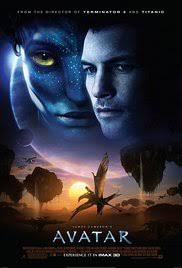
Avatar (2009)

AVATAR

AVATAR (2009) One-and-a-half stars
After I watched James Cameron’s AVATAR for the first time in nearly 10 years, numerous things hit me over the head like a (Hebrew) hammer.

Mental notes:

1) This movie sucks. I mean it, man, and I’m not sure how or why I ever liked it in the first place. I’ll blame it on the alcoholic consumption during my first watch in late ’09 and my love/lust relationship at the time with a woman who loved AVATAR.

2) It never ends. AVATAR is not the cinematic equivalent of the late ’60s Jefferson Airplane chestnut “3/5 of a Mile in 10 Seconds” or 216 miles per hour. The final act of AVATAR, in fact, could be called “3/4 of a Hour in 10 Years.”

3) Will Cameron ever direct a film again that comes in under 120 minutes? The 161-minute AVATAR followed hot on the heels (12 years later) of the 195-minute TITANIC. Here are the run times for TRUE LIES (141), TERMINATOR 2 (137), THE ABYSS (140), and ALIENS (137). In fact, you’d have to go all the way back in time to the 107-minute TERMINATOR (1984) for the last Cameron-directed picture under 120 minutes. (For the record, I like TERMINATOR 2, ALIENS, and THE ABYSS, I’ll pass on TRUE LIES, and I’ll have to revisit TITANIC to see how it holds up removed from all the hype and hysteria in late ’97 and early ’98.)

4) It’s been said that no good film is too long and no bad film is short enough. In that case, AVATAR will be cinematically torturous for people who think it’s no good. Let me put it yet another way: AVATAR and my last dentist appointment lasted about the same length of time, and I’ll go back to the dentist before I ever watch AVATAR again.

5) AVATAR just might be the preachiest movie ever made, even more so than any movie about, you know, preachers. Apparently, even 20th Century Fox asked Cameron to remove “some of this tree-hugging, FERN GULLY crap” from AVATAR. This preachiness makes AVATAR a real drag at times, and why it feels more like an endurance contest than an enjoyable, visionary motion picture experience.

6) Cameron practices what he preaches, though, because AVATAR recycles from DANCES WITH WOLVES, POCAHONTAS, FERN GULLY, ALIENS, and several Hayao Miyazaki films (just a short list). We’ve seen this movie before, and better.

7) AVATAR uncannily illustrates the “uncanny valley.” Definition: “The uncanny valley is a common unsettling feeling people experience when androids (humanoid robots) and audio/visual simulations closely resemble humans in many respects but are not quite convincingly realistic.”

8) Blue is not my favorite color.

9) Black is my favorite color. I loved AVATAR most when it finally faded to black.

10) I liked the Na’vi subtitles much better when they were in German on the bootleg copy I first consumed.

11) I must follow the THIS IS SPINAL TAP rule, which means this list must go to 11.

Breaker! Breaker! (1977)

BREAKER! BREAKER!

BREAKER! BREAKER! (1977) Two stars

We all have to start somewhere, as they say, and Chuck Norris fittingly started his true movie career with BREAKER! BREAKER! (We’ll ignore WAY OF THE DRAGON, because Norris plays a villain defeated by Bruce Lee.)

Well, BREAKER! BREAKER! is not a very good movie: Norris himself admitted that he had no idea what he was doing, it was made on an extremely low budget ($250,000) and looks it, its plot defines simplistic and leaves no room for shades of grey, and it’s a time capsule of the 1970s.

Whether or not that’s good or bad, I will leave for you to decide.

Hairdos, that music, arm wrestling, greasy diners, truck driving vernacular and CB radio lingo, and high flying karate with or without slow motion.

Yes, it all screams 1977.

BREAKER! BREAKER! only needed child custody and it could have predated OVER THE TOP by a decade.

Film’s alternate title: ROUNDHOUSE! ROUNDHOUSE! Believe you me, Mr. Norris unleashes one roundhouse per every minute of the film’s running time. Keep in mind that his feet have to catch up between the dialogue scenes.

Thinking about it a little bit longer, I believe I know where I’ve seen BREAKER! BREAKER! before: John Sturges’ 1955 classic BAD DAY AT BLACK ROCK, when Spencer Tracy’s one-armed war veteran runs into Lee Marvin, Robert Ryan, Ernest Borgnine, and just about every Black Rock resident.

BREAKER! BREAKER! is a dumbed-down BAD DAY AT BLOCK ROCK (which also predated FIRST BLOOD) and director Don Hulette is definitely no Sturges, whose other credits include GUNFIGHT AT THE O.K. CORRAL, THE MAGNIFICENT SEVEN, and THE GREAT ESCAPE.

The plot: Truck driver J.D. Dawes (Norris) warns his younger brother to stay away from Texas City, a California municipality rather hostile toward truckers. Judge Joshua Trimmings, Sergeant Strode, Deputy Boles, and seemingly every Texas City resident in cahoots run a brutal racket and they rough up one of Dawes’ friends, hence the warning to the younger brother. Well, of course, the younger brother does not stay away from Texas City and older brother springs into action to rescue younger brother and bring down corrupt Texas City. You can fill in the rest.

BREAKER! BREAKER! could play as part of a marathon with DUEL, SMOKEY AND THE BANDIT, and CONVOY or merely a double feature with the far superior BAD DAY AT BLACK ROCK.

NOTE: The poster for BREAKER! BREAKER! gets four stars.

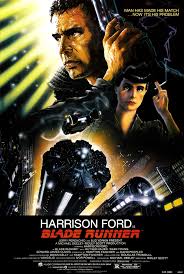
Blade Runner (1982)

BLADE RUNNER

BLADE RUNNER (1982) Four stars

Rutger Hauer’s death at the age of 75 brought me back a day later to BLADE RUNNER, one of the key movies in understanding the cinema of the last four decades.

It seems ironic that Hauer died in 2019, the same year as his character in BLADE RUNNER.

I can’t believe I’ve never written in detail about BLADE RUNNER, which has long been my No. 5 favorite movie of all-time behind CITY LIGHTS, DUCK SOUP, FREAKS, and TAXI DRIVER. Well, now is just as good a time as any to change that.

Watching the theatrical version from 1982, seeing BLADE RUNNER in any cut for what must have been the 100th time, faces especially stood out.

Title character Rick Deckard (Harrison Ford) as he takes in the death of main replicant Roy Batty (Hauer). We can read many different thoughts going through Deckard’s mind. The theatrical cut articulates it through Decker’s voice-over narration. I’ll get back to the narration later.

Batty throughout, from his entrance to his exit. Hauer’s so damn good that he almost steals the movie from both Ford and the incredible production design.

Batty’s punk pleasure model replicant lover Pris (Daryl Hannah) when she ambushes and assaults Deckard late in the picture.

J.F. Sebastian (William Sanderson) as he bears unfortunate witness to Batty settling his account with his creator Tyrell (Joe Turkel, best known as Lloyd from THE SHINING).

Leon Kowalski (Brion James) as he’s shot dead by replicant and Deckard romantic interest Rachel (Sean Young), just when it seemed Kowalski had Deckard near his demise.

Capt. Harry Bryant (M. Emmet Walsh) and his oily charm, and the enigma of Gaff (Edward James Olmos).

I’ve never exactly understood the criticism leveled at BLADE RUNNER that it’s great to look at but difficult to care about any of the characters.

I wonder if those critics saw the same movie.

I’ve always been moved by the plight of the replicants, the bio-engineered people who are “more human than human.”

The Nexus-6 model of replicants — represented by Batty, Pris, Leon, and Zhora (Joanna Cassidy) — look exactly like your average adult human being, but they have superior strength, speed, agility, resilience, and intelligence, especially combat model Batty. For the protection of the human race, replicants have a four-year life span and were given false memories.

Imagine finding out your childhood never happened.

The cold, hard facts of life.

Indeed.

The replicants bring a wide range of responses.

They’re slave labor off Earth … and illegal on Earth. “Quite an experience to live in fear, isn’t it? That’s what it is to be a slave.”

They’re at least complex villains, if they’re even the “bad guys.” We can make a strong case for Tyrell being more of a villain.

Then, we have the ambiguous title character who’ll probably always inspire debate: Is or isn’t Deckard a replicant? Ford argues human, director Ridley Scott replicant, but it’s been left for each viewer to determine.

Deckard plays like the detective hero lifted straight from THE BIG SLEEP or CHINATOWN and that comes across even more in the theatrical version with Ford’s gruff narration explicitly putting over Deckard’s world-weary cynicism.

Deckard gets no pleasure from his job “retiring” replicants. And the narration makes Deckard sound like he’s just woke up from a long hangover. (Ford’s hatred of the narration could not be more obvious.)

Later releases excised the voice-over narration, a device the executives wanted to make the film seem less confusing.

I watched the 1992 Director’s Cut first and so it took some adjustment to the narration. I find it works, except for one scene very late in the film where it’s sheer overkill. I mean, try it out:

“I don’t know why he saved my life. Maybe in those last moments he loved life more than he ever had before. Not just his life — anybody’s life; my life. All he’d wanted were the same answers the rest of us want. Where did I come from? Where am I going? How long have I got? All I could do was sit there and watch him die.” Do we need that? No.

That brings us to Batty’s final speech, “I’ve seen things you people wouldn’t believe. Attack ships on fire off the shoulder of Orion. I watched C-beams glitter in the dark near the Tannhauser gate. All those moments will be lost in time … like tears in rain … Time to die.”

In a sports column way back in 2012, I called Batty’s final speech my favorite movie dialogue.

In office conversation about this column, the late, great Morning Sun writer Nikki Patrick said that Hauer improvised Batty’s speech.

That made the speech even greater and Nikki even cooler.

The Spy Who Loved Me (1977)

THE SPY WHO LOVED ME

THE SPY WHO LOVED ME (1977) Three-and-a-half stars

This is the best of the James Bond films starring Roger Moore (1927-2017) and the one that ranks with the Best of the Bonds like FROM RUSSIA WITH LOVE, GOLDFINGER, ON HER MAJESTY’S SECRET SERVICE, TOMORROW NEVER DIES, and SKYFALL.

I believe it’s no small coincidence that after our small Kansas town of Arcadia finally picked up cable TV, I became hooked on watching James Bond films on TBS. It also helped that I hit puberty during this Bond discovery. Bond just fits perfectly with an adolescent mindset.

Moore had the unenviable task of replacing Sean Connery as Bond. Connery established Bond in the hearts and minds of the public after playing the character in DR. NO, FROM RUSSIA WITH LOVE, GOLDFINGER, THUNDERBALL, YOU ONLY LIVE TWICE, and then DIAMONDS ARE FOREVER after the George Lazenby Bond Experiment proved disastrous. (I’ll argue that ON HER MAJESTY’S SECRET SERVICE is one of the two or three best James Bond pictures.)

Connery’s first three Bond pictures especially worked as legitimate thrillers. He brought a conviction and toughness to the character that Moore generally lacked during his run from 1973 to 1985. Moore made seven Bond films, beginning with LIVE AND LET DIE and ending with A VIEW TO A KILL. In 1983, both Moore and Connery starred in competing Bond pictures, Moore in OCTOPUSSY and Connery in NEVER SAY NEVER AGAIN, the latter title a reference to Connery’s reported quote from 1971 that he would never play James Bond again.

Moore played a radically different Bond than Connery and his worst Bond films descended into campy territory, everything from the cheesiest double entendres and over-the-top product placement to a cartoonish character like Clifton James’ Sheriff J.W. Pepper in two films and a Bond-meets-Blaxploiation plot like 1973’s LIVE AND LET DIE.

Connery got down and dirty, whereas Moore never soiled his suit. That’s at least the perception.

THE SPY WHO LOVED ME is a cinematic exhibit for that old phrase “third time’s a charm,” since this is Moore’s third outing as Bond.

Moore fits the character better and let’s face it, THE SPY WHO LOVED ME benefits significantly from a great Bond girl, Russian agent Major Anya Amasova a.k.a. Agent XXX (played by Barbara Bach), and a great henchman, Jaws (played by the 7-foot-2 Richard Kiel). Both Agent XXX and Jaws stand among the great Bond girls and great Bond henchmen, respectively.

On top of that, we have Carly Simon’s “Nobody Does It Better,” one of the great Bond songs with music by Marvin Hamlisch and lyrics by Carole Bayer Sager.

Jaws puts a genuine fright into Bond and we like the British super agent a lot better under such circumstances. Bond’s one-liners won’t save him against this relentless Jaws, who does take a licking and keeps on ticking. He’s a dedicated henchman.

We cheer on Jaws’ destruction — he does some great work on a truck — and we especially love him when he makes Bond squirm. Of course, we’re rooting for Bond, but it’s still more fun seeing the indestructible Bond against the indestructible Jaws. It’s a fair matchup, for a change. Silly fools that we are, we believe for isolated moments that Bond might finally meet his match. We hadn’t felt that way since ON HER MAJESTY’S SECRET SERVICE and before that GOLDFINGER.

Not only does Bond face Jaws, but Agent XXX wants revenge on Bond once she finds out that he killed her lover Sergi Barsov (in the movie’s opening). Will she or won’t she kill Bond? Of course, we all know the answer.

Production designer Ken Adam (1921-2016) did some of his best work for THE SPY WHO LOVED ME, and he earned an Academy Award nomination. Our megalomaniac Stromberg (Curt Jargons) wants to destroy the world and build a civilization under the sea … designed by Adam.

Veteran cinematographer Claude Renoir (1913-93) worked on his uncle’s films TONI and THE GRAND ILLUSION. His work on THE SPY WHO LOVED ME should have been a fourth Academy Award nomination for the film.

In other words, THE SPY WHO LOVED ME is a first-rate production and entertainment that ranks among the very best James Bond films.

Five best James Bond films:

— ON HER MAJESTY’S SECRET SERVICE (1969)

— GOLDFINGER (1964)

— FROM RUSSIA WITH LOVE (1963)

— SKYFALL (2012)

— THE SPY WHO LOVED ME (1977)