Take a Walk on the Spooky Side: Eight Great Disney Animated Shorts 1929-49

TAKE A WALK ON THE SPOOKY SIDE: EIGHT GREAT DISNEY ANIMATED SHORTS 1929-49
I know what some of you might be thinking: Why do you have Disney animated shorts under consideration during a horror marathon?

Like The Wizard of Oz, Disney animated films proved to be a perfect introduction to scary movies.

You have the haunted woods in Snow White and the Seven Dwarfs, Chernabog in Fantasia, the donkey boys in Pinocchio, the pink elephants in Dumbo, Bambi’s mother’s death in Bambi, the bear in The Fox and the Hound, the Horned King in The Black Cauldron, and Ratigan (voiced by horror legend Vincent Price) in The Great Mouse Detective, just for starters, all potential source material for the nightmares of children.

Now, I will take a look at eight great Disney animated shorts that were made from between 1929 and 1949.

The Skeleton Dance (1929; Walt Disney): Why is this short directed by Walt himself and animated by Ub Iwerks, Les Clark, and Wilfred Jackson, with music from Carl W. Stalling and Edvard Grieg, so important?

Music and animation were made at the same time for the first time, rather than having sound added in later, sure, that’s one very important reason, but it’s because the four dancing skeletons make for a great cover photo every October.

Walt Disney Productions made 75 animated musical short films from 1929 to 1939. They were called part of the Silly Symphony series, and the series began with none other than The Skeleton Dance in August 1929 and ended with The Ugly Duckling in April 1939.

Such classics as Iwerks’ Hell’s Bells, Burt Gillett’s Three Little Pigs, Jackson’s The Tortoise and the Hare, and Jackson’s The Old Mill appeared during the decade.

The Skeleton Dance falls under the classification Danse Macabre or dance of death or an artistic genre of allegory of the Late Middle Ages on the universality of death.

For the first couple minutes, we have a series of Gothic images leading us toward skeletons dancing in a cemetery — lightning, large eyes that are revealed to belong to an owl, strong wind, chimes at midnight, bats, a full moon, a howling hound dog, and black cats brawling on top of tombstones until they are scared off by our lead skeleton.

I may have forgotten about the spider, or was that another macabre Disney classic from the year 1929?

Anyway, around 2 minutes, 40 seconds, that’s when the dancing begins, and eat your heart out, Kevin Bacon! These skeletons are footloose and fancy free!

Hell’s Bells (1929; Ub Iwerks): The fourth entry in the Silly Symphony series takes a dark turn after the October 1929 entry Springtime.

It’s all fun and games and song and dance in this short until one of Satan’s subordinates becomes insubordinate when faced with the prospect of being served to Cerberus, Satan’s three-headed guard dog.

Song and dance set to the theme music from Alfred Hitchcock Presents.

I absolutely love the name of that piece of music, by the way.

Funeral March of a Marionette by Charles Gounod in the 1870s.

Was Hitchcock a Walt Disney fan?

Who Killed Cock Robin appeared in Hitchcock’s Sabotage.

Iwerks beat AC/DC to it by about 51 years.

Hell’s Bells came out on November 21, 1929, while the Hells Bells single was released October 31, 1980.

Somebody on YouTube put the 5:50 Hell’s Bells and the 5:12 Hells Bells together for a perfect marriage of sight and sound.

The Haunted House (1929; Walt Disney): This one has a plot that will sound awfully darn familiar to fans of the horror, mystery, suspense, and thriller genres.

Good old Mickey Mouse, he’s caught out in this horrible storm that makes the one in The Old Dark House seem like a jolly old time by comparison.

He’s not driving a motor car, though, he’s out walking. What are you doing, Mickey?

Fortunately, no, wait, make that unfortunately for him and fortunately for our high-quality entertainment value, there’s a house nearby that can provide Mickey with shelter from the storm.

Needless to say, we quickly find out why they called this one The Haunted House.

The four dancing skeletons return from The Skeleton Dance and their ability to coordinate a dance number in the midnight hour remained intact only a few months after their legendary motion picture debut.

The Skeleton Dance, Hell’s Bells, and The Haunted House all came out within a few months’ span in 1929, not a coincidence given the dark times faced around the world at that moment in time.

The Mad Doctor (1933; David Hand): On a dark and stormy night — are there ever any other kind in anything related to horror — the diabolical genius title character takes Pluto away to his mansion for a wacky transplant. Pluto’s head on the body of a chicken, and Mickey Mouse obviously comes to the rescue.

The title character apparently learned from Dr. Jerry Xavier played by Lionel Atwill in the 1932 classic Doctor X or maybe they’re cousins. Maybe it’s the other way around, since the mad doctor in The Mad Doctor goes by Dr. XXX.

Mickey walks his way through Saw 70 years before the start of that infamous series, only in seven minutes rather than 110 and no F-bombs.

Skeletons appear in a Disney short, and that’s almost the guarantee for a classic.

I’ll even forgive The Mad Doctor for including the dreaded ‘It’s only a dream’ ending.

Pluto’s Judgement Day (1935; David Hand): This one is truly something wild.

The family dog Pepper is absolutely positively terrified by this one.

She won’t even approach the plot summary.

Pluto’s Judgement Day opens with our favorite animated dog in the middle of chasing a kitten through the yard and eventually into Mickey Mouse’s living room.

Pluto becomes a muddy mess, Mickey saves the kitten, and Mickey scolds Pluto, telling him that he’ll pay on Judgment Day.

Pluto falls to sleep in front of the fire, so naturally he dreams that he’s on trial for his life in a Hell presided over by cats. They all have it in for Public Enemy No. 1, all the witnesses are Pluto’s victims, the jury of eight fine cats can balance justice with song and dance, and they give Pluto the chair.

It has a similar ending to The Mad Doctor, the 1933 short directed by David Hand that also featured Mickey and Pluto.

When I hear Pepper dreaming, I wonder if her dreams are anything like Pluto’s Judgement Day.

I sincerely hope not.

The Old Mill (1937; Wilfred Jackson, Graham Heid): The year 1937 definitely proved to be a landmark year for Walt Disney Studios.

On December 21, 1937, Disney’s first feature-length animated film Snow White and the Seven Dwarfs premiered in Los Angeles.

The Old Mill, a Silly Symphony short, appeared in theaters November 5, 1937, and it’s every bit the landmark in animation as Snow White.

See, The Old Mill introduces the multiplane camera, a technical innovation used on Disney animated films from Snow White to The Little Mermaid.

From the Disney Wiki for a multiplane camera, Various parts of the artwork layers are left transparent, to allow other layers to be seen behind them. The movements are calculated and photographed frame-by-frame, with the result being an illusion of depth by having several layers of artwork moving at different speeds – the further away from the camera, the slower the speed. The multiplane effect is sometimes referred to as a parallax process.

The plot is basic compared to the technical aspects of the short — the animal residents of an old mill do their best to survive a thunderstorm.

I love the scene, just before the storm comes in, when the denizens of a nearby pond — frogs and crickets — have a croaking and chirping duet or duel.

Lonesome Ghosts (1937; Burt Gillett): Peter Venkman, Ray Stantz, and Egon Spengler owe a debt of gratitude to Mickey Mouse, Donald Duck, and Goofy.

Four of the bored out of their gourd title characters see the ad for the Ajax Ghost Exterminators agency in their local newspaper, so they decide to alleviate their boredom by calling Mickey, Donald, and Goofy and having them come out to investigate their house. Our title characters then get their kicks with pranks and more pranks on Mickey, Donald, and Goofy once they’re inside to investigate. Inconceivable!

Goofy even utters the famous words, I ain’t a-scared of no ghosts.

Goofy also does a mirror routine with one of the ghosts, only he sees the ghost’s reflection in the mirror the entire time.

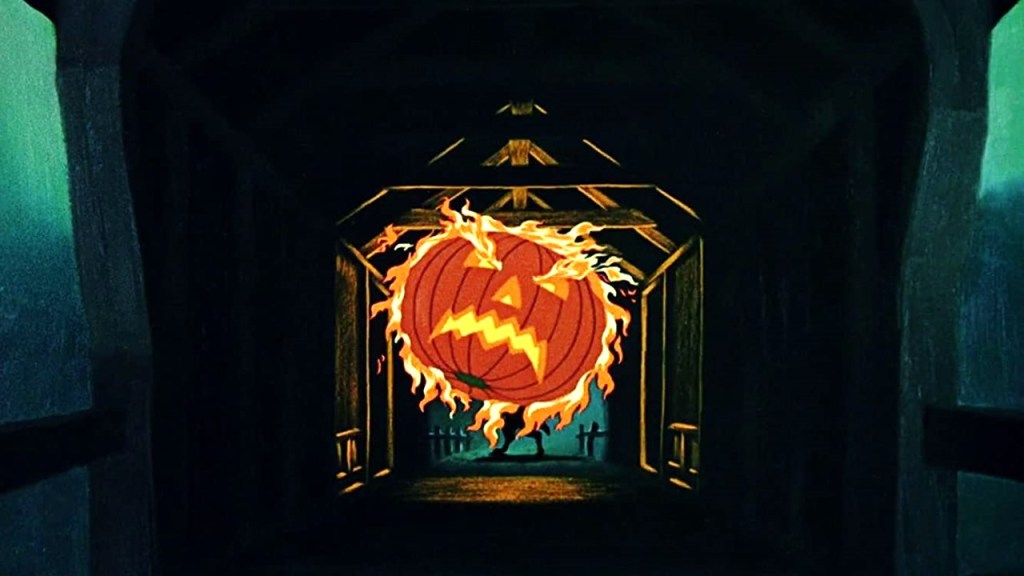
The Legend of Sleepy Hollow (1949; Clyde Geronimi, Jack Kinney): I already reviewed The Adventures of Ichabod and Mr. Toad that packaged shorts The Wind and the Willows and The Legend of Sleepy Hollow into a 68-minute feature.

I prefer The Legend of Sleepy Hollow alone.

We have an adaptation of Washington Irving’s 1820 The Legend of Sleepy Hollow that’s more faithful than more famous adaptations, like Tim Burton’s 1999 Sleepy Hollow.

We have Ichabod Crane and Brom Bones, as well as a host of other characters, and the legendary Headless Horseman.

Bing Crosby provides the voice for the narrator and the singing voice for Ichabod and Brom Bones.

Crosby and Jud Conlon’s Rhythmaires are great in their performance of The Headless Horseman, which starts Gather ’round and I’ll elucidate / What goes on outside when it gets late / Along about midnight the ghosts and banshees / They get together for their nightly jamboree / There’s things with horns and saucer eyes / Some with fangs about this size / Some are fat and some are thin / And some don’t even wear their skin / I’m telling you, brother, it’s a frightful sight / To see what goes on Halloween night.

Gotta love the chorus: With a hip, hip and a clippity clop / He’s out looking for a top to chop / So don’t stop to figure out a plan / You can’t reason with a headless man.

The final 11 minutes of The Legend of Sleepy Hollow, beginning when Brom starts his Headless Horseman song, rank with the opening in Frankenstein Meets the Wolf Man.

The Universal Frankenstein Movies

THE UNIVERSAL FRANKENSTEIN MOVIES
Of all the horror movie series, there’s not one I like more than Universal Studios’ Frankenstein cycle which started with the immortal 1931 classic Frankenstein and continued through The Bride of Frankenstein, Son of Frankenstein, The Ghost of Frankenstein, Frankenstein Meets the Wolf Man, House of Frankenstein, House of Dracula, and finally concluded with Abbott and Costello Meet Frankenstein in 1948.

Seven of the eight films are stone cold classics and I rate Frankenstein, The Bride of Frankenstein, Son of Frankenstein, and Abbott and Costello Meet Frankenstein at four stars and The Ghost of Frankenstein, Frankenstein Meets the Wolf Man, and House of Frankenstein three-and-a-half, with House of Dracula ranked two-and-a-half and it’s the only one that I would even slightly hesitate to recommend to people.

I watched Frankenstein, The Bride of Frankenstein, and Abbott and Costello Meet Frankenstein around roughly the same time in the late ’90s and early ’00s. I caught up with the others much later on during a marathon of Universal horror films. I liked The Ghost of Frankenstein, Frankenstein Meets the Wolf Man, and House of Frankenstein upon first viewing, as well Abbott and Costello Meet Frankenstein a lot, but they’ve all grown on me to where I bumped up their rating one-half star.

I have a feeling that watching the eight films in close proximity to one another will become a tradition, like it has for who knows how many people over the last 90 years.

Here’s a look at the film series that seemingly started it all in the horror genre.

Frankenstein (1931; James Whale): The one that started it all, Edward Van Sloan, who plays Dr. Van Helsing in Dracula and Doctor Waldman in Frankenstein, begins the picture, How do you do? Mr. Carl Laemmle feels it would be a little unkind to present this picture without just a word of friendly warning. We’re about to unfold the story of Frankenstein, a man of science who sought to create a man after his own image without reckoning upon God. It is one of the strangest tales ever told. It deals with the two great mysteries of creation: life and death. I think it will thrill you. It may shock you. It might even horrify you. So if any of you feel that you do not care to subject your nerves to such a strain, now is your chance to, uh … well, we’ve warned you!

Colin Clive and Dwight Frye are great in their roles as mad scientist Henry Frankenstein and hunchbacked assistant Fritz, Van Sloan is much better in Frankenstein than in Dracula, and Boris Karloff is not even credited as Karloff yet for playing The Monster. The opening credits have it The Monster — ?

The work done by makeup artist Jack Pierce and set designer Herman Rosse is just as definitive and influential as the characters and performances by Clive, Frye, and Karloff.

We’ve all seen Frankenstein time and time again in the thousands if not hundreds of thousands of films that have been influenced by James Whale’s first horror masterpiece.

The Bride of Frankenstein (1935; James Whale): One of the greatest horror films and greatest sequels ever made, I rate The Bride of Frankenstein as the best Frankenstein and it’s not even all that close, despite the fact that it shares the same star rating as Frankenstein, Son of Frankenstein, and Abbott and Costello Meet Frankenstein.

The Bride of Frankenstein has a more wicked sense of humor than any of the other films in the series, and that’s including Abbott and Costello Meet Frankenstein, and it’s undeniably the most fun to watch. It’s just as iconic and influential as the original Frankenstein, from the more sympathetic, speaking Monster to the makeup and the sets.

Mad scientists do not come madder than Ernest Thesiger’s Doctor Pretorius, and he’s a devious hoot throughout The Bride of Frankenstein. He’s so mad that he makes Colin Clive’s Doctor Frankenstein seem almost sane. You think I’m mad. Perhaps I am. But listen, Henry Frankenstein. While you were digging in your graves, piecing together dead tissues, I, my dear pupil, went for my material to the source of life. I grew my creatures, like cultures, grew them as nature does, from seed.

I wish they would have done more with the title character, that’s just about my only gripe against The Bride of Frankenstein.

Son of Frankenstein (1939; Rowland V. Lee): Easily the longest of the series, the third Frankenstein entry benefits tremendously from the presence of four absolute legends of the genre in Lionel Atwill, Boris Karloff, Bela Lugosi, and Basil Rathbone. Atwill and Lugosi are especially fantastic.

I would make the argument that Lugosi never had a better role than Ygor and never gave better performances than he did in Son of Frankenstein and The Ghost of Frankenstein. He’s the driving engine in both films and helps make them so entertaining. They hanged me once Frankenstein. They broke my neck. They said I was dead. Then they cut me down. They threw me in here, long ago. They wouldn’t bury me in holy place like churchyard. Because I stole bodies, eh they said. So, Ygor is dead! So, Dr. Frankenstein. Nobody can mend Ygor’s neck. It’s alright.

Atwill became the most versatile and most important supporting player in the Frankenstein series, playing Inspector Krogh in Son of Frankenstein, Doctor Theodore Bohmer in The Ghost of Frankenstein, the Mayor in Frankenstein Meets the Wolf Man, Inspector Arnz in House of Frankenstein, and Police Inspector Holtz in House of Dracula.

He’s at his best as Inspector Krogh, and this character will ring a bell to Young Frankenstein fans, as will Ygor. Most vivid recollection of my life. I was but a child at the time, about the age of your own son Herr Baron. The Monster had escaped and was … ravaging the countryside, killing, maiming, terrorizing. One night he burst into our house. My father took a gun and fired at him but the savage brute sent him crashing to a corner. Then he grabbed me by the arm!

Karloff gives his final performance as Frankenstein’s Monster and he’s given less to do than Frankenstein and especially The Bride of Frankenstein. He returns to not speaking in Son of Frankenstein after the strides the Monster made in Bride, but Karloff had the innate ability to communicate much without dialogue.

The Ghost of Frankenstein (1942; Erle C. Kenton): This is the first downturn in quality in the series after the triple triumph of Frankenstein, The Bride of Frankenstein, and Son of Frankenstein, but The Ghost of Frankenstein still proves to be loads of fun with the return of Ygor, the brain transplant and mad scientist plot, and plenty of action during one of the shortest running times in the entire series.

Ygor could take a hanging before Son of Frankenstein and take a shooting in Son and keep on ticking in The Ghost of Frankenstein. He’s still got his one true friend in Ghost, Frankenstein’s Monster, though it’s no longer Boris Karloff but Lon Chaney Jr in his first and only appearance. Chaney became a big horror movie star after The Wolf Man and Universal cast him as Frankenstein’s Monster, Dracula, and Kharis. Not sure how they missed him for The Invisible Man and The Phantom of the Opera.

Anyway, Lugosi dominates The Ghost of Frankenstein, despite the fact that Ygor’s not as menacing as he was in Son of Frankenstein. You cannot take my friend away from me. He’s all that I have. Nothing else. You’re going to make him your friend and I’ll be alone. Ygor plots to have his brain transplanted inside Frankenstein’s Monster, so he can rule the world, and finds a willing conspirator in Atwill’s Doctor Theodore Bohmer. As Doctor Ludwig Frankenstein says, You’re a cunning fellow, Ygor. Do you think I would put your sly and sinister brain into the body of a giant? That would be a monster indeed. You will do as I tell you or I will not be responsible for the consequences.

The Ghost of Frankenstein has one of the better casts in the series with Cedric Hardwicke as Ludwig Frankenstein and The Wolf Man cast members Ralph Bellamy and Evelyn Ankers join Chaney and Lugosi. The original Frankenstein (Colin Clive) makes an archive footage cameo appearance; Clive passed away in 1937 at the age of 37.

Frankenstein Meets the Wolf Man (1943; Roy William Neill): The fifth installment of the series begins with arguably the best seven minutes of the entire franchise and the film takes a steady dip in quality for the next hour until we get to the last few minutes.

Lawrence Talbot and The Wolf Man make their first appearance in the series, and his tortured soul number makes sweet music especially as played by Chaney Jr. I only want to die. That’s why I’m here. If I ever find peace I’ll find it here. Lugosi plays Frankenstein’s Monster, but one might remember from the end of The Ghost of Frankenstein that our Monster speaks like Ygor because of the brain transplant operation late in the picture. He’s still blind, as well, respecting continuity for a change in any of these sequels, but it’s all rendered moot because Universal muted Lugosi’s speaking voice as the Monster. He’s not the worst Monster, and they all became interchangeable after Karloff left the role anyway.

Before King Kong vs. Godzilla and long before Freddy vs. Jason, there was Frankenstein Meets the Wolf Man.

Isn’t it an interesting coincidence that Frankenstein Meets the Wolf Man came out in 1943, the American version of King Kong vs. Godzilla in 1963, and Freddy vs. Jason in 2003?

House of Frankenstein (1944; Erle C. Kenton): The sixth installment piles on the monster characters and the acting talent.

Boris Karloff returns to the series for the final time as the mad doctor Gustav Niemann and not Frankenstein’s Monster, Chaney returns as Lawrence Talbot and The Wolf Man, John Carradine and Glenn Strange make their debuts as Dracula and Frankenstein’s Monster, and J. Carrol Naish almost steals the show as the hunchbacked henchman Daniel.

There’s also Lionel Atwill, George Zucco, and Sig Ruman, so there’s no shortage of talent in the cast even in the smallest roles.

Where’s Lugosi? No, seriously, where’s Lugosi?

Carradine and Strange are major downgrades as Dracula and Frankenstein’s Monster, it’s great to have Karloff back in a speaking and a mad doctor role though I’d still prefer him as Frankenstein’s Monster, Chaney plays his tortured soul number again, and Naish joins Dwight Frye and Lugosi in the lexicon of scene-stealing servant characters.

This is as good a place as any to mention Frye, who passed away in 1943 and who appeared in Frankenstein as Fritz, The Bride of Frankenstein as Karl, Son of Frankenstein as a villager, The Ghost of Frankenstein as a village, and Frankenstein Meets the Wolf Man as Rudi, a nice little supporting role for Frye.

House of Frankenstein is a step down from The Ghost of Frankenstein and Frankenstein Meets the Wolf Man and closer to a three-star rating.

House of Dracula (1945; Erle C. Kenton): This is the only film in the series that I’ve not been able to warm into a positive review after repeat viewings. Apparently, I’ve made three attempts over the last couple years.

Unfortunately, by this point in the series, House of Dracula feels like we’ve been here before … and in better films.

The title, the poster, and the cast of characters echo House of Frankenstein.

The Wolf Man, Dracula, and Frankenstein’s Monster all return and we have a new mad doctor and a new hunchback after Karloff and Naish in House of Frankenstein.

I must state again that I don’t particularly care for Carradine and Strange in the roles of Dracula and Frankenstein’s Monster. They are many grades below Lugosi and Karloff. Especially Carradine, who I unfortunately watched playing Dracula first in Billy the Kid vs. Dracula from 1966. I had no idea back then Carradine had played Dracula before he revisited the role for director William Beaudine in a toothless cross between a western and a horror film. Anyway, Carradine does this thing with his eyes that’s supposed to be hypnotic, but it always comes across like somebody’s just squirted him in the eyes. They wisely gave Strange absolutely little to do in House of Frankenstein, House of Dracula, and Abbott and Costello Meet Frankenstein.

Chaney is still pretty good in House of Dracula, and he’s the main positive reason for the film’s mixed review.

Abbott and Costello Meet Frankenstein (1948; Charles Barton): The comedic duo of Bud Abbott and Lou Costello and the monsters like Frankenstein’s Monster, Dracula, and The Wolf Man were the main cash cows for Universal throughout the 1940s.

Universal squeezed from the teets for a big hit in Abbott and Costello Meet Frankenstein — we have Bud and Lou as Chick and Wilbur, Lugosi for the second and final time as Dracula, Chaney once more as tortured soul Lawrence Talbot and The Wolf Man, and Strange as Frankenstein’s Monster. The monsters do make for great straight men and Costello’s fright never proved more convincing or delightful or funny than it is throughout Abbott and Costello Meet Frankenstein.

Lenore Aubert and Jane Randolph are both quite fetching as women with ulterior motives for their interest in Wilbur.

I reviewed Abbott and Costello Meet Frankenstein at length earlier in the month, and I stand 100 percent behind that four-star review.

The Universal Frankenstein Movies, Ranked
1. The Bride of Frankenstein (1935) ****
2. Frankenstein (1931) ****
3. Son of Frankenstein (1939) ****
4. Abbott and Costello Meet Frankenstein (1948) ****
5. Frankenstein Meets the Wolf Man (1943) ***1/2
6. The Ghost of Frankenstein (1942) ***1/2
7. House of Frankenstein (1944) ***1/2
8. House of Dracula (1945) **1/2

Little Shop of Horrors (1986)

LITTLE SHOP OF HORRORS (1986) ****
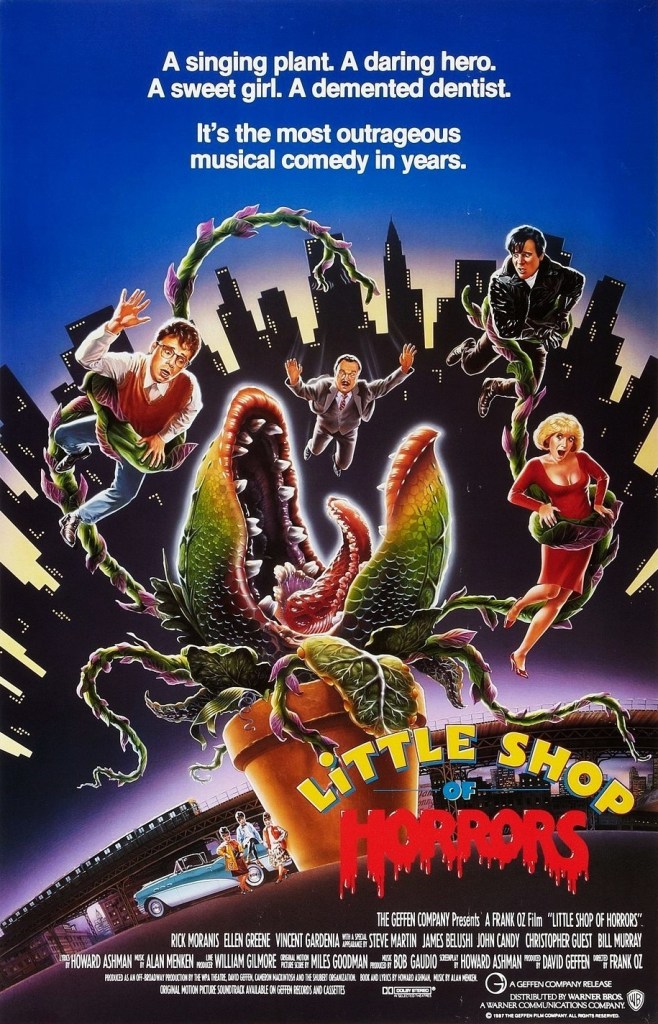
Little Shop of Horrors, based on the off-Broadway stage musical itself based on the 1960 Roger Corman cult film, is one of those movies that I like a little bit more every time I watch it.

I’ll just come right out and say it early on in this review: I’ll take Little Shop of Horrors over The Rocky Horror Picture Show every day of the week because the performances and characters, the science fiction and horror plot, the script, the direction, the musical production numbers, and the special effects are all far superior. Granted, to be fair, Little Shop of Horrors had more than 25 times the production budget of Rocky Horror.

I watched both films around the same time, in the late ’80s or early ’90s both on late-night local TV Saturday night movie programming. I also remember first coming across Wolfen and The Breakfast Club in this format. Anyway, I’ve always liked Little Shop of Horrors and never particularly cared for Rocky Horror, which I’ve come to like even less with every viewing so it’s Little Shop of Horrors inverted.

Rick Moranis stars as the meek, nerdy florist Seymour Krelborn. He means well but he’s extremely clumsy and pines after his beautiful coworker Audrey (Ellen Greene) who dates the abusive, sadistic, nitrous oxide fiend ’50s style greaser biker dentist Orin Scrivello (Steve Martin). Seymour’s perpetually chewed out by his boss Mr. Mushnik (Vincent Gardenia), the owner of Mushnik’s Flower Shop. Everything changes for Seymour, Audrey, and Mr. Mushnik when Seymour discovers Audrey II (voiced by Levi Stubbs, lead singer of the Four Tops), one mean green mother from outer space with an insatiable appetite and designs on taking over Planet Earth. Feeding Audrey II proves to be a nightmare for Seymour.

Moranis gives his definitive film performance, Greene returns to play Audrey from the stage production, Moranis and Greene make for a great movie couple and they’re very deserving of a happy ending, and Martin and Stubbs are both absolutely incredible in their villainous roles.

In fact, Martin and Stubbs both should have been nominated for Best Supporting Actor, but it’s understandable why they were not in a year with supporting actor winner Michael Caine for Hannah and Her Sisters and nominees Tom Berenger and Willem Dafoe for Platoon, Denholm Elliott for A Room with a View, and Dennis Hopper for Hoosiers.

Comedies, science fiction, and horror films very rarely earn nods from the Academy, a problem for Little Shop of Horrors when it encompasses all three genres.

It also became complicated when considering Stubbs (1936-2008) for a nomination, since he’s the voice of an animatronic puppet with 21 different principal puppeteers including Brian Henson. Stubbs’ authoritative, booming voice benefits the movie infinitely in both the dialogue scenes between Audrey II and poor Seymour and four musical numbers.

Audrey II’s Mean Green Mother from Outer Space, with lyrics by Howard Ashman and music by Alan Menken, received an Academy Award nomination for Best Original Song and lost to Berlin’s Take My Breath Away from Top Gun.

I’ve been known to say to pets both canine and feline Feed me, Seymour.

Crystal (Tichina Arnold), Ronette (Michelle Weeks), and Chiffon (Tisha Campbell), names borrowed from three girl groups contemporaneous with the original Little Shop of Horrors, provide a Greek chorus with sass and style.

Jim Belushi, John Candy, Christopher Guest, and Bill Murray show up in small roles.

Little Shop of Horrors originally retained the ending of the stage musical with Audrey and Seymour killed and giant Audrey II plants on a Godzilla-like rampage, but test audiences positively absolutely hated that Audrey and Seymour were killed and the original 23-minute ending became a rewritten and reshot happy ending that pushed the release date back to December 19, 1986.

I’ve only watched Little Shop of Horrors with the happy ending, and I must say that I’m more than happy with that.

Karloff Meets Lugosi Meets Poe: The Black Cat, The Raven

KARLOFF MEETS LUGOSI MEETS POE: THE BLACK CAT, THE RAVEN
Boris Karloff (1887-1969) and Bela Lugosi (1882-1956) endure as two icons of horror and their best movies remain essential to a greater understanding of the horror genre long after their death.

Karloff and Lugosi starred in many classic films. Dracula. Frankenstein. Island of Lost Souls. The Mummy. White Zombie. Old Dark House. Murders in the Rue Morgue. The Mask of Fu Manchu. Chandu the Magician. The Bride of Frankenstein. Mark of the Vampire. The Black Room. The Man They Could Not Hang. The Wolf Man. Frankenstein Meets the Wolf Man. The Return of the Vampire. House of Frankenstein. Isle of the Dead. Bedlam. Abbott and Costello Meet Frankenstein. Targets.

That list grows once the several films they made together are considered: The Black Cat, The Raven, The Invisible Ray, Son of Frankenstein, Black Friday (not a classic), You’ll Find Out (not seen this one), and The Body Snatcher.

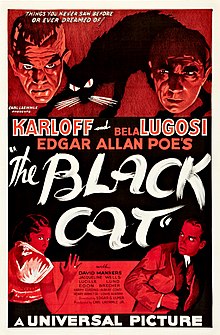
The Black Cat and The Raven, generally paired together in greatest hits packages, are the films where Karloff and Lugosi are most evenly matched on screen. They’re both immortal movie classics based on that mere fact alone; Lugosi nearly walks away with Son of Frankenstein as Ygor, while it’s sad to see how much of a nonentity part Lugosi received in The Body Snatcher, especially when compared against Karloff’s meaty role as John Gray and perhaps his best performance.

Young American lovers on their honeymoon in Hungary, a train ride beginning and ending the picture, a dark and rainy night, a road accident, an old dark house, an enigmatic doctor, a Satan worshipping priest, a story suggested by the work of Edgar Allan Poe with story and direction from Edgar G. Ulmer, and The Black Cat flies past in about 65 minutes, like a lot of the early horror classics.

Of course, there’s Karloff credited merely as Karloff, David Manners as one of the young American lovers, and Karloff and Lugosi find themselves at each other’s throat by the end of the picture.

Like the Frankenstein pictures and the Mary Shelley source material, The Black Cat departs almost entirely from Poe’s short story originally published in The Saturday Evening Post on August 19, 1843. I am okay with that, because Ulmer has a style all his own like James Whale in Frankenstein and The Bride of Frankenstein and The Black Cat pairs two movie legends for the first time.

The Raven gets done faster than even The Black Cat at 61 minutes, credits both Karloff and Lugosi with their surnames alone, and it has a lot of the same elements as The Black Cat.

Lugosi plays arguably his most diabolical and evil character in Dr. Richard Vollin, the archetype for the brilliant but troubled surgeon who has this, let’s say, morbid obsession with instruments of torture. He’s not your average doctor, obviously. Lugosi chews through the scenery, especially in the final reel, and relishes lines like Death is my talisman, I like torture, I tear torture out of myself by torturing you, and Poe, you are avenged!

Yes, he’s also obsessed with Edgar Allan Poe. The Pit and the Pendulum even makes a cameo appearance!

The Raven tilts more toward being Lugosi’s show because Karloff doesn’t even show up for his first scene until 17 minutes into the picture.

Karloff is great though, of course, and brings a certain poignancy to the tortured murderer on the run Edmond Bateman, who just wants the doctor to fix his ugly face.

EB: I’m saying, Doc, maybe because I look ugly … maybe if a man looks ugly, he does ugly things.

DRV: You are saying something profound.

Naturally, Vollin makes Bateman’s face even uglier and enlists him in a diabolical scheme.

The rest of the cast doesn’t measure up against Lugosi and Karloff, especially Irene Ware as the screaming socialite Jean Thatcher, but it doesn’t really matter because Lugosi and Karloff are so damn great.

I heartily recommend The Black Cat and The Raven, both Poe and Universal.

The Black Cat (1934) ****; The Raven (1935) ****


Jaws in 3D (1975 / 2022)

JAWS IN 3D (1975 / 2022) ****
When I first read the announcement Jaws 3D would be released to theaters in early September 2022, I mistook it for the Jaws 3-D from 1983 and I thought why in the bloody hell anybody would unleash that bloody awful movie once again … Just when you thought it was safe to go back in a movie theater … because there couldn’t be that much interest really in a third-rate Jaws movie.

I watched Jaws for the first time on the big screen in June 2020, sitting between my wife Lynn on the left and my mom on the right. We ate lunch beforehand at a place called Sharky’s Pub and Grub, and they might even have a Jaws poster. Just when you thought it was safe to go into a restaurant. My stepdaughter Emily and her friend watched E.T.

Jaws is another one of those movies that I would stop and watch every time I would come across it on cable TV, whether it played on TBS or TNT or part of a Jaws marathon 4th of July weekend on one of the premium channels.

Anyway, I decided to watch Jaws in 3D on Saturday, Sept. 3, which just happened to be National Cinema Day. $3 tickets for every showing, every showtime, every format. I had never seen the multiplex so busy; the theater had all hands on deck, and apparently 8.1 million people attended theaters across the nation on that day. Despite not being the biggest 3D fan, I thought why not bloody Jaws, of course a movie not originally in 3D, at that relatively budget price. There was a decent-sized crowd for this 47-year-old blockbuster pioneer, and they remained mostly quiet except for a couple of the most famous shock moments.

I thought it was a great experience, not only because I got to keep the glasses.

I long considered Jaws a very good movie, an ideal one to watch on cable TV when you just want to laze around and watch a movie, but after the last two times I’ve seen it in a movie theater, Jaws has dramatically increased in stature. It’s a great movie.

First and foremost, I appreciate Roy Scheider as Police Chief Martin Brody, Robert Shaw as Quint, and Richard Dreyfuss as Matt Hooper more every single time I watch Jaws.

Three great characters, three great performances, and they are something the other three Jaws films obviously lack. Scheider returns as Brody for Jaws 2, but it’s not the same.

George Burns (The Sunshine Boys) beat out Brad Dourif (One Flew Over the Cuckoo’s Nest), Burgess Meredith (The Day of the Locust), Chris Sarandon (Dog Day Afternoon), and Jack Warden (Shampoo) for Best Supporting Actor at the 1976 Academy Awards, but none of them approach Shaw’s work in Jaws.

Shaw makes an unlikable character likable by not even trying to be likable, and we feel his death scene more than just about any other in movie history. It is truly a horrifying moment, and despite the fact that I’ve watched Jaws 50, 75, 100, however many times, I still don’t want to see Quint lose his grip and slide right into the mouth of that great white shark.

Recently, I mentioned the incredible chemistry between Fred Ward and Kevin Bacon in Tremors. Scheider and Dreyfuss have a similar chemistry as Brody and Hooper, and I’m glad Jaws made Hooper infinitely more likable, excised Hooper’s extramarital affair with Brody’s wife, and let him survive along with Brody in the movie.

Shaw and Dreyfuss are great together, especially when they’re landing jabs and throwing shade at each other.

At one point in Jaws, Hooper describes the shark, and he could just as well be talking about Jaws itself and its capacity to make thrills, What we are dealing with here is a perfect engine, an eating (thrill) machine. It’s really a miracle of evolution. All this machine does is swim and eat and make little sharks (thrills), and that’s all.

Of course, that’s not all with Jaws, a truly scary classic that also generates lots of laughter and lots of emotion.

Tremors (1990)

TREMORS (1990) ****
The title Tremors immediately conjures up such science fiction and monster movie touchstones from a long-gone era as Tarantula and Them!

Matter of fact, though it does not approach the suspense in Them, Tremors belongs filed right alongside the classic horror films of the ’30s and the science fiction films of the ’50s from predominantly Universal Studios.

Tremors also calls to mind The Birds, Jaws, and Night of the Living Dead at various times, obviously, but director Ron Underwood and screenwriters Brent Maddock and S. S. Wilson provide us with a talented ensemble cast playing quirky and likable characters, as well as interesting and intelligent monsters, nifty special effects that bring the monsters to life, and the ability to balance horror and humor, that Tremors becomes a minor classic with a fresh and funky vibe all its own.

Kevin Bacon and Fred Ward star as Val (short for Valentine) and Earl, two repairmen in the small town of Perfection, Nevada. Can you really call Perfection a small town when it’s Population 14 and Elevation 2135? Anyway, Bacon and Ward have incredible chemistry in Tremors and they’re every bit as good as Danny Glover and Mel Gibson in Lethal Weapon, for example. Their characters and their performances are stronger than what can be found within the average monster movie, and they form a strong human core at the epicenter of Tremors. We like these two characters a great deal and make an investment in their fate.

Finn Wilson is also quite good as seismology student (and potential Kevin Bacon romantic interest) Rhonda LeBeck. She’s not some dumdum, thankfully, and she fits right in alongside Val and Earl because she’s feisty and intelligent and resourceful and likable.

Supporting cast members Michael Gross, best known beforehand for playing Michael J. Fox’s dad on Family Ties, and Reba McEntire nearly steal the show as survivalist and prepper husband and wife Burt and Heather Gummer. Their scene in the basement when they do battle against one of the monsters earned a spot in the annals of unforgettable movie scenes next to the final scene in Road House.

Burt Gummer’s Gun Wall has, as matter of fact, its own fan page with the weapons listed: William and Moore 8 gauge, Heckler & Koch HK91, Colt AR-15 Sporter II, Remington 870, Winchester 1200 Defender, Winchester Model 1894, Winchester Model 70, Steyr-Mannlicher SSG-PII Rifle, Micro Uzi, Colt Single Action Army, Smith & Wesson Model 19, Beretta 92FS Inox, SIG-Sauer P226, Ruger Redhawk, Magnum Research Inc. Mark I Desert Eagle, M8 Flare Pistol, M1911A1, Walther P38, Luger P08, TT-33, Browning Hi-Power, Walther PPK, .600 Nitro Express, Browning Auto-5, Norinco Type 54, Ruger Mini-14, Uzi, Nambu Type-14, Ruger Mk1, Browning Hi Power, SIG-Sauer P228, .38 Derringer, Webley Mk1, S&W Model 66 3-inch barrel, S&W Model 66 4-inch barrel, S&W Model 686 5-inch barrel, Chinese SKS, Factory stock blued Ruger Mini-14, Auto Ordnance M1 Carbine with metal heat shroud, Mil-Spec M1 Carbine, M1 Carbine in aftermarket unfolding stock, and Ruger Mini-14 with Choate folding stock.

Okay, yeah, anyway, I’m glad that somebody went to such great lengths to keep organized stock of an inventory that could be considered a Dirty Harry dream come true.

There’s one super irritating, annoying character in Tremors — prankster Melvin Plug (Bobby Jacoby), a smug little teenage punk who never becomes a kill count statistic much to everybody’s chagrin who’s ever watched Tremors. He’s only a small blemish on the film, because we do get a certain satisfaction when Burt tells Melvin I wouldn’t give you a gun if it were World War 3 and eventually gives him a gun without bullets.

Tremors still comes equipped with such an inherent appeal in part because it’s one of those movies I would always sit and watch if I came across it on cable TV. I don’t know how many times I’ve watched it over the years, but I know it’s a lot and Tremors fits this definition of romp — a light fast-paced narrative, dramatic, or musical work usually in a comic mood.

Any way you define it, though, it’s a fun 96 minutes and I do know that, after writing this review, I do want to watch it once again.

Abbott and Costello Meet Frankenstein (1948)

ABBOTT AND COSTELLO MEET FRANKENSTEIN (1948) ****
Over a period of a couple years, I watched all 36 Abbott and Costello feature-length comedies from their scene-stealing minor roles in One Night in the Tropics (1940) to their last disappointing picture in Dance with Me, Henry (1956).

Bud Abbott (1897-1974) and Lou Costello (1906-59) are not on the same elite level as Charlie Chaplin, Buster Keaton, Harold Lloyd, W.C. Fields, the Marx Brothers, and Laurel and Hardy, for starters, but they fit on a tier below neatly alongside the Three Stooges and Wheeler and Woolsey.

I recommend 28 out of their 36 films, and I do like the duo and their films a good bit. That said, I do not recommend binge-watching their films because they are often saddled with cornball musical numbers, cornball romantic subplots, and comedic routines that could quickly become very repetitive and tiresome after repeat exposure to their work. I spread their 36 films out very effectively, rarely ever watching any of them consecutively in a single sitting.

Until I recently watched Abbott and Costello Meet Frankenstein again, easily their most famous picture, I would have even argued they never made a truly great motion picture.

I’ve seen it several times over the years, and I’ve always liked it a lot ever since that first viewing many years ago on AMC. I always considered it nothing less than a very good film and the ultimate Abbott and Costello motion picture experience.

Anyway, this last time watching Abbott and Costello Meet Frankenstein, a meeting of Universal’s main staples, I thought Who the hell am I kidding, this is a great movie and I’m bumping it up to four stars exactly right where it belongs!

Of course, Abbott and Costello don’t actually meet Frankenstein, it’s Frankenstein’s Monster (Glenn Strange) and he plays a subservient role to Count Dracula (Bela Lugosi) and Larry Talbot / The Wolf Man (Lon Chaney Jr.), and it’s also not Abbott and Costello but Chick Young and Wilbur Gray who do the meeting within the movie. I guess Chick and Wilbur Meet Frankenstein’s Monster or Abbott and Costello Meet Glenn Strange or Abbott and Costello Meet Dracula, Frankenstein and the Wolf Man just wouldn’t have worked as titles.

If you stop and think too much about the inconsistencies and continuity gaps and logical flaws in any Universal horror movie, especially the ones made during the ’40s, you just might drive yourself stark raving mad and start foaming at the mouth.

I recommend just going with the flow. You’ll likely live a little if not a lot longer.

I’m not even going to regurgitate a plot synopsis for Abbott and Costello Meet Frankenstein because life is short, life is precious, and I honestly believe that one knows more or less what to expect from something titled Abbott and Costello Meet Frankenstein.

Abbott and Costello developed a routine in their horror comedies, as early as 1941’s Hold That Ghost and starting again with Abbott and Costello Meet Frankenstein and continuing through 1955’s Abbott and Costello Meet the Mummy, where something frightens Costello’s character and he will try (often in vain) to get Abbott’s character to believe him.

I am not exactly the biggest fan of this routine, I must admit, and it’s the first exhibit for what I wrote earlier about their comedic routines becoming repetitive and tiresome.

They never got that routine down any better than Abbott and Costello Meet Frankenstein, however, and it definitely has something to do with the presence of Lugosi (1882-1956), Chaney (1906-73), and, to a much lesser degree, Strange (1899-1973).

Lugosi, Chaney, and Strange play it straight and they help sell the laughs just by acting no differently than if they were in House of Frankenstein or House of Dracula.

Costello never played more convincingly frightened than he does throughout Abbott and Costello Meet Frankenstein.

Abbott and Costello were never more consistently funny than they are during Abbott and Costello Meet Frankenstein.

Dead of Night (1945)

DEAD OF NIGHT (1945) ****
Back in 2005, I needed three credits to complete a master’s degree in history (lifetime underachievement) and I finished a three-week 120-hour internship that summer at the National Archives in Kansas City, Missouri.

Anyway, they let me loose on their free account on some genealogical site as reward for good behavior and a day-and-a-half later I came back with Sisney family history dating back to 1776.

On February 27, 1776, a few months before the Declaration of Independence, Steven Sisney fought at and was captured and imprisoned during the Battle of Moores Creek Bridge near Wilmington, North Carolina. Sisney was one of about 1600 loyalist-siding Highland Scots who marched from Cross Creek, North Carolina, toward the coast behind British Colonel Donald McLeod. The loyalists lost, the patriots received a morale boost, and North Carolina became the first colony to vote for independence, beating the official declaration by a couple months easy.

Every once in a while, I think about Steven Sisney and his loyalty to the British since I favor the Beatles and the Stones and the Who and the Kinks and Black Sabbath and Led Zeppelin and the Clash and the Sex Pistols and the Buzzcocks and Radiohead and Pink Floyd and Peter Cushing and Christopher Lee and Sherlock Holmes and James Bond and Alec Guinness and Cary Grant and Ben Kingsley and Ian McKellen and Glenda Jackson and Hammer and Hitchcock and Monty Python and Lord of the Rings and Harry Potter and on and so on and on some more again.

If nothing else, the 1945 horror anthology film Dead of Night made me think about Steven Sisney, the epic 1989 David Hackett Fischer history book Albion’s Seed: Four British Folkways in America (never forget the saga of the poor one-eyed servant George Spencer in New Haven, who was hanged for bestiality after a sow birthed a deformed pig with one eye and the two witnesses required for conviction were the deformed piglet and Spencer’s recanted confession), the late Pittsburg State history professor Judith Shaw (1931-2013) who taught many British History courses over the decades, and how much of an impact Dead of Night had on Richard Attenborough’s Magic.

Horror anthologies generally offer a mixed bag of success and failure.

Of course, Ray Davies outlined it in Celluloid Heroes, Success walks hand-in-hand with failure along Hollywood Boulevard. I always think about Twilight Zone: The Movie from 1983 to illustrate the mixed bag qualities of just about every anthology we’ve ever been expected to consume. The segments directed by John Landis and Steven Spielberg suck, the ones from Joe Dante and George Miller are dynamite, and the prologue and epilogue push the overall package into positive review terrain.

In Dead of Night, Alberto Cavalcanti directed Christmas Party and The Ventriloquist’s Dummy, Charles Crichton directed Golfing Story, Robert Hamer directed The Haunted Mirror, and Basil Dearden directed Hearse Driver and Linking Narrative.

It all starts when architect Walter Craig (Mervyn Johns) tells host and potential client Eliot Foley (Roland Culver) and his guests at country estate Pilgrim’s Farm that he’s seen them all in a recurring dream. Craig feels like he’s been at Pilgrim’s Farm before and every guest rings a bell to him despite never having met any of them before. Each person (host and guests alike) rattles off a supernatural tale, inspired by Craig’s revelations. Craig wants to leave because he doesn’t want his dream to come true and the guests do their best to make him stay.

The Haunted Mirror and The Ventriloquist’s Dummy are especially brilliant and Golfing Story reminds one that Ealing Studios later brought us Kind Hearts and Coronets, The Lavender Hill Mob, and The Ladykillers, all of which feature a dark comedy that seems to have started with Hitchcock. Hamer directed Kind Hearts and Coronets and Crichton directed The Lavender Hill Mob (and later on in his career A Fish Called Wanda).

Basil Radford (1897-1952) and Naunton Wayne (1901-70) appear together in Dead of Night, but not as their characters Charters and Caldicott. Charters and Caldicott began in Hitchcock’s 1938 classic The Lady Vanishes and then the acting duo appeared together in a series of films from 1940 through 1949, including three more times playing Charters and Caldicott. They are very funny, both individually and collectively, in Dead of Night. They don’t seem particularly gay in Dead of Night.

During The Haunted Mirror, guest Joan Cortland (Googie Withers) relays to us what happened after she gifted an antique mirror to her future husband Peter (Ralph Michael). Peter sees another room in the mirror’s reflection, does not see Joan in the mirror when she confronts him, and for a spell he sees the room as normal. Joan finds out the history of the mirror and the wealthy man who owned it after she visits the antique shop from which she purchased the mirror. This wealthy man was crippled in a riding accident, then he grew so insanely jealous of his wife that he strangled her and he finally slit his own throat in front of the mirror. When Joan returns home, Peter accuses her of having an affair and then he attempts to strangle her. Joan smashes the mirror in sheer desperation and breaks the spell.

In The Ventriloquist’s Dummy, the absolute most effective segment, resident rational explanation seeker Dr. Van Straaten (Frederick Valk) tells us about the case of ventriloquist Maxwell Frere (Michael Redgrave) and his dummy Hugo Fitch. Maxwell develops a dual personality with Hugo becoming the dominant part. Poor, poor, poor Sylvester Kee (Hartley Power), who happens to catch and be impressed by the act.

In the long run, I was much impressed by Dead of Night and I recommend it to anyone.

Dracula (1931)

DRACULA (1931) ****
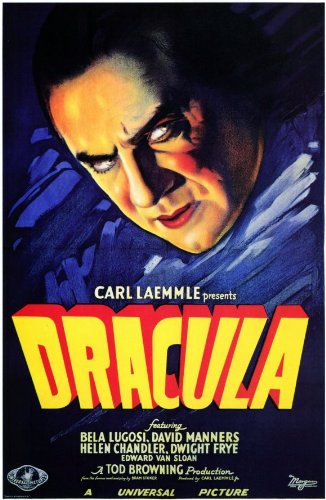
I remember being first disappointed by the 1931 Dracula and that disappointment carried over for more than two decades.

Around the turn of the 21st Century, I bought the 1999 VHS release and that’s what I first watched, the one with Classic Monster Collection across the top and then New Music by Philip Glass and Performed by Kronos Quartet immediately below. Of course, I thought Bela Lugosi as Dracula and Dwight Frye as Renfield were absolutely incredible, David Manners as Jonathan Harker and Edward Van Sloan as Professor Van Helsing and Helen Chandler as Mina Harker less so, and I loved director Tod Browning’s 1932 Freaks at first sight contemporaneous with Dracula. Freaks remains one of my absolute favorite movies, so obviously some movies hit people right from the start and others just simply take more time or sometimes they never make that deep, personal connection others do.

For the longest time, at least a decade if not longer, I thought Dracula was overrated and paled in comparison against Freaks, Frankenstein, The Bride of Frankenstein, and The Wolf Man, all of which I first saw around the same time as Dracula and I loved, absolutely loved, and still do love all of them. At the time, I also loved Abbott and Costello Meet Frankenstein more than Dracula.

It was that darn Philip Glass / Kronos Quartet score that stank up Dracula and I still get a big kick out of the Triumph the Insult Comic Dog couplet, Philip Glass, atonal ass, you’re not immune / Write a song with a fucking tune. I remember my wife complained about Glass’ score for the experimental non-narrative film Koyaanisqatsi and I bristled at his score for Candyman upon revisiting that 1992 film for the first time in several years.

Revisiting the 1931 Dracula in recent years, without the Glass / Kronos score and back closer to how it first appeared in theaters on Feb. 14, 1931, it’s risen in stock from three to three-and-a-half and finally four stars. I cannot deny that it still has a fair share of faults, like those performances I mentioned earlier and the stage-bound production quality since it’s based off the 1924 stage play adapted from Bram Stoker’s 1897 novel, but I’ve grown appreciation for everything that works from the opening scenes in Transylvania to Lugosi (1882-1956) and Frye (1899-1943), who inspired later songs from Bauhaus (Bela Lugosi’s Dead) and Alice Cooper (The Ballad of Dwight Fry).

It also helps one to catch up with the Spanish language Dracula from the same year and the same sets but a different cast, a different language, and a different director. This Spanish version, rediscovered first in 1978 and then later on video in 1992, lasts 30 minutes longer and it’s better in almost every respect than its famous counterpart. Better shot and better looking, vastly superior cleavage and far sexier women (Lupita Tovar over Helen Chandler any day of the millennium), and less wimpy men in the Spanish version, but Lugosi still prevails against Carlos Villarias.

Several lines had already entered the lexicon decades before I first watched Dracula: I never drink … wine. For one who has not lived even a single lifetime, you’re a wise man, Van Helsing. Listen to them. Children of the night. What music they make. Even I am Dracula belongs somewhere in the pantheon near Bond, James Bond. Lugosi’s ability or lack thereof speaking the English language actually benefits the otherworldly nature of his Dracula and I hold his performance in high regard alongside Max Schreck in Nosferatu, Christopher Lee in Dracula, and Gary Oldman in Dracula.

I have a long relationship with vampires.

I remember the 1985 Fright Night being the highlight of a boy slumber party circa 1988 and third or fourth grade.

I must have been 11 or 12 years old and in the fifth or sixth grade when reading the Stoker novel. Right around that point in time, I also read Sir Arthur Conan Doyle’s The Hound of the Baskervilles and Roald Dahl’s Charlie and the Chocolate Factory. I loved all three of them and they each fired up my imagination and creative spirit.

A few years later, I caught up with the Francis Ford Coppola version and talk about a movie that wowed a 14-year-old boy. I remember staying up late and sneaking around (somewhat) to watch this Dracula on my bedroom TV, captivated by all the nudity and sexuality and violence and Winona Ryder and Sadie Frost and it recalled some of what I liked about the novel all while becoming a cinematic extravaganza. I know critics of the 1992 Dracula blasted the film for being all style, no substance and for being overblown, but I think it’s overflowing with creativity and sheer cinematic beauty. I rate it right up there with F.W. Murnau’s Nosferatu as one of the best vampire films ever.

Some things simply transcend Keanu Reeves’ horrible accent and Dracula’s at one point beehive hairdo.

The vampire genre itself transcends such duds as Dracula 2000 and New Moon.

Odds and Odds: The Vikings, Dolls, The Monster Squad, Scream Blacula Scream

ODDS AND ODDS: THE VIKINGS, DOLLS, THE MONSTER SQUAD, SCREAM BLACULA SCREAM
Richard Fleischer’s The Vikings calls to mind epic grand adventure pictures Captain Blood, The Adventures of Robin Hood, The Sea Hawk, and The Sea Wolf, not to mention The Seventh Voyage of Sinbad from the same year (1958) and John Boorman’s Excalibur from 1981.

Kirk Douglas’ lust for life recalls Errol Flynn’s in Captain Blood, Robin Hood, and Sea Hawk and Janet Leigh’s incredible beauty compares with Olivia de Havilland’s in Captain Blood and Robin Hood, as well as Helen Mirren’s in Excalibur. Never mind that Leigh and Mirren play characters named Morgana; however, their beauty and first name are where their characters’ similarities begin and end.

In other words, The Vikings belongs to the fine cinematic tradition of swashbucklers, hair-raisers, cliff-hangers, nail-biters, period costume pieces, and historical fiction.

Of course, it doesn’t hurt that it has an uncredited Orson Welles narrate. The Vikings, in Europe of the eighth and ninth century, were dedicated to a pagan god of war, Odin. Trapped by the confines of their barren ice-bound northlands, they exploited their skill as shipbuilders to spread a reign of terror, then unequaled in violence and brutality in all the records of history. Good stuff.

Highlights include Douglas’ Einar and Curtis’ Eric having key body parts removed, the former his eye by a falcon and the latter his hand in a bout of capital punishment. These moments undoubtedly make The Vikings one of the most gruesome films in 1958 this side of the British classic Fiend Without a Face. Oh, that’s a golden oldie.

Naturally, one can’t go too wrong with any picture where Ernest Borgnine plays a character named Ragnar and spouts screenwriter Calder Willingham’s dialogue like a bountiful fountain, for example What man ever had a finer son? Odin could have sired him, but I did … and Look how he glares at me. If he wasn’t fathered by the black ram in the full of the moon my name is not Ragnar.

Back in the day, my friend would call on quotes from Airplane and Austin Powers for our amusement, and it’s a crying shame that we had no idea about The Vikings, because I think lines such as You sound like a moose giving birth to a hedgehog and The sun will cross the sky a thousand times before he dies, and you’ll wish a thousand times that you were dead would have perfectly fit a night of carousing, especially for two byproducts of a school with Vikings for its mascot.

Rating: Four stars.

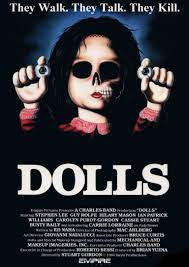
— I finally got around to watching Stuart Gordon’s Dolls for the first time.

Finally, because I love Gordon’s first two features Re-Animator and From Beyond.

I must say that I wasn’t disappointed by Dolls, though it’s a step down from From Beyond and a good two or three from Re-Animator.

Alas, Dolls belongs to a slightly different but no less venerable tradition than Re-Animator and From Beyond, both of which cross mad scientists and low-budget exploitation (nudity, gore, etc.). Think Frankenstein meets Dawn of the Dead.

Dolls, meanwhile, recalls such touchstones as The Old Dark House and The Devil-Doll, not to mention the 1979 Tourist Trap. See if this plot sounds familiar: On a dark and stormy night, six people — a dysfunctional family (husband and father, wife and stepmother, and daughter / stepdaughter) and a young man with two hitchhikers — find the nearest house (The Old Dark House) and they have to fight to make it out of the other end of the motion picture alive because their kindly old hosts are magical toy makers with killer dolls (The Devil-Doll, Tourist Trap).

Like both Re-Animator and From Beyond, Gordon and Dolls screenwriter Ed Naha jump off from their basic old-fashioned plot structure with inspired moments of madness.

Dolls also predates Child’s Play by more than a year and rather than just one killer doll, it has a horde … but Child’s Play, created by Don Mancini, spawned Child’s Play 2, Child’s Play 3, Bride of Chucky, Seed of Chucky, Curse of Chucky, Cult of Chucky, and Child’s Play (2019), plus short films Chucky’s Vacation Slides and Chucky Invades and the TV series Chucky.

So, apparently, not all killer doll films are created equal.

Rating: Three stars.

The Monster Squad starts with an absolute genius idea: Take a group of kids, horror movie fans one and all, and have them do battle against Dracula, Frankenstein’s Monster, Wolf Man, Mummy, and Gill Man.

Yes, what an absolutely positively brilliant idea by screenwriters Shane Black and Fred Dekker, whose names ring a bell loud and clear for genre fans. Others will be familiar with their work regardless whether they know their names or not.

Black made his fame and fortune first for the script of the buddy cop picture Lethal Weapon and some of his other credits include Predator (he plays Hawkins), The Last Boy Scout, and The Long Kiss Goodnight.

Dekker’s other feature directorial credits are the fantastic Night of the Creeps and the not-so-fantastic RoboCop 3.

The Monster Squad gives us both protagonists and monsters that we like, and that goes a long way toward producing a memorable motion picture experience.

The Wolf Man gets his due for a change. The fat kid Horace kicks the Wolf Man in the groin and unleashes the film’s trademark line Wolfman’s got nards! In 2018, Andre Gower, one of the stars of The Monster Squad, directed a documentary named Wolfman’s Got Nards, which looks at the impact one little cult horror film made on fans, cast and crew, and the movie industry.

Anyway, in a movie filled with nifty little moments, I love it when the Wolf Man regenerates after he’s blown up real good.

On the site Drinking Cinema, I found a game for The Monster Squad so drink whenever: 1. Dynamite EXPLODES! 2. A monster dies! 3. You hear a sweet insult. 4. You learn a new monster fact. 5. The cops are having a really hard time figuring out that, um, hello, the perps are various Jack Pierce creations. 6. You see amazing dog acting. 7. You witness a patented Monster Slow-Walk. 8. There’s a monster scare!

I give The Monster Squad a slight deduction for the obligatory music video montage right around the midway point of the picture.

Rating: Three-and-a-half stars.

— Vampirism and voodoo go together rather well and their combination helps Scream Blacula Scream become one of those rare sequels I prefer over the original.

I thought William Marshall’s performance as the title character was the redeeming factor in Blacula and he’s every bit as good in Scream Blacula Scream. Marshall just has a commanding screen presence and he brings both a gravitas to a character and legitimacy to a movie that otherwise might be laughable with the wrong person in the main role. He’s equally effective in every guise of this character — the debonair Mamuwalde who has a definite charm with the ladies befitting an African prince (which he indeed was before the racist Dracula cursed him and imprisoned in a coffin until Blacula awakened in 1972 Los Angeles), the menacing Blacula with his fangs bared, and the more reflective Mamuwalde who hates the dreaded vampire curse.

A highly respectable box office return — not voodoo, no matter what the plot synopsis might read — brought Mamuwalde / Blacula / Marshall back.

In the first movie, Mamuwalde / Blacula comes to believe the lovely Tina’s the reincarnation of his long dead wife Luva. Well, it definitely helps that Vonetta McGee plays both Tina and Luva. By golly, doesn’t this plot thread just get you every single time?

In the sequel, Mamuwalde / Blacula believes in the voodoo powers of Lisa Fortier. She can provide a cure and exorcise the curse once and forever.

Scream Blacula Scream came out two weeks after Coffy and had it been made later in 1973 after Pam Grier busted out as a star playing Coffy, her Lisa Fortier character in Scream Blacula Scream would have undoubtedly been different. Grier plays a more traditional leading lady and screaming and shrinking damsel in distress in Scream Blacula Scream, and she’s definitely no shrinking violet in either Coffy or Foxy Brown. So if Scream Blacula Scream had been produced more in the aftermath of both Coffy and Cleopatra Jones, which came out a month after both Coffy and Scream Blacula Scream, surely American-International — one of the best exploitation film outlets — would have wanted Grier to play one badass mama jama vampire killer rather than her more stereotypical role.

Fair warning: Scream Blacula Scream ends on an extremely jarring note. I remember thinking, in the immortal song title of Peggy Lee, is that all there is? Despite the fact of that ending, you might be surprised to find that I am granting Scream Blacula Scream three-and-a-half stars. Yes, it is just that good.