Blackenstein (1973)

BLACKENSTEIN (1973) No stars
Blackenstein just might possibly be the worst horror movie I have ever seen and off the top of my head, that means it competes alongside such turkey bombs as Jaws: The Revenge, Monster a Go-Go, and Robot Monster. Now, that would be one way to do a horror movie marathon.

Poor Eddie. Dude lost both arms and both legs in Vietnam and he’s bullied in a Veterans Hospital near the beginning of Blackenstein over ice cream. He does have the love of the lovely Dr. Winifred Walker, who hooks Eddie up with the brilliant surgeon and DNA researcher Dr. Stein. Dr. Stein can attach new limbs to Eddie and he’ll be walking just like you and I in no time says this preeminent doctor. Not so fast, my fiend, not with Dr. Stein’s dastardly assistant Malcomb around.

This super creep Malcomb falls instantly in love, well he calls it love anyway, with Dr. Winifred, and by the way, the actor who plays Malcomb (Roosevelt Jackson) gives one of the most subtle performances ever. He does not foreshadow any upcoming plot developments by staring a hole right through Dr. Winifred the first half-dozen scenes they share. That’s why I called him super creep just a couple moments ago, because he’s super creepy.

Malcomb declares his lust, er, love for Dr. Winifred, Dr. Winifred tells Malcomb no because she loves Eddie, Malcomb becomes all spurned and switches Eddie’s DNA with that of a caveman, and Eddie becomes, you guessed it, the title character. That’s when Blackenstein really takes a dive for the dumpster, as it departs from soap opera to horrible horror with soul music interludes that quite frankly belong in another movie.

Blackenstein first wanted to cash in on the coattails of the 1972 hit Blacula and I have read that American International, one of the best exploitation film outlets, chose Scream Blacula Scream over Blackenstein. Gene Siskel reviewed Blackenstein in 1975, when distributors tried passing it off as Black Frankenstein with their fervent Malcomb-like desire to siphon off the success of the Mel Brooks satire / affectionate tribute Young Frankenstein. Siskel managed to be extremely generous when he rated Blackenstein one-half star.

Blackenstein, in short, has got no soul and that’s why it failed then and fails now or any moment in time. Not only does it have no soul, which is certainly bad enough, it’s got no joy of filmmaking like Edward R. Wood’s Plan 9 from Outer Space and Ray Dennis Steckler’s The Incredibly Strange Creatures Who Stopped Living and Became Mixed-Up Zombies, both of which are somehow considered worse than Blackenstein. The director of Blackenstein should be glad we cannot remember his name without an Internet search party.
What’s Good for the Goose May Not Be Good for the Gander

WHAT’S GOOD FOR THE GOOSE MAY NOT BE GOOD FOR THE GANDER: JONATHAN LIVINGSTON SEAGULL & MILLION DOLLAR DUCK

Jonathan Livingston Seagull felt like the cinematic equivalent of a bird pooping on you for 99 long, long, long minutes. How long? It felt twice as long as watching Shoah.

By the way, what did that bird spray on its way? A whole load of New Age gobbledygook that gobsmacked me right in the kisser. I’ll stand with the flock of seagulls in this case, thank you very much, and put Jonathan Livingston Seagull on blast for being one festering piece of poo.

The nature photography and some level of admiration for exactly how they filmed it earn Jonathan Livingston Seagull one star, and that’s definitely more than our next specimen. However, I hate Neil Diamond’s songs and the birds’ outer-inner monologues, and I desperately wish Jonathan Livingston Seagull was a silent movie. Maybe I should have watched it muted. My bad.

For example, there’s six-and-a-half minutes of a Diamond concoction named “Be.” Maybe just maybe it will replace “Sweet Caroline” as the Great American Sing-a-Long. This sports writer can only hope after 10 years of hearing “Sweet Caroline” at every single baseball game. I’ll have endless admiration for a crowd that could make something timeless from lyrics the likes of “Be / As a page that aches for words / Which speaks on a theme that’s timeless / While the Sun God will make for your day / Sing / As a song in search of a voice that is silent / And the one God will make for your way.”

Early on in Jonathan Livingston Seagull, it tricked me into thinking I might be stumbling into a remake of the Alfred Hitchcock classic The Birds. Oh, how I wish it were true. Guess I can wish in one hand and have bird shit in the other.

Now, we come to Million Dollar Duck, a Walt Disney Studios production from 1971 that must have created a commotion back then, namely the sound of Uncle Walt rolling over in his grave at the abysmal quality of what might quite possibly be “one of the most profoundly stupid movies I’ve ever seen.” Roger Ebert and Gene Siskel agreed, because I quoted Ebert and now I will mention that Siskel walked out on Million Dollar Duck.

For the record, I endured about one hour and I stopped watching Million Dollar Duck right around the point when they brought out a photo of Richard Nixon and the stereotype of a Japanese diplomat carried over from World War II propaganda. At that point, I told Million Dollar Duck to go straight to The Devil and Max Devlin.

Sandy Duncan’s Katie Dooley has a beat on being the single dumbest character in cinematic history, and yes, that’s including any dumb character played by Pauly Shore or Adam Sandler and Lloyd and Harry from Dumb and Dumber, for crying out loud. You wonder how Katie Dooley and her brilliant husband Professor Albert Dooley (Dean Jones) ever created a child, let alone one of those precious, er, precocious Disney brood, er, children that could kill Damien with kindness.

The other dumb characters are not far behind, who are all dumber than the title character who earns the title, you guessed it, by laying golden eggs. Million Dollar Duck certainly laid an egg, all right, definitely not golden.

Once upon a time, my Grandma told me the story of how a bird found my Grandpa’s bald head in their back yard one day and how the bird started pecking away on that bald head. Actually, she told me that story a few times over the years and I must admit that I thought about it and pictured my poor Grandpa being pecked by that bird during both Jonathan Livingston Seagull and Million Dollar Duck. Finally, though, I cannot hate Jonathan Livingston Seagull and Million Dollar Baby too much because they helped me think about my grandparents and I have settled on the thought that one day I will tell my grandchildren about that one fateful night I watched Jonathan Livingston Seagull and Million Dollar Duck back-to-back and how I lived to tell the tale.

The Dark (1979)

THE DARK (1979) *

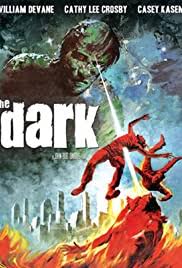
Be afraid, very afraid, not of the dark but of The Dark, a laughable thriller that only increases in being laughable until one of the most ridiculous conclusions in cinematic history.

See, I’m not afraid of sleeping in the dark, not afraid of being in a cemetery late at night, not afraid of being home alone in an old house, not afraid of admitting or being wrong, et cetera. In all honesty, though, I hated working alone late nights at the Neosho Daily News office and avoided it as much as possible, except Friday nights during football season. Once corporate killed the Sunday edition and made Tuesday our next paper, though, I started going home after the game, uploaded photos online, and wrote the gamer the next day.

Anyway, The Dark tells the story of a killer who strikes every night in the Los Angeles area and earns the cheap nickname ‘The Mangler.’ What’s a killer without a cheap nickname? This one is a nightmare for the police, because of his unusual strength, his seeming lack of any discernible pattern in his killing, his ability to leave no forensic evidence behind, and, predating Austin Powers, he shoots frickin’ laser beams from his frickin’ eyes. We eventually find out that he even grows stronger with every killing.

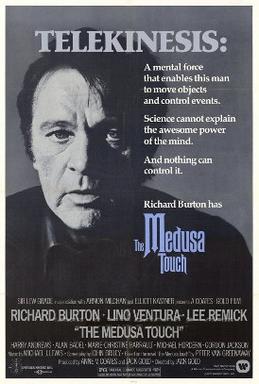
The killer and his laser beams look awesome on the poster for The Dark and I grade that promo artwork three-and-a-half stars. In the actual movie, though, the killer and his laser beams absolutely positively suck. These special effects alone impeded the advancement of all technology. When our killer unleashes his laser beams on several anonymous policemen in the grand finale, he clearly misses the mark but the policemen nonetheless take a mighty fall. In all seriousness, just thinking about these scenes now, I haven’t laughed this loudly since Richard Burton’s telekinesis in The Medusa Touch.

Just think all one had to do was light the killer on fire and BOOM! KABOOM! KABLOOEY! Just thinking about the killer’s demise now, I haven’t laughed so heavily since the paragraph before.

The Dark wastes a relatively distinguished cast — William Devane, Cathy Lee Crosby, Richard Jaeckel, and Keenan Wynn — and I find it ironic that fired director Tobe Hooper (replaced by John Cardos) later directed a flop horror film titled The Mangler.

Please remember, though, to be afraid, very afraid, of The Dark, especially since it’s possible that one’s head may explode from convulsive laughter.

The Prowler (1981)

THE PROWLER (1981) *
Describe The Prowler in one word.

Excess.

Yes, indeed, director Joseph Zito goes for an excess of false alarms and jump scares. It seems like there’s a scene like that every couple minutes. I mean, for crying out loud, somebody (usually her policeman significant other) sneaks up on our main female protagonist alone at least five times. Keep in mind The Prowler (hopefully not confused with the 1951 Joseph Losey thriller) earned Zito the opportunity to direct Friday the 13th: The Final Chapter.

Tom Savini’s gore effects ran into considerably less interference than earlier 1981 slasher films My Bloody Valentine and Friday the 13th Part 2, both released in the immediate aftermath of John Lennon’s murder and the subsequent MPAA tougher stance against graphic violence. Savini’s effects are quite frankly almost too good for their own good, as the blood gushes like a geyser at regular intervals. I found them a little much, just as I did in Maniac, and I usually love Savini’s work, especially Dawn of the Dead and Day of the Dead.

In addition to all the false alarms and jump scares, The Prowler relies too much on cat-and-mouse or a ‘contrived action involving constant pursuit, near captures, and repeated escapes.’ The main female protagonist and her dashing cop significant other recall Nancy Drew and one of the Hardy Boys. At one point late in the picture, she even attempts the old hiding underneath the bed with a deranged, psychopathic killer nearby trick.

The Prowler begins with a 1945 newsreel and a ‘Dear John’ letter, before getting down to brass tacks with a double homicide in the distant past that will trigger a present-day murder spree. After the success of Halloween, this flashback style of storytelling to start the whole shebang in style became the vogue for slasher films. Let’s see, Friday the 13th, Prom Night, Terror Train, and The Burning all started up this way and Happy Birthday to Me and My Bloody Valentine were both not too far behind with tours of the past. The plots of The Prowler and My Bloody Valentine have striking parallels, especially the overall look of the killer.

The Prowler conceals the identity of the killer until nearly the end of the movie and that’s probably best … but, who are we kidding, since I found some or even most of the Prowler’s behavior laughable even before the unveiling that calls into question every murder in the past hour. Fortunately, though, we have only a brief unmasking and then our heroine unceremoniously shotgun blasts the Prowler’s head to smithereens. We are spared any big speech or further character motivation and the frenzied scenery chewing of, let’s say, Betsy Palmer late in Friday the 13th. Unfortunately, we are not spared yet another jump scare in the film’s last scene, as if Zito received a bonus for overloading the picture with jump scares. Jump scares are cheap, though, and eventually some audience members turn against any picture that abuses jump scares, false alarms, cat-and-mouse, flashbacks, and dream sequences or whatever combination of them.

Casting Farley Granger as Sheriff George Fraser proved to be a strike against The Prowler, because I flashed back on two of the greatest thrillers ever made, Rope and Strangers on a Train, directed by none other than the Master of Suspense, Alfred Hitchcock. All the marvels of modern cinematic technology like nudity, gore, and profanity galore cannot make up for the difference between Zito and Hitchcock or the difference between a hack and a master.

The Medusa Touch (1978)

THE MEDUSA TOUCH (1978) *1/2
I could only empathize with Richard Burton’s character in The Medusa Touch in one way.

At some point during The Medusa Touch, I realized that I was seeing a cinematic disaster before my very eyes and I began staring right back at the screen especially when Burton’s John Morlar trotted out his telekinetic powers. Through my telecinematic eyes, I flashed back on Billy the Kid Vs. Dracula when the Old Count, played by veteran John Carradine, overacted with his eyes just like Burton did 12 years later. I laughed at both films more than I have at films that were aiming to make me laugh and failed.

Whether or not one appreciates The Medusa Touch boils down to how one feels about the film’s heavy flashback structure and the Burton lead performance.

I don’t know, personally speaking, I soured on the flashbacks by about the third time Lino Ventura’s French detective Monsieur Brunel encountered a character who recalled a past event, normally a disaster, involving John Morlar at various evolutionary stages in his telekinesis. We know, though, with dread certainty that whenever there’s a flashback, somebody’s going to die. Morlar’s parents, his wife and her lover, Morlar’s neighbor, Morlar’s enemies at school, et cetera. Of course, the deaths grow progressively in number and more sensational until Morlar crashes planes into buildings and reduces cathedrals to rubble.

As far as Burton’s performance, I never felt much of anything for John Morlar and that blame falls on the shoulders of the man who could be both one of the best and one of the worst actors in the world before his death in 1984. I feel even more admiration for Sissy Spacek’s work as the title character in Carrie, after watching Burton go down in flames in The Medusa Touch. Spacek creates such overwhelming empathy for her character that we get caught up in the predominantly teenybopper melodrama and we truly care about what happens to Carrie White. We don’t want to see any more misfortune befall this character, and we are on her side when the pigs’ blood flies late in the picture. Morlar could not even rouse me to a superficial hatred that immediately disappears at the end credits, and by all rights he should have. I just heard Burton mouthing dialogue and being guilty of worse overacting with his telekinesis.

Not only does Morlar have telekinesis, he’s apparently unstoppable. Nobody can kill him in this picture, though two main characters give it the old college try. Morlar takes a licking and keeps on ticking. Simply unbelievable. Morlar spends almost the entire movie in a hospital bed on life support and that helps explain why Burton gives his performance basically in flashback; it should be mentioned though Morlar’s brain occasionally causes the attached monitor to go schizoid. Nobody casts a star the stature of Burton and then have him bed ridden for the film’s duration.

Between telekinesis and invincibility, I found little to believe in during The Medusa Touch. I just wanted it to be over so I could quickly begin the healing process.