Kill and Kill Again, Firecracker, Circle of Iron

KILL AND KILL AGAIN, FIRECRACKER, CIRCLE OF IRON

In his 1981 TV review of the South African martial arts spectacular KILL AND KILL AGAIN, Roger Ebert predicted action movie stardom for James Ryan and invoked the names Eastwood, Bronson, and Bruce Lee.

Well, in this business and life in general for that matter, you win some, you lose some.

James Ryan, who? Yeah, not exactly a household name.

Describing the plot, I would like to just string together a bunch of random words: martial arts champion for hire undercover government agent top secret rescue mission kidnapped scientist recruit colleagues alternative energy source megalomaniac uniformed cult mind control world domination bar fight mushy romance mushy talk middle-of-nowhere fight storming fortress explosions fisticuffs flips plot revelations not particularly revelatory.

There you go. KILL AND KILL AGAIN, the sequel to KILL OR BE KILLED, in a nutshell.

KILL AND KILL AGAIN works predominantly because it has a good sense of humor and it finds just the right tone to pull off being a successful action comedy.

There’s one especially fun supporting character and supporting performance, the diabolical genius’ assistant and (significant other) Minerva played by Marloe Scott-Wilson. She looks like she drifted over from ROCK ‘N’ ROLL HIGH SCHOOL or THE DECLINE OF WESTERN CIVILIZATION, especially with that ridiculous Day-Glo hairdo. She’s a lot of fun in every scene, especially when she calls residential madman Marduk (Michael Mayer) by these absolutely ridiculous pet names. She comes up with a fresh one every single time. And it rankles Marduk, because good old Minerva says her little terms of endearment right in front of everybody. At one point, Marduk tells her, “I said don’t call me Popsicle.” This running gag even has an explosive payoff in the end.

Guess we should mention that South African beauty queen Anneline Kriel — Miss World 1974 — does her own stunts in the movie. She has to overcome playing a character named “Kandy Kane.” I almost wish they would have named her character “Susan Alexander Kane” or “Emily Kane,” for all us CITIZEN KANE fans in the audience. Now, that would have been an impressive stunt.

Impressive stunts are at the heart of FIRECRACKER, especially during the film’s last 30 minutes.

We’re talking about topless kickboxing and what must surely be one of the weirdest love scenes ever committed to celluloid.

Two sicko creeps pursue our heroine Susanne Carter, played by the luscious Jillian Kesner, and they eventually shed her of her top and bra. She then proceeds to kick their asses viciously. Meanwhile, in the background, we have “Rack Master” boxes. Perfect!

“Rack Master” should have been Carter’s martial arts name and it also should have been a title for FIRECRACKER.

That’s not too much of a stretch, especially since FIRECRACKER traveled as NAKED FIST in Australia.

FIRECRACKER director Cirio H. Santiago plagiarized this topless kickboxing scene from his earlier New World Pictures extravaganza TNT JACKSON.

Now, let us consider that weird love scene. Oh Susanna and her love interest Chuck Donner (Darby Hinton) consummate their relationship, but not before they remove each other’s clothes stitch-by-stitch with a knife. Kinky. Chuck Donner and his incredible mustache, especially his incredible mustache, just scream “Creepy seducer of the ladies who killed Susanna’s sister.” Of course, Susanna does not learn of this fact until after their lovemaking.

Susanna exacts her revenge against Chuck in the ring and we all can be sure that he will never look at another woman ever again.

Kesner passed away in 2007 and she and her late husband Gary Graver (1938-2006) became known for their efforts to preserve the work and legacy of legendary director Orson Welles. I do believe it is time for another reference to CITIZEN KANE.

CIRCLE OF IRON attempts to be something bigger, greater than KILL AND KILL AGAIN and FIRECRACKER. It wants to be a transcendent exploitation film.

We are given the only clue we need as soon as the following title card appears on screen: “Prior to the death of the legendary Bruce Lee he helped to create a movie story that might capture not only the spirit of martial arts but a part of the Zen philosophy he lived by. He was aware that a film with these dynamics would cause controversy, particularly among those unfamiliar with Zen beliefs. But it was this very uniqueness that he believed wound enthrall the moviegoer. Bruce set the story in a land that never was and always is. It is to Bruce Lee that this film is posthumously dedicated.”

I was definitely not enthralled by CIRCLE OF IRON. Not very often.

It certainly did not help that Captain Hairdo, er, Jeff Cooper plays the lead character Cord and this character and performance never quite resonated with me because I kept seeing Roger Daltrey instead and I pretended it was TOMMY.

I kept waiting for Cooper’s cord to break out into song, “Listening to you, I get the music / Gazing at you I get the heat / Following you I climb the mountain / I get excitement at your feet!” and “See me, feel me, touch me, heal me.”

It never happened and I felt extremely disappointed.

David Carradine plays about four roles too many in CIRCLE OF IRON. Okay, I’ll say three roles too many, because we get one of the film’s most entertaining scenes when Carradine assumes the guise of “Monkeyman.” At one point, Carradine’s wig came off and I thought shit like that only happened in SAMURAI COP.

Christopher Lee passed on THE LEGEND OF THE 7 GOLDEN VAMPIRES, a joint venture between Hammer Studios and the Shaw Brothers, because he did not want to play Dracula for the millionth time … but he plays what turns out to be a role that sucks even more in CIRCLE OF IRON, Zoltar, er, Zetan. This is one of those quest movies where you’ll become irritated after hearing a certain name — Zetan, maybe — many, many, many, many, many, many times.

Orson Welles asked me not to reference a certain movie during this review of CIRCLE OF IRON. I must respect his wishes.


KILL AND KILL AGAIN ***; FIRECRACKER ***; CIRCLE OF IRON **

Attack of the Fantastical Movies

ATTACK OF THE FANTASTICAL MOVIES: ATTACK OF THE 50 FOOT WOMAN, EARTH VS. THE FLYING SAUCERS, PLANET OF THE VAMPIRES, MOTORPSYCHO!, GALAXINA, REPTILICUS, BIG BAD MAMA, REAL LIFE, NINJA III: THE DOMINATION, NIGHT OF THE DEMONS

How do I grade something like ATTACK OF THE 50 FOOT WOMAN from 1958? It has a setup that could be called “laborious” or “lackluster” or “lugubrious.” I’m not going to call it any of those words, but I can see exactly why somebody else would. In other words, it’s not until about the 45-minute mark that we get to the 50 foot woman. Yes, I wish they had reversed the numbers, 15 minutes of setup and 45 minutes of 50 foot woman. Simple mathematics. At least, 45 minutes of setup and 45 minutes of 50 foot woman. Yes, that sounds even better than “15 then 45.” The final 15 or 20 minutes of ATTACK OF THE 50 FOOT WOMAN, though, are solid gold. Rating: ***

— It’s virtually impossible to watch EARTH VS. THE FLYING SAUCERS and not think about MARS ATTACKS! (flying saucers) and INDEPENDENCE DAY (Washington D.C. invaded), two blockbusters from 1996 with a combined production budget of $145 million and big, big, big stars, including Jack Nicholson in dual roles in MARS ATTACKS! In EARTH VS. THE FLYING SAUCERS from 1956, Ray Harryhausen’s stop-motion flying saucers are the real star of the show (step aside, Hugh Marlowe) and the film thankfully wastes very little time in showcasing them. It’s the inverse of ATTACK OF THE 50 FOOT WOMAN. ***1/2

— Italian director Mario Bava (1914-80) became especially known for his stylish horror films. From his British Film Institute profile, “Mario Bava took a vital role in the creation of the modern horror film. If there was to be a a Mount Rushmore-style monument dedicated to four directors whose work pioneered a new form of big screen chills and thrills, those giant faces etched in granite on the mountainside would be: Bava, Alfred Hitchcock, Georges Franju and Michael Powell.” In the words of a Pavement song, a Bava film has style, miles and miles. Case in point: PLANET OF THE VAMPIRES, a low-budget science fiction and horror production from 1965 that masked its cheap sets through smoky skullduggery. Bava said in Fangoria, “Do you know what that unknown planet was made of? A couple of plastic rocks — yes, two: one and one! — left over from a mythological movie made at Cinecitta! To assist the illusion, I filled the set with smoke!” Watching PLANET OF THE VAMPIRES for the first time, you might think you’ve seen this basic plot somewhere before … ahem … Ridley Scott’s ALIEN. ***1/2

— 1965 proved to be a great year for titles with exclamation points and for director, producer, writer, cinematographer, and editor Russ Meyer (1922-2004), whose films often proved to be ahead of their time. Meyer contributed two exclamation point titles — FASTER, PUSSYCAT! KILL! KILL! and MOTORPSYCHO! — during a 1965 in which he directed three films overall; Meyer’s greatest cinematic year began with MUDHONEY. Proof of being ahead of its time: MOTORPSYCHO! (what a title) gives us a psychotic motorcycle trio led by a deeply disturbed Vietnam vet — before TAXI DRIVER, before ROLLING THUNDER, before THE DEER HUNTER, before FIRST BLOOD — in addition to all the elements (large-breasted women and endless cleavage, campy humor, satire, and quotable dialogue) we expect from a Meyer film. ***

— GALAXINA lands a few successful jabs at STAR WARS, STAR TREK, and ALIEN, but otherwise it’s a real long slog through 90-plus minutes of a lowbrow and low-budget science fiction and western parody set in the 31st century. Here’s just one example of the film’s humor: Avery Schreiber (1935-2002) plays a character named “Capt. Cornelius Butt.” Then again, I probably should have just said that it’s a Crown International Pictures release. Surely you remember Crown International Pictures? They brought us such immoral, er, immortal classics as THE BEAST OF YUCCA FLATS, THEY SAVED HITLER’S BRAIN, SEXTETTE, and THE BEACH GIRLS. The late former Playboy Playmate of the Year Dorothy Stratten fills the title role and she’s been described as “a voluptuous blonde android servant.” Galaxina works better when she’s silent (the first half of the picture), because Stratten proves that she was a true novice thespian every time she speaks during GALAXINA. Stratten reportedly complained to film director and her paramour Peter Bogdanovich that the ads for GALAXINA promoted her being the Playmate of the Year, because she wanted to be taken seriously as an actress. GALAXINA would not do good for anybody wanting to be taken seriously for anything. Unfortunately, Stratten’s estranged husband Paul Snider murdered her two months after the release of GALAXINA. Stratten would be immortalized on film by the 1981 TV movie DEATH OF A CENTERFOLD: THE DOROTHY STRATTEN STORY and the 1983 theatrical release STAR 80, played by Jamie Lee Curtis and Mariel Hemingway, respectively. In case you were wondering, you see a lot more of Stratten in Playboy than GALAXINA. *1/2

— Recent weeks, mostly under self-quarantine, have included a few first-time watch monster movies: GODZILLA VS. MECHAGODZILLA and TERROR OF MECHAGODZILLA, SLITHIS (possibly the worst monster movie ever made), THE GIANT CLAW, and, most recently, REPTILICUS, Denmark’s infamous first entry in the monster movie sweepstakes. Judging by REPTILICUS, the Danish should stick to pastries. They make a mean strudel, not so much a Godzilla rip-off. Apparently, there’s never been a second Danish monster movie, so I guess they have stuck to pastries for nearly 50 years since this 1961 turkey. Anyway, I wanted to find the Danish version of REPTILICUS, but, of course, I had to settle for the English dub from good old American International. The plot: Copper miners find the tail of a prehistoric reptile and it eventually regenerates into Reptilicus, a hand puppet (close-up) and a marionette (wide shot) that give the $50 Giant Claw its money for being the “best” worst movie monster of all-time. I enjoyed REPTILICUS even less than THE GIANT CLAW, though. For example, when Reptilicus eats an extra or two, the victims look like they have been cut out of a magazine and they are being thrown into the puppet’s mouth. In THE GIANT CLAW, at least its victims being eaten scene brought me back to the “Eat ‘em! Eat ‘em! Crunch! Crunch!” scene from Q: THE WINGED SERPENT. I even called out “Crunch! Crunch!” during THE GIANT CLAW. No such luck during REPTILICUS. **

— Arthur Penn’s 1967 film BONNIE AND CLYDE proved to be one of the watershed films of the second half of the 20th century and one indication was that for several years, BONNIE AND CLYDE inspired many sensationalistic crime films set during the Great Depression. Roger Corman produced a whole slew of them, with the most famous being 1974’s BIG BAD MAMA starring Angie Dickinson, Tom Skerritt, and William Shatner and directed by Steve Carver (who later directed the Chuck Norris spectacular LONE WOLF McQUADE). BIG BAD MAMA mixes in a hippie-like free love sensibility and showcases bed hopping and generous amounts of nudity between all the murder and mayhem. The title character (Dickinson) and her two not long past jailbait daughters (Susan Sennett, Robbie Lee) all have multiple nude scenes, highlighted by Dickinson’s full-frontal shot late in the picture. One of the picture’s tag lines: “Wilma gave her daughters everything — her looks, her lovers and the crime of their lives!” Dick Miller (1928-2019), yes, that guy, plays a crime fighter and you know you can’t go too wrong with a picture that features an old-fashioned bloody crime spree, much nudity and shenanigans (Dickinson looked absolutely sensational in 1974), Shatner, and Dick Miller. ***

— Many years before the proliferation of reality TV, Albert Brooks skewered it with his 1979 directorial debut REAL LIFE, a satire of the 1973 PBS documentary “An American Family.” Brooks plays an exaggerated version of himself and watching this movie for the first time in 2020, it’s difficult not to conjure up memories of all the obnoxious or obsequious hosts and participants on reality TV shows from years ago — “The Real World,” “The Bachelor,” et cetera, they’re all terrible and I’m fortunate to have survived all my encounters with them. All those creeps still give me the willies just thinking about it now, but unfortunately reality TV seems like it’s here and it’s here to stay. Take that from somebody who’s not watched a whole lot of TV in the last decade, with reality TV being one of the big reasons. I laughed a lot during REAL LIFE, from the epic sight gag on the head of every cameraman (I laughed every single time) to the fiery grand finale Brooks borrows from GONE WITH THE WIND. ****

— The Cannon Group’s best of the worst films could generously be called “sublime stupidity” and I believe that description fits NINJA III: THE DOMINATION perfectly. Part ENTER THE NINJA, part FLASHDANCE, and part EXORCIST, THE DOMINATION must be seen to not be believed. Imagine Jennifer Beals possessed by the evil spirit of a ninja with an Oriental Max von Sydow attempting to bring it out. THE DOMINATION starts out with its very best scene, a golf course massacre that leads to the bad ninja transferring his spirit into the body of telephone lineman and aerobics instructor Christie (Lucinda Dickey). Also happening in the first 30 minutes of the picture: Christie’s aerobics class, her fight against a handful of creeps who were harassing one of her students, and possibly the most awkward bedroom seduction scene in the history of cinema. Christie won’t give this creepy cop the time of day and then, practically the next moment, they end up in embrace and she pours V-8 on herself … this is the beginning of a beautiful friendship. There’s also a bizarre sequence involving Christie’s Bouncer arcade game. On the International Arcade Museum page for Bouncer, it says “Bouncer was seen in the low budget martial arts film NINJA 3: THE DOMINATION. The game is in the main character’s apartment and she is seen playing it. The character becomes possessed by the spirit of the ninja, and as he overtakes her body, the arcade cabinet begins to bellow out smoke and hypnotizes her with a little laser show from the screen.” I thought she was already possessed. Yeah, I know, bizarre. Then again, bizarre basically describes both THE DOMINATION and Cannon films in general. We wouldn’t have them any other way. ***

— We’ve seen NIGHT OF THE DEMONS done better before, especially the first two EVIL DEAD movies and RETURN OF THE LIVING DEAD, which it seems to reference through both Linnea Quigley and punk rock. We’ve seen this plot before: 10 (mostly) horny high school kids have a Halloween party inside an abandoned funeral parlor. You can fill in the rest, down to every detail both personality and plot. It’s not a bad movie, exactly, it’s just after having seen EVIL DEAD and RETURN OF THE LIVING DEAD and EVIL DEAD 2, why settle for less? Seemingly just about every movie from the ‘80s — the good, the bad, and the ugly — has developed a cult following over time and NIGHT OF THE DEMONS is one of them, spoken about in an enthusiastic tone by admirers. I can sympathize, because I feel similarly about numerous movies. I have mixed feelings on NIGHT OF THE DEMONS. On one hand, I can’t think very highly of a movie that goes for three jump scares very early on. That loses points for it real quickly. It’s also one of those movies that I started liking less down the home stretch and I wished it would get to its inevitable conclusion sooner rather than later. On the other hand, it does have a few good moments, just not enough for a recommendation. **

Porky’s (1981)

PORKY'S

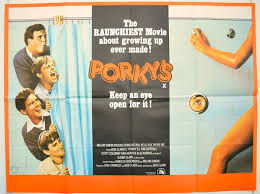
PORKY’S (1981) Three stars

“Nobody ever went broke underestimating the intelligence of the American public,” H.L. Mencken famously said.

Mencken said that long before the success of PORKY’S, PORKY’S II: THE NEXT DAY, and PORKY’S REVENGE!, comedies which combined for over $200 million in box office and rental returns. Mencken died in 1956.

PORKY’S earned the vast majority of that $200 million and it came from out of seemingly nowhere to place fifth at the American box office in 1982, behind only breakaway winner E.T., ROCKY III, ON GOLDEN POND, and AN OFFICER AND A GENTLEMAN. PORKY’S sat on top of the American box office from late March through early May and it was dethroned by Arnold Schwarzenegger and CONAN THE BARBARIAN.

Unlike those other films, however, critics absolutely detested PORKY’S and aligned it with FRIDAY THE 13TH and THE CANNONBALL RUN in an unholy trinity of films that would no doubt lead to the downfall of Western Civilization. PORKY’S exhibits more than most how a film can be hated by critics and loved by the masses.

The success of the first PORKY’S spawned a whole slew of teenage sex comedies, often nostalgic and especially set in either the 1950s or 1960s.

I claimed a copy of PORKY’S as one of my first VHS purchases in my late teenage years and it quickly became a favorite movie of my rowdy group of friends. We loved it, as well as NATIONAL LAMPOON’S ANIMAL HOUSE, CADDYSHACK, KINGPIN, and THE BIG LEBOWSKI.

Every time I watch PORKY’S, I find a few big laughs and that’s why I am giving the film a passing grade. As far as the sequels are concerned, they are dreadful and deserve their horrible reputation. I remember seeing all of them in heavily edited form on “USA Up All Night,” before catching up with them all on video or pay TV.

Of course, our seven high school horn balls in PORKY’S are all played by older actors: Dan Monahan turned 26 in 1981, Mark Herrier 27, Wyatt Knight 26, Roger Wilson 25, Cyril O’Reilly 23, Tony Ganios 22, and Scott Colomby 29. That’s not anything new for a Hollywood film. For example, in GREASE, another highly successful nostalgia piece, John Travolta was 23 when he made it and Olivia Newton-John was 28 almost 29, Stockard Channing 33, Jeff Conaway 27, Barry Pearl 27, and Michael Tucci 31 when they were playing high school students.

Speaking of GREASE, one could describe PORKY’S as GREASE with T&A and rednecks instead of PG and greasers and without musical numbers.

PORKY’S includes sex jokes, condom jokes, sex jokes, size jokes, sex jokes, nude jokes, sex jokes, penis jokes, sex jokes, virgin jokes, sex jokes, and fat jokes, especially at the expense of villains Porky (Chuck Mitchell, a 6-foot-3, nearly 400-pound man) and Ms. Beulah Balbricker (Nancy Parsons).

Porky is a real vile piece of work, a saloon and brothel owner who is the most powerful man in his county. Every public official seems to be related to Mr. Wallace, namely his brother Sheriff Wallace (former NFL great Alex Karras). Mitchell wraps his best redneck goon around such dialogue as “I was givin’ the old place an enema and this pile of shit come floatin’ up to the surface” and “Where are these five little virgins who think they reached manhood? You wanna tangle ass with me? Come up here, you sawed-off punk! I’ll educate ya! I’ll wrap this right around your damn neck!” It is to Mitchell’s credit that he creates such a nasty character that we do root for his comeuppance in the final reel.

Balbricker embodies the worst killjoy or she’s basically portrayed as the Carrie Nation of the teenage sex comedy. Less successful, though, much less successful. After all, Carrie Nation (1846-1911) said things like “I felt invincible. My strength was that of a giant. God was certainly standing by me. I smashed five saloons with rocks before I ever took a hatchet” and “I want all hellions to quit puffing that hell fume in God’s clean air.” Balbricker (also called “Ball-breaker” and “King Kong” by other characters) develops an obsession with one character’s penis. Please can we call it a tallywhacker? Penis is so personal. Parsons, like Mitchell, gives a very good performance, one that rates with John Vernon in ANIMAL HOUSE.

Kim Cattrall must have used her work here as Miss Honeywell (“Lassie”) during her audition for “Sex and the City.” It definitely beats MANNEQUIN.

Writer and director Bob Clark (1939-2007) has a very interesting story and filmography, since his credits include the 1974 proto-slasher BLACK CHRISTMAS, the beloved A CHRISTMAS STORY, and the first two PORKY’S films, as well as even more diverse entries like MURDER BY DECREE, TRIBUTE, RHINESTONE, TURK 182!, LOOSE CANNONS, and BABY GENIUSES.

His entry in “Take One’s Essential Guide to Canadian Film” from 2001 : “Clark turned down bids to play pro football to complete a drama major at the University of Miami. With the success of his low-budget horror classic CHILDREN SHOULDN’T PLAY WITH DEAD THINGS, Clark moved to Montreal in 1973 and came to dominate Canadian commercial filmmaking for a decade. He followed CHILDREN with BLACK CHRISTMAS, a box-office hit starring Margot Kidder, and then, from 1978 to 1981, he directed MURDER BY DECREE, TRIBUTE, and PORKY’S – three of the most successful films produced in the tax-shelter era. Sad to say, the sophomoric PORKY’S remains the Canadian box-office champ. Clark returned to the United States in 1984; his career, like his locale, has gone south since.”

I read that Clark gathered the material for PORKY’S over a 15-year period, combining stories from other males of his generation with his own experiences. Every Hollywood studio passed on PORKY’S and it was produced by the Canadian company Astral Bellevue Pathe and Melvin Simon Productions (Mr. Simon, who died in 2009 at the age of 82, developed Mall of America, co-owned the Indiana Pacers along with his brother Herbert, and produced films including PORKY’S, THE STUNT MAN, and ZORRO, THE GAY BLADE), but 20th Century Fox picked up the U.S. distribution and a slick marketing campaign, combined with strong word-of-mouth, produced a monster hit on a $4 million budget.

Clark passionately defended the film amid the constant cries of misogyny and racism.

Those critics are missing that Wendy, played by Kaki Hunter, is often the sunniest presence and that Clark set his film in the Deep South in 1954. One character does overcome his initial anti-Semitism and becomes friends with a Jewish classmate.

THE NEXT DAY seems to address both criticisms, though, with one thoughtful dialogue scene between Wendy and main horn ball Pee-Wee (Monahan) and then adds a fanatical reverend, hypocritical politicians, a Native American, and the Ku Klux Klan to the mix. All the latter material simply does not mesh with the juvenile sex comedy.

Clark did not return to direct REVENGE and director James Komack and screenwriter Ziggy Steinberg wanted the third installment to return to the pure sex farce of the first movie. All the actors simply look too long in the tooth to be partaking in such adolescent shenanigans. I mean, for crying out loud, Colomby was nearly in his mid-30s by the point they made this third PORKY’S film; he graduated from Beverly Hills High School in 1970. Bottom line: I laughed not a single time at PORKY’S REVENGE, maybe once at NEXT DAY.


PORKY’S II: THE NEXT DAY (1983) One star; PORKY’S REVENGE! (1985) No stars

The Cannonball Run (1981)

CANNONBALL RUN

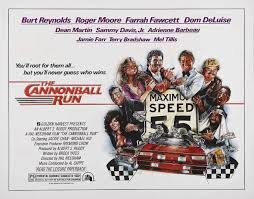
THE CANNONBALL RUN (1981) Two stars

THE CANNONBALL RUN is not a very good movie, but nonetheless it contains a certain undeniable value in the time capsule department.

That’s right, THE CANNONBALL RUN shows us a society that once highly valued Burt Reynolds, James Bond, crude foreign stereotypes, cameos, cleavage, NFL, TV, and stuntman turned director Hal Needham, not in that exact order. THE CANNONBALL RUN finished sixth in the 1981 box office sweepstakes.

However, it came a few years late in the cinematic car chase-and-crash department, not so hot on the wheels of such illustrious precursors as GONE IN 60 SECONDS, DEATH RACE 2000, CANNONBALL,THE GUMBALL RALLY, EAT MY DUST, GRAND THEFT AUTO, and SMOKEY THE BANDIT, by far the best of the six Needham and Reynolds productions that saw the light of multiplex from 1977 through 1984. Never mind John Landis’ THE BLUES BROTHERS, which should have been the final word on car chases and crashes.

Needham (1931-2013) made his directorial debut with SMOKEY AND THE BANDIT and that film contains just about everything you need to know about the director and his films: chases, races, curves, stunts, pile-ups, punch-ups, slapstick, Southern humor, and Reynolds. The great success of SMOKEY AND THE BANDIT, only behind STAR WARS at the box office in 1977, paved the road for the TV show “The Dukes of Hazzard” (1979-85).

On the Needham scale, THE CANNONBALL RUN finds itself halfway between the high point of SMOKEY AND THE BANDIT and the dual low points of STROKER ACE and CANNONBALL RUN II.

SMOKEY AND THE BANDIT had the benefit of the great performance of Jackie Gleason, a performance not matched in any of the other Needham and Reynolds productions, including Gleason again in SMOKEY AND THE BANDIT II. Gleason walked (or drove) away with the first movie.

Reynolds (1936-2018) more or less squandered his career on Needham films.

For example, he chose STROKER ACE over TERMS OF ENDEARMENT. Jack Nicholson won the Best Supporting Actor Oscar for playing former astronaut Garrett Breedlove, the role turned down by Reynolds. The $16.5 million STROKER ACE bombed at the box office as it earned $5 million less than its budget. TERMS OF ENDEARMENT won Best Picture and took in over $100 million, succeeding both commercially and critically.

Reynolds’ career was never quite the same after STROKER ACE.

It would not be until BOOGIE NIGHTS (1997) the name “Burt Reynolds” was spoken with respect again. Reynolds earned a Best Supporting Actor nomination (part of a tally of 12 awards and three more nominations) for his performance as porn director Jack Horner in Paul Thomas Anderson’s sprawling epic. BOOGIE NIGHTS showed us a glimpse of what could have been for Reynolds had the actor not chosen his friend Needham in cynical productions.

They are cynical because they believed that Reynolds’ trademark grin and laugh could get us through a series of tossed off stunts, gags, and in-jokes.

This cynicism hit its absolute worst in CANNONBALL RUN II, which ironically found Reynolds playing alongside TERMS OF ENDEARMENT star Shirley MacLaine.

Frank Sinatra phoned in his cameo appearance and animator-for-hire Ralph Bakshi worked harder on the race than any of the big-name performers.

Roger Ebert called THE CANNONBALL RUN “Hollywood Squares on Wheels.”

“I’ll take James Bond for the block, please.”

“I’ll take Adrienne Barbeau’s cleavage for the win, please.”

When Roger Moore passed on the sequel, they brought in Bond villain Richard Kiel. The 7-foot-2 actor played Jaws in THE SPY WHO LOVED ME and MOONRAKER.

Barbeau and her busty blonde counterpart Tara Buckman were replaced by Catherine Bach and Susan Anton for the sequel.

The best thing to come from the CANNONBALL RUN films was that Jackie Chan borrowed the closing credit gag reel for his productions. Chan showcased not only bloopers and cast members cracking up like the CANNONBALL RUN films, but also stunts like the one in ARMOUR OF GOD that nearly killed him.

“I try to grab every tree,” Chan said in a 2017 interview. “They just keep breaking. Breaking, breaking, breaking, breaking. Then, boom, I just hit on the rock. I get up, I thought, ‘It’s nothing.’ I just feel my back’s hurt. Then I get up, but everybody pushes me down because my whole body was numb. By the time the numb passed, then I feel my air and I see the blood. We go to the hospital … I almost died.”

Even in his worst films, Chan gives it everything he got, certainly more than what the vast majority of the cast members did in CANNONBALL RUN, CANNONBALL RUN II, and SPEED ZONE. Chan’s presence helped CANNONBALL RUN II make a killing in Japan.

All we need to know about the CANNONBALL RUN series is that Jamie Farr’s Sheik Abdul ben Falafel is the only character to appear in all three films.

Clash of the Titans (1981)


CLASH OF THE TITANS (1981) Three-and-a-half stars

Harryhausen vs. Harry Hamlin.

That’s what CLASH OF THE TITANS amounts to in the long run for this viewer.

Artist, designer, visual effects man, writer, and producer Ray Harryhausen (1920-2013) mastered the dying art of stop-motion animation. His credits include MIGHTY JOE YOUNG, THE 7TH VOYAGE OF SINBAD, JASON AND THE ARGONAUTS, ONE MILLION YEARS B.C., and CLASH OF THE TITANS, Harryhausen’s final production in which he goes out with a big bang.

Harryhausen is the real star of CLASH OF THE TITANS, and not Harry Hamlin or even big-name actors Laurence Olivier, Ursula Andress, Maggie Smith, Burgess Meredith, and Claire Bloom.

I like CLASH OF THE TITANS a lot because of all them stop-motion creations.

Let’s see, we have scorpions, the Stygian witches, Calibos and his vulture, a two-headed hound of Hell, the Kraken, the mechanical owl Bubo, and, of course, Medusa.

The Medusa sequence is the pièce de résistance of CLASH OF THE TITANS and responsible for at least three stars alone.

Harryhausen himself favored Medusa among his many creations.

The snake-haired Medusa, we all know that she’s deadly with arrows and she can turn a person to stone if you make contact with her eyes. Personally, I pretend that every salesperson in a shopping mall is Medusa and eye contact must be strictly avoided. Perseus (Hamlin) tricks Medusa with his reflection and he lops off her head. Then, our hero uses Medusa’s head to turn the formidable Kraken to stone.

A wide range of filmmakers have been inspired by Harryhausen’s work, including Steven Spielberg, Joe Dante, James Cameron, Tim Burton, Peter Jackson, and Sam Raimi.

In 2010, Academy Award winning animator Nick Park talked with the BBC about his three favorite Harryhausen moments. He finished up with Medusa from CLASH OF THE TITANS after picking two from JASON AND THE ARGONAUTS.

“It was so well done and frightening,” Park said. “It’s all the same technique but going to different heights of intricacy.

“I thought it was a combination of really good lighting and shadow. I do admire a lot of CGI, but there’s something not real about it.

“In the Medusa that Ray did it’s there and it’s grounded, there’s real light hitting real surfaces. Somehow your brain knows it’s not real with CGI.”

I’ll be honest, I am far more interested in Harryhausen’s creatures than the rather convoluted plot involving Perseus, Andromeda (Judi Bowker), Calibos, Cassiopeia, and the gods pulling all the strings.

That’s what I meant by starting this review “Harryhausen vs. Harry Hamlin.”

Most of CLASH OF THE TITANS plays like a soap opera, not helped out by pretty boy Hamlin and Bowker, who seem like they should be on “Days of Our Lives.”

Google is a wondrous invention: With just two magic words and one little click, I found the 1987 People article on Hamlin, “The Sexiest Man Alive” double issue no less, and the opening paragraph of “Last of the Great Romantics” just hooks me in against my better instincts.

“The name seems wrong for The Sexiest Man Alive, Harry is a name for an uncle, or a guy who asks you to the prom because his mother made him. Of course, Harold would be worse. So Harry it is. Harry Robinson Hamlin, to be precise … the Harry everyone’s just wild about.” (Personally, I prefer Harry Truman or Harry Potter, quite possibly since neither will ever be proclaimed “The Sexiest Man Alive.”)

The article comes back around for a swipe at CLASH OF THE TITANS.

“And there’s always the possibility of doing a remake of CLASH OF THE TITANS. ‘I brought my toga home,’ says Harry, raising hopes of another glimpse of those knees. He’s kidding, of course. Frivolous flicks are a thing of the past for The Sexiest Man Alive. Besides, says Harry, laughing, ‘I used the toga to wash my car.’”

Frivolous flicks a thing of the past for Hamlin? Hamlin’s career has included 105 episodes of “L.A. Law,” 21 of “Movie Stars,” 12 of “Veronica Mars,” eight apiece of “Army Wives” and “Shameless,” and 15 of “Mad Men,” as well as a plethora of TV movies and other shows.

Hamlin should count himself lucky to be associated with CLASH OF THE TITANS.

Because Harryhausen trumps Harry Hamlin every single time.

The Burning (1981)

THE BURNING (1981) Two stars
The late, great director Howard Hawks (1896-1977) once said that a good movie is “three great scenes and no bad ones.”

No way that Hawks could have possibly had a movie like THE BURNING in mind, since he died a few years before the release of the 1981 slasher and even before the boom of that genre. John Carpenter paid Hawks tribute in HALLOWEEN with characters watching THE THING FROM ANOTHER WORLD on TV.

THE BURNING does have three great scenes but also several bad ones.

Let’s get the three great scenes out of the way first.

There’s an effective jump scare in an early hospital scene, before the opening credits. It makes up for a couple clunker false alarms later on in the picture.

Several early period slasher films include a scene where one character would regale both the rest of the characters and the audience with an origin story of the killer. THE BURNING, FRIDAY THE 13TH PART 2, and MADMAN all have a similar campfire story. These scenes are fun, because most of us can remember at least once being enthralled and freaked out by somebody’s ghastly yarn around the fire. Cropsy is based on a real-life New York urban legend, the Cropsey Maniac, a genuine campfire tale which obviously had a major impact on the creative forces, including Bob and Harvey Weinstein and Brad Grey (later three of the most powerful men in Hollywood), behind THE BURNING.

The “infamous raft massacre” scene, when Cropsy takes out five teenagers with his garden shears. This is the pièce de résistance of THE BURNING and the one scene when the film deserves its reappraised “classic” status. Splatter effect maestro Tom Savini earned his paycheck for this sequence alone and it can stand side-by-side with his best work.

In some quarters, THE BURNING has been called one of the best slasher films and a classic that flew under the radar.

Truth be told, I’ve always been underwhelmed and sometimes even disgusted by it, except for the three great scenes. I first watched it on late night Cinemax in the early 2000s and a few years later, I taped it off IFC.

The three great scenes probably make up less than 10 percent of the running time. Some of the camp scenes also work on a basic level.

Most often, though, THE BURNING alternates a jeering, leering tone with moments of brutal violence, a juxtaposition that makes for strange bedfellows.

We especially find that leering tone in the nude scenes of Carrick Glenn and Carolyn Houlihan. Houlihan, who won Miss Ohio in 1979, reportedly felt very uncomfortable with her nude scene and it only gets much worse for her Karen character as she receives first a temper tantrum from her would-be boyfriend after she changes her mind about sex and then Cropsy’s garden shears as she looks for her clothes scattered in the woods. Houlihan only appeared in two features, her second and final role “Bathing suit model” in A LITTLE SEX.

Ned Eisenberg and Larry Joshua play jerks in Eddy and Glazer, respectively. Joshua makes undoubtedly one of the oldest summer campers in screen history, as he turned 29 years old three months before the May 1981 release of the film. We just have absolutely no idea what Glenn’s Sally even sees in the first place in a creep like Glazer. Eddy, he’s not quite as bad as Glazer, but his scene with Karen leaves us liking the guy appreciably less.

Guess it goes to show what kind of movie we’re dealing with when Brian Matthews’ Todd and Brian Backer’s Alfred (possible nod to Hitchcock) take on Cropsy at the end. We find out Todd was one of the campers who participated in the fiery prank on Cropsy that horribly backfired during the prologue and we first see Alfred peeping on Sally in the shower. Alfred does grow on us, especially as he becomes friends with four of his fellow male campers.

Cropsy’s first murder, naturally of a prostitute, represents one of the worst aspects of the slasher film: a self-contained murder sequence that wastes precious time (sometimes minutes on end) and contributes nothing of virtue to the film.

THE BURNING holds interest today predominantly as a time capsule film.

It was part of a wave of low-budget horror films that attempted to cash in on the runaway success of HALLOWEEN. There proved to be a glut of these films in 1981.

Several famous performers and behind-the-scenes figures got their start with THE BURNING. Holly Hunter, Jason Alexander (with a head of hair), and Fisher Stevens made their screen debuts. THE BURNING marked one of the first productions of Miramax, known for their film production and distribution; Miramax (named after the Weinsteins’ parents Miriam and Max) started in 1979 in Buffalo, New York, close to where they filmed THE BURNING.

Maybe that leering, jeering tone should come of no surprise considering Harvey Weinstein’s role in THE BURNING as writer and producer.

Former production assistant Paula Wachowiak recounted her worst experience on THE BURNING with the Buffalo News in October 2017. She went to Harvey Weinstein’s hotel room, because she needed him to sign checks, and he greeted her at the door wearing nothing but a towel, which he naturally dropped when she entered his room. He wanted a massage. Wachiowiak spurned him. The Buffalo News article features the headline, “’You disgust me’: Buffalo woman tells of 1980 encounter with Weinstein.”

An American Werewolf in London (1981)

AN AMERICAN WEREWOLF IN LONDON

AN AMERICAN WEREWOLF IN LONDON (1981) Three stars

The 1980s were a golden age for comedy horror: GREMLINS, GHOSTBUSTERS, RE-ANIMATOR, EVIL DEAD II, FRIGHT NIGHT, LITTLE SHOP OF HORRORS, and KILLER KLOWNS FROM OUTER SPACE.

I’d put AN AMERICAN WEREWOLF IN LONDON among the second tier of 1980s comedy horror films, below every film listed in the opening paragraph. Do not fear, though, because it’s still a good movie.

AMERICAN WEREWOLF specializes in dark comedy, very very very dark, even beyond morbid especially when a dead Jack Goodman (Griffin Dunne) haunts best friend David Kessler (David Naughton) as Mr. Kessler becomes the title character. Jack tells David that he must kill himself before he kills others and that he’s under the werewolf’s curse. Jack still has that same way with words he had when he was alive; that’s why David tells Jack, “I will not be threatened by a walking meatloaf.” Poor, poor Jack.

Of course, all this started when David and Jack, two American college students on a walking tour, stop at the Slaughtered Lamb. We’ve all heard of the Wrong Gas Station, a hallmark of many horror movies, but the Slaughtered Lamb represents the Wrong Drinking Establishment. You have to be real thirsty or hungry or both to stop at the Slaughtered Lamb. The regulars don’t exactly warm to no bratty Americans in the first place, but the irrepressible Jack sticks his foot in his mouth big time when he blurts out about a pentagram. The conspiratorial patrons give Jack and David the boot, although Jack and David are told very specifically to stay on the road and not to go into the moors. I believe that I last saw that setting in the 1939 Basil Rathbone Sherlock Holmes movie HOUND OF THE BASKERVILLES. I love the moors in the movies.

Of course, we all know that David and Jack don’t stick to the road and go exactly where they’re not supposed to go.

1981 featured three good wolf movies: THE HOWLING premiered March 13, WOLFEN July 24, and AMERICAN WEREWOLF August 21. For the record, I prefer both WOLFEN and THE HOWLING over AMERICAN WEREWOLF, and that’s an indication just how great of a year it was for movies about wolves. All three have their own distinct qualities, though both Joe Dante’s THE HOWLING and John Landis’ AMERICAN WEREWOLF pursue laughter far more than Michael Wadleigh’s WOLFEN.

All three stand out for their special effects: Rob Bottin and Rick Baker, who previously worked together on Dante’s PIRANHA, battled for werewolf transformation superiority and Baker’s makeup work on AMERICAN WEREWOLF earned him the first Academy Award for Best Makeup, as he beat out Stan Winston on the comedic craptacular HEARTBEEPS. The overshadowed WOLFEN did some innovative things with sound and image to depict the world of the wolf.

At this point in Landis’ career, the controversial director was on a major roll with a three-picture run of NATIONAL LAMPOON’S ANIMAL HOUSE, THE BLUES BROTHERS, and AMERICAN WEREWOLF. This was before TWILIGHT ZONE: THE MOVIE, when actor Vic Morrow and child actors Myca Dinh Le and Renee Shin-Yi Chen were killed in a helicopter accident during filming in July 1982.

The National Transportation Safety Board reported a couple years later: “The probable cause of the accident was the detonation of debris-laden high temperature special effects explosions too near a low-flying helicopter leading to foreign object damage to one rotor blade and delamination due to heat to the other rotor blade, the separation of the helicopter’s tail rotor assembly, and the uncontrolled descent of the helicopter. The proximity of the helicopter to the special effects explosions was due to the failure to establish direct communications and coordination between the pilot, who was in command of the helicopter operation, and the film director, who was in charge of the filming operation.”

(If you want to watch something fucked up, you can find “Vic Morrow’s Death Video” on YouTube. The rotor blades decapitated Morrow and Le and the right landing skid crushed Chen to death. All three died instantaneously. For this reason and the fact that it’s not very good, I cannot watch Landis’ installment in TWILIGHT ZONE: THE MOVIE and skip ahead on the DVD to the Joe Dante and George Miller portions of the program.)

Despite being acquitted of involuntary manslaughter after a nine-month jury trial over 1986 and 1987, Landis’ reputation rightfully took a major hit … and every single thing you can find about the incident makes Landis seem like the ultimate asshole director, worse than Hitchcock, worse than Kubrick, worse than Lang, worse than Preminger, worse than Woody Allen, worse than any other director in relentless pursuit of perfection. Landis broke California child labor laws by hiring both child actors without their required permits, in addition to his reckless behavior filming the nighttime helicopter sequence. None of this should have ever happened and Landis served not a single second of time for his crimes.

TRADING PLACES and COMING TO AMERICA both were hits directed by Landis. He also directed the nearly 14-minute music video for Michael Jackson’s “Thriller,” a job Landis earned after Jackson saw AMERICAN WEREWOLF. It is widely considered the greatest musical video of all-time.

Back to AMERICAN WEREWOLF.

AMERICAN WEREWOLF represents a throwback to the horror movies of the 1930s, especially the ones from Universal, updated with gore, nudity, and profanity of a modern era.

Like several other films from the 1980s, it deftly balances laughs and scares just right so often.

AMERICAN WEREWOLF, though, falls shy of greatness: There’s a lot to love, especially in the first 30 minutes, but I’ve never loved its ending (full half-point deduction alone for this deficiency) and I just cannot believe the savvy Landis did not choose Warren Zevon’s “Werewolves of London” — Lon Chaney Sr. and Jr. references on top lyrics “You hear him howling around your kitchen door / You better not let him in / Little old lady got mutilated late last night / Werewolves of London again” and “He’s the hairy-handed gent who ran amuck in Kent / Lately he’s been overheard in Mayfair / You better stay away from him / He’ll rip your lungs out, Jim / I’d like to meet his tailor.” In other words, Zevon’s dark sense of humor would have fit AMERICAN WEREWOLF, just like a wolf suit.

No matter how many times I’ve heard CCR’s “Bad Moon Rising” and Van Morrison’s “Moondance,” they still thrill and AMERICAN WEREWOLF uses them perfectly, especially pairing Morrison’s lyrics “Well, I want to make love to you tonight / I can’t wait ’til the morning has come / And I know now the time is just right / And straight into my arms you will run / And when you come my heart will be waiting / To make sure that you’re never alone / et cetera” with the escalation in David’s relationship with friendly nurse Alex (the alluring Jenny Agutter).

I’ll end this review with a warning to stick to the original and please do not watch AN AMERICAN WEREWOLF IN PARIS.

American Pop (1981)

AMERICAN POP

AMERICAN POP (1981) Four stars
From 1972 to 1983, British Mandate of Palestine born and New York City and Washington D.C. raised Ralph Bakshi directed eight animated features: FRITZ THE CAT, HEAVY TRAFFIC, COONSKIN, WIZARDS, THE LORD OF THE RINGS, AMERICAN POP, HEY GOOD LOOKIN’, and FIRE AND ICE.

Bakshi definitely proved to be a game changer: Feature-length animation could be combative, satirical, adult entertainment and more than just good, clean, wholesome family entertainment as in the socially accepted definition for animated films. His films — especially his first three — paved the way for “The Simpsons,” “Beavis & Butt-Head,” “South Park,” “Family Guy,” “Adult Swim,” et cetera.

FRITZ THE CAT, loosely based on Robert Crumb’s comic strip, became a landmark motion picture, the first animated feature to earn the ‘X’ rating in the United States.

HEAVY TRAFFIC, COONSKIN, AMERICAN POP, and HEY GOOD LOOKIN’ are ‘R’ and WIZARDS, THE LORD OF THE RINGS, and FIRE AND ICE are ‘PG,’ although that rating once packed a punch with the first two Indiana Jones, JAWS, POLTERGEIST, GREMLINS, and LONE WOLF McQUADE, arguably the most violent ‘PG’ ever made, being some of the most notorious ‘PG’ entries before ‘PG-13’ debuted in August 1984 with the release of RED DAWN.

I’ve watched seven of the eight Bakshi films listed above, liked nearly all of them, and FRITZ THE CAT, THE LORD OF THE RINGS, and AMERICAN POP have earned a spot on my personal top 10 lists for 1972, 1978, and 1981, respectively.

I just watched AMERICAN POP last night and I was once again impressed by the overall sweep of the enterprise — narratively and musically and, of course, its animation — just like I had been several years back watching it for the first time.

AMERICAN POP tells the story of four generations of Russian Jewish immigrants who all have some involvement with American popular music.

First, we meet Zalmie around the late 19th and early 20th century and follow him for a series of years. Zalmie, who started hanging around burlesque shows at an early age, wants to be a singer, but a wound to his throat during World War I kills his singing career. After the war, back home in New York City, he falls in love and marries a stripper named Bella, and Zalmie transfers his star-making ambition to his wife. She’s killed opening a letter bomb intended for him. See, Zalmie used money from mob boss Nicky Palumbo for his wedding to Bella and eventually, Zalmie testifies against Palumbo on TV, calling the mob boss “a rat.”

Zalmie and Bella have a son named Benny, who becomes a very talented jazz pianist. Benny fights in World War II and in one of the film’s best scenes, he finds an abandoned piano in a bombed-out building that leads to his demise. When we first see Benny in Nazi Germany, he’s playing the harmonica (not exactly his musical forte) and even he quips to two fellow troops who call out his lousy playing, “I know, but it’s hard to fit a piano in a foxhole.” At this abandoned piano, Benny first riffs on “As Time Goes By” (Dooley Wilson’s Sam had to play it — again — in CASABLANCA) and his playing quickly draws the attention of an awakened, armed Nazi soldier who approaches Benny from the rear. Benny changes tune to “Lili Marleen” (Marlene Dietrich made it especially famous) and the appreciative Nazi waits to shoot down Benny until he’s done playing “Lili Marleen.” The Nazi even says thanks in German before firing his shots.

Third generation Tony experiences the Beats and the Hippies as he migrates from East to West and back again — of course, we hear Allen Ginsberg’s “I saw the best minds of my generation destroyed by madness,” one of the best starts to any poem — and he gets poetic himself first over “The Blonde” from Kansas. “Yeah, I’m crazy,” Tony tells her. “I’m crazy in love with your blue eyes … and your corn-sulked hair. Your corn-sulked hair. I’ll never eat corn again without thinkin’ about you. Canned corn, candy corn, popcorn, Crackerjacks! You’re the prize in my box! And my box is this country. It’s all tinfoil on the outside. Corn and sweetness on the inside.”

Tony’s journey leads him next to California and he writes songs for a rock band on the edge of stardom. Tony and female lead singer Frankie Hart — a character archetype obviously inspired by Grace Slick and Janis Joplin — become heroin addicts. With the band set to play after Jimi Hendrix one night in Kansas, two important events happen to Tony: his lover Frankie overdoses backstage and he meets his son Pete, who came from the one night with the corn-sulked hair girl.

Tony moves back to New York City, joined by his son. Both Tony and Pete become drug dealers and Pete begins selling drugs to rock bands. Pete finally seizes the moment and gives the band members an ultimatum: They must listen to Pete’s music before they can have any more cocaine. Pete chooses to play Bob Seger’s “Night Moves” for the band and the management. Next thing we know, before we can get all the way through “Night Moves,” Pete’s on stage with the band playing “Blue Suede Shoes,” “Devil in a Blue Dress,” and “Crazy on You.” Late in the medley, we start to see images from earlier in the movie — Zalmie, Benny, and Tony — with Pete on stage.

Of course, Lynyrd Skynyrd’s “Free Bird” plays over the end credits.

AMERICAN POP guides us through 80 years of popular music — everything from standards to Jimi Hendrix’s “Purple Haze,” Janis Joplin’s “Summertime,” and Lou Reed’s “I’m Waiting for the Man,” in addition to the songs already mentioned. That list barely hints at the music heard throughout AMERICAN POP.

Stylistically, we not only have rotoscoping (a process where live actors are filmed and then animators draw over the live-action footage), but also water colors, computer graphics, live-action shots, and archival footage.

Bakshi swung for the fences making AMERICAN POP — an epic achieved in 96 minutes with any failures consumed by the successful elements.

If you still have, somehow at this point in time after many advances in the field, a belief that animated films occupy a limited range aesthetically, emotionally, and intellectually, then Ralph Bakshi’s AMERICAN POP just might free and expand your mind.

In other words, “Whether you dance to it, drive to it, sing with it or swing to it … if you can crank it up, plug it in, or switch it on … if it assaults your senses, rocks your body, or touches your soul, it’s AMERICAN POP.”

My Bloody Valentine (1981)

MY BLOODY VALENTINE

MY BLOODY VALENTINE (1981) Three stars
Several elements lift MY BLOODY VALENTINE — a 1981 Canadian production that became renowned for nine minutes of excised footage so it could receive a “R” from the Motion Picture Association of America — above the average mad slasher film.

1) Valentine Bluffs (“The Little Town with the Big Heart,” elevation 200, population 3735) feels like a real place, definitely more than Springwood, Ohio in A NIGHTMARE ON ELM STREET and any of the locations in the FRIDAY THE 13TH movies.

You can almost feel the characters’ excitement as they plan a Valentine’s Day dance for the first time in two decades, you can almost taste the Moosehead beer, you can almost sense their dread they’re stuck in this small town, and you can almost articulate word-for-word both their frustration and thankfulness for that damn mine where everybody, just about everybody, in town works for all their lives.

MY BLOODY VALENTINE just might be the only horror movie that evokes THE DEER HUNTER, through its mine, its miners, its cars, its bar, its beer drinking, its tough talking, and its romantic triangle.

In an interview with Terror Trap, director George Mihalka touched on the environment in MY BLOODY VALENTINE, at one point mentioning how the film’s screenwriter pictured it as “THE DEER HUNTER of horror films.”

“One of the things that both (screenwriter) John Beaird and I wanted to do was that we wanted to take it out of the suburban bungalow context,” Mihalka said. “We wanted to set this in some place where there is a slight hint of social consciousness. This was really the first film in that era where teenagers are actually talking about the fact that there’s no future left.

“There’s no jobs, there’s no future. Not a lot of hope. It was, in a strange way, the first of a Generation X mentality. I think that’s what may still resonate after all these years.”

Valentine Bluffs rates with Kingston Falls (GREMLINS) at the top of my list for horror towns.

MY BLOODY VALENTINE used Sydney Mines, Nova Scotia, for its location.

Their plants Sydney Steel (DISCO) and the Sydney Mines Steel (SCOTIA) helped produce 50 percent of Canada’s steel during World War I.

MY BLOODY VALENTINE filmed its mine scenes at Princess Colliery Mines, an operation from 1875 to 1975 that produced 30 million tons of coal.

Princess Colliery even had a famous disaster on December 6, 1938.

From the opening paragraph of Canadian Press staff writer Arthur Andrew, “A committee of miners and officials planned today to descend Princess Colliery and trace the death-dealing trail of a runaway ‘man-rake’ that killed 16 men yesterday. Their visit is the first step in an investigation seeking the reason the string of cars broke loose, spreading death and injury. … The evidence they gather, added to the testimony of the more than 200 men who survived the disaster, will be placed before an investigating commissioner. Hon. Michael Dwyer, minister of mines, will attend the probe into the worst accident in the last 21 years of coal mining in Cape Breton.”

2) MY BLOODY VALENTINE mines (pun intended) its holiday for all its worth.

Not only do we have Valentine Bluffs, we have a Valentine’s dance, we have red and white streamers all over the place, its killer has a future writing Hallmark cards … for psychos like this epic “ROSES ARE RED, VIOLETS ARE BLUE, ONE IS DEAD, AND SO ARE YOU!” (the killer underlines you three times for dramatic effect), and it makes brilliant use of a box of chocolates, only rather than candy hearts, well, think we should leave that a surprise for those who have never seen MY BLOODY VALENTINE. I’ve already said too much.

Paramount Pictures released MY BLOODY VALENTINE on February 11, 1981, and its profit proved to be considerably less than what FRIDAY THE 13TH produced for Paramount in 1980.

3) “The Miner” is one of the most iconographic killers, I mean, come on just take a gander at him on Google Images. Hell, better yet, go watch MY BLOODY VALENTINE.

He’s combination miner, Jason Voorhees, and Darth Vader.

4) These characters are years removed from HALLOWEEN, FRIDAY THE 13TH, and A NIGHTMARE ON ELM STREET: They’re adults.

Of course, that fact does not absolve them from doing any of the numbskull things horror movie characters often do at the most inopportune times for numbskull behavior.

5) A 25-year-old John McDermott sang “The Ballad of Harry Warden” over the closing credits and I remember being floored by this song upon first viewing MY BLOODY VALENTINE. I just could not believe it. Wow, it’s just about every bit as great as Bob Dylan’s “Knockin’ On Heaven’s Door” and it’s the closing song for a mad slasher movie.

A sampling of Paul Zaza’s lyrics: “Once upon a time, on a sad Valentine / In a place known as Henniger Mine / A legend began, every woman and man / Would always remember the time / And those who remain were never the same / You could see the fear in their eyes / Once every year, as the 14th draws near / There’s a hush all over the town / For the legend they say, on a Valentine’s Day / Is a curse that’ll live on and on / And no one will know, as the years come and go, of the horror from long time ago.”

Victory (1981)

VICTORY

VICTORY (1981) Three stars
It’s hard to believe that any movie directed by the late John Huston (1906-87) and starring Michael Caine and Sylvester Stallone could possibly be a “buried treasure,” but that’s definitely the case for 1981’s VICTORY in North America or ESCAPE TO VICTORY in international markets.

Huston, born in Nevada, Missouri, to actor Walter and sports editor Rhea (who gave up her career after her son was born), debuted with THE MALTESE FALCON in 1941 and his distinguished directorial career included THE TREASURE OF THE SIERRA MADRE, THE ASPHALT JUNGLE, THE RED BADGE OF COURAGE, THE AFRICAN QUEEN, BEAT THE DEVIL, THE MISFITS, FAT CITY, THE MAN WHO WOULD BE KING, WISE BLOOD, ANNIE, UNDER THE VOLCANO, PRIZZI’S HONOR, and his final movie, THE DEAD, in 1987.

Huston directed four more films after VICTORY.

Huston previously directed Caine in THE MAN WHO WOULD BE KING (1975) and Caine’s an actor who has persevered through many a bad movie during his nearly seven-decade career, including such epic disasters as THE SWARM, BEYOND THE POSEIDON ADVENTURE, BLAME IT ON RIO, and JAWS: THE REVENGE. (Caine did not accept his Academy Award for Best Supporting Actor for HANNAH AND HER SISTERS in person because he was making JAWS: THE REVENGE, a role for which he famously stated, “I have never seen it, but by all accounts it is terrible. However, I have seen the house that it built, and it is terrific.” Honestly, Caine gave a better performance in the 1984 Madness song “Michael Caine.”)

Stallone has mostly struggled outside the ROCKY and RAMBO franchises.

If you’ve seen THE GREAT ESCAPE, THE LONGEST YARD, and ROCKY, for example, then you’ve basically seen VICTORY, a movie built along similar lines except for it substitutes fútbol for football (THE LONGEST YARD) and boxing (ROCKY). It leads up to both a big game and the great escape from Nazis in the grand finale, and it features several training sequences as this ragtag group of war prisoners takes on the German national team in a propaganda soccer match.

Although VICTORY is a very predictable movie, it’s a rousing crowd pleaser just like THE GREAT ESCAPE, THE LONGEST YARD, and ROCKY before it.

You do feel good watching it.

Normally, action movies with an international cast (like VICTORY) bite the big one. Not here and it’s not your average international action spectacular cast.

Here, we have soccer players Pele from Brazil, Bobby Moore, Russell Osman, and Mike Summerbee from England, Osvaldo Ardiles from Argentina, Paul Van Himst from Belgium, Kazimierz Deyna from Poland, Co Prins from Holland, John Wark from Scotland, Soren Linsted from  Denmark, Halivar Thoresen from Norway, and Kevin O’Callaghan from Ireland.

That’s just the Allied team.

Caine and Stallone play soccer in the movie, although we can be thankful Caine used a double, professional football player Kevin Beattie. Paul Cooper’s credited for being Stallone’s double, although Stallone insisted on his own work during the big match.

Stallone initially blew off training from England’s World Cup winning goalkeeper Gordon Banks. In a 2015 interview, Pele talked about Stallone and the movie.

“When I got the first script I was a goalkeeper and Stallone was a forward,” Pele said. “I said, ‘Listen, I can’t play as a goalkeeper.’ When we started training for the film, we saw Stallone knew nothing about football. We teased him because he didn’t even know how to kick a ball. Michael Caine was my teacher. He’d call me over and say, ‘Pele, you must be more patient — this is a film, not reality.’ He was fantastic.”

Stallone dislocated a shoulder and broke his ribs a couple times during filming.

Ardiles said of the 47-year-old Caine and his physical and soccer abilities, “Awful, and he couldn’t even run 20 yards.”

Acting wise, though, Caine blows Stallone right off the screen in VICTORY and gets us more from the beginning to the end of the picture than his American counterpart.

Stallone’s not very good in VICTORY.

Apparently, Stallone antagonized cast and crew by eating by himself and flying off to either London or Paris every weekend on his private jet.

Also, Stallone reportedly insisted that he end the film on the note of a game-winning goal. “A game-winning goal from a goalkeeper?” Ridiculous.

That’s why the match ends on a penalty kick where, you guessed it, Stallone makes the save that saves the day.

In “Booked! The Gospel According to our Football Heroes” by John Smith and Dan Treifer, Wark talked about the film with much praise for Caine and the opposite for Stallone.

“Stallone was nowhere near as sociable. He and his entourage, which comprised several minders, were even booked into a different hotel.”

Wark touched on Stallone and a prisoner shower scene in the movie, “We spotted that Stallone preferred to wear a pair of mini briefs and all these years later I still can’t help wondering what ‘Rocky’ wanted to keep hidden from us.”

In the same book, it’s said by Pele that Stallone refused to allow anybody else to sit in his chair on the set and by Ardiles that it took Stallone at least 17 takes before he could make the save on the penalty kick.

You can bet the film’s writers took it all hard.

Yabo Yablonsky, one of two screenwriters and one of three credited for the story, apparently hated the revisions so much that he contemplated taking his own life upon seeing the finished project.

Stallone later made OVER THE TOP, that 1987 epic combining arm wrestling, child custody, and truck driving.

That brings us to a story involving Stallone and professional footballer Beattie.

Beattie told the East Anglian Daily Times in 2008, “We had finished for the day and I was at the bar with Russell Osman and John Wark and we were winding each other up. Somehow we started chatting about arm wrestling and there was a lot of laughing and joking.

“I was just sitting there and Stallone came over and asked if I’d like to give him an arm wrestle. I said, ‘By all means, no problem.’

“He had muscles on his muscles but I don’t remember him being that tall. I just thought I’d give it a go — I’d always been quite strong. Anyway, I ended up beating him and I don’t think he talked to me again for the rest of the film!

“Stallone got a bit of a shock but it’s a good claim to fame. I guess I was naturally strong. I used to carry the bags of coal for my dad and when I was at the gym at Portman Road, I was one of the only ones who could lift all the weights.”

I’d prefer footage of Beattie and Stallone arm wrestling in a bar over all of OVER THE TOP.

That’s because I take my arm wrestling without child custody and truck driving.