Odds and Odds: The Vikings, Dolls, The Monster Squad, Scream Blacula Scream

ODDS AND ODDS: THE VIKINGS, DOLLS, THE MONSTER SQUAD, SCREAM BLACULA SCREAM
Richard Fleischer’s The Vikings calls to mind epic grand adventure pictures Captain Blood, The Adventures of Robin Hood, The Sea Hawk, and The Sea Wolf, not to mention The Seventh Voyage of Sinbad from the same year (1958) and John Boorman’s Excalibur from 1981.

Kirk Douglas’ lust for life recalls Errol Flynn’s in Captain Blood, Robin Hood, and Sea Hawk and Janet Leigh’s incredible beauty compares with Olivia de Havilland’s in Captain Blood and Robin Hood, as well as Helen Mirren’s in Excalibur. Never mind that Leigh and Mirren play characters named Morgana; however, their beauty and first name are where their characters’ similarities begin and end.

In other words, The Vikings belongs to the fine cinematic tradition of swashbucklers, hair-raisers, cliff-hangers, nail-biters, period costume pieces, and historical fiction.

Of course, it doesn’t hurt that it has an uncredited Orson Welles narrate. The Vikings, in Europe of the eighth and ninth century, were dedicated to a pagan god of war, Odin. Trapped by the confines of their barren ice-bound northlands, they exploited their skill as shipbuilders to spread a reign of terror, then unequaled in violence and brutality in all the records of history. Good stuff.

Highlights include Douglas’ Einar and Curtis’ Eric having key body parts removed, the former his eye by a falcon and the latter his hand in a bout of capital punishment. These moments undoubtedly make The Vikings one of the most gruesome films in 1958 this side of the British classic Fiend Without a Face. Oh, that’s a golden oldie.

Naturally, one can’t go too wrong with any picture where Ernest Borgnine plays a character named Ragnar and spouts screenwriter Calder Willingham’s dialogue like a bountiful fountain, for example What man ever had a finer son? Odin could have sired him, but I did … and Look how he glares at me. If he wasn’t fathered by the black ram in the full of the moon my name is not Ragnar.

Back in the day, my friend would call on quotes from Airplane and Austin Powers for our amusement, and it’s a crying shame that we had no idea about The Vikings, because I think lines such as You sound like a moose giving birth to a hedgehog and The sun will cross the sky a thousand times before he dies, and you’ll wish a thousand times that you were dead would have perfectly fit a night of carousing, especially for two byproducts of a school with Vikings for its mascot.

Rating: Four stars.

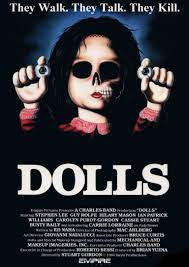
— I finally got around to watching Stuart Gordon’s Dolls for the first time.

Finally, because I love Gordon’s first two features Re-Animator and From Beyond.

I must say that I wasn’t disappointed by Dolls, though it’s a step down from From Beyond and a good two or three from Re-Animator.

Alas, Dolls belongs to a slightly different but no less venerable tradition than Re-Animator and From Beyond, both of which cross mad scientists and low-budget exploitation (nudity, gore, etc.). Think Frankenstein meets Dawn of the Dead.

Dolls, meanwhile, recalls such touchstones as The Old Dark House and The Devil-Doll, not to mention the 1979 Tourist Trap. See if this plot sounds familiar: On a dark and stormy night, six people — a dysfunctional family (husband and father, wife and stepmother, and daughter / stepdaughter) and a young man with two hitchhikers — find the nearest house (The Old Dark House) and they have to fight to make it out of the other end of the motion picture alive because their kindly old hosts are magical toy makers with killer dolls (The Devil-Doll, Tourist Trap).

Like both Re-Animator and From Beyond, Gordon and Dolls screenwriter Ed Naha jump off from their basic old-fashioned plot structure with inspired moments of madness.

Dolls also predates Child’s Play by more than a year and rather than just one killer doll, it has a horde … but Child’s Play, created by Don Mancini, spawned Child’s Play 2, Child’s Play 3, Bride of Chucky, Seed of Chucky, Curse of Chucky, Cult of Chucky, and Child’s Play (2019), plus short films Chucky’s Vacation Slides and Chucky Invades and the TV series Chucky.

So, apparently, not all killer doll films are created equal.

Rating: Three stars.

The Monster Squad starts with an absolute genius idea: Take a group of kids, horror movie fans one and all, and have them do battle against Dracula, Frankenstein’s Monster, Wolf Man, Mummy, and Gill Man.

Yes, what an absolutely positively brilliant idea by screenwriters Shane Black and Fred Dekker, whose names ring a bell loud and clear for genre fans. Others will be familiar with their work regardless whether they know their names or not.

Black made his fame and fortune first for the script of the buddy cop picture Lethal Weapon and some of his other credits include Predator (he plays Hawkins), The Last Boy Scout, and The Long Kiss Goodnight.

Dekker’s other feature directorial credits are the fantastic Night of the Creeps and the not-so-fantastic RoboCop 3.

The Monster Squad gives us both protagonists and monsters that we like, and that goes a long way toward producing a memorable motion picture experience.

The Wolf Man gets his due for a change. The fat kid Horace kicks the Wolf Man in the groin and unleashes the film’s trademark line Wolfman’s got nards! In 2018, Andre Gower, one of the stars of The Monster Squad, directed a documentary named Wolfman’s Got Nards, which looks at the impact one little cult horror film made on fans, cast and crew, and the movie industry.

Anyway, in a movie filled with nifty little moments, I love it when the Wolf Man regenerates after he’s blown up real good.

On the site Drinking Cinema, I found a game for The Monster Squad so drink whenever: 1. Dynamite EXPLODES! 2. A monster dies! 3. You hear a sweet insult. 4. You learn a new monster fact. 5. The cops are having a really hard time figuring out that, um, hello, the perps are various Jack Pierce creations. 6. You see amazing dog acting. 7. You witness a patented Monster Slow-Walk. 8. There’s a monster scare!

I give The Monster Squad a slight deduction for the obligatory music video montage right around the midway point of the picture.

Rating: Three-and-a-half stars.

— Vampirism and voodoo go together rather well and their combination helps Scream Blacula Scream become one of those rare sequels I prefer over the original.

I thought William Marshall’s performance as the title character was the redeeming factor in Blacula and he’s every bit as good in Scream Blacula Scream. Marshall just has a commanding screen presence and he brings both a gravitas to a character and legitimacy to a movie that otherwise might be laughable with the wrong person in the main role. He’s equally effective in every guise of this character — the debonair Mamuwalde who has a definite charm with the ladies befitting an African prince (which he indeed was before the racist Dracula cursed him and imprisoned in a coffin until Blacula awakened in 1972 Los Angeles), the menacing Blacula with his fangs bared, and the more reflective Mamuwalde who hates the dreaded vampire curse.

A highly respectable box office return — not voodoo, no matter what the plot synopsis might read — brought Mamuwalde / Blacula / Marshall back.

In the first movie, Mamuwalde / Blacula comes to believe the lovely Tina’s the reincarnation of his long dead wife Luva. Well, it definitely helps that Vonetta McGee plays both Tina and Luva. By golly, doesn’t this plot thread just get you every single time?

In the sequel, Mamuwalde / Blacula believes in the voodoo powers of Lisa Fortier. She can provide a cure and exorcise the curse once and forever.

Scream Blacula Scream came out two weeks after Coffy and had it been made later in 1973 after Pam Grier busted out as a star playing Coffy, her Lisa Fortier character in Scream Blacula Scream would have undoubtedly been different. Grier plays a more traditional leading lady and screaming and shrinking damsel in distress in Scream Blacula Scream, and she’s definitely no shrinking violet in either Coffy or Foxy Brown. So if Scream Blacula Scream had been produced more in the aftermath of both Coffy and Cleopatra Jones, which came out a month after both Coffy and Scream Blacula Scream, surely American-International — one of the best exploitation film outlets — would have wanted Grier to play one badass mama jama vampire killer rather than her more stereotypical role.

Fair warning: Scream Blacula Scream ends on an extremely jarring note. I remember thinking, in the immortal song title of Peggy Lee, is that all there is? Despite the fact of that ending, you might be surprised to find that I am granting Scream Blacula Scream three-and-a-half stars. Yes, it is just that good.

Blackenstein (1973)

BLACKENSTEIN (1973) No stars
Blackenstein just might possibly be the worst horror movie I have ever seen and off the top of my head, that means it competes alongside such turkey bombs as Jaws: The Revenge, Monster a Go-Go, and Robot Monster. Now, that would be one way to do a horror movie marathon.

Poor Eddie. Dude lost both arms and both legs in Vietnam and he’s bullied in a Veterans Hospital near the beginning of Blackenstein over ice cream. He does have the love of the lovely Dr. Winifred Walker, who hooks Eddie up with the brilliant surgeon and DNA researcher Dr. Stein. Dr. Stein can attach new limbs to Eddie and he’ll be walking just like you and I in no time says this preeminent doctor. Not so fast, my fiend, not with Dr. Stein’s dastardly assistant Malcomb around.

This super creep Malcomb falls instantly in love, well he calls it love anyway, with Dr. Winifred, and by the way, the actor who plays Malcomb (Roosevelt Jackson) gives one of the most subtle performances ever. He does not foreshadow any upcoming plot developments by staring a hole right through Dr. Winifred the first half-dozen scenes they share. That’s why I called him super creep just a couple moments ago, because he’s super creepy.

Malcomb declares his lust, er, love for Dr. Winifred, Dr. Winifred tells Malcomb no because she loves Eddie, Malcomb becomes all spurned and switches Eddie’s DNA with that of a caveman, and Eddie becomes, you guessed it, the title character. That’s when Blackenstein really takes a dive for the dumpster, as it departs from soap opera to horrible horror with soul music interludes that quite frankly belong in another movie.

Blackenstein first wanted to cash in on the coattails of the 1972 hit Blacula and I have read that American International, one of the best exploitation film outlets, chose Scream Blacula Scream over Blackenstein. Gene Siskel reviewed Blackenstein in 1975, when distributors tried passing it off as Black Frankenstein with their fervent Malcomb-like desire to siphon off the success of the Mel Brooks satire / affectionate tribute Young Frankenstein. Siskel managed to be extremely generous when he rated Blackenstein one-half star.

Blackenstein, in short, has got no soul and that’s why it failed then and fails now or any moment in time. Not only does it have no soul, which is certainly bad enough, it’s got no joy of filmmaking like Edward R. Wood’s Plan 9 from Outer Space and Ray Dennis Steckler’s The Incredibly Strange Creatures Who Stopped Living and Became Mixed-Up Zombies, both of which are somehow considered worse than Blackenstein. The director of Blackenstein should be glad we cannot remember his name without an Internet search party.

What’s Good for the Goose May Not Be Good for the Gander

WHAT’S GOOD FOR THE GOOSE MAY NOT BE GOOD FOR THE GANDER: JONATHAN LIVINGSTON SEAGULL & MILLION DOLLAR DUCK

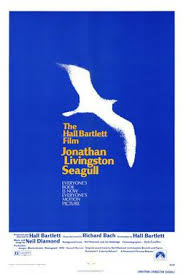
Jonathan Livingston Seagull felt like the cinematic equivalent of a bird pooping on you for 99 long, long, long minutes. How long? It felt twice as long as watching Shoah.

By the way, what did that bird spray on its way? A whole load of New Age gobbledygook that gobsmacked me right in the kisser. I’ll stand with the flock of seagulls in this case, thank you very much, and put Jonathan Livingston Seagull on blast for being one festering piece of poo.

The nature photography and some level of admiration for exactly how they filmed it earn Jonathan Livingston Seagull one star, and that’s definitely more than our next specimen. However, I hate Neil Diamond’s songs and the birds’ outer-inner monologues, and I desperately wish Jonathan Livingston Seagull was a silent movie. Maybe I should have watched it muted. My bad.

For example, there’s six-and-a-half minutes of a Diamond concoction named “Be.” Maybe just maybe it will replace “Sweet Caroline” as the Great American Sing-a-Long. This sports writer can only hope after 10 years of hearing “Sweet Caroline” at every single baseball game. I’ll have endless admiration for a crowd that could make something timeless from lyrics the likes of “Be / As a page that aches for words / Which speaks on a theme that’s timeless / While the Sun God will make for your day / Sing / As a song in search of a voice that is silent / And the one God will make for your way.”

Early on in Jonathan Livingston Seagull, it tricked me into thinking I might be stumbling into a remake of the Alfred Hitchcock classic The Birds. Oh, how I wish it were true. Guess I can wish in one hand and have bird shit in the other.

Now, we come to Million Dollar Duck, a Walt Disney Studios production from 1971 that must have created a commotion back then, namely the sound of Uncle Walt rolling over in his grave at the abysmal quality of what might quite possibly be “one of the most profoundly stupid movies I’ve ever seen.” Roger Ebert and Gene Siskel agreed, because I quoted Ebert and now I will mention that Siskel walked out on Million Dollar Duck.

For the record, I endured about one hour and I stopped watching Million Dollar Duck right around the point when they brought out a photo of Richard Nixon and the stereotype of a Japanese diplomat carried over from World War II propaganda. At that point, I told Million Dollar Duck to go straight to The Devil and Max Devlin.

Sandy Duncan’s Katie Dooley has a beat on being the single dumbest character in cinematic history, and yes, that’s including any dumb character played by Pauly Shore or Adam Sandler and Lloyd and Harry from Dumb and Dumber, for crying out loud. You wonder how Katie Dooley and her brilliant husband Professor Albert Dooley (Dean Jones) ever created a child, let alone one of those precious, er, precocious Disney brood, er, children that could kill Damien with kindness.

The other dumb characters are not far behind, who are all dumber than the title character who earns the title, you guessed it, by laying golden eggs. Million Dollar Duck certainly laid an egg, all right, definitely not golden.

Once upon a time, my Grandma told me the story of how a bird found my Grandpa’s bald head in their back yard one day and how the bird started pecking away on that bald head. Actually, she told me that story a few times over the years and I must admit that I thought about it and pictured my poor Grandpa being pecked by that bird during both Jonathan Livingston Seagull and Million Dollar Duck. Finally, though, I cannot hate Jonathan Livingston Seagull and Million Dollar Baby too much because they helped me think about my grandparents and I have settled on the thought that one day I will tell my grandchildren about that one fateful night I watched Jonathan Livingston Seagull and Million Dollar Duck back-to-back and how I lived to tell the tale.

Schlock (1973)

SCHLOCK

SCHLOCK (1973) ***

Schlock (/SHläk/): cheap or inferior goods or material; trash.

For quite some time as I watched it, I could not make heads or tails out of John Landis’ 1973 extremely low-budget feature film debut SCHLOCK.

I mean, I understood that it’s a good old-fashioned spoof of good old-fashioned monster movies, sure, from the moment I read a plot synopsis and that its title speaks louder than a thousand words, you bet, but it kept veering between tones. Our title character (played by none other than Landis himself) seemed menacing and imposing one moment and then funny the very next. He’s the missing link and “The Banana Monster” and the poster promises “A love stronger than KING KONG.”

There was one sequence though in particular that changed my tune about SCHLOCK.

Schlock (blanking on his full name right now) watches DINOSAURUS! from 1960 and THE BLOB from 1958 in a movie theater, both classics directed by Irvin S. Yeaworth and produced by SCHLOCK producer Jack H. Harris. We see choice scenes from both films, like a dinosaur fight and that classic moment in THE BLOB when its title character attacks first the projectionist and then the patrons to rudely interrupt the showing of DAUGHTER OF HORROR (renamed from DEMENTIA). Showing THE BLOB also provided Landis an opportunity to work Steven, er, Steve McQueen into his little $60,000 movie.

Not only that, but Schlock learns about vending machines and cleans out a candy counter. Bet he loved them jujubes with his sharp teeth. I love what Schlock does when this incredibly tall man sits in the seat one row in front of him. If only life could be that way. Then again, proper authorities cannot handle Schlock.

At the point Schlock went movie watching, I learned to stop worrying and like (not love) SCHLOCK.

Landis’ love for SEE YOU NEXT WEDNESDAY starts out early in his directorial career, by promoting it with “First, BIRTH OF A NATION! Then, GONE WITH THE WIND! 2001: A SPACE ODYSSEY! LOVE STORY! SEE YOU NEXT WEDNESDAY! And now … SCHLOCK!” A line spoken in 2001 turned into a running gag throughout most Landis films and even the music video for Michael Jackson’s “Thriller.”

So many low-budget movies have a great back story.

Landis and crew, including makeup artist Rick Baker early in his career, made SCHLOCK during 12 days in the summer of 1971, but it was not released until 1973. Johnny Carson found out about the film and he booked Landis on “The Tonight Show.” With this spotlight opportunity, Landis showed clips from SCHLOCK, which helped the first-time director find a distributor in Jack H. Harris Enterprises. Harris put up $10,000 if Landis put 10 minutes of running time on SCHLOCK.

I enjoyed SCHLOCK every bit as much as the Joan Crawford classic TROG (1970) and the similarly low-budget KING KUNG FU (1976).

Of course, I did not forget, but I will see you next Wednesday.

Invasion of the Bee Girls (1973)

DAY 99, INVASION OF THE BEE GIRLS.jpg

INVASION OF THE BEE GIRLS (1973) Three-and-a-half stars
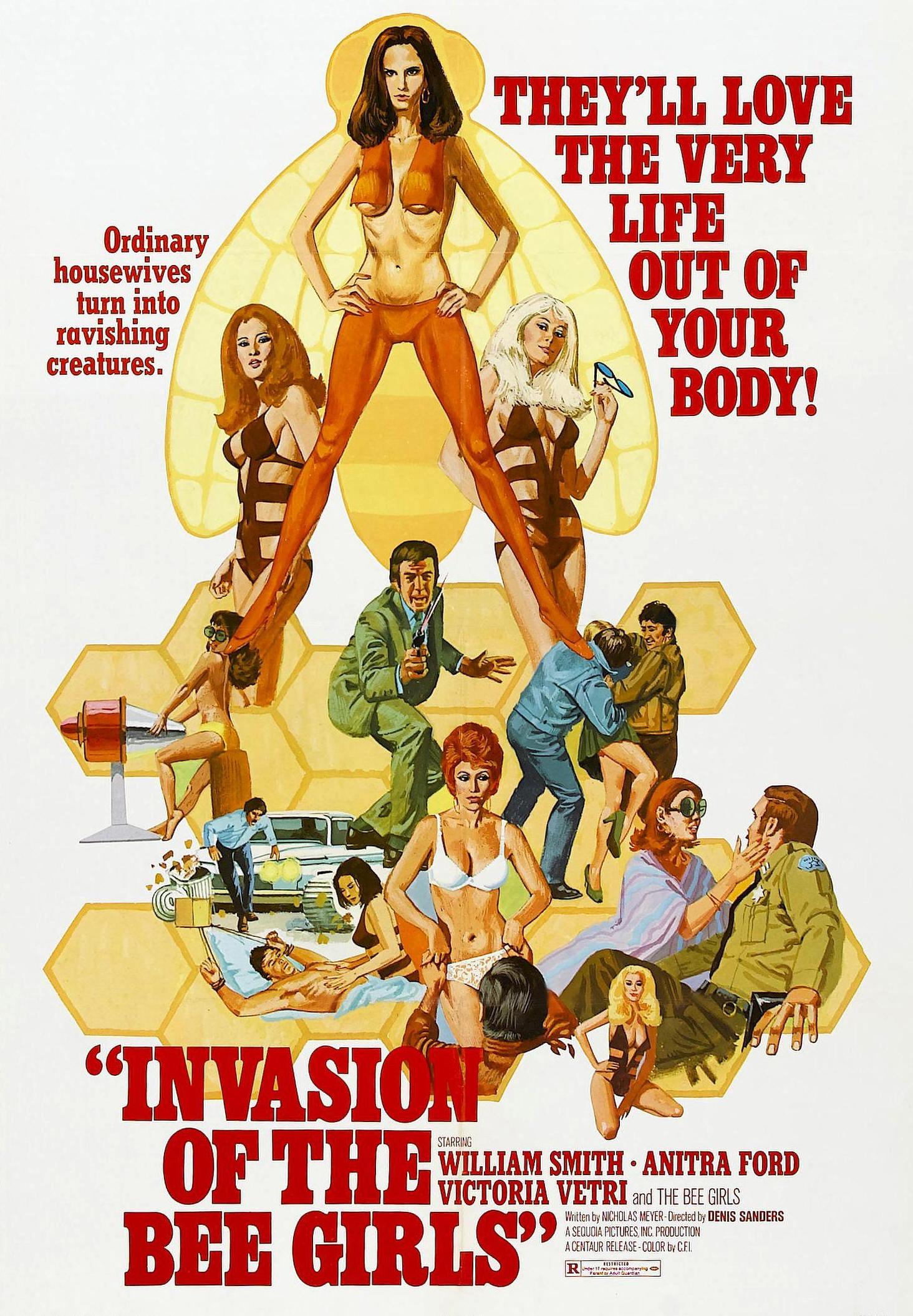
Granted, you know yourself better than anybody else, but tell me if this tagline / synopsis just doesn’t hook you in right away: “A powerful cosmic force is turning Earth women into queen bees who kill men by wearing them out sexually.”

I mean, sign me up to watch that movie!

Did Valerie Solanas ­— author of the SCUM (Society for Cutting Up Men) Manifesto and famous for her attempted assassination of Andy Warhol — write INVASION OF THE BEE GIRLS?

Not even close, because INVASION OF THE BEE GIRLS gives us a Grade-A B-nudie flick and you know that when the most prudish character is played by a former Playmate of the Year (Victoria Vetri, when she went under the name Angela Dorian).

Anyway, future STAR TREK II: THE WRATH OF KHAN and TIME AFTER TIME scribe and director Nicholas Meyer wrote this one and it’s something that he can be proud about. I mean, it’s something that I would be proud about writing.

Apparently not, since Meyer wanted to have his name removed from the credits before his manager talked the Hollywood newcomer down. Upon further research, Meyer’s script had been altered while he visited his family, hence that whole wanting his name stricken from the permanent record.

I bet folks ask him all the darn time about THE WRATH OF KHAN and TIME AFTER TIME, and understandably so, but how about INVASION OF THE BEE GIRLS, a film that I believe rates with THE WRATH OF KHAN and TIME AFTER TIME on an entertainment level.

I don’t know, I enjoyed this film like I enjoyed Russ Meyer classics FASTER, PUSSYCAT! KILL! KILL! and BEYOND THE VALLEY OF THE DOLLS and let’s face it that I’m amused by such a ridiculous premise and I’m turned on by the women in this film like I am the women in FASTER PUSSYCAT and BEYOND THE VALLEY.

In his IMDb profile, William Smith’s biography starts “Biker, bare-knuckle brawler, cowboy, Bee-Girl fighter, vampire hunter … William Smith has done it all.” Over a long career, you might remember him for being at odds with Joe Namath in the biker flick C.C. AND COMPANY (1970) or being Clint Eastwood’s fisticuffs opponent in ANY WHICH WAY YOU CAN (1980), which could go 15 rounds with THEY LIVE’s fight scene between Roddy Piper and Keith David.

Obviously, William Smith’s government agent Neil Agar can hang with the bizarre world of INVASION OF THE BEE GIRLS.

Ultimately, though, it’s not about him and the beautiful women, led by Anitra Ford’s Dr. Susan Harris and the Brandt Research Facility, and the dirty old men here make the horny scientists in TOWER OF EVIL (1972) chaste in comparison. Look up “horny scientist flick” and INVASION OF THE BEE GIRLS should be depicted with the incredible bee girl transformation sequence filed Exhibit A.

I can’t go without mentioning the line “They’re dropping like flies.” I love it every single line, every single time. If I would have had the opportunity to meet late character actor Cliff Osmond (1937-2012), I would have made him read me that line.

Other taglines for INVASION OF THE BEE GIRLS: “They’ll Love the Very Life Out of Your Body!”, “Ordinary housewives turn into ravishing creatures,” and “They’ll Turn You on from Dusk to Dawn.”

Other titles for INVASION OF THE BEE GIRLS: “The Honey Factor” (working); “Alien Predators” (bootleg); “Graveyard Tramps” (reissue). On French TV, the movie plays as INVASION OF THE BEE GIRLS.

You can find copies of INVASION OF THE BEE GIRLS everywhere, since its D-cups are public domain.

I came across it on at least two different cheapie 50-movie horror packs from Mill Creek that stack up public domain titles ranging from classics like NOSFERATU and NIGHT OF THE LIVING DEAD to less than classics, some of them so bad that I don’t want to even name them.

MGM packaged INVASION OF THE BEE GIRLS with INVASION OF THE STAR CREATURES during its epic “Midnite Movies Double Feature” DVD series.

There’s also INVASION OF THE BEE GIRLS packaged with THE DEVIL’S 8, UNHOLY ROLLERS, and VICIOUS LIPS on the “4 Cult Movie Marathon Volume One” DVD … and the Bee Girls also have a Scream Factory solo Blu-Ray release.

Enter the Dragon (1973)

DAY 34, ENTER THE DRAGON

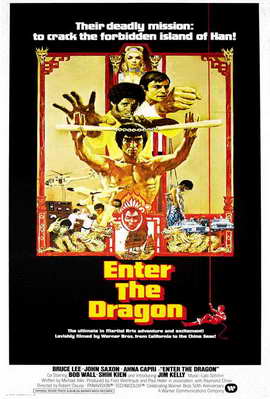
ENTER THE DRAGON (1973) Four stars
There’s a line in BLADE RUNNER that makes me think about Bruce Lee (1940-73), “The light that burns twice as bright burns half as long, and you have burned so very very brightly.”

Lee made his screen debut as an infant in GOLDEN GATE GIRL, a.k.a. TEARS IN SAN FRANCISCO.

He appeared in several films throughout the ’50s and ’60s, and played the role of Kato on “The Green Hornet” during that show’s 1966-67 run.

Lee made his legend, though, on five martial arts films that were filmed over a period of two years in the early ’70s, where his light burned twice as bright half as long: THE BIG BOSS, FIST OF FURY, THE WAY OF THE DRAGON, ENTER THE DRAGON, and THE GAME OF DEATH (a new, different plot filmed after his death around Lee’s completed fight scenes; Lee postponed finishing THE GAME OF DEATH to make ETD).

ENTER THE DRAGON was the groundbreaker, known as the first martial arts film produced by a major American studio and for a whopping $850,000. The film made $21,483,063 in North America and coupled with the success of the English dub of FIVE FINGERS OF DEATH earlier in 1973, martial arts exploded. (Lee’s earlier films FIST OF FURY and THE WAY OF THE DRAGON fared much better financially in Hong Kong.)

Unfortunately, Lee died of a cerebral edema on July 20, 1973, just six days before ENTER THE DRAGON premiered in Hong Kong. One month later, it premiered in the United States at Grauman’s Chinese Theatre on the Hollywood Walk of Fame.

It’s been said that Lee was very nervous before making ENTER THE DRAGON. Lee’s wife, Linda Lee Cadwell, countered that in the Q&A session for the film’s 40th anniversary Blu-ray.

“I think it’s been portrayed that (Bruce) was very nervous before filming began,” she said. “I think it’s been misrepresented to the point that some people say he was having a nervous breakdown he was so paralyzed by fear. That is false. He was a professional actor. He’d been acting his whole life. And he was a professional martial artist as well. So he had no butterflies about that kind of thing. But what he wanted was to make this film very special. And he had ideas he would like to see added to the script. He was very adamant about it.

“He really put a lot of work into studying how to improve this film. To make it the best product that it could be because this was an important film for Bruce. It was going to be his first introduction to the American market. There was some reticence on the side of the people making the film. They wanted Bruce to get on the set and get going but he didn’t want to show up and get going on the film until the things he wanted — namely all the philosophy ­— in the film were done.”

ENTER THE DRAGON has been described as James Bond meets Fu Manchu, a fact some reviewers have lamented.

For example this one from Time Out, “A sorry mixture of James Bond and Fu Manchu, it tacks together the exploits of a multi-national crew of martial artists converging on Hong Kong for a tournament, infiltrated by Lee — fresh from his Shaolin temple — on an assignment to bust an opium racket. Worth seeing for Lee, but still unforgivably wasteful of his talents.”

Paul Bramhall wrote “Enter the Dragon: The Most Overrated Kung Fu Movie Ever?” in July 2018 and here’s his take on the Bond element: “The influence of Bond drifts in and out of ENTER THE DRAGON like spliced footage in a Godfrey Ho movie, making it come across as shoehorned in rather than a natural part of the narrative. … Released the same year as Roger Moore’s debut as Ian Fleming’s most famous creation, the secret agent styled shenanigans on display in ENTER THE DRAGON were dated even before it hit cinema screens. Casting Geoffrey Weeks a poor man’s M, and a head scratching plot of a rogue Shaolin student using a martial arts tournament as a front to his opium smuggling operation, (director) Robert Clouse and co. should have taken a page out of the ‘less is more’ manual of filmmaking.”

Nigel Tufnel had the answer for all that, “That’s just nitpicking, isn’t it?”

ENTER THE DRAGON downplays the sex angle, the double entendres, and the gadgets, and this low-budget “Bond movie” can stand head-to-head with any of the best Bond films like FROM RUSSIA WHITH LOVE, GOLDFINGER, ON HER MAJESTY’S SECRET SERVICE, and SKYFALL, for example.

Like how those early Bond films gather a lot of their appeal from the star power of Sean Connery, ENTER THE DRAGON draws heavily on Lee.

He’s a movie star, yes, tried and true with charisma and electricity that can transcend a low budget, a dodgy or dopey plot, awkward and awful voice dubbing, and other production lapses.

Lee ranks with Humphrey Bogart, Marilyn Monroe, James Dean, et cetera, all the great stars of the screen.

Not only that, watching Lee in action is like watching great athletes Barry Sanders, Jerry Rice, Michael Jordan, and Mike Tyson, for example.

You know you’re watching the very best, a grand master at his or her craft and somebody in the greatest physical (and mental) shape.

George C. Scott said that he looked for a “joy of performing” quality in judging actors, that the great ones separated themselves from the good with their joy. Scott named James Cagney.

You can say all these actors and athletes named in the last few paragraphs all have this “joy of performing.”

Lee definitely had that joy, and it’s apparent throughout even his worst movies.

Unlike the other Lee martial arts movies released in America, though, we hear Lee’s actual speaking voice in ENTER THE DRAGON.

He’s very, very quotable and my friends and I loved to do our best Lee impression with lines such as “Don’t think. FEEEEEEEEL! It’s like a finger pointing away to the moon. Do not concentrate on the finger or you miss all of the heavenly glory,” “You can call it the art of fighting without fighting,” and “Why doesn’t somebody pull out a .45 and, bang, settle it?”

In addition to Lee at the center, we have John Saxon and Jim Kelly as Roper and Williams, respectively, who also end up on Han’s Island (not to be confused with the small, uninhabited island that Canada and Denmark are in dispute over) because they were designed to give the film a wider appeal to maximize profits. Unlike Lee, who transcends fads and fashions, Saxon and Kelly and their characters are a bit more prisoner of the times. Fortunately, the two Americans both have enough personality and martial arts skill to justify their presences, and they’re fun.

Then we have the arch villain Han, just like a Bond picture, but please try and picture Gert Frobe or Telly Savalas do martial arts battle with Lee and the other protagonists and their fists and feet of fury.

Shin Kein (his speaking voice dubbed by Keye Luke, since he did not speak English) received acting credits in 272 films from 1940-95 and he’s most identified with Han. Like the best of the Bond films, Han contributes to the success of ENTER THE DRAGON with his villainy, a great foil to the good guys.

I love this blurb from his profile on the Villains Wiki, “Han is a heroin drug lord who runs his heroin cooking business from a secluded island. He also lost a hand, though how he lost it is never explained. He keeps the bones of the severed hand on display in a museum of torture and weapons. In place of the missing hand he has a variety of weapon hands to use like a iron hand, claw hand and a bladed hand. He is also an expert in martial arts.”

ENTER THE DRAGON ends in slambang fashion with the final fight between Lee and Han — a scene that could be played right alongside THE LADY FROM SHANGHAI and DUCK SOUP, three of the best usages of mirrors in motion picture history.

I would love to have seen ENTER THE DRAGON at its American premiere, just for the response to Lee alone.

NOTE: Raymond Chow, the producer behind Lee and Jackie Chan, died Friday, November 2, 2018 at the age of 91.