The Universal Frankenstein Movies

THE UNIVERSAL FRANKENSTEIN MOVIES
Of all the horror movie series, there’s not one I like more than Universal Studios’ Frankenstein cycle which started with the immortal 1931 classic Frankenstein and continued through The Bride of Frankenstein, Son of Frankenstein, The Ghost of Frankenstein, Frankenstein Meets the Wolf Man, House of Frankenstein, House of Dracula, and finally concluded with Abbott and Costello Meet Frankenstein in 1948.

Seven of the eight films are stone cold classics and I rate Frankenstein, The Bride of Frankenstein, Son of Frankenstein, and Abbott and Costello Meet Frankenstein at four stars and The Ghost of Frankenstein, Frankenstein Meets the Wolf Man, and House of Frankenstein three-and-a-half, with House of Dracula ranked two-and-a-half and it’s the only one that I would even slightly hesitate to recommend to people.

I watched Frankenstein, The Bride of Frankenstein, and Abbott and Costello Meet Frankenstein around roughly the same time in the late ’90s and early ’00s. I caught up with the others much later on during a marathon of Universal horror films. I liked The Ghost of Frankenstein, Frankenstein Meets the Wolf Man, and House of Frankenstein upon first viewing, as well Abbott and Costello Meet Frankenstein a lot, but they’ve all grown on me to where I bumped up their rating one-half star.

I have a feeling that watching the eight films in close proximity to one another will become a tradition, like it has for who knows how many people over the last 90 years.

Here’s a look at the film series that seemingly started it all in the horror genre.

Frankenstein (1931; James Whale): The one that started it all, Edward Van Sloan, who plays Dr. Van Helsing in Dracula and Doctor Waldman in Frankenstein, begins the picture, How do you do? Mr. Carl Laemmle feels it would be a little unkind to present this picture without just a word of friendly warning. We’re about to unfold the story of Frankenstein, a man of science who sought to create a man after his own image without reckoning upon God. It is one of the strangest tales ever told. It deals with the two great mysteries of creation: life and death. I think it will thrill you. It may shock you. It might even horrify you. So if any of you feel that you do not care to subject your nerves to such a strain, now is your chance to, uh … well, we’ve warned you!

Colin Clive and Dwight Frye are great in their roles as mad scientist Henry Frankenstein and hunchbacked assistant Fritz, Van Sloan is much better in Frankenstein than in Dracula, and Boris Karloff is not even credited as Karloff yet for playing The Monster. The opening credits have it The Monster — ?

The work done by makeup artist Jack Pierce and set designer Herman Rosse is just as definitive and influential as the characters and performances by Clive, Frye, and Karloff.

We’ve all seen Frankenstein time and time again in the thousands if not hundreds of thousands of films that have been influenced by James Whale’s first horror masterpiece.

The Bride of Frankenstein (1935; James Whale): One of the greatest horror films and greatest sequels ever made, I rate The Bride of Frankenstein as the best Frankenstein and it’s not even all that close, despite the fact that it shares the same star rating as Frankenstein, Son of Frankenstein, and Abbott and Costello Meet Frankenstein.

The Bride of Frankenstein has a more wicked sense of humor than any of the other films in the series, and that’s including Abbott and Costello Meet Frankenstein, and it’s undeniably the most fun to watch. It’s just as iconic and influential as the original Frankenstein, from the more sympathetic, speaking Monster to the makeup and the sets.

Mad scientists do not come madder than Ernest Thesiger’s Doctor Pretorius, and he’s a devious hoot throughout The Bride of Frankenstein. He’s so mad that he makes Colin Clive’s Doctor Frankenstein seem almost sane. You think I’m mad. Perhaps I am. But listen, Henry Frankenstein. While you were digging in your graves, piecing together dead tissues, I, my dear pupil, went for my material to the source of life. I grew my creatures, like cultures, grew them as nature does, from seed.

I wish they would have done more with the title character, that’s just about my only gripe against The Bride of Frankenstein.

Son of Frankenstein (1939; Rowland V. Lee): Easily the longest of the series, the third Frankenstein entry benefits tremendously from the presence of four absolute legends of the genre in Lionel Atwill, Boris Karloff, Bela Lugosi, and Basil Rathbone. Atwill and Lugosi are especially fantastic.

I would make the argument that Lugosi never had a better role than Ygor and never gave better performances than he did in Son of Frankenstein and The Ghost of Frankenstein. He’s the driving engine in both films and helps make them so entertaining. They hanged me once Frankenstein. They broke my neck. They said I was dead. Then they cut me down. They threw me in here, long ago. They wouldn’t bury me in holy place like churchyard. Because I stole bodies, eh they said. So, Ygor is dead! So, Dr. Frankenstein. Nobody can mend Ygor’s neck. It’s alright.

Atwill became the most versatile and most important supporting player in the Frankenstein series, playing Inspector Krogh in Son of Frankenstein, Doctor Theodore Bohmer in The Ghost of Frankenstein, the Mayor in Frankenstein Meets the Wolf Man, Inspector Arnz in House of Frankenstein, and Police Inspector Holtz in House of Dracula.

He’s at his best as Inspector Krogh, and this character will ring a bell to Young Frankenstein fans, as will Ygor. Most vivid recollection of my life. I was but a child at the time, about the age of your own son Herr Baron. The Monster had escaped and was … ravaging the countryside, killing, maiming, terrorizing. One night he burst into our house. My father took a gun and fired at him but the savage brute sent him crashing to a corner. Then he grabbed me by the arm!

Karloff gives his final performance as Frankenstein’s Monster and he’s given less to do than Frankenstein and especially The Bride of Frankenstein. He returns to not speaking in Son of Frankenstein after the strides the Monster made in Bride, but Karloff had the innate ability to communicate much without dialogue.

The Ghost of Frankenstein (1942; Erle C. Kenton): This is the first downturn in quality in the series after the triple triumph of Frankenstein, The Bride of Frankenstein, and Son of Frankenstein, but The Ghost of Frankenstein still proves to be loads of fun with the return of Ygor, the brain transplant and mad scientist plot, and plenty of action during one of the shortest running times in the entire series.

Ygor could take a hanging before Son of Frankenstein and take a shooting in Son and keep on ticking in The Ghost of Frankenstein. He’s still got his one true friend in Ghost, Frankenstein’s Monster, though it’s no longer Boris Karloff but Lon Chaney Jr in his first and only appearance. Chaney became a big horror movie star after The Wolf Man and Universal cast him as Frankenstein’s Monster, Dracula, and Kharis. Not sure how they missed him for The Invisible Man and The Phantom of the Opera.

Anyway, Lugosi dominates The Ghost of Frankenstein, despite the fact that Ygor’s not as menacing as he was in Son of Frankenstein. You cannot take my friend away from me. He’s all that I have. Nothing else. You’re going to make him your friend and I’ll be alone. Ygor plots to have his brain transplanted inside Frankenstein’s Monster, so he can rule the world, and finds a willing conspirator in Atwill’s Doctor Theodore Bohmer. As Doctor Ludwig Frankenstein says, You’re a cunning fellow, Ygor. Do you think I would put your sly and sinister brain into the body of a giant? That would be a monster indeed. You will do as I tell you or I will not be responsible for the consequences.

The Ghost of Frankenstein has one of the better casts in the series with Cedric Hardwicke as Ludwig Frankenstein and The Wolf Man cast members Ralph Bellamy and Evelyn Ankers join Chaney and Lugosi. The original Frankenstein (Colin Clive) makes an archive footage cameo appearance; Clive passed away in 1937 at the age of 37.

Frankenstein Meets the Wolf Man (1943; Roy William Neill): The fifth installment of the series begins with arguably the best seven minutes of the entire franchise and the film takes a steady dip in quality for the next hour until we get to the last few minutes.

Lawrence Talbot and The Wolf Man make their first appearance in the series, and his tortured soul number makes sweet music especially as played by Chaney Jr. I only want to die. That’s why I’m here. If I ever find peace I’ll find it here. Lugosi plays Frankenstein’s Monster, but one might remember from the end of The Ghost of Frankenstein that our Monster speaks like Ygor because of the brain transplant operation late in the picture. He’s still blind, as well, respecting continuity for a change in any of these sequels, but it’s all rendered moot because Universal muted Lugosi’s speaking voice as the Monster. He’s not the worst Monster, and they all became interchangeable after Karloff left the role anyway.

Before King Kong vs. Godzilla and long before Freddy vs. Jason, there was Frankenstein Meets the Wolf Man.

Isn’t it an interesting coincidence that Frankenstein Meets the Wolf Man came out in 1943, the American version of King Kong vs. Godzilla in 1963, and Freddy vs. Jason in 2003?

House of Frankenstein (1944; Erle C. Kenton): The sixth installment piles on the monster characters and the acting talent.

Boris Karloff returns to the series for the final time as the mad doctor Gustav Niemann and not Frankenstein’s Monster, Chaney returns as Lawrence Talbot and The Wolf Man, John Carradine and Glenn Strange make their debuts as Dracula and Frankenstein’s Monster, and J. Carrol Naish almost steals the show as the hunchbacked henchman Daniel.

There’s also Lionel Atwill, George Zucco, and Sig Ruman, so there’s no shortage of talent in the cast even in the smallest roles.

Where’s Lugosi? No, seriously, where’s Lugosi?

Carradine and Strange are major downgrades as Dracula and Frankenstein’s Monster, it’s great to have Karloff back in a speaking and a mad doctor role though I’d still prefer him as Frankenstein’s Monster, Chaney plays his tortured soul number again, and Naish joins Dwight Frye and Lugosi in the lexicon of scene-stealing servant characters.

This is as good a place as any to mention Frye, who passed away in 1943 and who appeared in Frankenstein as Fritz, The Bride of Frankenstein as Karl, Son of Frankenstein as a villager, The Ghost of Frankenstein as a village, and Frankenstein Meets the Wolf Man as Rudi, a nice little supporting role for Frye.

House of Frankenstein is a step down from The Ghost of Frankenstein and Frankenstein Meets the Wolf Man and closer to a three-star rating.

House of Dracula (1945; Erle C. Kenton): This is the only film in the series that I’ve not been able to warm into a positive review after repeat viewings. Apparently, I’ve made three attempts over the last couple years.

Unfortunately, by this point in the series, House of Dracula feels like we’ve been here before … and in better films.

The title, the poster, and the cast of characters echo House of Frankenstein.

The Wolf Man, Dracula, and Frankenstein’s Monster all return and we have a new mad doctor and a new hunchback after Karloff and Naish in House of Frankenstein.

I must state again that I don’t particularly care for Carradine and Strange in the roles of Dracula and Frankenstein’s Monster. They are many grades below Lugosi and Karloff. Especially Carradine, who I unfortunately watched playing Dracula first in Billy the Kid vs. Dracula from 1966. I had no idea back then Carradine had played Dracula before he revisited the role for director William Beaudine in a toothless cross between a western and a horror film. Anyway, Carradine does this thing with his eyes that’s supposed to be hypnotic, but it always comes across like somebody’s just squirted him in the eyes. They wisely gave Strange absolutely little to do in House of Frankenstein, House of Dracula, and Abbott and Costello Meet Frankenstein.

Chaney is still pretty good in House of Dracula, and he’s the main positive reason for the film’s mixed review.

Abbott and Costello Meet Frankenstein (1948; Charles Barton): The comedic duo of Bud Abbott and Lou Costello and the monsters like Frankenstein’s Monster, Dracula, and The Wolf Man were the main cash cows for Universal throughout the 1940s.

Universal squeezed from the teets for a big hit in Abbott and Costello Meet Frankenstein — we have Bud and Lou as Chick and Wilbur, Lugosi for the second and final time as Dracula, Chaney once more as tortured soul Lawrence Talbot and The Wolf Man, and Strange as Frankenstein’s Monster. The monsters do make for great straight men and Costello’s fright never proved more convincing or delightful or funny than it is throughout Abbott and Costello Meet Frankenstein.

Lenore Aubert and Jane Randolph are both quite fetching as women with ulterior motives for their interest in Wilbur.

I reviewed Abbott and Costello Meet Frankenstein at length earlier in the month, and I stand 100 percent behind that four-star review.

The Universal Frankenstein Movies, Ranked
1. The Bride of Frankenstein (1935) ****
2. Frankenstein (1931) ****
3. Son of Frankenstein (1939) ****
4. Abbott and Costello Meet Frankenstein (1948) ****
5. Frankenstein Meets the Wolf Man (1943) ***1/2
6. The Ghost of Frankenstein (1942) ***1/2
7. House of Frankenstein (1944) ***1/2
8. House of Dracula (1945) **1/2
Dracula (1931)

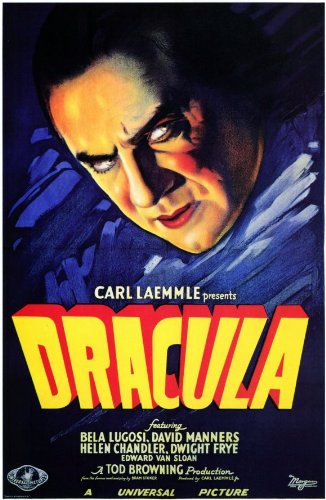
DRACULA (1931) ****
I remember being first disappointed by the 1931 Dracula and that disappointment carried over for more than two decades.

Around the turn of the 21st Century, I bought the 1999 VHS release and that’s what I first watched, the one with Classic Monster Collection across the top and then New Music by Philip Glass and Performed by Kronos Quartet immediately below. Of course, I thought Bela Lugosi as Dracula and Dwight Frye as Renfield were absolutely incredible, David Manners as Jonathan Harker and Edward Van Sloan as Professor Van Helsing and Helen Chandler as Mina Harker less so, and I loved director Tod Browning’s 1932 Freaks at first sight contemporaneous with Dracula. Freaks remains one of my absolute favorite movies, so obviously some movies hit people right from the start and others just simply take more time or sometimes they never make that deep, personal connection others do.

For the longest time, at least a decade if not longer, I thought Dracula was overrated and paled in comparison against Freaks, Frankenstein, The Bride of Frankenstein, and The Wolf Man, all of which I first saw around the same time as Dracula and I loved, absolutely loved, and still do love all of them. At the time, I also loved Abbott and Costello Meet Frankenstein more than Dracula.

It was that darn Philip Glass / Kronos Quartet score that stank up Dracula and I still get a big kick out of the Triumph the Insult Comic Dog couplet, Philip Glass, atonal ass, you’re not immune / Write a song with a fucking tune. I remember my wife complained about Glass’ score for the experimental non-narrative film Koyaanisqatsi and I bristled at his score for Candyman upon revisiting that 1992 film for the first time in several years.

Revisiting the 1931 Dracula in recent years, without the Glass / Kronos score and back closer to how it first appeared in theaters on Feb. 14, 1931, it’s risen in stock from three to three-and-a-half and finally four stars. I cannot deny that it still has a fair share of faults, like those performances I mentioned earlier and the stage-bound production quality since it’s based off the 1924 stage play adapted from Bram Stoker’s 1897 novel, but I’ve grown appreciation for everything that works from the opening scenes in Transylvania to Lugosi (1882-1956) and Frye (1899-1943), who inspired later songs from Bauhaus (Bela Lugosi’s Dead) and Alice Cooper (The Ballad of Dwight Fry).

It also helps one to catch up with the Spanish language Dracula from the same year and the same sets but a different cast, a different language, and a different director. This Spanish version, rediscovered first in 1978 and then later on video in 1992, lasts 30 minutes longer and it’s better in almost every respect than its famous counterpart. Better shot and better looking, vastly superior cleavage and far sexier women (Lupita Tovar over Helen Chandler any day of the millennium), and less wimpy men in the Spanish version, but Lugosi still prevails against Carlos Villarias.

Several lines had already entered the lexicon decades before I first watched Dracula: I never drink … wine. For one who has not lived even a single lifetime, you’re a wise man, Van Helsing. Listen to them. Children of the night. What music they make. Even I am Dracula belongs somewhere in the pantheon near Bond, James Bond. Lugosi’s ability or lack thereof speaking the English language actually benefits the otherworldly nature of his Dracula and I hold his performance in high regard alongside Max Schreck in Nosferatu, Christopher Lee in Dracula, and Gary Oldman in Dracula.

I have a long relationship with vampires.

I remember the 1985 Fright Night being the highlight of a boy slumber party circa 1988 and third or fourth grade.

I must have been 11 or 12 years old and in the fifth or sixth grade when reading the Stoker novel. Right around that point in time, I also read Sir Arthur Conan Doyle’s The Hound of the Baskervilles and Roald Dahl’s Charlie and the Chocolate Factory. I loved all three of them and they each fired up my imagination and creative spirit.

A few years later, I caught up with the Francis Ford Coppola version and talk about a movie that wowed a 14-year-old boy. I remember staying up late and sneaking around (somewhat) to watch this Dracula on my bedroom TV, captivated by all the nudity and sexuality and violence and Winona Ryder and Sadie Frost and it recalled some of what I liked about the novel all while becoming a cinematic extravaganza. I know critics of the 1992 Dracula blasted the film for being all style, no substance and for being overblown, but I think it’s overflowing with creativity and sheer cinematic beauty. I rate it right up there with F.W. Murnau’s Nosferatu as one of the best vampire films ever.

Some things simply transcend Keanu Reeves’ horrible accent and Dracula’s at one point beehive hairdo.

The vampire genre itself transcends such duds as Dracula 2000 and New Moon.

Broadway Melody, Cimarron Won Best Picture! So What, Because They Suck!

BROADWAY MELODY, CIMARRON WON BEST PICTURE! SO WHAT, BECAUSE THEY SUCK!
The Broadway Melody and Cimarron are horrible, terrible, horrible movies and the first two examples of how winning the Academy Award for Best Picture does not guarantee quality.

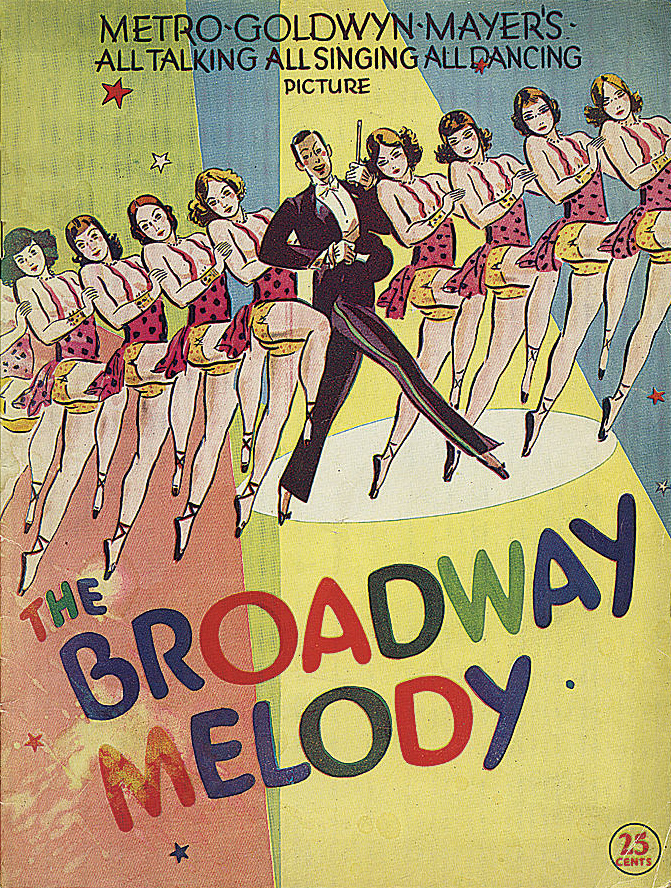
The Broadway Melody (1929) owns the distinction of being the first talking picture and the first musical to win Best Picture, thus it has a permanent place in cinematic history. Otherwise, though, The Broadway Melody makes me wonder how come the motion picture industry did not return to silent pictures, because the dialogue and the songs both stink up the screen every step of the way. (Apparently, MGM also released The Broadway Melody in a silent version.)

Likewise, Cimarron (1931) is the first Western to win Best Picture and it’s one of those movies, well, near the end of its 130-minute duration, I told my wife, “I feel like I’ve aged 40 years watching this movie.” In fact, I had to use hedge trimmers on my facial hair and step in the barber’s chair after Cimarron, and perhaps I should be thankful Cimarron only covered 1889 to 1929 and not a longer historical span. I might have been in deep trouble, at least six feet under, had the Howard Estabrook and Louis Sarecky screenplay and the 1929 Edna Ferber novel instead considered 50 or 60 years of Yancey and Sabra Cravat.

The first in a series of musicals for MGM, The Broadway Melody stars Charles King as Eddie Kearns and Anita Page and Bessie Love as sisters Queenie and Harriet ‘Hank’ Mahoney. See, what happens, Eddie and Hank have had a thing, but then he lays his eyes on a now grown up Queenie and boy oh boy, his eyes nearly pop out their head. Whee, Queenie lays off Eddie, sister loyalty, and lets New York high society playboy Jock Warriner (reference to studio mogul Jack Warner) play her. Eddie and Queenie realize they’re in love, Hank finally accepts it, and it all ends happily ever after with the closing line delivered by the character with a stutter. It was so good that I forgot it.

Charles King should have been renamed ‘Charles Sing’ because he sings much better than he acts and the scenes between Eddie and Hank (and Queenie) (and Jock) try and ultimately fail my test for strained melodrama. Yap! Yap! Yap! Yap! That’s right, one yap for every piece in the romantic square. Love and Page are easy on the eyes, especially Page, but difficult on the ears with all their hemming and hawing (more Page than Love) and perpetually melodramatic carrying on (more Love than Page). Either way, their dialogue scenes are destined for the mute button and subtitles.

I learned a lesson from Cimarron and it has nothing to do with Oklahoma’s state history before and after statehood on Nov. 16, 1907.

The Lesson: Do not start your movie with a land rush scene, because it’s highly unlikely that you will find something else to approach the excitement of that slambang opener.

After the intense thrills of the land rush, I must admit that I started paralleling Yancey Cravat’s restlessness and I desperately wanted to move to another movie, one that doesn’t even have to be a Best Picture winner, just as long as it can involve me from beginning to end and does not leave me contemplating how many years I have aged just watching it. That’s about the bare minimum I expect from a movie, any movie, and that isn’t asking for too much, now, is it?

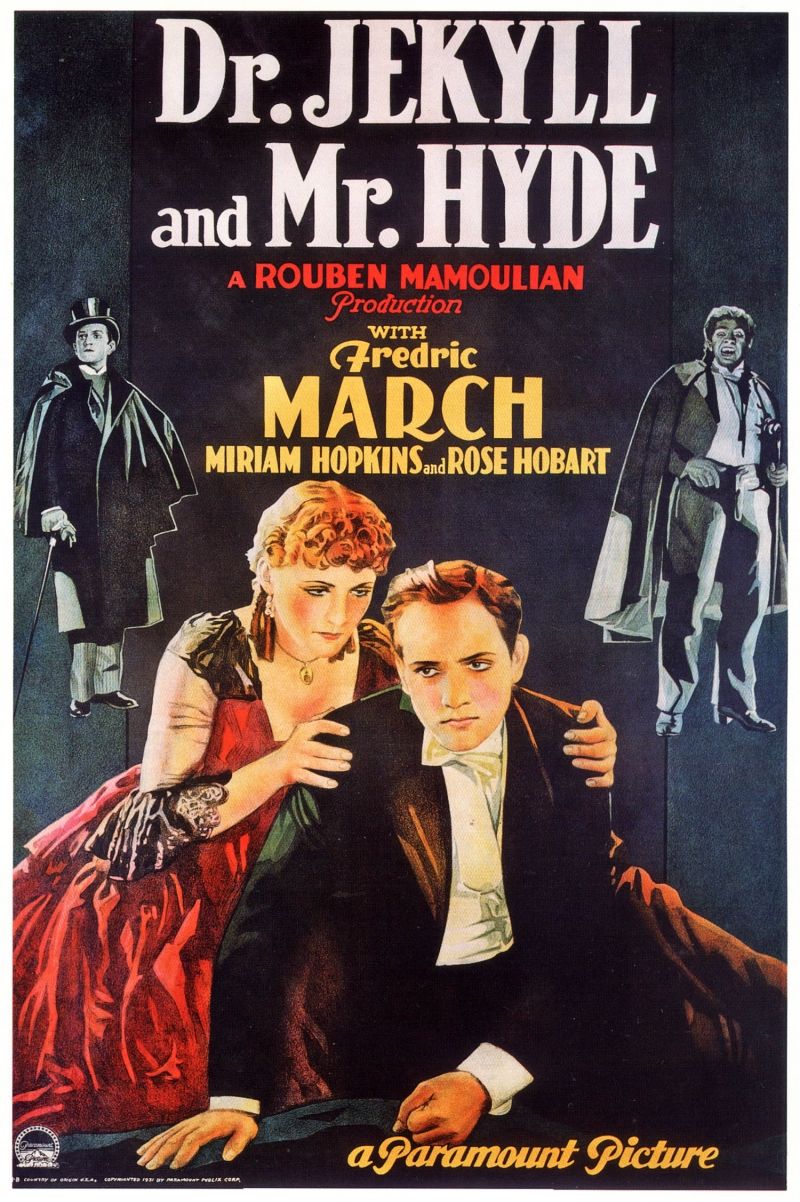
Dr. Jekyll & Mr. Hyde (1931)

day 16, dr. jekyll and mr. hyde

DR. JEKYLL AND MR. HYDE (1931) Four stars
The duality of man.

It was featured in a memorable conversation in FULL METAL JACKET between a colonel and Private Joker:
Colonel: Marine, what is that button on your body armor?
Private Joker: A peace symbol, sir.
Colonel: Where’d you get it?
Private Joker: I don’t remember, sir.
Colonel: What is that you’ve got written on your helmet?
Private Joker: “Born to Kill,” sir.
Colonel: You write “Born to Kill on your helmet and you wear a peace button. What’s that supposed to be, some kind of sick joke?
Private Joker: No, sir.
Colonel: You’d better get your head and your ass wired together, or I will take a giant shit on you.
Private Joker: Yes, sir.
Colonel: Now answer my question or you’ll be standing tall before the man.
Private Joker: I think I was trying to suggest something about the duality of man, sir.
Colonel: The what?
Private Joker: The duality of man. The Jungian thing, sir.

The duality of man is at the heart of DR. JEKYLL AND MR. HYDE in every form, be it Robert Louis Stevenson’s 1886 novella STRANGE CASE OF DR. JEKYLL AND MR HYDE and the 1931 and 1941 film versions with Fredric March and Spencer Tracy, respectively.

Dr. Henry Jekyll (March) believes that every man possesses two inside him (one good and one bad) and he puts this belief to the test with his creation of a formula that separates his good from his bad. He believes that if good and bad are separated, men will become truly liberated. Jekyll’s downfall will be his arrogance and his contempt for both his peers and the bounds for which one should not go.

Jekyll transforms into Mr. Edward Hyde, unleashing his inner demons on the world, especially a down-on-her-luck cabaret singer named Ivy Pearson (Miriam Hopkins). Jekyll saves Miss Pearson one night from a mugging and the very attractive young woman shows her appreciation to Jekyll in ways (bare legs, a kiss) that hasten Jekyll’s transformation into Hyde. It’s that leg that sticks with Jekyll, who’s engaged to be married to the socially respectable Muriel Carew (Rose Hobart) and you can go ahead and read socially respectable as dull. (The movie takes full advantage of coming before the Production Code that would have downplayed the sexual angle.)

Jekyll’s suave and sophisticated, well-respected, and known for both his decency and charitable works, but Hyde’s more a Neanderthal than a 19th Century Man with violent outbursts common and incredible physicality like brute strength and super jumping ability. Hyde is the darker side of Jekyll’s personality that he has repressed for so long, as a man of science turns into a homicidal maniac even without any potion.

Like many scientists in the movies, Jekyll messes around with things no man should and he pays the price dearly. There’s a dialogue scene between Jekyll and his friend Dr. Lanyon that gets to the gist of it:

Lanyon: You’re a rebel, and see what it has done for you. You’re in the power of this monster that you have created.
Jekyll: I’ll never take that drug again!
Lanyon: Yes, but you told me you became that monster tonight not of your own accord. It will happen again.
Jekyll: It never will. I’m sure of it. I’ll conquer it!
Lanyon: Too late. You cannot conquer it. It has conquered you!

March (1897-1975) was one of the best actors of his era on both stage and screen, winning two Academy Awards for Best Actor and two Tony Awards, and he gives two of the greatest performances in any horror film as Jekyll and Hyde, because they both take up residence in our mind.

For his work as Jekyll and Hyde, March tied with Wallace Beery (THE CHAMP) for the Academy Award for Best Actor. Should he not have won outright for playing two roles masterfully?

(Alas, March received one more vote than Beery. Unfortunately, though for March, Academy rules at that point in time considered an one-vote margin to be a tie. Thus, March and Beery tied for the award. This would not be the case any longer under Academy rules.)

DR. JEKYLL AND MR. HYDE, like many horror movies from the 1930s and 1940s, sticks with you long after it’s over and not only for its compelling themes and March’s performances but also for the use of POV shots and lap dissolves, transformation scenes, Hopkins’ performance as Ivy, and its evocation of a Victorian London that made Jekyll say “London is so full of fog, that it has penetrated our minds, set boundaries for our vision.”

Atmospheric has been used to describe the film directed quite masterfully by Rouben Mamoulian only a couple times.

Mamoulian pulls out all the stops in realizing the movie creatively.

Mamoulian on the transformation scene, “I asked, ‘What kind of sound can we put with this? The whole thing is fantastic. You put a realistic sound and it will get you nowhere at all.’ So again, you proceed from imagination and theory and if it makes sense, do it. I said, ‘We’re not going to have a single sound in this transformation that you can hear in life.’ They said, ‘What are you going to use?’ I said, ‘We’ll light the candle and photograph the light, high frequencies, low frequencies, direct from light into sound. Then we’ll hit a gong, cut off the impact, run it backward, things like that.’ So I had this terrific kind of stew, a melange of sounds that do not exist in nature or in life. It was eerie but it lacked a beat, and that’s where I had to introduce rhythm.

“So I said, ‘We need a beat.’ We tried all sorts of drums, but they all sounded like drums. When you run all out of ideas, something always pops into your head. I said, ‘I’ve got it.’ I ran up and down the stairway for two minutes until my heart was really pounding … and said, ‘Record me.’ And that’s the rhythm of the big transformation. So when I say my heart was in JEKYLL AND HYDE, it’s literally true.”