Silent Night, Deadly Night Part 2 (1987)

SILENT NIGHT, DEADLY NIGHT PART 2 (1987) *
One might think that the sequel to one of the most controversial movies ever made would not have to rely upon nearly 40 minutes of flashing back to the original like it was a forgotten movie from long ago.

It’s then quite possible the folks responsible for Silent Night, Deadly Night Part 2 thought they didn’t have much of a movie in the first place and they wanted to see if they could ride in on the coattails of the original controversy.

There’s so much of Silent Night, Deadly Night in Part 2 that we could skip the original and just watch Part 2 instead. In fact, that would be my advice to anybody out there curious about watching a Silent Night, Deadly Night movie for the first time, because it’s better to get two bad movies for the price of one.

Take it from someone who obviously went about it all the wrong way and picked the original movie first. Naughty, very naughty, and I was indeed punished!

I postponed watching Silent Night, Deadly Night Part 2 for so long because I heard it through the grapevine that it flashed back heavily on the original, a movie that I detest like almost no other and rate at zero stars. I consider Silent Night, Deadly Night to be one of the worst movies ever made, let alone one of the worst horror movies. It has a steady succession of scuzzy, sleazy, sordid scenes acted out in the most overacted way imaginable. The actors who play Grandpa, Mother Superior, the toy store owner, in particular, they’re all guilty of crimes against cinema for their overacting. Even the kid mullets are overacting. I did appreciate shots of the mountains in the background, however, and it was interesting to see what toys were on the shelves around 1984. Other than that, though, Silent Night, Deadly Night was one great big lump of coal.

Any movie flashing back so heavily on one of the worst movies ever made would seem to have an uphill struggle. Yes, that’s certainly true for Silent Night, Deadly Night Part 2, because how much I despise the original came back almost instantly.

Part 2 centers around Ricky Caldwell (Eric Freeman), who inherits the mantle of serial killer from his older brother Billy Chapman. Ricky’s responsible for the flashbacks to the first movie, as he tells his life story in a nuthouse to court-appointed therapist Henry Bloom. We flash back on events when Ricky was just a baby and several events where he was not even present, but sure why not and 1987 seems to be the year of the flashback with Part 2 outdoing even Jaws: The Revenge.

Part 2 has developed a cult following over the years, of course, centered around Freeman’s performance as Ricky. Yes, he’s responsible for the meme GARBAGE DAY! At one point, I thought I would give Part 2 two stars just because I was enjoying Freeman’s overacting so much; he’s an overacting force of nature, topping Will Hare as Grandpa, Lilyan Chauvin as Mother Superior, Britt Leach as Mr. Sims and everyone else from the first movie combined. Freeman’s exaggerated line readings and expressive eyebrows start out hysterical before they finally wear out their welcome down the backstretch of a bloodbath.

Elizabeth Kaitan briefly provides a bright and sunny presence as Ricky’s potential romantic interest Jennifer before she becomes cannon fodder.

Subtlety is definitely not the strong point of the first two Silent Night, Deadly Night movies. Take for instance the Mother Superior character in Part 2. We know she’s evil incarnate, right, because we can remember her despicable character from the first movie even without all the flashbacks. Mother Superior had a stroke in the interim and she’s retired and living alone when Billy, er, Ricky catches up with her for one final showdown between more evil and less evil. Naturally, she has a scarred face and lives at an address 666. Ho, ho, ho!

I realize that Part 2 was made in a hurry with a shoestring budget well under $1 million, but nonetheless both Silent Night, Deadly Night and Silent Night, Deadly Night Part 2 are garbage movies.
Friday the 13th Part VIII: Jason Takes Manhattan

FRIDAY THE 13TH PART VIII: JASON TAKES MANHATTAN (1989) *
The tragically titled Friday the 13th Part VIII: Jason Takes Manhattan just might be the first movie that I ever considered a bust, a disappointment, and a great big ripoff.

I remember looking forward to Jason Takes Manhattan because I had already seen Part III and Jason Lives on video and liked them a good deal and, let’s face it, I got all hyped up on promotional material that included the trailer and TV spots, the poster and print ads, and Jason Voorhees himself making a guest appearance on The Arsenio Hall Show on Friday, July 28, 1989, the date of the film’s release.

At that very point in time, I thought Jason Takes Manhattan would be the greatest thing ever in the whole wide world.

Boy, would I ever be wrong on that one!

Let’s see here, where to start, other than none of the human characters are exactly likable in the slightest degree, just like most of the later Friday the 13th sequels starting with A New Blood and running through both New Line Cinema films and the 2009 remake.

Uncle Charles, played by veteran character actor Peter Mark Richman (1927-2021), just might possibly be the most reprehensible character in the Friday series. Other worthy contenders right off the old head are Axel from The Final Chapter and Roy Burns from A New Beginning, but there’s so many loathsome characters in the later Friday films.

Jason Takes Manhattan almost feels like an episode of The Love Boat … seriously, the movie spends far more time on a boat than it does Manhattan. It’s unfortunate that Jason Takes Manhattan came out 30 years before Lonely Island’s I’m on a Boat.

Takes Manhattan? Seriously, are you kidding? More like Barely Walks Through Manhattan! It takes more than an hour of the longest entry in the Friday series to even get to Manhattan, and it’s disappointing even after we get there.

Director and screenwriter Rob Hedden possessed a vision to incorporate landmarks like the Statue of Liberty, the Brooklyn Bridge, and Madison Square Garden, naturally, but parent studio Paramount decided to be the Grinch and slash the budget for what turned out to be the final Paramount entry after a series of declining returns starting with A New Beginning and continuing through Jason Lives, A New Blood, and finally Jason Takes Manhattan.

They spent very little time in the actual Manhattan, and of course Vancouver stands in for the Big Apple most of the time.

Guess you could say Jason Takes Manhattan paved the way for Rumble in the Bronx, which makes up for featuring even less of the Bronx than Manhattan’s featured in Jason Takes Manhattan by having some absolutely fantastic Jackie Chan action scenes.

The kill scenes in Jason Takes Manhattan are disappointing, just like about every other single thing during the 100-minute motion picture.

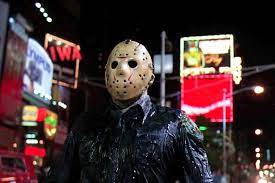
In the film’s most famous scene, Lakeview High School boxing champion Julius Gaw engages our anti-hero Jason Voorhees in a boxing match and punches Jason many, many, many times before Jason knocks Julius’ block off with just a single punch.

I’ve always been underwhelmed by that scene, and I far prefer a similar scene the year before in Killer Klowns from Outer Space.

I don’t even want to think about another one of those patented beyond weird Friday endings that leave viewers dumbfounded and stupefied.

Here instead is a transcript of the Arsenio interview.

A: How are you?

That’s good.

You know what I’ve noticed. I see all your movies, man, and you know what I’ve really noticed. You’re angry.

I don’t mean to laugh. Excuse me, it’s just the way I am, but you’re you’re you’re angry.

What happened, man, where did it all begin?

[Long pause]

You know what I mean? Was it a woman? Did you get cut from the hockey team in high school?

What happened? What’s up?

Let me ask you this.

I saw the new movie, Jason Takes Manhattan.

You killed 16 people … I don’t know why I’m laughing.

You killed 16 people and you were responsible for the death of eight others. Total, that’s less than what you usually kill in a movie.

Are you getting soft? Are you losing a step?

You’re trembling, man.

Oh, you brought a clip.

Would you set it up for us?

Set up the clip, like tell them you know how this fits into the movie and what they’re about to see and all that kind of stuff.

Jason Takes Manhattan, here’s his clip.

[Times Square clip plays.]

Working on the streets of New York, did you get a lot of people come up to you to ask for your autograph and stuff like that?

Ever think about doing a musical?

[Another pause.]

I’m running out of questions, man.

Oh, I know what I wanted to ask you.

You didn’t kill anybody with that big knife you used to kill people with, did you change because you were afraid of being typecast as just being a big knife killer?

So what’s next, man?

Some more of Jason Part Nine, I got some great titles I put together.

Jason and the Three Babies. What do you think of that?

Jason’s Big Top would be funny.

Oh … Jason Rabbit.

That would be great.

Oh … When Jason Met Sally … would that be funny?

You don’t do many comedies, do you?

Um … I’d like to thank you for coming by. It’s a pleasure.

(Jason shakes Arsenio’s hand very, very, very strongly.)

Jason, ladies and gentlemen.

Definitely another case where the promotion is a whole lot better than the picture.

Bats, Bats, Bats & Jaws with Claws: Nightwing, Prophecy, Grizzly

BATS, BATS, BATS & JAWS WITH CLAWS: NIGHTWING, PROPHECY, GRIZZLY
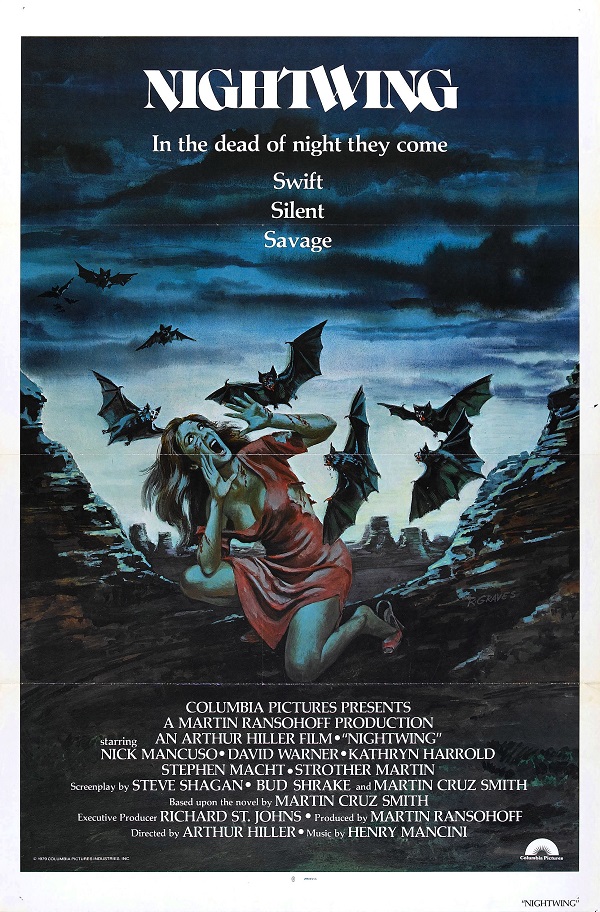
Distinguished character actor David Warner (1941-2022) almost redeems large portions of the 1979 killer vampire bat picture Nightwing, and he’s the reason that it rates out around two stars rather than one or possibly even worse.

Pardon the pun, but Warner truly bites into his dialogue and his monologues are the best moments in Nightwing. Phillip Payne comes across a little batty himself, more often delightfully so than not, and that batty quality would seem to come naturally with the territory of studying and killing plague-infested vampire bats.

The film’s best moments are definitely not the special effects and the vampire bat attack scenes, which almost had me laughing as much as The Bat People or Prophecy or perhaps the ultimate cinematic disaster disaster movie The Swarm.

Generally, I love the prerequisite genre scenes where the scientist explains the phenomenon on the rampage within the movie to a slack-jawed authority figure who usually downplays whatever threat it might be and decides to keep the park / town open.

It rarely ever lets me down, and I enjoyed Nightwing every time Phillip Payne goes all Dr. Sam Loomis on us about vampire bats.

Youngman Duran: It just doesn’t seem natural for a man to spend his life, his entire life, killing bats.

Phillip Payne: Not just bats. Vampire bats. I kill them because they’re evil. There’s a mutual grace and violence in all forms of nature; and each specie of live gives something in return for its own existence. All but one. The freak. The vampire bat alone is that specie. Have you ever seen one of their caves?

YD: No.

PP: I killed over 60,000 of them last year in Mexico. You really understand the presence of evil when you go into their caves. The smell of ammonia alone is enough to kill you. The floor of the cave is a foul syrup of digested blood. And the bats: up high, hanging upside down, rustling, fighting, mating, sending constant messages, waiting for the light to fade, hungry for blood, coaxing the big females to wake up and flex their nightwings to lead the colony out across the land, homing in on any living thing; cattle, sheep, dogs, children, anything with warm blood. And they feast, drinking the blood and pissing ammonia. I kill them because they’re the quintessence of evil. To me, nothing else exists. The destruction of vampire bats is what I live for.

Alrighty then.

Almost none of the small pleasures from Nightwing are to be found in Prophecy, films released only a week apart during June 1979.

Prophecy alternates between a serious, more ambitious movie about ecological concerns and land rights in a dispute between Native Americans and the polluting paper mill, domestic scenes involving a husband (Robert Foxworth) and his wife (Talia Shire), and silly monster attack scenes that belong in something like Food of the Gods or Bigfoot, two bad monster movies from earlier in the ’70s.

Rather, I meant laughably bad monster attack scenes.

None of the elements gel well together in Prophecy.

Prophecy gets awful preachy at times, maybe not too much of a surprise given the film’s title, and Foxworth’s Dr. Robert Verne makes for a rather lackluster and thus unlikable protagonist. Foxworth does not give Prophecy a jolt like Warner does in Nightwing, and his scientific explanatory scenes are pedestrian.

Dr. Verne and his wife Maggie do not have the relationship that, let’s see here, pugilist protagonist Rocky Balboa (Sylvester Stallone) and Adrian (Shire) do in Rocky and Rocky II, ironic considering that Rocky II and Prophecy were both released June 15, 1979.

Their domestic scenes are a drag, and I think less of Foxworth’s Dr. Verne from early on because of the way he treats his wife.

Veteran character actor Richard Dysart (1929-2015) gives the best performance in Prophecy, and it’s not even close. Dysart plays the role of the detestable paper mill company man Isely so effectively that it’s one of the film’s greatest disappointments when it cuts away from his graphic dismemberment by mercury mutant bear Katahdin late in the picture. We’ll have to settle instead for Dysart’s grisly death scene in John Carpenter’s The Thing.

The Katahdin we actually get in the finished product and the one in the promotional material (and dialogue) are not exactly one and the same, which hearkens Prophecy back to low-budget precursors like The Giant Claw and The Wasp Woman more than contemporaries like Alien and Dawn of the Dead, but without the fun of any of those movies.

Leonard Maltin described the monster as a giant salami, Isely said that it’s larger than a dragon with the eyes of a cat, Time reportedly said that it’s Smokey the Bear with an advanced acne condition, and Gene Siskel and Roger Ebert called it a cross between an earthworm and a bear (Siskel) and a grizzly bear and Godzilla (Ebert).

Given that it’s Kevin Peter Hall as the man in the monster suit, one might be tempted to call it a cross between Predator and Harry and the Hendersons.

Manbearpig!

Grizzly, a killer bear picture released three years before Prophecy, works a lot better than Prophecy because it succeeds at a much more modest level of ambition.

It’s required by law that every review mention Grizzly is a Jaws rip-off or we can go right on ahead and call it Jaws with Claws.

We have a law enforcement officer (park ranger), a military veteran (helicopter pilot), and a scientist (naturalist) on the hunt for a giant killer animal (grizzly bear). We also have a park supervisor who refuses to close down the national park despite a series of brutal deaths. The park supervisor allows hunters into the forest to hunt and kill the bear, while media converge on the scene for sensational coverage, but eventually our three main characters must try and do the deed themselves.

I honestly don’t mind too much that Grizzly follows the Jaws formula because Christopher George, Richard Jaeckel, and Andrew Prine are good in their roles and I care about them in their battle against a primal beast.

Honestly, it’s as simple as that, whereas I didn’t particularly care about the overwhelming majority of the human characters in Prophecy and did not care one way or another whether they lived or died just as long as the end credits rolled.

Grizzly, thankfully, is also not preachy, it’s endearing and entertaining on a basic level, and it’s a pleasant way to spend 90 minutes.

Granted, the three main actors and characters are not anywhere near the same level as Roy Scheider’s Sheriff Brody, Richard Dreyfuss’ Matt Hooper, and Robert Shaw’s Captain Quint, just like William Girdler’s no Steven Spielberg, but I still think Grizzly has earned a place right alongside such ’70s killer animal staples as Night of the Lepus, Frogs, Squirm, Kingdom of the Spiders, and Piranha.

Nightwing (1979) **; Prophecy (1979) *; Grizzly (1976) ***

Space Jam: A New Legacy (2021)

SPACE JAM: A NEW LEGACY (2021) *
I am not exactly sure why I decided to watch Space Jam: A New Legacy on a Saturday afternoon, following hot on the heels of the Disney live-action films Midnight Madness and Condorman.

I mean, I am not the biggest fan of the original Space Jam from 1996, basically a feature-length advertisement for the greatness of Michael Jordan with Looney Tunes and Bill Murray and Wayne Knight and everybody else guest stars or glorified cameos. Never thought it was all that great even back during the height of the Chicago Bulls — Space Jam came out Nov. 15, 1996, just a few months after the Bulls put together a 72-10 regular season and won an NBA title — and it has aged worse. Of course, it seems to have a major cult following, but then again, so does Howard the Duck.

Also, I have never been much of a LeBron James fan, since his arrival upon the scene in 2002. I’ve never cared for his style of play, his flopping and floundering about like he’s been shot when selling a foul despite the fact that he’s easily the size of an NFL tight end and bigger than most NBA players, his celebratory antics, his aping Michael Jordan from the shoes, money, and the uniform number to the chalk toss and now his very own Space Jam movie, his ring chasing and team hopping, and his outright hijacking of ESPN for the last two decades. He’s arguably been even more omnipresent in our lives than Jordan, one of the most famous people in the world during his glory days in the ’90s, given the social media factor.

For example, I liked and shared one LeBron traveling GIF, and the Facebook algorithms just won’t show me any mercy in the two or three years since. LeBron this, LeBron that, just because I thought it was funny to see LeBron travel across the desert with basketball in hand. Now, I have to see a brilliant quote like this one, I don’t give a fuck what nobody think. I’m him. I get shit for making the right play. Four motherfuckers on me. Motherfucker wide open right here. We are a team and I trust them. Why wouldn’t I have thrown it to them? I don’t care about the results. What?

Anyway.

You guessed it, Space Jam: A New Legacy is a $150 million and 1-hour, 55-minute advertisement for the greatness of LeBron James.

You can even play a drinking game with A New Legacy: Take a swig of the sauce every time you hear King James. It’s a lot safer than drinking every time they say Carol Anne in Poltergeist III or Cheech and Chong utter Hey, man in Up in Smoke.

I found very little to like in A New Legacy. A lot of the movie felt like watching a mash up of the plots from Hook and Space Jam. Also, the Looney Tunes more or less serve LeBron James and his greatness, aside from very fleeting isolated moments that don’t add up to any of the Looney Tunes shorts like Duck Amuck or The Great Piggy Bank Robbery or Porky in Wackyland or You Ought to Be in Pictures or any number of the brilliant shorts of the ’40s and ’50s.

Wile E. Coyote proves though he could be ideal halftime entertainment.

I absolutely hated what they did with all the Warner Brothers intellectual properties: Turn them into fans in The Big Game that closes out the picture. I mean, seriously, do you take King Kong or Pennywise for a basketball fan? I don’t see Pennywise cheering for anything. Come on, man. I didn’t catch Dirty Harry or Rick Deckard or Stanley Kowalski or Jack Torrance or Pazuzu in the crowd, but I sincerely hope that doesn’t mean we’ll see them in Space Jam 3.

I must admit to rooting for the villains, or the goons, during A New Legacy and found the greatest entertainment when they dunked on LeBron real good in the first half.

Of course, I understood the second half would take a dramatic turn and give us a great big happy ending for LeBron and his celluloid family. Wasn’t it cast in stone?

I just hope that LeBron (and his legion of fans) do not try and count his victory in A New Legacy toward his NBA titles.

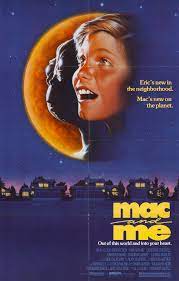
Mac and Me (1988)

MAC AND ME (1988) *
Cable TV came to the little hamlet of Arcadia, Kansas, circa 1988 or 1989 and I watched a whole lot of movies time and time again.

That includes not only blockbusters like Back to the Future Part II and III, Beetlejuice, Big, Die Hard, Total Recall, and Terminator 2, but Arachnophobia, the first two Bill & Ted movies, The Blob remake, Tremors, Red Heat, Cocktail, The ‘Burbs, Bloodsport, Johnny Be Good, Appointment with Death, and even that disaster starring Tony Danza, She’s Out of Control. That last one begs the question WHY? Because it was on, naturally.

I only watched Mac and Me once back then, however, and that’s because even then with less discriminating taste I knew it sucked.

I revisited it all these decades later and it still righteously sucks. Just imagine a stupid E.T the Extra-Terrestrial where none of the cast members have the slightest bit charm or ability to keep our interest and to earn our emotional investment. It’s also incredibly weird and off-putting, especially considering that it’s designed to be family entertainment like E.T and The Wizard of Oz (1939), still the ultimate standard bearer for this kind of movie.

One of the main sources of weirdness: Mac and Me plugs more products than any movie this side of Leonard Part 6 or Happy Gilmore. Don’t you just hate it when a movie does that?

I mean, though, now that I think about it some more, it’s truly a missed opportunity for the ages that Dorothy didn’t drink Coke or the Tin Man didn’t use WD-40 or the Scarecrow didn’t wear designer hay or the Cowardly Lion didn’t have the courage to make a commercial plug right smack dab in the middle of his big melodramatic scene. MGM could have done so much more with their Yellow Brick Road (a sponsor on each and every brick) and the Wicked Witch of the West should have been melted by a brand name water, for crying out loud. We need a remake immediately just so the ruby slippers can be Nike.

Mac and Me could switch people over forever to Pepsi, Burger King, the St. Louis Cardinals, and Sweet Tarts.

Spielberg also missed an opportunity by not having a dance contest in a chain restaurant in E.T.

I was really bummed when I couldn’t find Paul Rudd in the cast and instead endured these apparently neophyte actors like Jonathan Ward, Tina Caspary, Lauren Stanley, and Jade Calegory. Ward and Caspary have considerably more acting experience than Stanley and Calegory, but they’re just as stilted or melodramatic in every scene.

The adult performers and their characters suck, as well, but they are blessed with fewer scenes to suck than the younger actors. By all rights, I should have rooted for the government agents, but, no, I cheered when the end credits rolled on this jive turkey. This is a movie that viewers should put they survived it on their resume.

Oh, in all this hubbub over a crap movie, I almost forgot MAC stands for ‘Mysterious Alien Creature’ and not that one restaurant with the impromptu dance scene interrupted by evil government agents. We have the main one, then his family, and I am guessing they’re distant, no good cousins of E.T. I mean, I doubt they would ever sit together for one of them big family pictures that brings in all the brothers and sisters and cousins and parents and grandparents and grandchildren. E.T. is simply too good for Mac.

Weird children, weird adults, weird aliens, product placement out the wazoo, and Squire Fridell add up to one weird (and awful) movie.

Mac and Me is so awful that Harry and the Hendersons seems like Citizen Kane instead.

The Wild Geese (1978)

THE WILD GEESE (1978) *
We’ve seen The Wild Geese many times before and we’ve also seen it done a lot better many times before — the rounding up of the mercenary troops for their new mission, the basic training, the jail break, the great escape, the big double cross, the death scenes, etc.

If we pool our collective resources, undoubtedly we could brainstorm 50 or 100 titles easily and recall their overall plots and specific individual developments.

Worse, far worse, infinitely worse even, how do I describe the pace of The Wild Geese?

I thought about saying it moves at a snail’s pace, but then I quickly realized that it more accurately moves like a three-toed sloth dipped in molasses. This is one action movie that does not require slow motion because it’s already slow enough.

In fact, I am hard pressed to come up with an action movie that moves slower than The Wild Geese. I just can’t do it and I don’t want to ever find out if any do exist in this great big universe.

Anyway, we have the first 30 minutes to meet our stars Richard Burton, Richard Harris, and Roger Moore, then around the 45-minute mark it’s basic training and finally around one hour in we get into the main action. I almost said jump, but that’s way too much activity for The Wild Geese. To be fair, The Wild Geese picks up the pace in the last hour to such a degree that only two of the three sloth toes are molasses drenched. Guess what, though, it’s still dull as dishwater.

Yes, indeed, there’s not an exciting moment to be found in The Wild Geese.

Of course, that incredible pace might have something to do with the fact Burton, Harris, and Moore were in their late 40s (Harris) and early 50s (Burton, Moore) when they made The Wild Geese. Harris and especially Burton are not the least bit convincing in their action hero roles. Moore was nearly halfway through his run playing British secret agent James Bond, so he’s more credible than his counterparts and looks much less a fool than either Harris or Burton.

It is ironic that Burton, Harris, and Moore are playing middle-aged mercenaries and the film drops mercenary dialogue routinely during a 135-minute spread, because the three main actors fit the adjective definition of mercenary — primarily concerned with making money at the expense of ethics.

It seems like they paid Burton, Harris, and Moore by the word during The Wild Geese, because they yap and yammer constantly, their barrage of banter only interrupted by the generic requirements of the action movie. Granted, it takes a (long) while before the prerequisite explosions and gunfire.

By my reckoning, a long, long, long, long, long, long while and The Wild Geese lives up only to the geese portion because it is something foul alright. Wild, however, it is most certainly not.

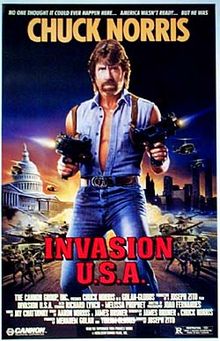
Invasion U.S.A. (1985)

INVASION U.S.A. (1985) *
Joseph Zito made a logical progression from directing mad slasher films The Prowler and The Final Chapter (Jason Voorhees’ third screen entry) to Chuck Norris action spectaculars Missing in Action and Invasion U.S.A for the Cannon Films Group, one of the ultimate purveyors of schlock all through the ’80s.

Their schlock includes Ninja III: The Domination and Breakin’ 2: Electric Boogaloo, both from 1984 and directed by Sam Firstenberg.

Anyway, I digress, which is something that I will invariably do whenever discussing Invasion U.S.A. Yes, I admit upfront this review will be filled with digressions.

The plot: Multinationals with guns (sometimes with subtitles, sometimes without) invade the United States, actually Florida but Invasion Florida doesn’t quite ring the same liberty bell, and one-man army Chuck Norris stops them with bloody ballyhoo. Named Matt Hunter in a fit of poetic fancy, perhaps by one of the writers of this garbage, Norris could have killed ’em all with denim.

Basically, Invasion U.S.A is Red Dawn dumbed down even more and it substitutes teeny bopper Commie scum killers Patrick Swayze, Charlie Sheen, C. Thomas Howell, Jennifer Grey, and Lea Thompson for Norris, who laughably tells us that he works alone. No joke, we know this after ’bout 50 Norris films where his character informs us that he kills scumbags all on his lonesome. I mean, wasn’t one of Norris’ better movies even called Lone Wolf McQuade for crying out loud?

The best Norris pictures have strong supporting characters and casts, who make up for the sometimes personality deficient Norris. Alas, Invasion U.S.A gives us one of the worst characters in not only a Norris movie but all movies in general — an apparent photojournalist named McGuire (Melissa Prophet) who probably should have been named Molly Magsnarl instead. She’s not the least bit grateful for Hunter saving her, and I would have let her meet her ultimate demise after the first time she snarls at me Cowboy. She blows out the tires on Invasion U.S.A every time she’s on screen.

Seeing her camera made me laugh, though, because I thought about how it was John Rambo’s assignment to only take photos of the POWs — not to rescue them — in Rambo: First Blood Part 2.

Speaking of First Blood Part 2, released a few months before Invasion U.S.A, it and Arnold Schwarzenegger’s Commando (released just after Invasion U.S.A) both blow away Invasion U.S.A in the great 1985 One-Man Army Movie Sweepstakes.

I also found a worse movie than Star Trek V: The Final Frontier that includes characters singing Row, Row, Row Your Boat.

Auto Pilot Cinema: The Airport Movies

AUTO PILOT CINEMA: THE AIRPORT MOVIES
When thinking of the worst series in movie history, I am tempted to start with Saw and Fast and the Furious then move back through time with The Omen and Amityville Horror and finally go way way way back to the Dead End Kids, er, Bowery Boys.

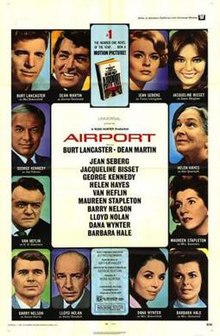
In piecing through all this cinematic carnage, I should not leave behind the four Airport movies that were churned out by Universal Pictures from 1970 to 1979. Maybe I should leave them behind.

Airport, based on Arthur Hailey’s 1968 novel of the same name, made a killing at the box office upon its late May release in 1970 and it even received 10, yes, believe it or not, 10 Academy Award nominations, including Best Picture, and 70-year-old Helen Hayes won Best Supporting Actress.

The three subsequent films — helpfully labeled 1975, ’77, and ’79 — got worse and worse, naturally, and the last film in the series, The Concorde … Airport ’79, is so bad (and so aggressively stupid) in fact that it could kill off any series. That’s despite the fact that it reportedly made $65 million, a much better take than, for example, Irwin Allen productions The Swarm ($7.7 million), Beyond the Poseidon Adventure ($2.1 million), and When Time Ran Out ($3.8 million). Regardless, Universal stopped making Airport movies after The Concorde and I’m almost dumbfounded why there’s not been a remake or a reboot loaded with today’s stars.

Hey, wait, did somebody mention stars? Yes, stars, that’s what these Airport movies were about — speculating which ones would emerge at the end of the picture relatively intact and which ones would die spectacularly. Grand Hotel in the sky, not exactly, since none of the careers in the Airport movies were at their peak like the ones in Grand Hotel, but the idea of stuffing the screen with stars in every scene applies just the same.

Airport: Burt Lancaster, Dean Martin, Jean Seberg, Jacqueline Bisset, George Kennedy, Hayes, Van Heflin, Maureen Stapleton, Barry Nelson, Dana Wynter, Lloyd Nolan.

Airport 1975: Charlton Heston, Karen Black, Kennedy, Efrem Zimbalist Jr., Susan Clark, Helen Reddy, Linda Blair, Dana Andrews, Roy Thinnes, Sid Caesar, Myrna Loy, Gloria Swanson.

Airport ’77: Jack Lemmon, Lee Grant, Branda Vaccaro, Joseph Cotten, Olivia de Havilland, Darren McGavin, Christopher Lee, Robert Foxworth, Kathleen Quinlan, James Stewart.

Airport ’79: Alain Delon, Susan Blakely, Robert Wagner, Sylvia Kristel, Kennedy, Eddie Albert, Bibi Andersson, Charo, John Davidson, Andrea Marcovicci, Martha Raye, Cicely Tyson, Jimmie Walker, David Warner, Mercedes McCambridge.

More like Hollywood Squares in the Sky? Yeah, believe so, especially since Davidson hosted a Hollywood Squares revival in the late ’80s.

Beside Airport in the titles, Kennedy (1925-2016) proved to be the connective tissue between all four pictures, meaning he’s the inverse of the Brody boys (Jaws) and the Griswold children (Vacation). Kennedy played Joe Patroni — first as mechanic, then as vice president of operations (1975), a consultant (’77), and finally an experienced pilot (’79). Regardless of position or rank, the character got worse and worse over the course of the films, not that he or the films started out all that hot. I found even his cigar was guilty of overacting in the original film and Patroni was so odiously obnoxious in the fourth film, especially after he utters the line that articulates the sexism of the entire series, They don’t call it the cockpit for nothing, honey. George Kennedy as sex symbol? Sure, I’ll believe anything, nearly anything except for, oh, the entire plot of The Concorde.

I’ll talk more about The Concorde and the original because they’re fresher in my memory. To be honest, though, I probably won’t even feel like discussing the original because …

Movies rarely come any dumber than The Concorde: Let’s see, this is going to be fun, not really, anyway TV reporter Susan Blakely comes across some highly incriminating evidence against defense contractor (and covert arms dealer) Robert Wagner. Wagner decides that he’s going to attempt to blow up real good the plane she’s on en route from Washington to Paris. Okay, okay, his plot to blow up the Concorde real good fails and they have dinner together in Paris during the middle section of the movie, because, you know, they have a history together and they still love each other. She still has this incriminating evidence, naturally, she’s going to eventually go public with it, of course, and what does he do? Kill her? He lets her walk away safe and unharmed, so he’ll have to go after the plane again. That’s right, she gets back on the Concorde for the final leg of the flight from Paris to Moscow. Guilt stricken, Wagner commits suicide very late in the picture and I believe it’s not because his secret’s been discovered and will be exposed regardless of whether he’s alive or not, but more that he’s one of the worst villains in cinematic history.

The Concorde is so laughable in so many ways, as if that whole plot discussed in the last paragraph wasn’t enough. The Concorde stops over in Paris for a night, and every single passenger gets back on the plane the next morning. They all seem way too calm and collected after the events of the first half of the movie. I would love to have just heard one character say ‘Hell no, I’m not getting back on that damn plane!’ They all deserved to die, but we know that’s not happening.

At one critical point during the first attack on the Concorde, the Übermensch George Kennedy proves that he’s truly The Übermensch by sticking his hand out the window of the Concorde and throwing a flare. Unbelievable, utterly unbelievable even in this preposterous movie. If only the first Airport had been the in-flight movie on The Concorde, especially that scene where Patroni discusses the effects of a bomb on a 707 and concludes, When I was a mechanic in the Air Force, I was being transferred on a MATS plane. At 20,000 feet, one of the windows shattered. The guy sitting next to it was about 170 pounds. He went through that little space like a hunk of hamburger going down a disposal, and right after him coats, pillows, blankets, cups, saucers. That was just a MATS plane, not the fastest plane in the universe.

I’m done, I can’t take it anymore, and I’m bailing out on the Airport movies.

Airport (1970) **; Airport 1975 (1974) **1/2; Airport ’77 (1977) *; The Concorde: Airport ’79 (1979) 1/2*

Calling All Cars, We Have a 412! Calling All Cars!

CALLING ALL CARS, WE HAVE A 412! CALLING ALL CARS!
I watched Chu Chu and the Philly Flash on March 7 and 18 days later, I can still hear it, that’s for sure, especially co-stars Alan Arkin and Carol Burnett and supporting player Danny Aiello.

Burnett plays Chu Chu, or Emily as only her dearest friends know her, who performs this Carmen Miranda routine out in the streets. Her performance gives one all the maracas needed for at least one year, perhaps even one lifetime. Emily used to be a successful entertainer, before the booze got to her. We all know the story by now.

Arkin, meanwhile, plays the Philly Flash, given that name not because of his ability to shed his raincoat but his former ability turning double plays at second base for the Philadelphia Phillies. Was he named the Philly Flash just because the real-life Phillies won the World Series in 1980? Anyway, just like Emily, booze got to Flash, not Grandmaster Flash (think I’d rather watch The Adventures of Grandmaster Flash on the Wheels of Steel than Chu Chu and the Philly Flash) or Flash Gordon (who just had a movie, a much better one believe it or not, come out in 1980) or The Flash. No, the Philly Flash’s power, like Chu Chu’s, seems to be that he can scream and carry on a whole lot. In fact, that’s about both all they ever do in Chu Chu and the Philly Flash.

Not sure that it even matters or not if Burnett played the Philly Flash and Arkin drew Chu Chu. They could have made him a former professional golfer and her a former burlesque entertainer or something. Yeah, like Bill Murray said in Meatballs, it doesn’t even matter.

Government secrets fall, yes, literally fall into the hands of Philly Flash and Chu Chu. Well, technically, not right into their hands, I mean they did have to walk over and pick up the briefcase. By the way, the briefcase gives the best performance in Chu Chu and the Philly Flash, since even the maracas overact.

Rating: One-half star.

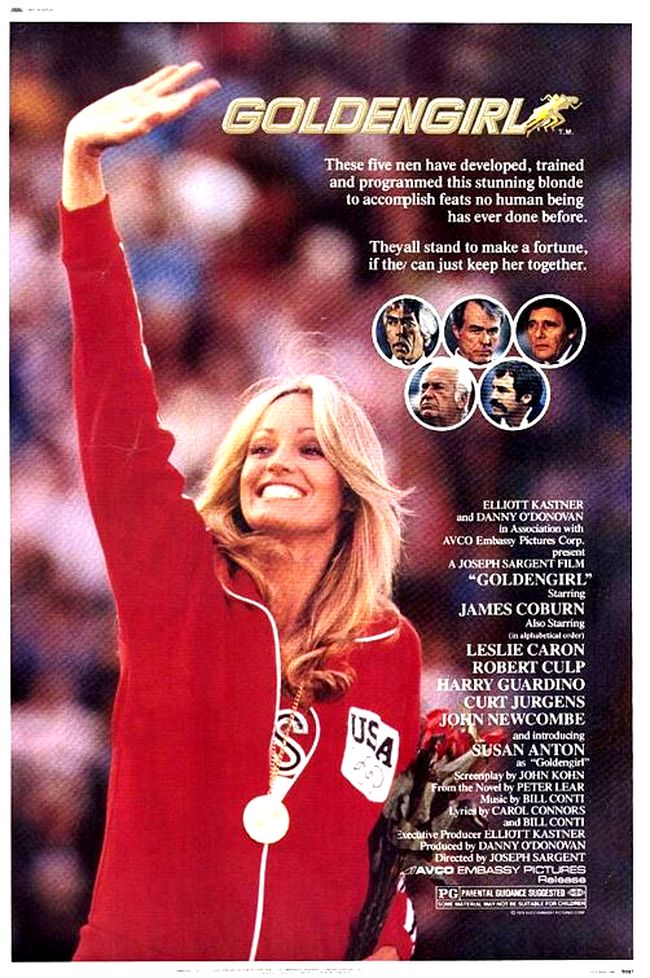
— Earlier in the same day I watched Chu Chu and the Philly Flash, I endured Goldengirl about basically a genetically engineered super female runner and it co-stars James Coburn, Robert Culp, Curt Jurgens, Leslie Caron, Jessica Walter, Michael Lerner, and Harry Guardino.

They’re all fine and dandy, more or less, but it’s star Susan Anton who ruins Goldengirl every single time she expresses any emotion. Guess they can’t genetically engineer the ability to act and the ability to not wreck an entire movie, because Anton can’t act and she absolutely obliterates Goldengirl every single time I wanted to give it another chance.

Give her one thing, though, because just like Donny and Marie Osmond in their motion picture debut and finale Goin’ Coconuts, Anton does have a great set of teeth. Outside her canines, incisors, premolars, and molars, though, Anton sucks in Goldengirl and despite the speeded up and slowed down footage, she’s not the least bit convincing as this incredible champion runner.

Anton and Coburn do have one of the great dialogue exchanges in motion picture history, one that could be played right alongside Fini can water you from Yes, Giorgio. She just set a new Olympic record and doesn’t she even deserve a kiss? Coburn works his way toward her magical lips and Anton moves the goalposts. She insists that he kisses her feet, then laughs maniacally, while Coburn, well, maybe he’s wishing that he could get hit upside the head by his old friend Bruce Lee’s one-hit punch again. Lee died in 1973 and Coburn was one of the pallbearers at Lee’s funeral.

The IMDb trivia entry starts out promisingly for Goldengirl, “Produced and theatrically released in 1979 prior to the 1980 Olympics boycott, this film depicts American athletes competing at the Moscow games. In reality, the boycott meant that the USA did not perform there, making the picture post-release anachronistic and historically inaccurate.”

Blame the boycott on Goldengirl.

Rating: One star.

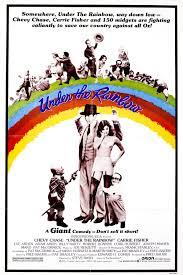
— I watched Under the Rainbow between opener Goldengirl and closer Chu Chu and the Philly Flash.

That’s right, one of the worst movie-watching nights of a lifetime.

Under the Rainbow, like Goldengirl, has at least a far more interesting plot summary than anything else associated with the finished product.

Okay, to be honest, only the part about the 150 little people descending upon Hollywood for a part in The Wizard of Oz (and a wild and crazy party) sounds interesting, then it gets all mucked up when federal agents, fat cats, and Nazi and Japanese spies enter the picture. Anyway, doesn’t 1938 seem too early for Nazi and Japanese spies? I mean, the Nazis didn’t invade Poland until Sept. 1939 and the United States officially remained neutral until late 1941.

Regardless of social class and nationality and historical accuracy, though, all the characters get run through the cinematic claptrap blender at maximum speed with broad, inane slapstick and would-be wacky hijinks the settings. Despite the maximum speed, Under the Rainbow still feels like it takes forever to be done and over. That’s because it’s all played as loudly as possible, of course, with so much mugging on display that it’s another one of those movies where you feel the back of your head for lumps and bruises and then check for your wallet after watching it.

Chevy Chase and Carrie Fisher are the nominal stars, but they’re lost in the crowd because they play it too cool for school. Meanwhile, Billy Barty acts like he’s in three movies simultaneously and Japanese-American actor Mako settles for only two, and their terminal mugging calls to mind the 1942 propaganda comedy short The Devil with Hitler. The Devil with Hitler is better than Under the Rainbow, and I should just leave it at that statement, though I want to end this review with one last cheap shot at three lousy pictures that I wish I would have left buried inside their time capsules.

Stan Freberg would have charged the casts of Chu Chu and the Philly Flash, Goldengirl, and Under the Rainbow with one heinous crime against humanity: a 412. What’s a 412? Over-acting.

Rating: One star.

Broadway Melody, Cimarron Won Best Picture! So What, Because They Suck!

BROADWAY MELODY, CIMARRON WON BEST PICTURE! SO WHAT, BECAUSE THEY SUCK!
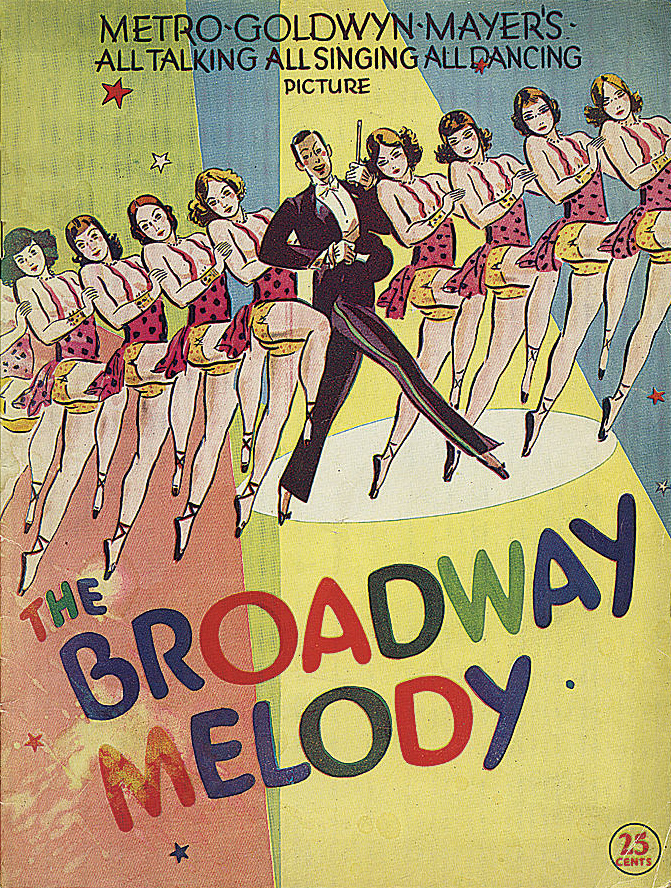
The Broadway Melody and Cimarron are horrible, terrible, horrible movies and the first two examples of how winning the Academy Award for Best Picture does not guarantee quality.

The Broadway Melody (1929) owns the distinction of being the first talking picture and the first musical to win Best Picture, thus it has a permanent place in cinematic history. Otherwise, though, The Broadway Melody makes me wonder how come the motion picture industry did not return to silent pictures, because the dialogue and the songs both stink up the screen every step of the way. (Apparently, MGM also released The Broadway Melody in a silent version.)

Likewise, Cimarron (1931) is the first Western to win Best Picture and it’s one of those movies, well, near the end of its 130-minute duration, I told my wife, “I feel like I’ve aged 40 years watching this movie.” In fact, I had to use hedge trimmers on my facial hair and step in the barber’s chair after Cimarron, and perhaps I should be thankful Cimarron only covered 1889 to 1929 and not a longer historical span. I might have been in deep trouble, at least six feet under, had the Howard Estabrook and Louis Sarecky screenplay and the 1929 Edna Ferber novel instead considered 50 or 60 years of Yancey and Sabra Cravat.

The first in a series of musicals for MGM, The Broadway Melody stars Charles King as Eddie Kearns and Anita Page and Bessie Love as sisters Queenie and Harriet ‘Hank’ Mahoney. See, what happens, Eddie and Hank have had a thing, but then he lays his eyes on a now grown up Queenie and boy oh boy, his eyes nearly pop out their head. Whee, Queenie lays off Eddie, sister loyalty, and lets New York high society playboy Jock Warriner (reference to studio mogul Jack Warner) play her. Eddie and Queenie realize they’re in love, Hank finally accepts it, and it all ends happily ever after with the closing line delivered by the character with a stutter. It was so good that I forgot it.

Charles King should have been renamed ‘Charles Sing’ because he sings much better than he acts and the scenes between Eddie and Hank (and Queenie) (and Jock) try and ultimately fail my test for strained melodrama. Yap! Yap! Yap! Yap! That’s right, one yap for every piece in the romantic square. Love and Page are easy on the eyes, especially Page, but difficult on the ears with all their hemming and hawing (more Page than Love) and perpetually melodramatic carrying on (more Love than Page). Either way, their dialogue scenes are destined for the mute button and subtitles.

I learned a lesson from Cimarron and it has nothing to do with Oklahoma’s state history before and after statehood on Nov. 16, 1907.

The Lesson: Do not start your movie with a land rush scene, because it’s highly unlikely that you will find something else to approach the excitement of that slambang opener.

After the intense thrills of the land rush, I must admit that I started paralleling Yancey Cravat’s restlessness and I desperately wanted to move to another movie, one that doesn’t even have to be a Best Picture winner, just as long as it can involve me from beginning to end and does not leave me contemplating how many years I have aged just watching it. That’s about the bare minimum I expect from a movie, any movie, and that isn’t asking for too much, now, is it?