Space Jam: A New Legacy (2021)

SPACE JAM: A NEW LEGACY (2021) *
I am not exactly sure why I decided to watch Space Jam: A New Legacy on a Saturday afternoon, following hot on the heels of the Disney live-action films Midnight Madness and Condorman.

I mean, I am not the biggest fan of the original Space Jam from 1996, basically a feature-length advertisement for the greatness of Michael Jordan with Looney Tunes and Bill Murray and Wayne Knight and everybody else guest stars or glorified cameos. Never thought it was all that great even back during the height of the Chicago Bulls — Space Jam came out Nov. 15, 1996, just a few months after the Bulls put together a 72-10 regular season and won an NBA title — and it has aged worse. Of course, it seems to have a major cult following, but then again, so does Howard the Duck.

Also, I have never been much of a LeBron James fan, since his arrival upon the scene in 2002. I’ve never cared for his style of play, his flopping and floundering about like he’s been shot when selling a foul despite the fact that he’s easily the size of an NFL tight end and bigger than most NBA players, his celebratory antics, his aping Michael Jordan from the shoes, money, and the uniform number to the chalk toss and now his very own Space Jam movie, his ring chasing and team hopping, and his outright hijacking of ESPN for the last two decades. He’s arguably been even more omnipresent in our lives than Jordan, one of the most famous people in the world during his glory days in the ’90s, given the social media factor.

For example, I liked and shared one LeBron traveling GIF, and the Facebook algorithms just won’t show me any mercy in the two or three years since. LeBron this, LeBron that, just because I thought it was funny to see LeBron travel across the desert with basketball in hand. Now, I have to see a brilliant quote like this one, I don’t give a fuck what nobody think. I’m him. I get shit for making the right play. Four motherfuckers on me. Motherfucker wide open right here. We are a team and I trust them. Why wouldn’t I have thrown it to them? I don’t care about the results. What?

Anyway.

You guessed it, Space Jam: A New Legacy is a $150 million and 1-hour, 55-minute advertisement for the greatness of LeBron James.

You can even play a drinking game with A New Legacy: Take a swig of the sauce every time you hear King James. It’s a lot safer than drinking every time they say Carol Anne in Poltergeist III or Cheech and Chong utter Hey, man in Up in Smoke.

I found very little to like in A New Legacy. A lot of the movie felt like watching a mash up of the plots from Hook and Space Jam. Also, the Looney Tunes more or less serve LeBron James and his greatness, aside from very fleeting isolated moments that don’t add up to any of the Looney Tunes shorts like Duck Amuck or The Great Piggy Bank Robbery or Porky in Wackyland or You Ought to Be in Pictures or any number of the brilliant shorts of the ’40s and ’50s.

Wile E. Coyote proves though he could be ideal halftime entertainment.

I absolutely hated what they did with all the Warner Brothers intellectual properties: Turn them into fans in The Big Game that closes out the picture. I mean, seriously, do you take King Kong or Pennywise for a basketball fan? I don’t see Pennywise cheering for anything. Come on, man. I didn’t catch Dirty Harry or Rick Deckard or Stanley Kowalski or Jack Torrance or Pazuzu in the crowd, but I sincerely hope that doesn’t mean we’ll see them in Space Jam 3.

I must admit to rooting for the villains, or the goons, during A New Legacy and found the greatest entertainment when they dunked on LeBron real good in the first half.

Of course, I understood the second half would take a dramatic turn and give us a great big happy ending for LeBron and his celluloid family. Wasn’t it cast in stone?

I just hope that LeBron (and his legion of fans) do not try and count his victory in A New Legacy toward his NBA titles.

Midnight Madness (1980)

MIDNIGHT MADNESS (1980) 1/2*
Midnight Madness is a teenybopper It’s a Mad, Mad, Mad, Mad World and I wrote of the latter picture ‘I laughed more during Inherit the Wind,’ ‘Because of its length, It’s a Mad, Mad, Mad, Mad World (dumb, dumb, dumb, dumb title) earns my vote for worst comedy ever made,’ and ‘I did not laugh once for more than three hours. That’s a record.’

Had I seen it at the time of the original review, I would have stated ‘I laughed more during Judgement at Nuremberg.’

I, however, did not laugh more during Midnight Madness, which I thought I would rate higher than It’s a Mad, Mad, Mad, Mad World (much prefer James Brown’s It’s a Man’s Man’s Man’s World) because it’s shorter by a hour but Midnight Madness got so incredibly dumb in the final act that I could not in clear conscience give it any more than half a star.

Letterboxd plot summary for It’s a Mad, Mad, Mad, Mad World: ‘A group of strangers come across a man dying after a car crash who proceeds to tell them about the $350,000 he buried in California. What follows is the madcap adventures of those strangers as each attempts to claim the prize for himself.’

Letterboxd plot summary for Midnight Madness: ‘A genius grad student organizes an all-night treasure hunt in which five rival teams composed of colorful oddballs furiously match wits with one another while trying to locate and decipher various cryptic clues planted ingeniously around Los Angeles.’

Laugh summary for a disgruntled viewer in the middle of nowhere, er, middle America: None.

Basically, I just do not like this comedic style, where a bunch of rumbling bumbling stumbling fumbling idiots fall all over themselves for two (or three) hours in the broadest possible acting imaginable (mugging) and this is supposed to be funny, entertaining, satirical.

Midnight Madness also belongs in this bizarre cinematic nether region between a G-rated Disney live-action movie and an R-rated National Lampoon’s Animal House.

Walt Disney Productions released Midnight Madness and it’s quite obvious, despite the studio not appearing in the credits and despite no Dean Jones, no Tim Conway, no Don Knotts, no Sandy Duncan, no Bette Davis, no Ray Milland, and no Keenan Wynn in the cast.

It has enough, more than enough, zany slapstick action for 10 Disney live-action pictures.

We get five different teams of colorful oddballs or rather, 21 young professional actors mugging through stereotypes like the fat twins, the beer-loving jocks, the debate nerds, the feminists, the Latino who never speaks, the older and younger brother, etc. There’s even a character named ‘Barf,’ preceding Spaceballs and Pizza the Hutt’s infamous line Barf … Puke … Whatever! Stephen Furst plays Harold – Blue Team Leader in a way that amplifies his Flounder from Animal House and crosses him with Mark Metcalf’s detestable Douglas C. Neidermeyer.

Midnight Madness certainly delivers the fat jokes at rapid intervals.

Anyway, well before the end of this dreary mess of a motion picture, all the characters are reduced to becoming overacting jerks like they’re all descended from Dick Shawn’s Sylvester.

The plot summary mentioned something or other about matching wits.

That’s more like half-wits, if you ask the spirit of Moe, Larry, and Curly.

Speaking of them, I’ll stick with Men in Black, Punch Drunks, and Hoi Polloi.

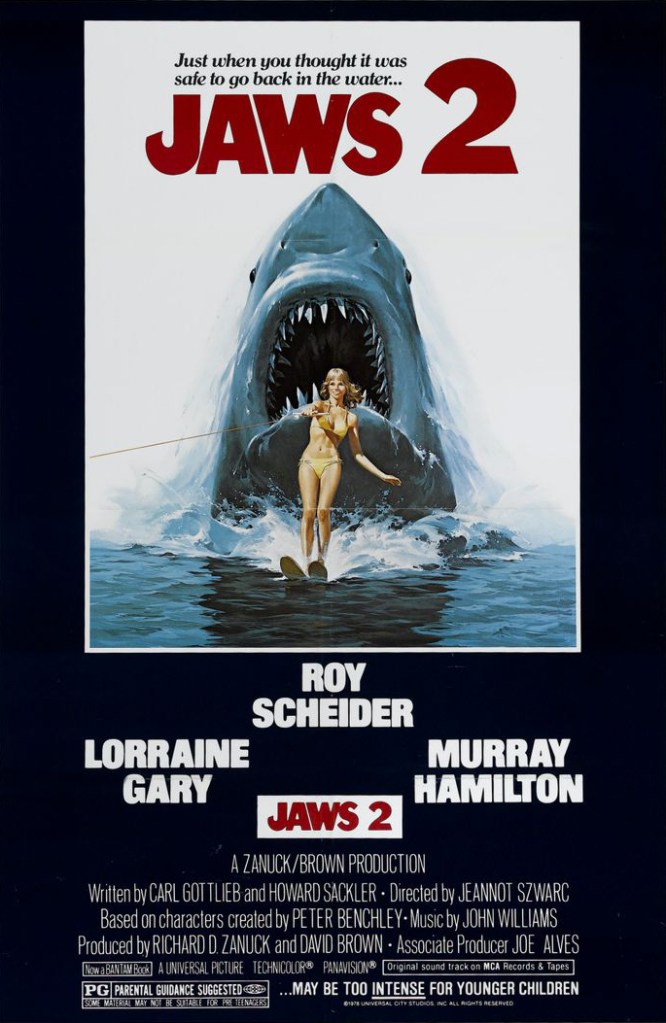
Jaws 2 (1978)

JAWS 2 (1978) **1/2
I feel like I owe both Jaws 2 overall and specifically the killer great white shark in Jaws 2 a big apology.

Not a great big apology, though, but let’s go back in time.

When I reviewed Jaws 2 back in 2019, I gave the film two and the killer great white shark three stars, the former rating averaged from the shark’s three stars and the human characters’ one star. I wrote that review based on memory from having seen it so, so, so many times over the years, rather than a fresh viewing.

After revisiting Jaws 2 for the first time in several years, I have bumped the shark to three-and-a-half and the human characters to one-and-a-half, averaging out to two-and-a-half stars.

I still think Jaws 2 has the same fundamental strengths and weaknesses, though I found the strengths a little bit stronger and the weaknesses a little bit less weak this latest watch.

The great white shark in Jaws 2, plain and simple, it’s one bad mother- (Shut your mouth!) But I’m talking ’bout Bruce Two! (Then we can dig it!)

Though a major step down from the original in just about every conceivable way, Jaws 2 still made a strong killing financially because it had a hard sell advertising campaign centered around the immortal tagline Just when you thought it was safe to go back in the water; because, just as Yogurt said in Spaceballs, Merchandising, merchandising, where the real money from the movie is made; and because, let’s face it, people wanted more shark and more shark attacks.

Jaws obviously did not satisfy the public demand for shark attacks captured on celluloid.

Released nearly three years later to the day, Jaws 2 serves up a shark attack every 10-15 minutes, just so we’re not completely bored stiff by a plot that rehashes one of the worst elements of the original Jaws and substitutes adult characters for a steady procession of teeny boppers who together do not make up for Quint and Hooper.

Jaws 2 introduces a syndrome … called none other than the Jaws 2 Syndrome.

That’s where a sequel takes the worst or one of the worst plot elements of the original film and does it again, only even worse, usually a lot worse.

We remember the infuriating mayor and the infuriating small town businesspeople and their infuriating desire to keep the beaches open in Jaws.

They’re even more infuriating in Jaws 2, set four years after the events of the first movie, especially in the form of the super sleazy town official and all-purpose wheeler dealer Len Peterson (Joseph Mascolo). Peterson only compounds our dislike of this character with his obvious lusting after Sheriff Brody’s wife Ellen (Lorraine Gary).

We’re not even rewarded with a death scene for Peterson, because, generally speaking, business interests and power brokers survive Jaws films.

Presented with photographic evidence of a shark, Peterson and his cronies on the town council dismiss it as seaweed, mud, something on the lens and they fire Sheriff Brody (Roy Scheider) not long after his public meltdown on a crowded beach.

We all know too well that Sheriff Brody and the killer shark are destined for a final showdown, so it is very frustrating (and infuriating, once again) to see Sheriff Brody put through the proverbial ringer in the middle section of Jaws 2.

Scheider did not want to have anything to do with Jaws 2 whatsoever and reports have it the human star of the movie thought he would be overshadowed by the shark. He’s right, exactly right, because the shark and the shark attacks absolutely steal the show. The shark is the greatest character in Jaws 2, despite Scheider’s best efforts as Sheriff Brody.

Jaws gives us five great characters in Sheriff Brody, Hooper (Richard Dreyfuss), Quint (Robert Shaw), Mayor Vaughn (Murray Hamilton), and the shark.

Brody and Vaughn return in Jaws 2, but they are overshadowed by the shark, Hooper did not return, and Quint certainly did not return after that ending in Jaws.

Instead, we have a bunch of nattering (or screaming) teenagers, who are still better characters than any in Jaws 3 and Jaws: The Revenge.

The Lonely Lady

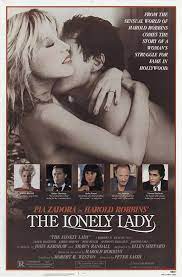
THE LONELY LADY (1983) 1/2*
The Lonely Lady is one of the all-time great stinker movies, 91 minutes of unpleasant characters in unsavory relationships with unbelievably bad actors speaking dialogue that should have never been uttered or ever written in the first place.

Like the (believe it or not) even more awful, killer Santa picture Silent Night, Deadly Night, The Lonely Lady potentially takes the heat off viewers by undercutting a procession of controversial scenes with unintentional humor. I could see hooting and howling in derisive laughter at the performances and the dialogue throughout Silent Night, Deadly Night and The Lonely Lady.

I found myself appalled more than anything else throughout The Lonely Lady, so I was basically too appalled to laugh.

The Lonely Lady especially lays it on thick whenever the title character — aspiring young screenwriter Jerilee Randall, played by the immortal Pia Zadora, though she’s never lonely — expresses her outrage at her perpetual exploitation by Hollywood writers, directors, actors, and producers, every one of them sexist pigs who just nonstop use and abuse her.

At the same time, however, the camera lingers on this exploitation from the rape by garden hose early on in the picture to some of the least sexy movie sex ever captured on celluloid.

On top of all that, Zadora’s real-life husband, Israeli multimillionaire industrialist Meshulam Riklis, funded Butterfly and The Lonely Lady with both pictures starring none other than Zadora. Legend has it that Riklis bought a Golden Globe award for his wife and her performance in Butterfly.

Zadora beat out Elizabeth McGovern and Howard E. Rollins Jr. in Ragtime, Kathleen Turner in Body Heat, Rachel Ward in Sharky’s Machine, and Craig Wasson in Four Friends, all five better-received performances in better-received films.

It remains inconceivable that Zadora — who made her motion picture debut in the 1964 cult film Santa Claus Conquers the Martians — won that award on her own merits.

Riklis was more than 30 years older than Zadora, and that’s not any different than the age gap between Jerilee and her much older husband, veteran Hollywood hack screenwriter Walter Thornton (Lloyd Bochner), in The Lonely Lady.

All those factors combine to make Jerilee’s speech at the Academy Awards — highlighted by that risible line I don’t suppose I’m the only one who’s had to fuck her way to the top! — the absolute worst scene in a movie populated by predominantly bad scenes.

Most of them involve Jerilee sleeping her way through some of the ugliest men imaginable.

Let’s take a look at one more scene that epitomizes The Lonely Lady.

Jerilee and Walter argue outside their Beverly Hills home, near the swimming pool seen first in one of the film’s most appalling scenes.

Jerilee: Walter? Walter, come to bed.
Walter: Haven’t you had enough wine? Go sleep it off.
J: If you’ll come with me.
[W turns away.]
J: I’m trying to say sorry.
W: With a head full of drink!
J: We don’t have to make love.
W: Thank you.
J: We could talk. We need to talk.
W: Why didn’t you go off with Dacosta? He would’ve enjoyed it.
[W picks up the garden hose that raped J earlier in the film.]
W: Or is this more your kick?

That’s even worse than the argument between Kathryn Harrold and Luciano Pavarotti in Yes, Giorgio that culminated in the infamous line I don’t want to be watered on by Fini.

That garden hose, in fact, might have once belonged to Fini.

The Lonely Lady flopped so badly that, thankfully, Hollywood never adapted one of Harold Robbins’ trashy novels again.

Now, I call that a happy ending.

Dead of Night (1945)

DEAD OF NIGHT (1945) ****
Back in 2005, I needed three credits to complete a master’s degree in history (lifetime underachievement) and I finished a three-week 120-hour internship that summer at the National Archives in Kansas City, Missouri.

Anyway, they let me loose on their free account on some genealogical site as reward for good behavior and a day-and-a-half later I came back with Sisney family history dating back to 1776.

On February 27, 1776, a few months before the Declaration of Independence, Steven Sisney fought at and was captured and imprisoned during the Battle of Moores Creek Bridge near Wilmington, North Carolina. Sisney was one of about 1600 loyalist-siding Highland Scots who marched from Cross Creek, North Carolina, toward the coast behind British Colonel Donald McLeod. The loyalists lost, the patriots received a morale boost, and North Carolina became the first colony to vote for independence, beating the official declaration by a couple months easy.

Every once in a while, I think about Steven Sisney and his loyalty to the British since I favor the Beatles and the Stones and the Who and the Kinks and Black Sabbath and Led Zeppelin and the Clash and the Sex Pistols and the Buzzcocks and Radiohead and Pink Floyd and Peter Cushing and Christopher Lee and Sherlock Holmes and James Bond and Alec Guinness and Cary Grant and Ben Kingsley and Ian McKellen and Glenda Jackson and Hammer and Hitchcock and Monty Python and Lord of the Rings and Harry Potter and on and so on and on some more again.

If nothing else, the 1945 horror anthology film Dead of Night made me think about Steven Sisney, the epic 1989 David Hackett Fischer history book Albion’s Seed: Four British Folkways in America (never forget the saga of the poor one-eyed servant George Spencer in New Haven, who was hanged for bestiality after a sow birthed a deformed pig with one eye and the two witnesses required for conviction were the deformed piglet and Spencer’s recanted confession), the late Pittsburg State history professor Judith Shaw (1931-2013) who taught many British History courses over the decades, and how much of an impact Dead of Night had on Richard Attenborough’s Magic.

Horror anthologies generally offer a mixed bag of success and failure.

Of course, Ray Davies outlined it in Celluloid Heroes, Success walks hand-in-hand with failure along Hollywood Boulevard. I always think about Twilight Zone: The Movie from 1983 to illustrate the mixed bag qualities of just about every anthology we’ve ever been expected to consume. The segments directed by John Landis and Steven Spielberg suck, the ones from Joe Dante and George Miller are dynamite, and the prologue and epilogue push the overall package into positive review terrain.

In Dead of Night, Alberto Cavalcanti directed Christmas Party and The Ventriloquist’s Dummy, Charles Crichton directed Golfing Story, Robert Hamer directed The Haunted Mirror, and Basil Dearden directed Hearse Driver and Linking Narrative.

It all starts when architect Walter Craig (Mervyn Johns) tells host and potential client Eliot Foley (Roland Culver) and his guests at country estate Pilgrim’s Farm that he’s seen them all in a recurring dream. Craig feels like he’s been at Pilgrim’s Farm before and every guest rings a bell to him despite never having met any of them before. Each person (host and guests alike) rattles off a supernatural tale, inspired by Craig’s revelations. Craig wants to leave because he doesn’t want his dream to come true and the guests do their best to make him stay.

The Haunted Mirror and The Ventriloquist’s Dummy are especially brilliant and Golfing Story reminds one that Ealing Studios later brought us Kind Hearts and Coronets, The Lavender Hill Mob, and The Ladykillers, all of which feature a dark comedy that seems to have started with Hitchcock. Hamer directed Kind Hearts and Coronets and Crichton directed The Lavender Hill Mob (and later on in his career A Fish Called Wanda).

Basil Radford (1897-1952) and Naunton Wayne (1901-70) appear together in Dead of Night, but not as their characters Charters and Caldicott. Charters and Caldicott began in Hitchcock’s 1938 classic The Lady Vanishes and then the acting duo appeared together in a series of films from 1940 through 1949, including three more times playing Charters and Caldicott. They are very funny, both individually and collectively, in Dead of Night. They don’t seem particularly gay in Dead of Night.

During The Haunted Mirror, guest Joan Cortland (Googie Withers) relays to us what happened after she gifted an antique mirror to her future husband Peter (Ralph Michael). Peter sees another room in the mirror’s reflection, does not see Joan in the mirror when she confronts him, and for a spell he sees the room as normal. Joan finds out the history of the mirror and the wealthy man who owned it after she visits the antique shop from which she purchased the mirror. This wealthy man was crippled in a riding accident, then he grew so insanely jealous of his wife that he strangled her and he finally slit his own throat in front of the mirror. When Joan returns home, Peter accuses her of having an affair and then he attempts to strangle her. Joan smashes the mirror in sheer desperation and breaks the spell.

In The Ventriloquist’s Dummy, the absolute most effective segment, resident rational explanation seeker Dr. Van Straaten (Frederick Valk) tells us about the case of ventriloquist Maxwell Frere (Michael Redgrave) and his dummy Hugo Fitch. Maxwell develops a dual personality with Hugo becoming the dominant part. Poor, poor, poor Sylvester Kee (Hartley Power), who happens to catch and be impressed by the act.

In the long run, I was much impressed by Dead of Night and I recommend it to anyone.

Dracula (1931)

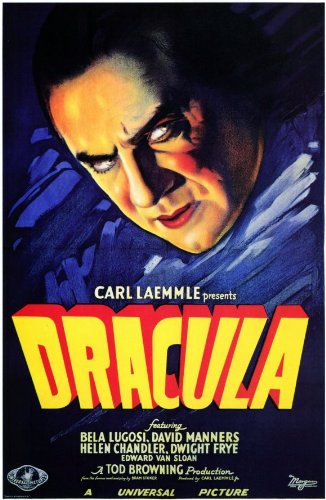
DRACULA (1931) ****
I remember being first disappointed by the 1931 Dracula and that disappointment carried over for more than two decades.

Around the turn of the 21st Century, I bought the 1999 VHS release and that’s what I first watched, the one with Classic Monster Collection across the top and then New Music by Philip Glass and Performed by Kronos Quartet immediately below. Of course, I thought Bela Lugosi as Dracula and Dwight Frye as Renfield were absolutely incredible, David Manners as Jonathan Harker and Edward Van Sloan as Professor Van Helsing and Helen Chandler as Mina Harker less so, and I loved director Tod Browning’s 1932 Freaks at first sight contemporaneous with Dracula. Freaks remains one of my absolute favorite movies, so obviously some movies hit people right from the start and others just simply take more time or sometimes they never make that deep, personal connection others do.

For the longest time, at least a decade if not longer, I thought Dracula was overrated and paled in comparison against Freaks, Frankenstein, The Bride of Frankenstein, and The Wolf Man, all of which I first saw around the same time as Dracula and I loved, absolutely loved, and still do love all of them. At the time, I also loved Abbott and Costello Meet Frankenstein more than Dracula.

It was that darn Philip Glass / Kronos Quartet score that stank up Dracula and I still get a big kick out of the Triumph the Insult Comic Dog couplet, Philip Glass, atonal ass, you’re not immune / Write a song with a fucking tune. I remember my wife complained about Glass’ score for the experimental non-narrative film Koyaanisqatsi and I bristled at his score for Candyman upon revisiting that 1992 film for the first time in several years.

Revisiting the 1931 Dracula in recent years, without the Glass / Kronos score and back closer to how it first appeared in theaters on Feb. 14, 1931, it’s risen in stock from three to three-and-a-half and finally four stars. I cannot deny that it still has a fair share of faults, like those performances I mentioned earlier and the stage-bound production quality since it’s based off the 1924 stage play adapted from Bram Stoker’s 1897 novel, but I’ve grown appreciation for everything that works from the opening scenes in Transylvania to Lugosi (1882-1956) and Frye (1899-1943), who inspired later songs from Bauhaus (Bela Lugosi’s Dead) and Alice Cooper (The Ballad of Dwight Fry).

It also helps one to catch up with the Spanish language Dracula from the same year and the same sets but a different cast, a different language, and a different director. This Spanish version, rediscovered first in 1978 and then later on video in 1992, lasts 30 minutes longer and it’s better in almost every respect than its famous counterpart. Better shot and better looking, vastly superior cleavage and far sexier women (Lupita Tovar over Helen Chandler any day of the millennium), and less wimpy men in the Spanish version, but Lugosi still prevails against Carlos Villarias.

Several lines had already entered the lexicon decades before I first watched Dracula: I never drink … wine. For one who has not lived even a single lifetime, you’re a wise man, Van Helsing. Listen to them. Children of the night. What music they make. Even I am Dracula belongs somewhere in the pantheon near Bond, James Bond. Lugosi’s ability or lack thereof speaking the English language actually benefits the otherworldly nature of his Dracula and I hold his performance in high regard alongside Max Schreck in Nosferatu, Christopher Lee in Dracula, and Gary Oldman in Dracula.

I have a long relationship with vampires.

I remember the 1985 Fright Night being the highlight of a boy slumber party circa 1988 and third or fourth grade.

I must have been 11 or 12 years old and in the fifth or sixth grade when reading the Stoker novel. Right around that point in time, I also read Sir Arthur Conan Doyle’s The Hound of the Baskervilles and Roald Dahl’s Charlie and the Chocolate Factory. I loved all three of them and they each fired up my imagination and creative spirit.

A few years later, I caught up with the Francis Ford Coppola version and talk about a movie that wowed a 14-year-old boy. I remember staying up late and sneaking around (somewhat) to watch this Dracula on my bedroom TV, captivated by all the nudity and sexuality and violence and Winona Ryder and Sadie Frost and it recalled some of what I liked about the novel all while becoming a cinematic extravaganza. I know critics of the 1992 Dracula blasted the film for being all style, no substance and for being overblown, but I think it’s overflowing with creativity and sheer cinematic beauty. I rate it right up there with F.W. Murnau’s Nosferatu as one of the best vampire films ever.

Some things simply transcend Keanu Reeves’ horrible accent and Dracula’s at one point beehive hairdo.

The vampire genre itself transcends such duds as Dracula 2000 and New Moon.

Friday the 13th: The Final Chapter (1984)

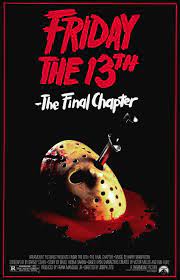
FRIDAY THE 13TH: THE FINAL CHAPTER (1984) ***
Once upon a time, I called Friday the 13th: The Final Chapter the most schizophrenic movie ever made and what I mean by this bit of hyperbole is that The Final Chapter largely alternates being a rather brutal, occasionally mean-spirited horror movie sequel and a jovial teenage sex comedy especially made explicit in casting Lawrence The Last American Virgin Monoson in one of the key supporting roles.

The Final Chapter has some of the best and also some of the worst moments in the entire 12-movie Friday series, easily the best cast and most likable characters from (almost) top to bottom, Tom Savini’s return as makeup artist, Harry Manfredini’s first-rate musical score, Ted White’s brutal conviction selling his kill scenes as Jason Voorhees, and it’s arguably the quintessential Friday the 13th movie.

Let’s hit a couple of the high points first.

The Final Chapter introduces us to Tommy Jarvis (Corey Feldman), a 12-year-old boy with a hyperactive imagination and penchant for monster make-up and masks not unlike Savini; Trish Jarvis (Kimberly Beck), Tommy’s older sister and our Final Girl; Mrs. Jarvis (Joan Freeman), Tommy’s and Trish’s single mother; Gordon the Family Dog, the golden retriever whose fate remains uncertain. Anyway, this family dynamic is something fresh and new for the Friday series.

Crispin Glover, one of the great movie eccentrics, makes his mark on The Final Chapter and his Jimmy becomes one of the most unforgettable horny (dead) teenagers in a series that served them up by the hundreds as fodder for the slaughter. Jimmy and his buddy Ted (Monoson) especially feel like refugees from a teenage sex comedy, like they continued playing their characters from My Tutor (Glover) and The Last American Virgin (Monoson). Jimmy’s dance and exit line in this movie have become the stuff of slasher movie legend.

Feldman and Glover provide us two of the most likable characters in any of the dozen Friday movies, something that’s ironic given the fact The New Beginning (which arrived in theaters around 11 months after The Final Chapter) has almost no likable characters among the largest cast of corpses in series history. Never mind that Tommy did not exactly pan out in The New Beginning and Jason Lives like the endings of The Final Chapter and The New Beginning seemed to promise.

I almost forgot Rob (E. Erich Anderson), the older brother of a character killed by potato sack Jason in Part 2. Rob seeks revenge against Jason and fortunately he meets Trish and Tommy first, though ultimately it does not matter because Rob represents one of the great missed opportunities. Here’s a character who could have served as a basis for an entire movie and The Final Chapter makes him completely underwhelming. His death scene, designed to be poignant, instead becomes laughable (‘He’s killing me. He’s killing me’) and it wishes it could be as enjoyably bad as the bookseller’s death in Dario Argento’s Inferno. You might recall that the creepy old book retailer’s done in by rats and a homicidal Central Park hot dog vendor.

Now, we’ve moved on to the more negative.

Our first two new corpses in The Final Chapter represent one of my least favorite scenarios that’s commonly found in Friday movies. We spend several minutes, it feels even longer, much much much longer, with super horny morgue attendant Axel (Bruce Mahler) and super uninterested Nurse Morgan (Lisa Freeman) before they are massacred by Jason. Maybe it’s only a few minutes, but I never want to watch their scenes ever again to find out. I’ll use their introduction as my cue to go make some scrumptious butter popcorn.

Like the beginning of Part III and the obligatory murder of the lakefront store owners, these are minutes of my life that could have been attended to better things, even during a Friday movie.

The Final Chapter loves breaking glass and characters falling through windows.

The Final Chapter gets straight at the heart of the ambivalent relationship between parent company Paramount Pictures and the Friday movies.

One immediately gets the feeling that Paramount wanted The Final Chapter, you know, to be the end of Jason once and forever because the studio hotshots were ashamed to be associated with such a disreputable and sleazy franchise, but, alas, at the same time, The Final Chapter leaves the door open for more sequels with one of the series’ trademark endings. Paramount walked through that very door — actually, more like sprinted — when The Final Chapter returned a hefty profit.

The Final Chapter finished in the top 25 box office for 1984 and put together a $11.1M opening during the weekend of April 13.

Friday, April 13, 1984. The Challenger returned to Earth from their 11th space shuttle mission. India beat Pakistan by 54 runs to win the first Asia Cricket Cup in Sharjah, United Arab Emirates.

Paramount released A New Beginning on March 22, 1985, and 1983 and 1987 are the only years of the ’80s without a Friday the 13th movie. Do 1983 and 1987 belong to another decade?

I more or less grew up with the Friday movies, so I might be more forgiving of them for all their numerous faults than people who grew up in different times.

Then again, I might not be, because I only consider Jason Lives (the best made and the only entry that deserves a place near second- or third-tier classic horror movies like Frankenstein Meets the Wolf Man), Part III (the most suspenseful and the one where Jason acquires his legendary hockey mask), and The Final Chapter even worth recommending. Most of the rest of them have their isolated moments, all of them are excuses for reels of sex and violence and vulgarity, and the movies definitely created their own distinctive space in the cinematic marketplace.

How did the world end up with 12 Friday the 13th movies and legendary status for both the series overall and serial killer Jason Voorhees specifically, when similar movies like My Bloody Valentine, The Burning, Happy Birthday to Me, and Madman failed to produce one sequel among them. Granted, the original Friday finished 15th in the 1980 American box office sweepstakes and the first three sequels also proved to be solid hits among strong competition, while The Burning grossed $700 thousand, Madman $1.3M, My Bloody Valentine $5.7M, and Happy Birthday to Me $10.6M.

Money obviously talked for Jason.

Mac and Me (1988)

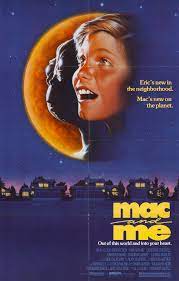
MAC AND ME (1988) *
Cable TV came to the little hamlet of Arcadia, Kansas, circa 1988 or 1989 and I watched a whole lot of movies time and time again.

That includes not only blockbusters like Back to the Future Part II and III, Beetlejuice, Big, Die Hard, Total Recall, and Terminator 2, but Arachnophobia, the first two Bill & Ted movies, The Blob remake, Tremors, Red Heat, Cocktail, The ‘Burbs, Bloodsport, Johnny Be Good, Appointment with Death, and even that disaster starring Tony Danza, She’s Out of Control. That last one begs the question WHY? Because it was on, naturally.

I only watched Mac and Me once back then, however, and that’s because even then with less discriminating taste I knew it sucked.

I revisited it all these decades later and it still righteously sucks. Just imagine a stupid E.T the Extra-Terrestrial where none of the cast members have the slightest bit charm or ability to keep our interest and to earn our emotional investment. It’s also incredibly weird and off-putting, especially considering that it’s designed to be family entertainment like E.T and The Wizard of Oz (1939), still the ultimate standard bearer for this kind of movie.

One of the main sources of weirdness: Mac and Me plugs more products than any movie this side of Leonard Part 6 or Happy Gilmore. Don’t you just hate it when a movie does that?

I mean, though, now that I think about it some more, it’s truly a missed opportunity for the ages that Dorothy didn’t drink Coke or the Tin Man didn’t use WD-40 or the Scarecrow didn’t wear designer hay or the Cowardly Lion didn’t have the courage to make a commercial plug right smack dab in the middle of his big melodramatic scene. MGM could have done so much more with their Yellow Brick Road (a sponsor on each and every brick) and the Wicked Witch of the West should have been melted by a brand name water, for crying out loud. We need a remake immediately just so the ruby slippers can be Nike.

Mac and Me could switch people over forever to Pepsi, Burger King, the St. Louis Cardinals, and Sweet Tarts.

Spielberg also missed an opportunity by not having a dance contest in a chain restaurant in E.T.

I was really bummed when I couldn’t find Paul Rudd in the cast and instead endured these apparently neophyte actors like Jonathan Ward, Tina Caspary, Lauren Stanley, and Jade Calegory. Ward and Caspary have considerably more acting experience than Stanley and Calegory, but they’re just as stilted or melodramatic in every scene.

The adult performers and their characters suck, as well, but they are blessed with fewer scenes to suck than the younger actors. By all rights, I should have rooted for the government agents, but, no, I cheered when the end credits rolled on this jive turkey. This is a movie that viewers should put they survived it on their resume.

Oh, in all this hubbub over a crap movie, I almost forgot MAC stands for ‘Mysterious Alien Creature’ and not that one restaurant with the impromptu dance scene interrupted by evil government agents. We have the main one, then his family, and I am guessing they’re distant, no good cousins of E.T. I mean, I doubt they would ever sit together for one of them big family pictures that brings in all the brothers and sisters and cousins and parents and grandparents and grandchildren. E.T. is simply too good for Mac.

Weird children, weird adults, weird aliens, product placement out the wazoo, and Squire Fridell add up to one weird (and awful) movie.

Mac and Me is so awful that Harry and the Hendersons seems like Citizen Kane instead.

Gappa (1967)

GAPPA: THE TRIPHIBIAN MONSTER (1967) ***
Sixty-two albums when he was alive and 54 more since his 1994 death, wanker guitar solos, frequently obscure and sophomoric lyrics, jazz and orchestral or hippie and doo-wop and other stylistic detours on the regular, and political and social satire that probably applies to all us members of the general audience somewhere down the line of a long and storied musical and recording career.

No, sorry, we’re not here to discuss the outstanding 2020 documentary Zappa directed by Alex Winter or Bill S. Preston, Esq., from the Bill & Ted films.

Nor are we here to discuss Gamera the giant flying turtle monster loved by children everywhere or Godzilla the ‘King of the Monsters’ or Gorgo and his sea monster mother Ogra (neither should necessarily be confused with Gorgo, Queen of Sparta) or Gordo the monster Spanish insult.

Nope, we’re here for Gappa: The Triphibian Monster from 1967, which if you like Gamera, Godzilla, Gorgo, etc., you might also find Gappa to your liking if you give it the good old college try. Why are there so many monsters that start with ‘G’? It’s a great big alphabet, for crying out loud.

The film’s also called Gappa the Triphibian Monsters and American-International dubbed the American version Monster from a Prehistoric Planet. It can be found in multiple places on the ‘Net.

Statement of fact: I’m a big fan of the old school monster movie aesthetic — rubber monsters, men-in-suits, miniatures, hapless government and military men, pro forma human interest though I usually wish monster films to go lighter on the human interest, etc. I like a lot of the Showa Era Godzilla moving pictures, like most of the Gamera films, and like Gorgo a good deal. Yeah, call them goofy or silly or ridiculous or preposterous or whatever denigrating pejorative haters desire but they’re mostly a good deal of fun.

By the way, what the hell is a Gappa? A triphibian monster, of course. What the heck’s a triphibian? A monster who’s adept at war on land, at sea, and in the air. A triple-threat, for a sports analogy. That also sounds like the potential for tons of mass destruction and busloads of extras running for their lives. Damn straight, Skippy.

The plot of Gappa has been called a virtual duplication of Gorgo — stupid fucking humans find a tropical island, take a monster back with them against the warnings of the islanders, and the monster’s parents come smashing Tokyo looking for their pride and monster joy — and one might be tempted to group them together with Son of Godzilla and All Monsters Attack as family values kaiju. The Family Values Kaiju Tour literally could have taken the world by storm, in spite of the fact that Son of Godzilla and All Monsters Attack both suck and rank among the worst Godzilla films.

Anyway, we’re not here for Godzilla and I’ll go on the permanent record right now to say that I bawl like a big ole blubbering baby at the end of Gappa. In the words of Weird Al, I was just overwhelmed by its sheer immensity, I had to pop myself a beer.

Frankenstein Meets the Wolf Man (1943)

FRANKENSTEIN MEETS THE WOLF MAN (1943) ***1/2
Frankenstein Meets the Wolf Man starts with an absolute big bang and we have possibly the greatest five minutes in any classic Universal monster movie.

That includes such immortal movies as Frankenstein, The Bride of Frankenstein, Son of Frankenstein, Dracula, The Mummy, The Invisible Man, and The Creature from the Black Lagoon, all stone cold classics essential to every horror movie lover.

The opening gets everything absolutely right: two grave robbers, a cemetery in the middle of the night, Larry The Wolf Man Talbot’s crypt, a full moon, a whole bunch of wolfbane, the revived Wolf Man’s hand, and enough overall spooky atmosphere for approximately 50 scary movie scenes. Yeah, it’s such a phenomenal sequence that director Tom McLoughlin revived it for his opening in Jason Lives, the one film during that long-running series most influenced by classic monster movies.

The rest of Frankenstein Meets the Wolf Man does not quite measure up, especially once Frankenstein’s Monster enters the picture, but it’s still a great deal of fun.

Of course, it doesn’t hurt any that Lon Chaney Jr. (1906-73) returns as Larry Talbot, one of the greatest horror movie characters. Chaney Jr. played Talbot five times from 1941 through 1948 — the original Wolf Man, Frankenstein Meets the Wolf Man, House of Frankenstein, House of Dracula, and Abbott and Costello Meet Frankenstein.

Talbot’s a tortured soul — in fact, mondoshop.com hypes its Wolf Man poster, The most tortured soul in the Universal Monsters universe is unquestionably that suffering bastard Larry Talbot, a.k.a. The Wolf Man — and we feel great empathy for this character because he essentially doesn’t want any damn part of being the Wolf Man. Your own son Bela was a werewolf. He attacked me. He changed me into a werewolf. He’s the one that put this curse on me. You watched over him until he was permitted to die. Well, now I want to die to. Won’t you show me the way?

In that way, he’s different from Dracula, Frankenstein’s Monster, the Mummy, and the Invisible Man. Lon Chaney’s Phantom in the 1925 classic The Phantom of the Opera inspires similar feelings as Talbot and the Wolf Man. To his enduring credit, Boris Karloff (1887-1969) worked some pathos into Frankenstein’s Monster, especially in Frankenstein and The Bride of Frankenstein. Still, Talbot stands apart from most cinematic monsters and maybe it’s because he’s the most explicitly human.

Bela Lugosi (1882-1956) passed on Frankenstein’s Monster in Frankenstein, much to his eternal regret, and so he signed on for the Monster in Frankenstein Meets the Wolf Man after playing Ygor in Son of Frankenstein and The Ghost of Frankenstein. During the latter film, one might remember that Dr. Ludwig Frankenstein accidentally put Ygor’s brain into the Monster’s head — he speaks poetically at one point in the film, I am Ygor. In a series that paid minuscule attention to continuity from one film to the next, the Monster originally spoke and explained his plight in Frankenstein Meets the Wolf Man, but Universal studio heads apparently laughed their heads off at Lugosi’s dialogue and demanded it be excised from the final cut, rendering the monster absolutely ridiculous and his scenes basically a washout. I am not sure why Lugosi’s voice suddenly became laughable. Lugosi’s stunt double stands in for the 61-year-old man in many scenes. Ironically, though, whenever people imitate Frankenstein’s Monster, it’s the Lugosi version from Frankenstein Meets the Wolf Man. (Lugosi played Bela in The Wolf Man and Chaney Jr. was Frankenstein’s Monster in The Ghost of Frankenstein after Karloff bowed out.)

We’re not sure exactly why the Monster’s encased in ice or why there’s a production number that must have moseyed on over from MGM. The second half of Frankenstein Meets the Wolf Man often leaves us feeling awful perplexed.

Frankenstein Meets the Wolf Man finishes strong, thankfully, and we do see our titular monsters slug it out, though it presents an internal struggle because while we’d love more battle royale between the monsters we do love the 90 seconds they give us. This movie paved the highway for King Kong vs. Godzilla and Freddy vs. Jason.

In most every way possible, Frankenstein Meets the Wolf Man proves to be a red hot mess, but a lovable and thoroughly entertaining one nonetheless.