Calling All Cars, We Have a 412! Calling All Cars!

CALLING ALL CARS, WE HAVE A 412! CALLING ALL CARS!
I watched Chu Chu and the Philly Flash on March 7 and 18 days later, I can still hear it, that’s for sure, especially co-stars Alan Arkin and Carol Burnett and supporting player Danny Aiello.

Burnett plays Chu Chu, or Emily as only her dearest friends know her, who performs this Carmen Miranda routine out in the streets. Her performance gives one all the maracas needed for at least one year, perhaps even one lifetime. Emily used to be a successful entertainer, before the booze got to her. We all know the story by now.

Arkin, meanwhile, plays the Philly Flash, given that name not because of his ability to shed his raincoat but his former ability turning double plays at second base for the Philadelphia Phillies. Was he named the Philly Flash just because the real-life Phillies won the World Series in 1980? Anyway, just like Emily, booze got to Flash, not Grandmaster Flash (think I’d rather watch The Adventures of Grandmaster Flash on the Wheels of Steel than Chu Chu and the Philly Flash) or Flash Gordon (who just had a movie, a much better one believe it or not, come out in 1980) or The Flash. No, the Philly Flash’s power, like Chu Chu’s, seems to be that he can scream and carry on a whole lot. In fact, that’s about both all they ever do in Chu Chu and the Philly Flash.

Not sure that it even matters or not if Burnett played the Philly Flash and Arkin drew Chu Chu. They could have made him a former professional golfer and her a former burlesque entertainer or something. Yeah, like Bill Murray said in Meatballs, it doesn’t even matter.

Government secrets fall, yes, literally fall into the hands of Philly Flash and Chu Chu. Well, technically, not right into their hands, I mean they did have to walk over and pick up the briefcase. By the way, the briefcase gives the best performance in Chu Chu and the Philly Flash, since even the maracas overact.

Rating: One-half star.

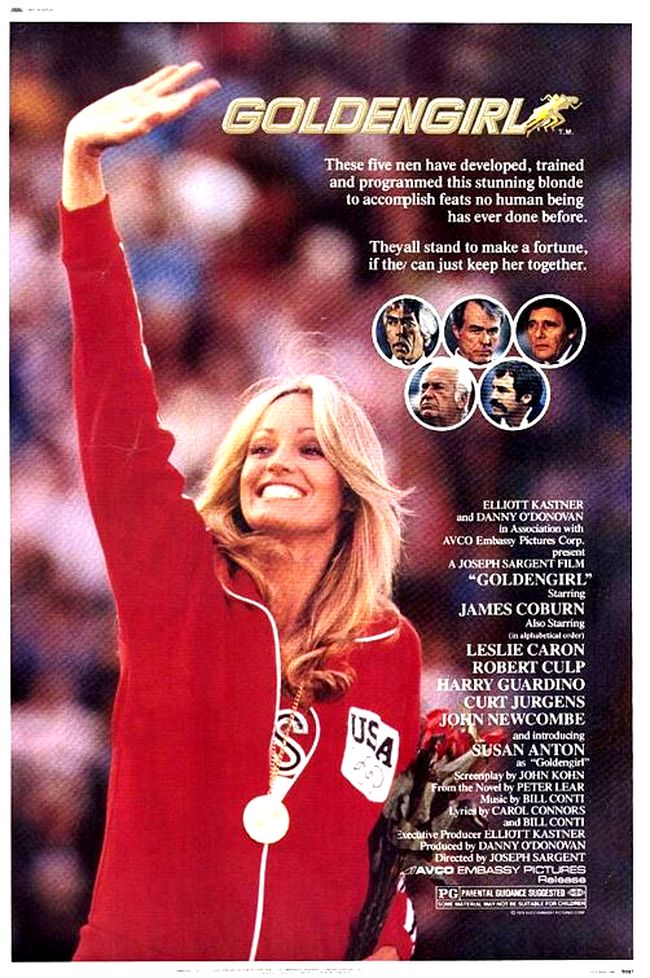
— Earlier in the same day I watched Chu Chu and the Philly Flash, I endured Goldengirl about basically a genetically engineered super female runner and it co-stars James Coburn, Robert Culp, Curt Jurgens, Leslie Caron, Jessica Walter, Michael Lerner, and Harry Guardino.

They’re all fine and dandy, more or less, but it’s star Susan Anton who ruins Goldengirl every single time she expresses any emotion. Guess they can’t genetically engineer the ability to act and the ability to not wreck an entire movie, because Anton can’t act and she absolutely obliterates Goldengirl every single time I wanted to give it another chance.

Give her one thing, though, because just like Donny and Marie Osmond in their motion picture debut and finale Goin’ Coconuts, Anton does have a great set of teeth. Outside her canines, incisors, premolars, and molars, though, Anton sucks in Goldengirl and despite the speeded up and slowed down footage, she’s not the least bit convincing as this incredible champion runner.

Anton and Coburn do have one of the great dialogue exchanges in motion picture history, one that could be played right alongside Fini can water you from Yes, Giorgio. She just set a new Olympic record and doesn’t she even deserve a kiss? Coburn works his way toward her magical lips and Anton moves the goalposts. She insists that he kisses her feet, then laughs maniacally, while Coburn, well, maybe he’s wishing that he could get hit upside the head by his old friend Bruce Lee’s one-hit punch again. Lee died in 1973 and Coburn was one of the pallbearers at Lee’s funeral.

The IMDb trivia entry starts out promisingly for Goldengirl, “Produced and theatrically released in 1979 prior to the 1980 Olympics boycott, this film depicts American athletes competing at the Moscow games. In reality, the boycott meant that the USA did not perform there, making the picture post-release anachronistic and historically inaccurate.”

Blame the boycott on Goldengirl.

Rating: One star.

— I watched Under the Rainbow between opener Goldengirl and closer Chu Chu and the Philly Flash.

That’s right, one of the worst movie-watching nights of a lifetime.

Under the Rainbow, like Goldengirl, has at least a far more interesting plot summary than anything else associated with the finished product.

Okay, to be honest, only the part about the 150 little people descending upon Hollywood for a part in The Wizard of Oz (and a wild and crazy party) sounds interesting, then it gets all mucked up when federal agents, fat cats, and Nazi and Japanese spies enter the picture. Anyway, doesn’t 1938 seem too early for Nazi and Japanese spies? I mean, the Nazis didn’t invade Poland until Sept. 1939 and the United States officially remained neutral until late 1941.

Regardless of social class and nationality and historical accuracy, though, all the characters get run through the cinematic claptrap blender at maximum speed with broad, inane slapstick and would-be wacky hijinks the settings. Despite the maximum speed, Under the Rainbow still feels like it takes forever to be done and over. That’s because it’s all played as loudly as possible, of course, with so much mugging on display that it’s another one of those movies where you feel the back of your head for lumps and bruises and then check for your wallet after watching it.

Chevy Chase and Carrie Fisher are the nominal stars, but they’re lost in the crowd because they play it too cool for school. Meanwhile, Billy Barty acts like he’s in three movies simultaneously and Japanese-American actor Mako settles for only two, and their terminal mugging calls to mind the 1942 propaganda comedy short The Devil with Hitler. The Devil with Hitler is better than Under the Rainbow, and I should just leave it at that statement, though I want to end this review with one last cheap shot at three lousy pictures that I wish I would have left buried inside their time capsules.

Stan Freberg would have charged the casts of Chu Chu and the Philly Flash, Goldengirl, and Under the Rainbow with one heinous crime against humanity: a 412. What’s a 412? Over-acting.

Rating: One star.

An Interesting Story (1904)

AN INTERESTING STORY (1904) ****
One of the best qualities of the best early silent films is how they would regularly take a simple idea and play it to the hilt in a short time, like the explosive 150-second The Man with the Rubber Head from 1901 and the nearly 6-minute That Fatal Sneeze from 1907.

That hilt-playing simplicity also helps define An Interesting Story from 1904, where a man, who knows it might even be director James Williamson himself, gets so taken by a book that he simply cannot put it down to the point that he becomes a virtual danger to society, including himself. This short could be made today, of course in color rather than black & white if you so prefer, but the protagonist would (most likely) be engrossed by the latest, greatest, most upgraded cellular device. Since I returned to college in 2008, it’s been about 13 years then since I first started noticing that I would regularly be the one person in the room (crowded or not) looking up and not down into the abyss of a cellular device. Generation gap most clearly expressed through differences in phones? Possibly.

Anyway, what book could the unnamed protagonist be reading in An Interesting Story? The Bobbsey Twins of Lakeport by Laura Lee Hope? Green Mansions by William H. Hudson? The Country of the Blind by H.G. Wells? The Book of the Law by Aleister Crowley? Dreamers by Knut Hamsun? Peter Pan by J.M. Barrie? Nostromo by Joseph Conrad? The Sea Wolf by Jack London? Just to take a sampling from works first published in 1904. Naturally, it could have been an older book.

Off the top of my head, Franz Kafka’s The Metamorphosis and J.D. Salinger’s The Catcher in the Rye are the books I plowed through in one sitting, but I remained safely within the confines of my isolation chamber and No animals were harmed during the reading of this book each time. Just think I didn’t even turn into an insect like Gregor Samsa, the protagonist of The Metamorphosis.

Getting somewhat back on track here, An Interesting Story utilizes a steamroller for comedic effect some 84 years before The Naked Gun (which also gave arch villain Ricardo Montalban a great big fall from a baseball stadium, a bus, and a marching band with the steamroller between the bus and the band) and A Fish Called Wanda (when Ka-Ka-Ka-Ken gets his great desserts against Otto, that stupid, brute, vulgar American).

Yes, you could definitely say that An Interesting Story was ahead of its time.

Grand Hotel (1932)

GRAND HOTEL (1932) ***
MGM once boasted More stars than there are in Heaven and as I typed out those words, sounds and images from Grand Hotel played on the motion picture spread inside my head.

Of course, because Grand Hotel put Greta Garbo, John Barrymore, Joan Crawford, Wallace Beery, and Lionel Barrymore — five good old-fashioned movie stars — together. A commercial and critical success, Grand Hotel gave Hollywood a casting model still with us today, as well as the custom that a luxurious setting must host our stars. They even named the movie after this luxurious setting.

Part of the appeal of watching Grand Hotel to this very day — nearly 90 years after the film’s original release, for crying out loud — derives from drawing parallels between the real-life performer and their character, especially true for Garbo, John Barrymore, and Crawford.

Top billed Garbo (1905-90) plays ballerina Grusinskaya, but it’s virtually impossible to not draw the parallels with the actress herself when we hear the famous words, I want to be alone. Or I think Suzette, I’ve never been so tired in all my life. Yes, I listened to the Kinks’ “Celluloid Heroes” so many times before I watched Grand Hotel that the song informed every second of seeing Garbo in arguably her most famous movie role, Don’t step on Greta Garbo as you walk down the Boulevard / She looks so weak and fragile, that’s why she tried to be so hard / But they turned her into a princess / And they sat her on a throne / But she turned her back on stardom / Because she wanted to be alone.

Garbo appeared in eight films after Grand Hotel, her final one being George Cukor’s Two-Faced Woman in 1941. That one came with the slogan Go Gay with Garbo! Her first talking picture, 1930’s Anna Christie, simply hyped Garbo Talks!

John Barrymore (1882-1942) first made his motion picture fame as Dr. Henry Jekyll and Mr. Edward Hyde in the 1920 Dr. Jekyll and Mr. Hyde. Barrymore’s life played out like Jekyll and Hyde, seeing that his matinee idol looks earned him the nickname ‘The Great Profile’ and benefited him in romantic lead parts in Grand Hotel (as the formerly wealthy Baron Felix von Gaigern, who specializes in thievery and gambling with Garbo his potential mark) and Twentieth Century (arguably his best performance as tempestuous temperamental theatrical director Oscar Jaffe) before many years of heavy drinking finally wore him down into a shell of his former self. John Barrymore died 10 years after Grand Hotel premiered, at the age of 60 from pneumonia and cirrhosis of the liver. He’s more famous today for being Drew Barrymore’s grandfather, but his acting talents are well-preserved on celluloid and I’d start (and possibly finish) with Dr. Jekyll and Mr. Hyde, Grand Hotel, and Twentieth Century.

Crawford (1904-77) has remained a divisive figure some 50 years after her final movie — Trog in 1970 — embodied by the essay The Feminine Grotesque: On the Warped Legacy of Joan Crawford by Angelica Jade Bastien that reappeared on RogerEbert.com during Women’s History Month. No lesser authority than Crawford herself described her Grand Hotel character Flaemmchen as “the little whore stenographer,” and the actress’ eternal divisiveness stems in part from her infamous reputation for sleeping her way to the top. Bette Davis said of her arch rival, She slept with every star at MGM. Of both sexes.

Kansas City (Missouri)-born Beery (1885-1949) shared the 1933 Academy Award for Best Actor — with Fredric March from Dr. Jekyll and Mr. Hyde — for his performance as the title character in the feel good heartstring yanker The Champ. The Champ premiered Nov. 21, 1931. Grand Hotel premiered 143 days later and Beery plays a character, General Director Preysing, who proves to be a complete 180 from The Champ. Beery chews through the scenery not only on Grand Hotel but every other movie MGM had in production at that moment in time.

John’s older brother Lionel Barrymore (1878-1954) etched his place in history as the epitome of villain, Mr. Henry F. Potter from It’s a Wonderful Life. So to see him play such a likable character in Grand Hotel might be a great shock for most viewers who are only familiar with Barrymore through It’s a Wonderful Life. He’s definitely a scene stealer in Grand Hotel.

Ironically enough, Lionel Barrymore presented Beery with his Oscar statuette. Barrymore won Best Actor the previous year for his performance in A Free Soul.

I must admit, though, that I prefer International House, taglined in 1933 as ‘The Grand Hotel of Comedy’ and released by Paramount, over Grand Hotel. International House gives us a cast that includes famous gold digger Peggy Hopkins Joyce, W.C. Fields, George Burns and Gracie Allen, Rudy Vallee, and Bela Lugosi, plus Stoopnagle and Budd, Baby Rose Marie, and Cab Calloway. We have Calloway and his band performing “Reefer Man,” Fields smoking opium and driving his American Austin automobile through this grand hotel in Wuhu China, Doctor Burns and Nurse Allen bantering, and plenty more Paramount pre-Code shenanigans stuffed into a 70-minute cinematic confectionery. By comparison, Grand Hotel, lasting more than 110 minutes, seems awful staid and stodgy.

That said, Grand Hotel serves a lasting reminder of how powerful star power used to be.

Broadway Melody, Cimarron Won Best Picture! So What, Because They Suck!

BROADWAY MELODY, CIMARRON WON BEST PICTURE! SO WHAT, BECAUSE THEY SUCK!
The Broadway Melody and Cimarron are horrible, terrible, horrible movies and the first two examples of how winning the Academy Award for Best Picture does not guarantee quality.

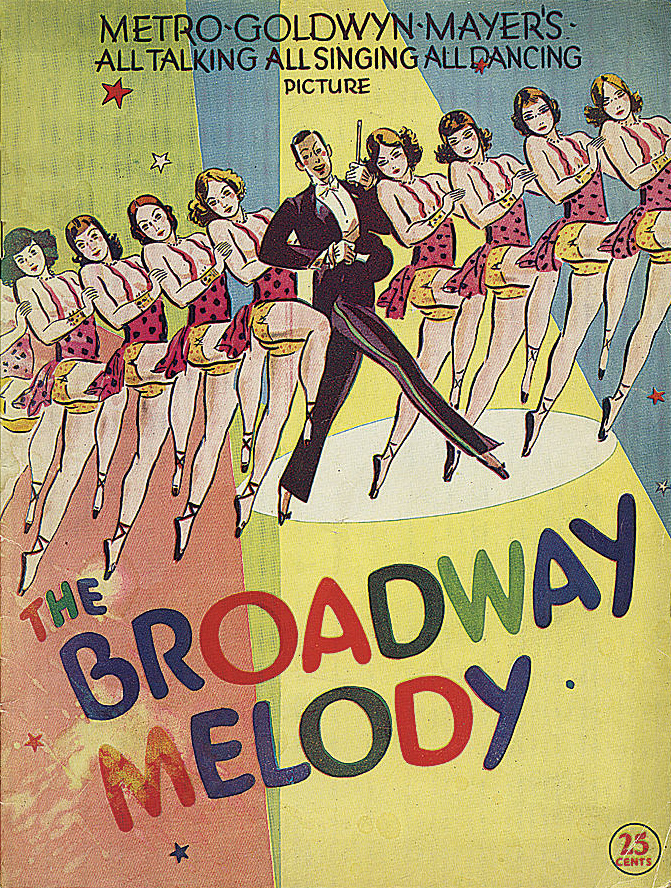
The Broadway Melody (1929) owns the distinction of being the first talking picture and the first musical to win Best Picture, thus it has a permanent place in cinematic history. Otherwise, though, The Broadway Melody makes me wonder how come the motion picture industry did not return to silent pictures, because the dialogue and the songs both stink up the screen every step of the way. (Apparently, MGM also released The Broadway Melody in a silent version.)

Likewise, Cimarron (1931) is the first Western to win Best Picture and it’s one of those movies, well, near the end of its 130-minute duration, I told my wife, “I feel like I’ve aged 40 years watching this movie.” In fact, I had to use hedge trimmers on my facial hair and step in the barber’s chair after Cimarron, and perhaps I should be thankful Cimarron only covered 1889 to 1929 and not a longer historical span. I might have been in deep trouble, at least six feet under, had the Howard Estabrook and Louis Sarecky screenplay and the 1929 Edna Ferber novel instead considered 50 or 60 years of Yancey and Sabra Cravat.

The first in a series of musicals for MGM, The Broadway Melody stars Charles King as Eddie Kearns and Anita Page and Bessie Love as sisters Queenie and Harriet ‘Hank’ Mahoney. See, what happens, Eddie and Hank have had a thing, but then he lays his eyes on a now grown up Queenie and boy oh boy, his eyes nearly pop out their head. Whee, Queenie lays off Eddie, sister loyalty, and lets New York high society playboy Jock Warriner (reference to studio mogul Jack Warner) play her. Eddie and Queenie realize they’re in love, Hank finally accepts it, and it all ends happily ever after with the closing line delivered by the character with a stutter. It was so good that I forgot it.

Charles King should have been renamed ‘Charles Sing’ because he sings much better than he acts and the scenes between Eddie and Hank (and Queenie) (and Jock) try and ultimately fail my test for strained melodrama. Yap! Yap! Yap! Yap! That’s right, one yap for every piece in the romantic square. Love and Page are easy on the eyes, especially Page, but difficult on the ears with all their hemming and hawing (more Page than Love) and perpetually melodramatic carrying on (more Love than Page). Either way, their dialogue scenes are destined for the mute button and subtitles.

I learned a lesson from Cimarron and it has nothing to do with Oklahoma’s state history before and after statehood on Nov. 16, 1907.

The Lesson: Do not start your movie with a land rush scene, because it’s highly unlikely that you will find something else to approach the excitement of that slambang opener.

After the intense thrills of the land rush, I must admit that I started paralleling Yancey Cravat’s restlessness and I desperately wanted to move to another movie, one that doesn’t even have to be a Best Picture winner, just as long as it can involve me from beginning to end and does not leave me contemplating how many years I have aged just watching it. That’s about the bare minimum I expect from a movie, any movie, and that isn’t asking for too much, now, is it?

Battle of Britain (1969)

BATTLE OF BRITAIN (1969) One star
Never in the field of motion pictures were so few scenes owed by so few to so many.

— Harry Saltzman

As far as we know, Harry Saltzman never actually said that, nor did Winston Churchill or, for that matter, Yogi Berra and Yogi the Bear.

Anyway, that would-be quote came to mind several times during Battle of Britain and it’s been on my mind preparing this review inside my ripped, twisted brain.

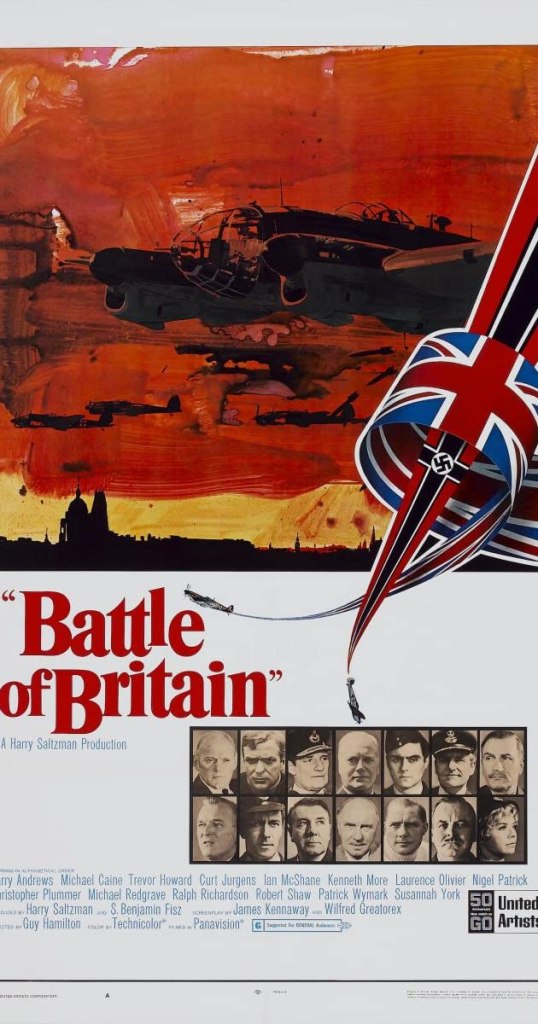
Just look at the cast: Harry Andrews, Michael Caine, Trevor Howard, Curt Jurgens, Ian McShane, Kenneth More, Laurence Olivier, Nigel Patrick, Michael Redgrave, Ralph Richardson, Robert Shaw, Patrick Wymark, Susannah York, Michael Bates. Anyway, we get the point and to fill in the rest of the cast might take every bit as long as Battle of Britain.

Battle of Britain lasts approximately 2 hours, 12 minutes, and yeah, that’s exactly right, very little screen time for each actor since there’s so many of them.

Regardless, the planes get all the good lines in Battle of Britain.

Beyond the planes, though, Michael Caine’s dog gives the best dramatic performance. Unfortunately, I couldn’t even find the dog’s name in the seemingly neverending end credits.

Battle of Britain invested so much into the planes that it forgot about the characters, the people, you know, the reason why audiences engage with any successful motion picture spread. They spent so much on the planes, in fact, they couldn’t even afford subtitles for the German dialogue spoken often throughout Battle of Britain, for crying out loud.

I am not always the biggest fan in the world of these cast-of-thousands World War II epics and Battle of Britain joins The Longest Movie, Boring! Boring! Boring!, and A Movie Too Long in the cinematic wreckage of bloated, ponderous war movies.

It especially doesn’t help when the musical score for Battle of Britain has me thinking that’s what it must feel like to be trapped inside a tuba for a two-hour concert.

The Kinks’ incredible, indelible concept album Arthur (Or the Decline and Fall of the British Empire) came out two weeks before Battle of Britain in October 1969 and coincidentally, I put Arthur on almost immediately after Battle of Britain. Arthur provided the emotional and intellectual content missing from Battle of Britain, as well as a great sense of humor and sharp wit, not to mention tunes out the wazoo.

Arthur lasts all of 49 minutes, 17 seconds, and travels from the Victorian era to World War I to World War II to post-war England to Australia in a mere 12 songs. Ray Davies proved himself once again to be one of the great storytellers in popular music on this album, from opener “Victoria” and “Shangri-La” to “Mr. Churchill Says” and closer “Arthur.”

I get more from one song on Arthur than all of Battle of Britain; for example, these rather cinematic lyrics from “Some Mother’s Son,” Some mother’s son lies in a field / Someone has killed some mother’s son today / Head blown up by some soldier’s gun / While all the mothers stand and wait / Some mother’s son ain’t coming home today / Some mothers son ain’t got no grave / Two soldiers fighting in a trench / One soldier glances up to see the sun / And dreams of games he played when he was young / And then his friend calls out his name / It stops his dream and as he turns his head / A second later he is dead / Some mother’s lies in a field / Back home they put his picture in a frame / But all dead soldiers look the same.

Rats! Rats! Rats! You’ve Got a Friend in Willard and Ben

RATS! RATS! RATS! YOU’VE GOT A FRIEND IN WILLARD AND BEN
It makes sense that a sequel to the 1971 hit Willard appeared within the next year.

It makes sense that this sequel focused on the rat Ben and would be called Ben, given the previous film’s rather downbeat ending.

It also makes sense that Phil Karlson directed Ben, since Karlson directed such gritty films as Kansas City Confidential, 99 River Street, and The Phenix City Story, all involving characters who might be considered dirty rats.

Karlson never directed any character badder and meaner than Ben, though. Not any of the tough guys played by John Payne, Preston Foster, Neville Brand, Lee Van Cleef, and Jack Elam in Kansas City Confidential. Ben don’t need no stinking mask, for one. Ben also has an infinitely larger gang anyway and they’re real hungry as demonstrated throughout Ben. Nor Tennessee sheriff Buford Pusser from Walking Tall, which Karlson made right after Ben. Joe Don Baker must have come as quite a relief after Ben, who quickly became a has been after his two film roles and multiple songs about him. Ben must have wanted even more dough to return for a third film. That dirty rat!

Ben also won a PATSY Award for his performance in Ben, which undoubtedly contributed to his ego problem.

Anyway, I didn’t much care for Ben, because it quickly established a dread pattern after the obligatory flashback to the events that ended Willard. Here’s that pattern: Rat attack. Cutesy poo musical number. Rat attack. Cutesy poo musical number. Rat attack. Cutesy poo musical number. Rat attack. Cutesy poo musical number. Rat attack. Cutesy poo musical number.

Sounds like a real winner, right? Yeah, if you like a bunch of bad ideas bouncing off each other for 90 minutes.

You can also throw in some police chatter, a journalist character who’s seemingly working on just this one story (though it’s hard to blame him, I mean it’s not everyday that millions of street rats terrorize a city), and a little boy named Danny and his sister (played by Meredith Baxter before her marriage and hyphenated name, before her TV mother fame, before her Lifetime movie career, before her coming out) and his mother who all seem like refugees from a Disney live-action project.

Oh yeah, like Willard before him, the little boy possesses the ability to communicate with rats, especially Ben. Oh yeah, once again, the lonely little boy has a heart condition.

Danny proves responsible for the musical numbers scattered throughout Ben and he even gives Ben a puppet show. Wow, just wow.

A 13-year-old Michael Jackson sings “Ben’s Song” over the end credits and “Ben” competed against songs from The Poseidon Adventure, The Little Ark, The Life and Times of Judge Roy Bean, and The Stepmother for Best Original Song at the 1973 Academy Awards. “Ben” lost to “The Morning After” from The Poseidon Adventure, believe it or not, and having heard both songs, I don’t believe it since “The Morning After” defines godawful. Unfortunately so does most of the movie Ben.

I’ll give Karlson and animal trainer Moe Di Sesso their due for amplifying the rat count to 4,000 for Ben. Eight times the rats as Willard, but that’s the only area in which Ben triumphs over its older brother. Granted, one human year translates to approximately 30 in rat years, so maybe that’s why Ben’s motion picture career stopped after two films in two years.

Rating: One star.

— What else can I say other than I liked Willard and I would not be surprised if I found out that it played as one-half of a double bill with fellow 1971 cult film Harold and Maude.

Both are weird little items with a delightfully morbid sense of humor and I only say delightfully because I like both films, and they have offbeat lead characters who push the patience of every adult.

Bruce Davison stars as Willard Stiles, who must contend with a harridan mother (Elsa Lanchester) and a bully for a boss (Ernest Borgnine). Willard develops a close relationship with Ben and Socrates, who unfortunately for Willard are rats. See, Willard finds out that he can communicate directly with rats and that he enjoys their company more than his fellow human beings, especially his overbearing mother and all her overbearing friends and his asshole boss. His mother wants Willard to get rid of them damn rats and his boss, well, he develops genuine distaste for Rattus norvegicus after Willard’s rats crash his party one night.

Willard also begins a tentative, very tentative relationship with his lovely temporary co-worker Joan (Sondra Locke). In the end, Willard should have pursued Joan more than Socrates and Ben. No doubt that our lad Willard would have lived a whole lot longer.

As interesting as it was to watch Davison and Locke early in their careers and Lanchester (The Bride from The Bride of Frankenstein) late in her career, Borgnine proved to be the key component in the success of Willard. For a picture like Willard to work any whatsoever, we need a character that we love to hate and Borgnine’s Al Martin suitably fills that need. For us to fully anticipate and then relish his inevitable death, Borgnine needed to work us into a frenzy every time he’s onscreen. Borgnine does that and then some, especially when he seizes upon Socrates and kills him with delight. We know then, more than ever before, that Martin will meet a spectacular demise.

Borgnine won the Academy Award for Best Actor in 1956 for his extremely likable performance as the title character in Marty, directed by Delbert Mann. Sixteen years later, in a picture directed by Daniel Mann, Borghine mined the opposite end of the character spectrum for Martin.

For sure, Borghine might be the first, last, and thus far only Academy Award-winning actor to be annihilated by rats.

That alone is worth the price of admission.

Rating: Three stars.

Kingdom of the Spiders (1977)

KINGDOM OF THE SPIDERS (1977) ***
John ‘Bud’ Cardos’ Kingdom of the Spiders proved to be a pleasant surprise.

First, I remembered Cardos directed The Dark, one of the worst movies of 1979.

Second, I remembered the last time I saw Kingdom of the Spiders star William Shatner in a cowboy hat, yes, the absolutely ridiculous The Devil’s Rain, one of the worst movies of 1975.

Third, Kingdom of the Spiders starts out with the country number “Pleasant Verde Valley.”

Finally, Kingdom of the Spiders starts out slow, real slow, tipped off by No. 3.

Kingdom of the Spiders, though, kicks into high gear around the hour mark and it’s a whole lot of fun the final 35-40 minutes once the spiders attack Camp Verde, Arizona, and the tarantulas take complete control of the picture, hence being a pleasant surprise.

Kingdom of the Spiders borrows from such motion picture immortals as The Birds, Jaws, and Night of the Living Dead. That’s all part of the fun, when you enjoy something like Kingdom of the Spiders. Otherwise, it’s one more objection to a failure, like, for example, such bombs from the same era as The Giant Spider Invasion, Food of the Gods, and fellow 1977 release Empire of the Ants.

On the other hand, I have a weakness for Nature Attacks movies. There’s Frogs, starring killer amphibians, birds, insects, and reptiles, plus a crotchety old Ray Milland and a topless Sam Elliott. There’s Night of the Lepus, pairing a mutated killer rabbit infestation with a character actor infestation featuring Janet Leigh, Stuart Whitman, Rory Calhoun, and DeForest Kelley. There’s Squirm, where killer worms and a pair of redheads played by Don Scardino and the perky Patricia Pearcy wreak havoc on Fly Creek, Georgia, after one helluva storm. All of them are good fun and I’ve been known to call Frogs — great fun — better than The Godfather. Ditto for Godzilla vs. The Smog Monster.

Anyway, Kingdom of the Spiders works a thousand times more than The Giant Spider Invasion because it decides on real spiders — many spiders, how many exactly, how about 5,000, I mean that fact alone creates shivers down the spine — rather than a Volkswagen Beetle converted into a silly giant spider invasion. The Giant Spider Invasion doesn’t help itself when Alan Hale’s Sheriff exclaims, “You ever see the movie Jaws? It makes that shark look like a goldfish!” Giant mistake.

Also, the characters in Kingdom of the Spiders are far more likable than the ones in The Giant Spider Invasion. I mean, I eventually forgave Shatner for the cowboy hat — it’s better than the one he wore for The Devil’s Rain — and I even got over the fact that his character’s named “Rack Hansen.”

I remember an elementary school teacher calming the nerves of several pupils who were scared silly by a tarantula. She told us they’re harmless, they’re not poisonous anyway, they just look big and scary and very, very frightening indeed, and Kingdom of the Spiders brought me back 30 years to that moment in time. I’m just thankful our teacher did not show us Kingdom of the Spiders afterwards to counteract her moral lesson on tarantulas.

Creature from the Haunted Sea (1961)

CREATURE FROM THE HAUNTED SEA (1961) *
Lemme tell you about Jack from Creature from the Haunted Sea.

His real name is Happy Jack Monahan and he’s a crew member of crook Renzo Capetto, who has this real genius plan backfire on him miserably. Renzo wants to systematically eliminate his hapless crew and blame their deaths on a certain legendary sea monster, and that monster turns out to be real. Who could have guessed such a phenomenon? Anyway, Happy Jack’s played by Robert Bean and not by Jim Beam, which might improve Creature from the Haunted Sea.

This Happy Jack character, who probably once lived in the sand at the Isle of Man, imitates all form of animal life and it’s not a good sign for any sort of a good movie when Happy Jack lets out his inner yak. Happy Jack undoubtedly could have had a great future in “Farmer Says” toys, had he not been cast in Creature from the Haunted Sea.

That’s a roundabout way to get to the main point: Creature from the Haunted Sea ranks with the absolute dregs of the monster movie, down there buried at the bottom of the sea alongside Robot Monster and Slithis and APE, three other infamous monster movie titles featuring infamous movie monsters. You might feel sorry for this poor creature from the haunted sea and for all those associated with him, but mostly you’ll just laugh at him in that same way many people often do when they come across old movies and their antiquated special effects.

I am thankful, however, for Creature from the Haunted Sea, because its tedium afforded me the opportunity for an afternoon nap. I woke up and I felt like I didn’t miss a thing, not a beat; even if I did miss a thing, I would be grateful for it. That afternoon nap earned Creature from the Haunted Sea one-half star more than Slithis and APE, for example, I do believe.

I have not watched every Roger Corman monster movie, but Creature from the Haunted Sea is definitely the worst so far, leagues below Attack of the Crab Monsters from 1957 that’s for certain. Hell, Creature from the Haunted Sea is so bad that it makes The Wasp Woman look almost like Citizen Kane by comparison.

Charles B. Griffith (1930-2007), credited or not but more often credited, wrote screenplays for Corman spectaculars It Conquered the World, Attack of the Crab Monsters, A Bucket of Blood, and The Little Shop of Horrors, as well as later Corman productions Death Race 2000 and Eat My Dust. In other words, the man definitely had his better moments like Bucket of Blood and Little Shop of Horrors. Alas, Creature from the Haunted Sea is not one of them.

Rather, it’s a compendium of crap.

For example, Creature from the Haunted Sea gives us more voiceover narration than what’s necessary for any creature feature. I mean, for crying out loud, I bet there’s more voiceover in Creature from the Haunted Sea than in all the other films combined from 1961. Sure that’s why I fell asleep for a while. Airplane spoofed voiceover fantastically, although thankfully I did not meet the same fate as the characters on that infamous cinematic flight.

It doesn’t even matter that future Academy Award-winning screenwriter Robert Towne delivers this narration or that he’s credited for ‘Sparks Moran / Agent XK150 / Narrator.’

I have not talked much about the actual creature in Creature from the Haunted Sea and there’s a good reason for that. Yes, that’s right, the creature from the haunted sea just might be the worst movie monster I have ever seen, and please keep in mind I’ve seen Robot Monster.