The Bad News Bears (1976)

THE BAD NEWS BEARS

THE BAD NEWS BEARS (1976) Four stars

I can hear somebody out there shout that THE BAD NEWS BEARS is not an underrated movie.

Sure, it’s not an underrated comedy or an underrated baseball movie, but I believe THE BAD NEWS BEARS is underrated as a serious consideration of competition and the effects of winning both individually and collectively on a team. Perhaps it’s because of director Michael Ritchie (1938-2001), whose other credits include THE CANDIDATE, SMILE, DOWNHILL RACER, and both FLETCH movies, that we get a sports comedy that goes a little deeper.

It’s that additional level that makes THE BAD NEWS BEARS my favorite baseball movie.

The Bears are, of course, the worst team in a prestigious California Little League. They’re a motley crew of misfits or as their firebrand shortstop Tanner Boyle (Chris Barnes) puts it in his inimitable way, “All we got on this team are a buncha Jews, spics, niggers, pansies, and a booger-eatin’ moron.”

Of course, they’re not wanted in this elite league — in fact, city councilman and attorney Bob Whitewood (Ben Piazza) sued and won a lawsuit against that prestigious Little League to allow the least skilled athletes (including his son Toby) to play in the first place. The Bears are made up of those bottom-of-the-barrel players.

Whitewood hires Morris Buttermaker (Walter Matthau), a former Minor League pitcher who turned to a life of beer and cleaning swimming pools … but mostly beer. Whitewood pays Buttermaker under the table to coach the Bears.

Buttermaker and the Bears are opposed by Coach Roy Turner (Vic Morrow) and the Yankees, namely Coach Turner’s son and star pitcher Joey Turner (Brandon Cruz, later a punk rock singer), at every turn. The Yankees are a juggernaut, of course, and the assholes and the bullies.

Along the way the Bears pick up two critical acquisitions: 11-year-old tomboy pitcher Amanda Whurlizer (Tatum O’Neal) and local hoodlum Kelly Leak (Jackie Earle Haley), who joins the Bears to get back at Coach Turner and to pursue his crush on Amanda.

The Bears start winning and they make it to the championship game against the hated Yankees.

Please keep in mind THE BAD NEWS BEARS does not end like so many sports movies with the underdog winning the Big Game. It’s funny that both THE BAD NEWS BEARS and ROCKY end differently than all the movies they influenced.

It’s more important that Buttermaker and the Bears finally see the effects winning had on them and how they started becoming more and more like them damn Yankees.

By the final scene, when the Yankees sing an obligatory and condescending cheer for the Bears, they’ve already had it and Tanner speaks for the entire Bears team when he tells the Yankees, “You can take your apology and your trophy and shove ‘em straight up your ass!”

Honestly, that’s a more satisfying finish than a win in the big game.

THE BAD NEWS BEARS IN BREAKING TRAINING and THE BAD NEWS BEARS GO TO JAPAN followed in successive years for three movies in three years and both sequels are lesser movies, especially the latter as the Bears resembled a high school baseball team. Kelly Leak, in fact, looks ready to join the cast of BREAKING AWAY. Yeah, GO TO JAPAN should be titled LONG IN THE TOOTH.

Matthau is perfect for the role of Buttermaker and the sequels miss him dearly, as William Devane (BREAKING TRAINING) and Tony Curtis (GO TO JAPAN) lack both the comedic and dramatic touches of Matthau. They’re just not as good as Matthau, who takes on a wide range in THE BAD NEWS BEARS. Matthau (1920-2000) handles the scenes where Buttermaker’s drunk, the quiet moments with Amanda, the screaming matches against Turner, and the shift in his personality after the Bears start winning. Matthau gives a great performance. He’s one of those actors that we’ll follow all the way through a turn toward asshole. Buttermaker takes a major asshole turn.

For example, Buttermaker pitches Amanda into early retirement, instructs Kelly Leak to go chase down and catch every fly ball even the ones hit to the other fielders, and commands godawful hitter Rudi Stein (David Pollock) to purposely get hit by pitches to give the Bears a runner on base.

The younger actors do not wear out their welcome and they’re not too damn cute for their (and our) own good. Yes, thankfully, it’s not one of those movies where the younger actors mug so heavily that I have to check my back pocket for my wallet.

There are many big laughs and moments of truth in THE BAD NEWS BEARS and the film deftly maneuvers between farce and slapstick, satire, sentiment, and drama.

Mad Max (1979)

MAD MAX

MAD MAX (1979) Four stars
12 weeks. $350,000. Guerrilla style filmmaking in and around Melbourne, Australia. A first-time feature film director and a largely unknown cast. A legitimate motorcycle gang. A refurbished 35mm camera somehow left behind from Sam Peckinpah’s THE GETAWAY.

You just read a success story.

Part of the Australian New Wave that invaded American theaters in the late 1970s and early 1980s, George Miller’s MAD MAX plays like a ripped, twisted cross between an American Western like HIGH NOON, Sergio Leone Westerns, Jack Kerouac’s “On the Road” and Hunter S. Thompson’s “Hell’s Angels,” American International biker pics, dystopian science fiction, horror films, good old-fashioned hyperkinetic action, and ultra-violent vigilante justice like DEATH WISH and TAXI DRIVER.

When good old American International Pictures released MAD MAX in America in 1980, they played up the film’s action content in promotion since lead actor Mel Gibson was not yet the international star that he would soon become and they Americanized the language with a new dub replacing the original Australian dialogue. (I own both versions, and I prefer the original Australian dub.)

After the prerequisite title card (Miller said the film’s low budget created the need for a post apocalyptic world), MAD MAX wisely jumps straight into the action with a fantastic, slam-bang chase scene that lasts 10 minutes. I rate this chase among the very best during an era that included many great chase scenes, like BULLITT and THE FRENCH CONNECTION.

In those chases, you feel like anything could happen at any given time. They look real. They feel real. Real cars, real danger.

Understatement: MAD MAX starts on a high note.

The setup for the chase: A ripped, twisted individual named “The Nightrider” kills a Main Force Patrol rookie officer and takes off in the officer’s Pursuit Special. MFP officers are in hot pursuit and the Nightrider eludes them until he meets his match in Max Rockatansky (Gibson).

Vincent Gil plays the Nightrider and his brief appearance proves to be absolutely essential in establishing the entire MAD MAX series.

He’s crazy, yeah, crazier than a shit house rat. I believe one of the officers calls him a terminal psychotic. He’s got verbal style, though, and this is one of the elements that defines MAD MAX, although words became fewer over time.

Max asks his best friend Goose (Steve Bisley) “Much damage?” over the radio and the Nightrider gives one of the great responses, helped out by a quote from Australian hard rock band AC/DC: “You should see the damage, bronze. Huh? Metal damage, brain damage. Heheheh. Are you listening, bronze? I am the Nightrider. I’m a fuel injected suicide machine. I am a rocker, I am a roller, I am a out-of-controller! I’m the Nightrider, baby!”

It’s an indelible sight as the Nightrider turns from brashness to sheer terror in his final moments.

The Nightrider’s motorcycle gang brethren, namely the Toecutter (Hugh Keays-Byrne), Bubba Zanetti (Geoff Parry), and Johnny the Boy (Tim Burns), pursue their revenge and enact their reign of terror on the Australian countryside.

Max loses his faith in justice, his best friend, and his family, his wife Jessie (Joanne Samuel) and his infant son.

At one point, Max tells his boss, “Any longer out on that road and I’m one of them, you know? A terminal crazy … only I got a bronze badge to say I’m one of the good guys.”

Max goes AWOL from the MFP, steals their Pursuit Special, and he stalks and kills the Toecutter, Bubba Zanetti, and finally Johnny the Boy.

Max drives off into the wasteland, a shell of his former self. We’re unsure of the future of this man.

I favor MAD MAX over both THE ROAD WARRIOR and MAD MAX: FURY ROAD because of a greater emotional investment. It shows us everything Max lost, and it’s less spectacle than the later films, obviously due to the difference in budget constraints. (FURY ROAD, for example, cost a cool $150 million. That’s 428.571428571 times the budget of the original.)

Miller, whose credits include BABE: PIG IN THE CITY and THE WITCHES OF EASTWICK in addition to the Mad Max films, is a former medical doctor and that profession informs MAD MAX.

Miller worked as an emergency room doctor to earn funds to make MAD MAX.

The surname “Rockatansky” derives from 19th century Bohemian pathologist Carl von Rokitansky, who originated a procedure that became the most common method for the removal of internal organs during an autopsy.

Miller’s experiences in the emergency room with motorcycle and automobile accidents are played out in MAD MAX.

Five great Australian New Wave films:
— PICNIC AT HANGING ROCK (1975)
— THE LAST WAVE (1977)
— THE CHANT OF JIMMIE BLACKSMITH (1978)
— MAD MAX (1979)
— BREAKER MORANT (1980)

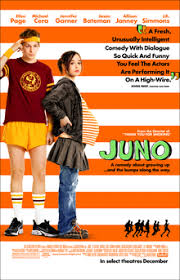
Juno (2007)

JUNO

JUNO (2007) One-and-a-half stars

The second episode of the 10th season of “South Park” gave us a great concept that applies to the 2007 comedy JUNO: “Smug Alert.”

That internal smug alert went off throughout Jason Reitman’s film, especially regarding Diablo Cody’s screenplay and Ellen Page’s precious little title character.

Two quotes from “Smug Alert” pinpoint what’s not right with JUNO.

“Being smug is a good thing,” Gerald Broflovski said.

“You mean — we should drive in hybrids but not act like we’re better than everyone else because of it?” Randy Marsh said.

JUNO (both the movie and the character) acts like being smug is a good thing and that it’s better than everybody else because of it, well, yeah, because that’s what it means to be smug.

Believe it or not, Cody’s original screenplay won for “Best Original Screenplay” in both the American and British editions of the Academy Awards. Yeah, I don’t believe it.

The dialogue scene between Juno and a clerk named Rollo proved enough to set off the “Smug Alert.” I’ll quote it all because I’ll let it form my case against JUNO and Juno.

Rollo: Well, well … if it isn’t MacGuff the crime dog? Back for another test?

Juno: I think the last one was defective. The plus sign looked more like a division sign so I remain unconvinced.

Rollo: Third test today, Mama Bear. Your eggo is preggo, no doubt about it.

Tough Girl: It’s really easy to tell. Is your nipples real brown?

Rollo: Yeah. Maybe your little boyfriend’s got mutant sperms. Knocked ya up twice.

Juno: Silencio old man! Look, I just drank my weight in Sunny-D and I gotta go pronto!

Rollo: Well, you know where the lavatory is.

Rollo [yells]: You pay for that pee stick when you’re done! Don’t think it’s yours just cuz ya marked it with your urine!

[later]

Rollo: Well, what’s the prognosis, fertile Myrtle? Minus or plus?

Juno: [taking a pregnancy test] I don’t know. It’s not seasoned yet. [grabs some candy] I’ll take some of these. Nope … There it is. The little pink plus sign is so unholy.

Rollo: That ain’t no Etch-a-Sketch. This is one doodle that can’t be un-did, homeskillet.

Yeah, exactly, that early dialogue indicts itself and the entire film. Did the voters for “Best Original Screenplay” have that scene erased from their collective memories? Never mind all the critics who listed JUNO as one of 2007’s best films — Roger Ebert named it his No. 1 film.

There are some good things in JUNO but they are ultimately overshadowed by that darn you-know-what that starts with ’s’ and ends with ’ss’ (it’s not success or sadness).

I also dislike the cinematic trend where seemingly every single damn character in a comedy talks like a stand-up comedian with crack timing and perfectly-timed cheap shots, even the characters that are not being played by stand-up comedians.

You had to have been living under a rock to not hear about JUNO in late 2007 and throughout 2008.

JUNO received Academy Award nominations for Best Picture, Best Director, and Best Actress (Page), in addition to its one victory.

Other screenplays nominated against JUNO were LARS AND THE REAL GIRL (Nancy Oliver), MICHAEL CLAYTON (Tony Gilroy), RATATOUILLE (Brad Bird, Jan Pinkava, and Jim Capobianco), and THE SAVAGES (Tamara Jenkins).

I don’t know about you at home, but I’d favor the rat over the brat ‘cause Ratatouille and RATATOUILLE are not smug in the slightest and that makes a huge difference.

Cody (born June 1978) made a name for herself writing an “adult” blog named “The Pussy Ranch” (honest to blog!) and her memoir “Candy Girl: A Year in the Life of an Unlikely Stripper” before she hit the jackpot with her debut screenplay for JUNO. Her life sounds perfectly equipped for becoming an Academy Award winning bio pic. Would her character be played by Miss Sassy Pants Page?

Cody’s other screenplay credits: JENNIFER’S BODY, YOUNG ADULT, PARADISE, RICKI AND THE FLASH, and TULLY. I also regret watching JENNIFER’S BODY, a horror comedy starring Megan Fox and Amanda Seyfried that again set off the “Smug Alert.”

Cody said of JUNO, “You can look at it as a film that celebrates life and celebrates childbirth, or you can look at it as a film about a liberated young girl who makes a choice to continue being liberated. Or you can look at it as some kind of twisted love story, you know, a meditation on maturity.”

I’d rewrite Cody’s quote, “You can look at it as a film that celebrates superficiality and celebrates hipster, or you can look at it as a film about a glib young girl who makes a choice to continue being glib. Or you can look at it as some kind of situation comedy, you know, a meditation on monotony.”

JUNO also frequently misses the mark with the soundtrack, apparently picked by Page herself.

JUNO makes overtures to punk, glam, alternative, et cetera, but picks songs like the Velvet Underground’s “I’m Sticking with You” and Sonic Youth’s “Superstar,” for example, atypical numbers for those bands. Where’s Nirvana and the many bands name-dropped by Kurt Cobain? Like the Vaselines, just one example. Nirvana covered “Here She Comes Now,” the most accessible song from the Velvets’ second LP WHITE LIGHT/WHITE HEAT, 40 minutes and 13 seconds of sound renowned for clearing rooms and making ear drums bleed. What would Juno have made of “Sister Ray”?

Sonic Youth’s Thurston Moore on JUNO in Magnet Magazine, “Every once in a while, you’ll be asked whether your music can be used in a movie. Invariably, we always ask, ‘What’s the movie about?’ Because you don’t want it to be some kind of grotesque film. I didn’t even remember that they’d used the song until I was watching it with my daughter, then I was like, ‘Oh my God!’ [Laughs} When Mark (Jason Bateman) tells Juno, ‘Here’s a Sonic Youth song, I think you’ll really like this,’ and then he plays the song that’s the least indicative of our music — us covering a Carpenters tune — it’s such an odd choice. It’s also funny that she would be into totally hardcore punk — Iggy, Patti Smith, the Runaways — and then quantify Sonic Youth as ‘just a bunch of noise.’ But I think she was just angry at the guy and trying to get back at him.”

Michael Cera plays Paulie Bleeker in what amounted to his second movie featuring “The Michael Cera Role,” following SUPERBAD, and I was already tired of it. No, that’s not Jesse Eisenberg, who you might remember from THE SQUID AND THE WHALE and ZOMBIELAND. Yeah, it’s confusing.

Guess this confusion happened to the guys all the time.

“I bumped into Jesse on the street once and he told me he gets it once a day,” Cera said in the New York Post. “This guy asked me today if I was Napoleon Dynamite [Jon Heder].”

You know you’re in trouble when the best performance in the movie belongs to Jennifer Garner.

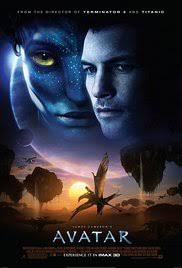
Avatar (2009)

AVATAR

AVATAR (2009) One-and-a-half stars
After I watched James Cameron’s AVATAR for the first time in nearly 10 years, numerous things hit me over the head like a (Hebrew) hammer.

Mental notes:

1) This movie sucks. I mean it, man, and I’m not sure how or why I ever liked it in the first place. I’ll blame it on the alcoholic consumption during my first watch in late ’09 and my love/lust relationship at the time with a woman who loved AVATAR.

2) It never ends. AVATAR is not the cinematic equivalent of the late ’60s Jefferson Airplane chestnut “3/5 of a Mile in 10 Seconds” or 216 miles per hour. The final act of AVATAR, in fact, could be called “3/4 of a Hour in 10 Years.”

3) Will Cameron ever direct a film again that comes in under 120 minutes? The 161-minute AVATAR followed hot on the heels (12 years later) of the 195-minute TITANIC. Here are the run times for TRUE LIES (141), TERMINATOR 2 (137), THE ABYSS (140), and ALIENS (137). In fact, you’d have to go all the way back in time to the 107-minute TERMINATOR (1984) for the last Cameron-directed picture under 120 minutes. (For the record, I like TERMINATOR 2, ALIENS, and THE ABYSS, I’ll pass on TRUE LIES, and I’ll have to revisit TITANIC to see how it holds up removed from all the hype and hysteria in late ’97 and early ’98.)

4) It’s been said that no good film is too long and no bad film is short enough. In that case, AVATAR will be cinematically torturous for people who think it’s no good. Let me put it yet another way: AVATAR and my last dentist appointment lasted about the same length of time, and I’ll go back to the dentist before I ever watch AVATAR again.

5) AVATAR just might be the preachiest movie ever made, even more so than any movie about, you know, preachers. Apparently, even 20th Century Fox asked Cameron to remove “some of this tree-hugging, FERN GULLY crap” from AVATAR. This preachiness makes AVATAR a real drag at times, and why it feels more like an endurance contest than an enjoyable, visionary motion picture experience.

6) Cameron practices what he preaches, though, because AVATAR recycles from DANCES WITH WOLVES, POCAHONTAS, FERN GULLY, ALIENS, and several Hayao Miyazaki films (just a short list). We’ve seen this movie before, and better.

7) AVATAR uncannily illustrates the “uncanny valley.” Definition: “The uncanny valley is a common unsettling feeling people experience when androids (humanoid robots) and audio/visual simulations closely resemble humans in many respects but are not quite convincingly realistic.”

8) Blue is not my favorite color.

9) Black is my favorite color. I loved AVATAR most when it finally faded to black.

10) I liked the Na’vi subtitles much better when they were in German on the bootleg copy I first consumed.

11) I must follow the THIS IS SPINAL TAP rule, which means this list must go to 11.